
20 Project Health Check Metrics That Reveal Early Warning Signs
Understanding the health of a project is crucial for its success, especially in large organizations. Many projects fail to meet their objectives due to overlooked warning signs that could have been addressed earlier. By analyzing specific statistics, project managers can gain insights into potential issues and act proactively. This article explores 20 project health check metrics that reveal early warning signs.
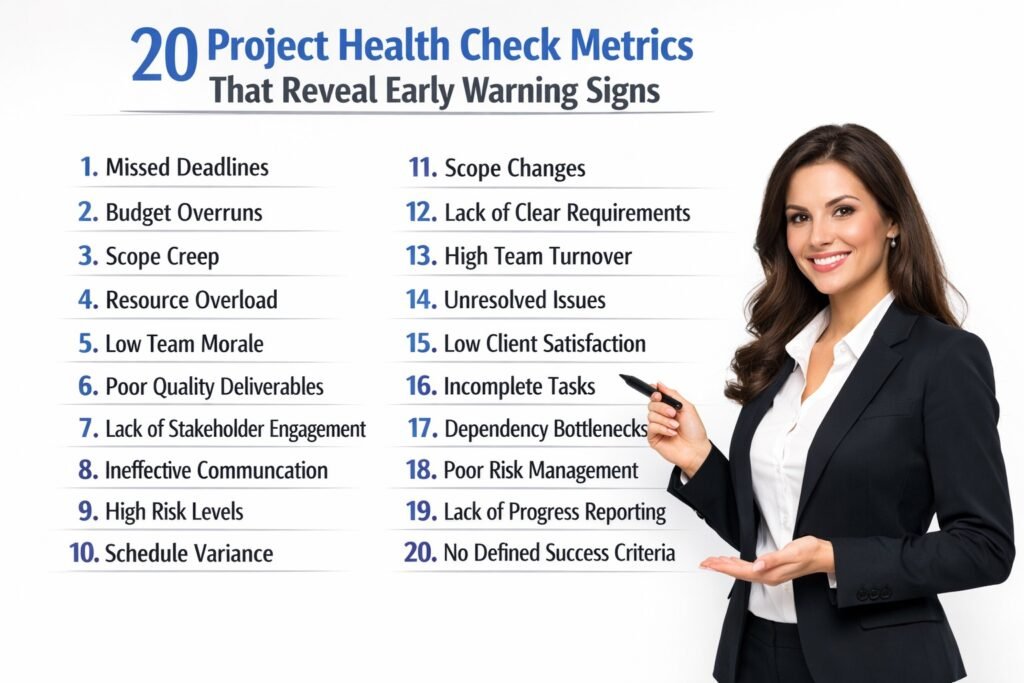
Understanding Project Health Checks: The Basics Explained
Project health checks are systematic evaluations designed to assess various aspects of a project to determine its overall status. These assessments provide insights into how well a project is performing against its goals, timelines, and budgets. By examining key indicators such as scope, resources, risks, and stakeholder engagement, project managers can better understand the project’s trajectory.
A project health check typically includes both quantitative and qualitative measures, allowing for a comprehensive view of a project’s status. This dual approach ensures that managers are not only looking at numbers but also considering the human elements that can significantly impact the project’s success. In a corporate setting, these checks often involve regular reviews and reporting, making them essential for stakeholder communication.
The significance of regular health checks cannot be overstated. They serve as a diagnostic tool, enabling organizations to identify problems before they escalate into larger issues. This proactive approach can help in reallocating resources, adjusting timelines, or even pivoting project goals to align better with organizational objectives.
Key Metrics That Indicate Project Health Risks
Statistical analysis can reveal trends and indications of potential risks. For instance, research shows that projects with frequent scope changes are 50% more likely to go over budget. Scope creep, which refers to uncontrolled changes in a project’s scope, is a common issue that can derail timelines and exhaust resources. Monitoring the frequency and impact of these changes provides an early warning signal that requires immediate attention.
Another crucial metric to consider is that organizations with weak stakeholder engagement have a staggering 70% failure rate in projects. This emphasizes the need for active communication and collaboration among all parties involved. If stakeholders are not aligned with project goals, it can lead to misunderstandings and a lack of support, both of which can jeopardize project success.
Moreover, data shows that projects suffering from misaligned objectives often exceed their original timelines by 37%. This underscores the importance of having a clear and shared understanding of project goals at the outset. Regular health checks that assess alignment can help in reorienting teams and ensuring that everyone is on the same page.
Early Warning Signs: What to Look For in Projects
Identifying early warning signs within projects can save organizations from future headaches. One of the most telling indicators is a sudden drop in team morale. When team members become disengaged or disheartened, it can reflect deeper issues within the project. Regular pulse checks through team surveys can help gauge morale and provide insights into potential problems.
Another key warning sign is the failure to meet interim deadlines. If a project is consistently missing deadlines, it could suggest issues with resource allocation, team capability, or even project scope. Keeping an eye on milestone achievements allows project managers to adapt quickly and address any underlying issues before they escalate.
Lastly, an increase in resource requests can be a red flag. If team members are continually asking for more time, budget, or personnel, it’s often an indication that the current resources are insufficient for the project’s demands. Tracking these requests against project timelines and goals can offer critical insights into where adjustments may be needed.
The Role of Communication in Project Health Monitoring
Effective communication is the backbone of successful project management. A lack of communication can lead to misunderstandings, misalignment, and ultimately project failure. Studies suggest that projects with robust communication practices are 30% more likely to finish on time and within budget.
Regular updates and open lines of communication ensure that all stakeholders are aware of the project’s status and any potential issues. Utilizing project management tools that facilitate continuous communication can help maintain clarity. This ensures that everyone remains aligned with the project goals and can collaboratively address any challenges that arise.
Moreover, feedback loops play a critical role in communication. Actively seeking feedback from team members and stakeholders provides valuable insights into the project’s health. By creating an environment where feedback is welcomed and acted upon, project managers can make data-driven decisions that enhance project outcomes.
How Budget Overruns Signal Project Distress
Budget overruns are among the most clear-cut indicators that a project may be in distress. Research indicates that approximately 70% of projects exceed their initial budgets. This metric highlights the necessity of diligent budget tracking and management throughout the project lifecycle. A consistent review of budget versus actual spending can reveal patterns that might indicate larger issues.
One common cause of budget overruns is scope creep. When new features or functionalities are added without adjusting the budget, financial resources can quickly dwindle. It’s essential to implement strict change management processes to assess the financial impact of any scope changes. Regular financial assessments can help ensure that the project remains within budget constraints.
Moreover, poor forecasting can also contribute to budget overruns. Estimates based on outdated data or unrealistic assumptions can lead to significant discrepancies. Utilizing historical data and employing statistical tools for accurate forecasting can help project managers set realistic budgets and avoid potential pitfalls.
Timeline Delays: An Indicator of Potential Issues
Timeline delays often signal underlying problems that need immediate attention. Data shows that projects that experience initial delays are 60% more likely to encounter additional setbacks down the line. Identifying the root causes of these delays be it resource constraints, unclear objectives, or external factors is essential for getting back on track.
Regularly monitoring project timelines against planned schedules can provide valuable insights into potential issues. If a project consistently misses deadlines, it may be time to reassess resource allocation, team capabilities, or even project scope. Project managers can utilize Gantt charts or other visualization tools to illustrate progress and identify bottlenecks effectively.
Additionally, understanding the reasons for delays can help organizations learn and improve future project planning. Analyzing past projects for common delays can offer key lessons that inform better practices moving forward. By making timeline assessments a regular part of health checks, organizations can enhance their ability to deliver projects on schedule.
Team Dynamics: The Impact on Project Success Rates
The dynamics within a project team can significantly influence its success. Research indicates that projects with high-performing teams are 50% more likely to meet their objectives. The interpersonal relationships, communication styles, and collaborative capabilities of team members can either bolster or hinder project progress.
Regularly assessing team dynamics through surveys or team-building exercises can help in identifying any problematic interactions or communication gaps. A cohesive team that works well together is more likely to stay engaged and committed to the project’s goals. Enhancing team dynamics can be achieved through training, mentorship, or facilitated discussions aimed at building trust and collaboration.
Moreover, understanding individual strengths and weaknesses within a team can lead to better task assignments. By recognizing which team members excel in specific areas, project managers can allocate tasks more effectively. This tailored approach not only improves efficiency but also boosts morale, as team members are more likely to feel empowered when working on tasks aligned with their strengths.
Utilizing Metrics to Enhance Project Management Strategies
In today’s data-driven world, utilizing statistics can dramatically enhance project management strategies. By analyzing key project metrics such as time spent on tasks, budget utilization, and team performance project managers can make informed decisions that positively impact project outcomes.
Implementing project management software that provides real-time analytics can be especially beneficial. These tools can track various metrics and offer insights into project health at a glance. By setting up dashboards that visualize key metrics, project managers can quickly assess whether the project is on track and make timely adjustments as needed.
Furthermore, leveraging historical data can inform future projects. By examining past projects for common pitfalls and successes, organizations can refine their project management practices. Utilizing lessons learned from previous projects can create a culture of continuous improvement, ultimately leading to higher success rates across the organization.
Frequently Asked Questions (FAQ): Project Health Check Metrics and Early Warning Signs
1. What is a project health check, and why is it important in large organizations?
A project health check is a structured evaluation of a project’s current performance across key dimensions such as scope, schedule, cost, risk, and stakeholder engagement. In large organizations, where projects often span multiple departments, geographies, and systems, complexity increases the likelihood of hidden risks. Health checks act as an early detection mechanism, allowing leadership to identify performance degradation before it becomes irreversible.
From an enterprise perspective, health checks are not just operational tools they are governance mechanisms. They provide executive stakeholders with visibility into delivery confidence, enabling informed decision-making, portfolio prioritization, and resource reallocation. Without regular health checks, organizations risk relying on outdated or overly optimistic reporting, which can lead to systemic delivery failures.
2. How frequently should project health checks be conducted?
The frequency of project health checks depends on the scale, complexity, and criticality of the initiative. In large-scale enterprise programs, health checks are typically conducted monthly at a minimum, with more frequent (weekly or bi-weekly) reviews for high-risk or fast-moving projects.
For strategic initiatives or transformation programs, continuous monitoring through dashboards and automated reporting is increasingly common. However, formal health check reviews where metrics are analyzed holistically and decisions are made should still occur at defined intervals to ensure governance rigor.
The key principle is consistency. Irregular or ad hoc health checks reduce comparability over time and weaken trend analysis, which is essential for identifying early warning signals.
3. What are the most critical metrics to include in a project health check?
While there are many metrics available, the most critical ones typically fall into five core categories:
- Schedule Performance – Are milestones being met as planned?
- Cost Performance – Is the project within budget forecasts?
- Scope Stability – How frequently is the scope changing?
- Risk Exposure – Are risks increasing in severity or likelihood?
- Stakeholder Engagement – Are key stakeholders aligned and actively involved?
In enterprise environments, these are often supplemented with advanced metrics such as earned value analysis (EVA), resource utilization rates, dependency tracking, and benefits realization forecasts. The goal is to balance leading indicators (predictive) with lagging indicators (historical) to create a comprehensive view of project health.
4. What are early warning signs that a project may be in trouble?
Early warning signs often manifest subtly before becoming critical issues. Common indicators include:
- Increasing frequency of missed milestones
- Rising number of change requests or scope adjustments
- Declining stakeholder participation in meetings or decision-making
- Escalating risk logs without corresponding mitigation actions
- Resource overallocation or high team burnout rates
In large organizations, these signals are often masked by reporting layers or optimistic status updates. This is why objective, data-driven health check metrics are essential they cut through subjective bias and highlight underlying trends that may otherwise go unnoticed.
5. How does scope creep impact project health?
Scope creep is one of the most significant contributors to project failure, particularly in complex enterprise initiatives. Uncontrolled expansion of scope leads to increased costs, extended timelines, and diluted focus on core objectives.
From a health check perspective, tracking scope changes both in frequency and impact is critical. A high volume of change requests may indicate poor initial requirements definition, weak governance controls, or shifting business priorities.
In large organizations, scope creep often originates from multiple stakeholders introducing incremental changes. Without a robust change control process, these small adjustments accumulate, ultimately destabilizing the project.
6. Why is stakeholder engagement considered a key health metric?
Stakeholder engagement directly influences decision-making speed, alignment, and overall project support. In enterprise settings, where projects often depend on cross-functional collaboration, disengaged stakeholders can create bottlenecks, misalignment, and resistance to change.
A lack of engagement is a leading indicator of potential failure. If stakeholders are not actively participating in governance forums, reviewing deliverables, or providing timely feedback, the project risks drifting away from business objectives.
Health checks should assess not just attendance, but the quality of engagement are stakeholders contributing meaningfully, making decisions, and supporting the project’s direction?
7. How can data and analytics improve project health monitoring?
Data and analytics enable a more proactive and predictive approach to project health management. By leveraging historical data, organizations can identify patterns and correlations that signal potential risks.
For example, predictive analytics can highlight that projects with declining resource utilization often experience schedule delays within a specific timeframe. Similarly, trend analysis can reveal gradual cost overruns before they exceed thresholds.
In large organizations, integrating project management tools with business intelligence platforms allows for real-time dashboards, automated alerts, and advanced reporting. This reduces reliance on manual reporting and enhances the accuracy and timeliness of health assessments.
8. What role does risk management play in project health checks?
Risk management is a foundational component of any project health check. A project with unmanaged or poorly tracked risks is inherently unstable, regardless of its current performance metrics.
Health checks should evaluate:
- The number and severity of identified risks
- The effectiveness of mitigation strategies
- The rate at which new risks are emerging
- The responsiveness of the team in addressing risk events
In enterprise environments, risks are often interconnected across projects and programs. Therefore, health checks should also consider systemic risks that may impact multiple initiatives simultaneously.
9. How do misaligned objectives affect project outcomes?
Misaligned objectives occur when stakeholders have differing expectations about the project’s goals, success criteria, or deliverables. This misalignment can lead to conflicting priorities, rework, and delays.
From a metrics perspective, misalignment often manifests as:
- Frequent changes in project direction
- Increased rework or rejected deliverables
- Delays in approvals or decision-making
In large organizations, alignment must be continuously reinforced through governance structures, communication strategies, and regular health checks. Ensuring that all stakeholders share a common understanding of objectives is critical for maintaining project momentum.
10. Can project health checks prevent project failure entirely?
While project health checks significantly reduce the likelihood of failure, they cannot eliminate it entirely. External factors such as market changes, regulatory shifts, or organizational restructuring can still impact project outcomes.
However, health checks dramatically improve an organization’s ability to respond to challenges. By identifying issues early, project teams can implement corrective actions before problems escalate beyond control.
In enterprise environments, the value of health checks lies in increasing predictability, improving decision-making, and enhancing overall delivery confidence not in guaranteeing success, but in maximizing the probability of it.
11. How should project managers act on health check findings?
Identifying issues is only half the process effective action is what drives improvement. Project managers should prioritize findings based on impact and urgency, then develop targeted remediation plans.
This may include:
- Reallocating resources to critical areas
- Revising timelines or milestones
- Strengthening stakeholder communication
- Implementing stricter change control processes
In large organizations, escalation pathways should also be clearly defined. If issues cannot be resolved at the project level, they must be raised to program or portfolio governance boards for intervention.
12. What tools are commonly used for project health checks?
Enterprise organizations typically use a combination of project management and reporting tools, such as:
- Project portfolio management (PPM) systems
- Dashboard and business intelligence tools
- Risk management platforms
- Collaboration and communication tools
These tools enable centralized data collection, real-time reporting, and standardized health check frameworks. The key is integration disconnected tools can lead to fragmented insights and reduce the effectiveness of health checks.
13. How do project health checks support executive decision-making?
Executives rely on accurate, timely data to make strategic decisions. Project health checks provide a consolidated view of project performance, risks, and trends, enabling leaders to:
- Prioritize investments
- Allocate resources effectively
- Identify underperforming initiatives
- Make informed go/no-go decisions
In large organizations, where multiple projects compete for resources, health checks are essential for maintaining portfolio alignment with business objectives.
14. What is the difference between leading and lagging indicators in project health?
Leading indicators are predictive metrics that signal potential future issues, such as declining stakeholder engagement or increasing risk exposure. Lagging indicators, on the other hand, reflect past performance, such as budget overruns or missed deadlines.
A robust project health check framework includes both. Leading indicators enable proactive intervention, while lagging indicators provide validation and historical context. In enterprise environments, over-reliance on lagging indicators is a common pitfall, as it limits the ability to prevent issues before they occur.
15. How can organizations standardize project health checks across multiple teams?
Standardization is critical for scalability and consistency. Large organizations should establish a centralized framework that defines:
- Core metrics and KPIs
- Reporting formats and frequency
- Thresholds for escalation
- Roles and responsibilities
This ensures that all projects are evaluated using the same criteria, enabling meaningful comparisons and portfolio-level insights. Standardization also supports governance, compliance, and continuous improvement initiatives.
Conclusion
Understanding and monitoring project health is crucial for success in large organizations. By focusing on key metrics and early warning signs, project managers can proactively address issues before they escalate. Effective communication, budget management, timeline assessments, and team dynamics play a significant role in project success. Utilizing these insights not only enhances project management strategies but also fosters a culture of learning and improvement within organizations.
Hashtags: #ProjectManagement #RiskAssessment #TeamDynamics #BudgetManagement #DataDriven
External Source: Discover 12 Project Health Check Techniques to Rescue Troubled Programs
Discover More great templates at
https://pmresourcehub.com/library/formal-project-authorization-notice-template-free-word-download/
https://pmresourcehub.com/library/success-criteria-definition-template-free-word-download/