
Executive Summary Slide: An Essential Guide on Executive Reporting Best Practices
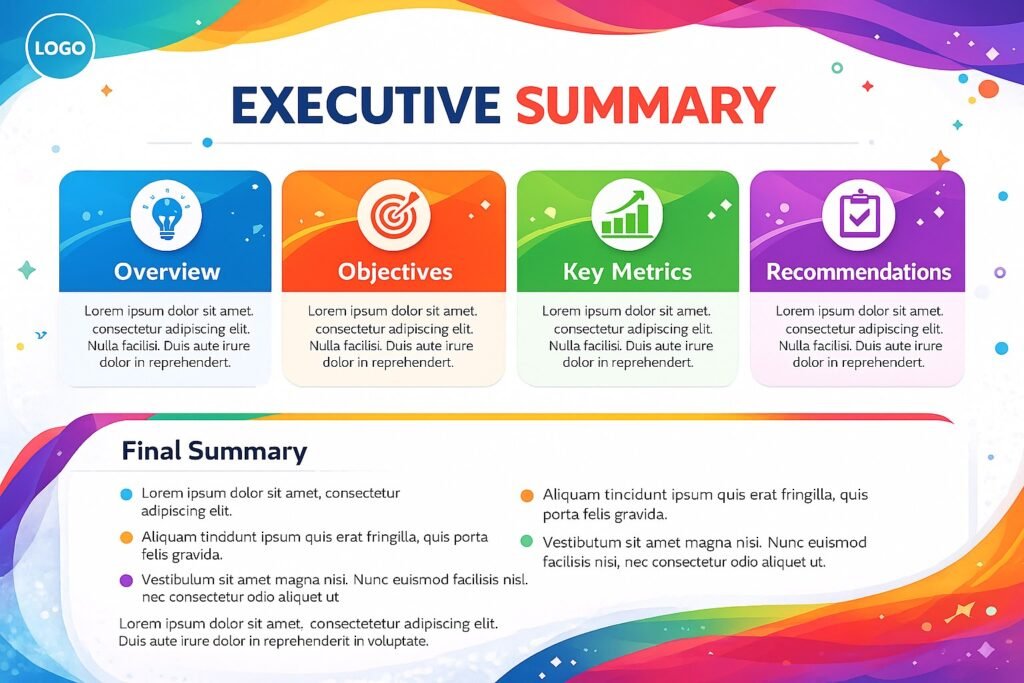
Understanding the nuances of an executive summary slide is critical for anyone working within large organizations or corporate enterprises. This slide often serves as the first impression of a presentation, providing a concise overview that captures the essence of a larger report or proposal. In an environment where decision-makers are inundated with information, having an effective executive summary slide can mean the difference between gaining interest and being overlooked. This article will delve into the significance of an executive summary slide, its key components, and best practices for crafting a visually appealing and engaging slide tailored for various stakeholders.
Understanding the Importance of an Executive Summary Slide
An executive summary slide is not merely an introductory statement; it serves as a strategic tool that encapsulates the core messages of your presentation. In large organizations, where time is of the essence, executives often rely on these summaries to gauge the relevance of a proposal or report before delving into the details. This slide provides a snapshot of complex information, highlighting the most critical data points and recommendations.
Moreover, the executive summary slide can set the tone for the entire presentation. A well-crafted summary instills confidence and piques interest, motivating the audience to engage further. Conversely, a poorly constructed slide can lead to misconceptions or disinterest, causing vital insights to be overshadowed. In a corporate environment where high-stakes decisions are made, the importance of this slide cannot be overstated. It’s essential that it succinctly conveys the key takeaways and the strategic importance of the content that follows.
Lastly, the executive summary slide acts as a bridge between the presenter and the audience. It allows the presenter to articulate the significance of the project or proposal while encouraging dialogue and questions. In essence, this slide is a catalyst for engagement, facilitating a two-way conversation that can lead to actionable insights and collaborative discussions.
Key Components to Include in Your Executive Summary
To maximize the effectiveness of your executive summary slide, certain key components should always be included. First and foremost, a clear and concise statement of the purpose or objective is essential. This sets the stage for what the audience can expect to learn from the presentation. For example, you might state, “This presentation aims to outline the strategic benefits of implementing a new customer relationship management system.”
Next, it’s crucial to highlight the main findings or recommendations. Use bullet points for clarity and brevity, allowing the audience to easily scan and absorb the information. Each bullet point should encapsulate a key takeaway from the report, such as projected cost savings, enhanced customer engagement, or improved operational efficiency. This method of presentation not only organizes thoughts but also emphasizes the most significant aspects of the proposal.
Lastly, including a visual element such as a graph, chart, or infographic can further enhance understanding. Visuals can effectively distill complex data into easily digestible formats, making it simpler for executives to grasp the implications quickly. By incorporating these components, your executive summary slide will not only inform but also engage your audience effectively.
Crafting a Compelling Narrative in Your Summary Slide
The effectiveness of an executive summary slide is not only about the data but also the narrative surrounding it. A compelling narrative weaves together the purpose, findings, and recommendations in a way that resonates with the audience. Start by framing the context: why the issue at hand is important and how it aligns with the organization’s broader goals. This establishes relevance and captures attention right from the start.
Next, focus on clarity and simplicity in your language. Avoid jargon or overly technical terms that may alienate some members of the audience. Instead, use straightforward language that delivers messages succinctly. Consider this as telling a story: every story has a beginning, middle, and end. The beginning introduces the challenge or opportunity, the middle presents your findings and insights, and the end delivers a call to action or recommendation.
Finally, ensure that your narrative creates an emotional connection. Use phrases that invoke the organization’s values or goals, such as “enhancing customer satisfaction” or “driving innovation.” This emotional appeal can be instrumental in persuading stakeholders to buy into your proposal, as it aligns the data with the organization’s mission and vision. A well-crafted narrative can transform dry statistics into compelling reasons for action.
Visual Design Tips for an Effective Executive Summary
Visual design plays a pivotal role in the effectiveness of your executive summary slide. First, maintain a consistent color scheme and font style that aligns with your organization’s branding. This helps create a professional appearance while making the content more visually harmonious. A well-designed slide not only looks inviting but also facilitates easier reading and comprehension.
Next, embrace white space. Cluttered slides can overwhelm the audience, causing critical information to become lost in the noise. Use white space strategically to highlight key points and make your slide more digestible. A clean layout invites the viewer’s eye to flow naturally over the content, ensuring they grasp the essential information without becoming distracted.
Lastly, consider the use of visual aids like icons and images. These elements can bolster understanding by providing visual representations of complex ideas or data. For instance, if discussing cost savings, an icon of a dollar sign can be effective. Just be cautious not to overdo it; every visual element should serve a purpose and enhance the overall narrative. Thoughtful design amplifies the message you wish to convey and makes your executive summary slide stand out.
Tailoring Your Summary for Different Stakeholders
When crafting an executive summary slide, it’s essential to tailor your content for your specific audience. Different stakeholders may have varying interests, priorities, and levels of understanding regarding the subject matter. For instance, while a financial analyst may be focused on cost implications, a marketing executive might be more interested in customer engagement strategies. Understanding these nuances can guide how you present information.
To effectively tailor your summary, start by identifying your audience’s main concerns and objectives. This could involve conducting preliminary discussions or surveys to gauge their interests. Once you have this information, customize your messaging accordingly. For example, if your audience is primarily technical, consider including more in-depth data analysis. Conversely, for a more general audience, focus on high-level insights and implications.
Additionally, consider the format and language you use. Technical stakeholders might appreciate detailed metrics and industry-specific terminology, while executives might prefer broader implications and strategic alignment. By taking the time to customize your executive summary slide for different stakeholders, you increase the likelihood of engagement and buy-in.
Common Mistakes to Avoid on Executive Summary Slides
Creating an effective executive summary slide comes with its own set of challenges, and avoiding common pitfalls can elevate your presentation. One frequent mistake is overwhelming the audience with too much information. It’s easy to think that giving more data will make your case stronger, but instead, it can lead to confusion. Focus on the most critical points and aim for clarity.
Another common error is failing to provide context. A summary slide that merely lists figures or findings without explaining their significance can leave the audience puzzled. Always frame your data within a narrative that clarifies why it matters. Providing context will help guide the audience’s understanding and reinforce the points you wish to make.
Lastly, neglecting to rehearse the delivery of your executive summary slide can undermine its effectiveness. Even the best content can fall flat without confident delivery. Practice articulating your key points succinctly and engagingly. Your enthusiasm and clarity will resonate with your audience, making a significant impact on their receptiveness to your proposal.
Best Practices for Presenting Your Summary Slide
When it comes to presenting your executive summary slide, preparation is key. First, consider your pacing. Being concise while covering all critical points is crucial. Aim to deliver your summary in a manner that respects your audience’s time while ensuring they grasp the essential insights. A well-paced delivery keeps the audience engaged and makes the information easier to absorb.
Next, use body language and eye contact to connect with your audience. Engage them by making eye contact, using hand gestures, and varying your tone of voice to emphasize important points. This not only enhances your credibility but also creates a more dynamic presentation environment. Being present and approachable can foster an atmosphere where dialogue and questions thrive.
Lastly, be prepared for questions and discussions. After presenting your summary slide, invite dialogue by asking for feedback or posing open-ended questions. This interaction will not only clarify any uncertainties but also foster a collaborative atmosphere. An executive summary slide is not a one-way communication tool; it is an opportunity for establishing a dialogue that can lead to enriched insights and actionable outcomes.
Enhancing Engagement with Your Executive Summary Slide
Engagement is paramount in ensuring that your executive summary slide has the desired impact. One effective way to enhance engagement is by incorporating storytelling elements. By framing your data within a narrative context, you make it relatable and compelling. Share anecdotes that illustrate the challenges or opportunities at hand, thereby drawing the audience closer to the subject matter.
Another strategy is to solicit audience input during the presentation. Interactive elements such as polls, questions, or even small group discussions can create a more inclusive environment. Allowing stakeholders to participate in the conversation not only holds their attention but also enriches the insights gathered during the presentation. Engaged audiences are more likely to remember the information and act upon it.
Finally, consider following up after the presentation with a summary email that includes the executive summary slide. This not only reinforces the key points discussed but also provides a takeaway that stakeholders can refer back to. It demonstrates professionalism and a commitment to ensuring that your message resonates beyond the immediate presentation. Engaging your audience doesn’t end when the meeting does; it is an ongoing effort that can lead to lasting impacts.
In conclusion, a well-crafted executive summary slide is an invaluable asset in the corporate presentation arsenal. By understanding its importance, incorporating essential components, and utilizing effective design principles, you can create a compelling narrative that resonates with various stakeholders. Avoid common mistakes, adhere to best practices, and focus on engagement to ensure that your message is not only heard but acted upon. A well-executed executive summary slide can elevate the quality of discussions, drive decisions, and ultimately contribute to organizational success.
Hashtags: #ExecutiveSummary #CorporatePresentations #AudienceEngagement #PresentationDesign #StakeholderManagement
External Source: ‘How to Write an Effective Executive Summary Like a McKinsey or BCG Consultant’ from Slideworks For more insights on creating effective presentations.