
How to Manage Projects with Regulatory Oversight: A Strategic Guide
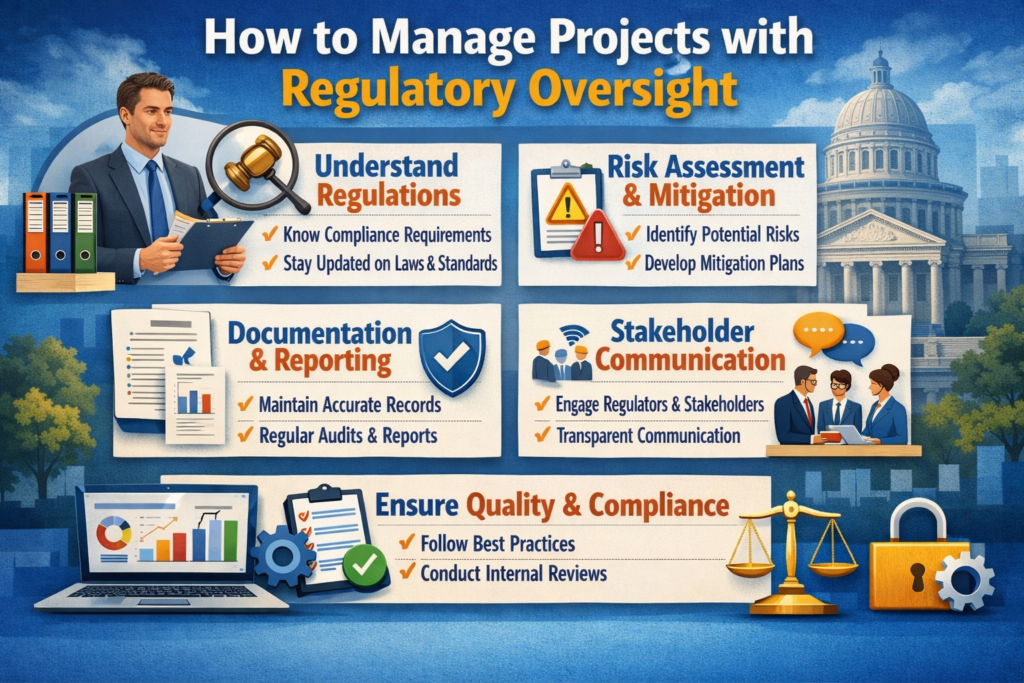
Managing projects under regulatory oversight can feel like navigating a maze. The stringent requirements imposed by governing bodies can create challenges, but they can also lead to improved processes and accountability. This article provides insights into How to Manage Projects with Regulatory Oversight effectively while adhering to rigorous regulations, ensuring that compliance does not hinder innovation or success.
Understanding the Challenges of Regulatory Oversight in Projects
Projects subject to intense regulatory oversight face a myriad of challenges. One significant issue is the increased complexity of project management frameworks. The need to comply with regulations means that project managers must integrate compliance considerations into every phase of the project lifecycle. This often leads to longer approval processes, requiring additional time and resources to ensure that all compliance measures are met. The environment can feel stifling, where innovation may take a back seat to compliance.
Another major challenge is the potential for misunderstanding or misinterpretation of regulatory guidelines. Regulations often use complex language that can lead to confusion among team members and stakeholders. This confusion can delay project milestones or lead to incomplete compliance checks, ultimately placing the project at risk. Furthermore, the lack of clarity can foster a negative atmosphere where team members feel uncertain about their roles and responsibilities.
Additionally, the burden of documentation can overwhelm project teams. Regulatory compliance often mandates extensive record-keeping, which can divert focus from project execution to administrative tasks. This shift in focus may lead to frustration among team members, potentially affecting morale and overall productivity. Thus, understanding these challenges is crucial for developing effective strategies that navigate the regulatory landscape while still achieving project goals.
Key Principles for Successfully Managing Oversight
To successfully navigate projects with extreme regulatory oversight, a few key principles must be embraced. Firstly, integrating compliance into the project planning phase is essential. By making regulatory considerations a core part of the planning process, project managers can streamline efforts and ensure that all tasks align with compliance requirements from the very start. This proactive approach reduces the likelihood of costly delays and misunderstandings down the road.
Secondly, fostering transparency within the project team is vital. Regular updates and open lines of communication help to ensure that all team members understand their responsibilities regarding compliance. This practice not only boosts accountability but also builds trust within the team, leading to a more cohesive working environment. Engaging team members in discussions about compliance can also help to demystify regulations and encourage collaborative problem-solving.
Lastly, establishing a robust oversight framework can significantly enhance project management effectiveness. This framework should include defined roles and responsibilities, regular compliance assessments, and clear documentation procedures. By ensuring that everyone knows their tasks and the expected standards, project leaders can minimize confusion and maintain a steady course toward compliance and project success.
Essential Tools for Project Management Under Regulations
Utilizing the right tools can make compliance with regulations significantly more manageable. Project management software with built-in compliance features can be a game-changer. Tools like Asana, Trello, or Microsoft Project allow teams to track timelines, allocate resources, and ensure that compliance tasks are integrated seamlessly into the project plan. These tools often come equipped with templates for regulatory documentation, ensuring that all records meet necessary standards.
Additionally, compliance management systems (CMS) can streamline the oversight process by centralizing regulatory documentation and processes. A CMS not only simplifies record-keeping but also automates reminders for compliance deadlines, making it easier for teams to stay on track. Tools like LogicGate or MetricStream can help organizations efficiently manage compliance-related tasks while reducing the risk of human error.
Lastly, collaboration platforms like Slack or Microsoft Teams can facilitate communication among team members when adhering to regulatory requirements. These platforms allow for real-time updates and interactions, ensuring that everyone is on the same page. Utilizing these tools can transform the regulatory oversight process from a cumbersome task into a manageable and structured workflow.
Strategies for Effective Communication with Regulatory Bodies
Effective communication with regulatory bodies is critical when managing projects under strict oversight. Establishing a direct line of communication can pave the way for smoother interactions. Designating a compliance officer or a regulatory liaison can create a point of contact for regulatory bodies, ensuring that questions are answered promptly and accurately. This proactive communication helps to build a positive relationship and establishes your organization as cooperative and responsible.
Regularly engaging with regulatory bodies allows project managers to gain insights into upcoming regulatory changes or updates. Participating in industry forums, workshops, or webinars can facilitate these connections. Staying informed about regulatory expectations ensures that project teams can adjust their strategies accordingly, reducing the risk of non-compliance and potential penalties.
Lastly, maintaining transparency in reporting can be highly beneficial. Providing comprehensive updates on project status and compliance efforts fosters trust with regulatory bodies. Clear documentation of compliance actions taken can also serve as a protective measure in case of audits or inquiries. This level of transparency not only strengthens relationships with regulators but can also enhance the organization’s credibility in the industry.
Building a Compliance-Driven Project Management Culture
Creating a compliance-driven culture within an organization is essential for successfully managing projects with extreme regulatory oversight. This begins with leadership buy-in; when leaders prioritize compliance, it sets a tone for the entire organization. Leadership should actively participate in compliance training and initiatives, demonstrating a commitment to adhering to regulations and encouraging team members to do the same.
Incorporating compliance training into the onboarding process for new employees can establish a foundational understanding of regulatory expectations. Regular training sessions should be scheduled to keep all team members updated on compliance changes and best practices. By fostering a culture of continuous learning around compliance, organizations can ensure that team members feel empowered and knowledgeable in navigating regulatory landscapes.
Moreover, recognizing and rewarding compliance efforts within the team can reinforce the importance of regulatory adherence. Celebrating achievements related to compliance can motivate team members to prioritize these efforts. By creating an environment where compliance is valued and integrated into daily operations, organizations can enhance project success while navigating the complexities of regulatory oversight.
Risk Management Techniques for Highly Regulated Projects
Risk management is a critical aspect of project management, especially in highly regulated environments. Identifying potential risks associated with regulatory compliance early in the project lifecycle can help mitigate issues before they arise. Conducting comprehensive risk assessments enables project teams to outline potential compliance challenges and develop strategies to address them proactively.
Employing scenario planning is another effective technique for managing risk in regulated projects. By envisioning various scenarios both positive and negative project teams can prepare for unexpected changes in regulatory landscapes or project dynamics. This foresight allows teams to quickly adapt their strategies and maintain compliance even in the face of unforeseen circumstances.
Finally, utilizing risk management software can streamline the process of identifying and tracking risks. Tools like RiskWatch or Riskalyze provide templates for risk assessments, alerts for potential compliance issues, and frameworks for developing risk mitigation plans. By integrating risk management into the project management process, organizations can significantly reduce the likelihood of non-compliance and enhance overall project resilience.
Best Practices for Documentation and Reporting Compliance
Proper documentation is the backbone of compliance in highly regulated projects. Establishing standardized documentation procedures ensures that all compliance-related activities are tracked and recorded appropriately. Templates for regulatory reports, audit trails, and compliance checklists can simplify the documentation process, making it easier for project teams to adhere to regulations seamlessly.
Regular audits and reviews of compliance documentation are essential for identifying gaps and ensuring that all records meet the required standards. Scheduling periodic internal reviews helps maintain compliance and allows teams to adjust practices based on any changes in regulations. This proactive approach can prevent issues from escalating and promote a culture of accountability.
Moreover, leveraging digital documentation tools can enhance the efficiency of record-keeping. Cloud-based storage solutions like Google Drive or SharePoint enable teams to store, access, and share compliance documentation easily. Implementing version control features ensures that team members are always working with the latest documents, minimizing the risk of errors and omissions in compliance reporting.
Evaluating Project Success in a Regulatory Framework
Evaluating project success in a regulatory framework involves measuring both compliance outcomes and project deliverables. Setting clear compliance metrics at the outset allows project teams to track their performance in relation to regulatory standards. These metrics can include successful completion of required audits, adherence to timelines for compliance documentation, and feedback from regulatory bodies.
Additionally, evaluating the impact of compliance on project outcomes is crucial. Understanding how regulatory adherence affects project timelines, costs, and overall quality gives project managers valuable insights for future initiatives. This evaluation can help refine processes and create more efficient workflows that align compliance efforts with project goals.
Finally, gathering feedback from both internal team members and external stakeholders is vital. Regularly assessing how well compliance measures are being implemented and their effectiveness can provide a comprehensive view of project success. By integrating compliance evaluation into the overall project assessment, organizations can ensure that they are not only meeting regulatory requirements but also achieving their strategic objectives.
Managing projects with extreme regulatory oversight can be a daunting task, but with the right strategies, tools, and mindset, organizations can thrive in this environment. By prioritizing compliance, fostering open communication, and encouraging a culture of accountability, businesses can navigate the complexities of regulations while still achieving project success. With a proactive approach, regulatory oversight can become an integral part of a project management strategy rather than a hindrance.
Case Study: Delivering a Mission-Critical Transformation Under Extreme Regulatory Oversight
Background
A national financial services organization initiated a multi-year digital transformation program to modernize its customer onboarding and transaction monitoring platforms. The program was driven by increasing regulatory scrutiny, evolving data protection requirements, and the need to improve operational efficiency across multiple business units. The project operated under continuous oversight from national regulators and internal compliance, audit, and risk committees.
Challenge
The organization faced several interrelated challenges. Regulatory requirements imposed strict controls on data handling, system changes, and customer verification processes. Approval cycles were lengthy, documentation requirements were extensive, and any deviation from approved procedures triggered formal reviews. At the same time, executive leadership expected measurable improvements in customer experience and processing speed without increasing regulatory risk.
Project teams struggled with balancing delivery velocity and compliance rigor. Ambiguous regulatory language led to inconsistent interpretations across departments, while fragmented governance caused delays in decision-making. Without intervention, the program risked timeline overruns, cost escalation, and increased exposure during regulatory inspections.
Approach
The organization restructured the program governance model to embed compliance directly into project execution. A cross-functional oversight group was established, including representatives from compliance, legal, risk, IT, and operations. Regulatory requirements were translated into clear delivery controls and embedded into the project lifecycle, rather than treated as external checkpoints.
Key actions included:
-
Integrating regulatory controls into the project plan, milestones, and acceptance criteria
-
Introducing standardized documentation and evidence templates aligned to regulatory expectations
-
Implementing structured change control with predefined escalation thresholds
-
Establishing regular compliance reviews alongside delivery status reporting
-
Training project teams to interpret regulatory guidance consistently and apply it pragmatically
This approach ensured that compliance decisions were made in parallel with delivery decisions, reducing friction and rework.
Results
The program achieved regulatory approval at every formal review without major findings or remediation actions. Despite operating under heightened scrutiny, the organization delivered the new platforms within the approved budget and with only minor schedule adjustments. Audit readiness improved significantly, with evidence repositories allowing rapid response to regulatory inquiries.
Operationally, customer onboarding times were reduced, data quality improved, and internal confidence in regulatory controls increased. Most importantly, regulators acknowledged the organization’s strengthened governance model, reducing follow-up scrutiny in subsequent review cycles.
Key Takeaways
This case demonstrates that extreme regulatory oversight does not inherently prevent successful project delivery. When compliance is embedded into governance, planning, and execution, organizations can reduce risk while maintaining strategic momentum. Strong leadership, cross-functional collaboration, and disciplined documentation are critical enablers of success in regulated project environments.
Frequently Asked Questions (FAQ)
What is meant by “extreme regulatory oversight” in project management?
Extreme regulatory oversight refers to projects that are governed by strict laws, standards, or regulatory bodies that impose mandatory controls, approvals, audits, and reporting requirements. This is common in highly regulated sectors such as healthcare, financial services, government, pharmaceuticals, energy, and critical infrastructure, where non-compliance can result in fines, legal action, reputational damage, or operational shutdowns.
How does regulatory oversight impact the project lifecycle?
Regulatory oversight affects every phase of the project lifecycle, from initiation to closure. Requirements often influence scope definition, design decisions, procurement processes, delivery methods, testing protocols, and acceptance criteria. Governance checkpoints, formal approvals, and documentation reviews typically extend timelines and require additional coordination across legal, compliance, and risk functions.
Why is early compliance integration critical for regulated projects?
Integrating compliance at the planning stage reduces downstream risk and rework. When regulatory requirements are embedded into schedules, budgets, and work breakdown structures from the outset, organizations avoid late-stage redesigns, failed audits, or approval delays. Early integration also enables more accurate forecasting and executive decision-making.
How can project managers balance compliance with innovation?
Compliance and innovation are not mutually exclusive. Successful organizations treat regulatory constraints as design parameters rather than obstacles. By using risk-based approaches, modular delivery, controlled experimentation, and documented decision frameworks, teams can innovate within defined regulatory boundaries while maintaining auditability and control.
What role does documentation play in regulatory-driven projects?
Documentation is a core compliance artifact, not an administrative afterthought. Regulators often require evidence of decision-making, approvals, testing, change control, and risk mitigation. Well-structured documentation supports audits, enables traceability, and protects the organization in the event of regulatory review or investigation.
How can organizations reduce delays caused by regulatory approvals?
Delays can be mitigated through proactive stakeholder engagement, clear approval pathways, and predefined governance calendars. Establishing relationships with compliance, legal, and regulatory stakeholders early in the project helps clarify expectations and reduces rework. Standardized templates and pre-approved processes also accelerate approval cycles.
What skills are most important for project managers working under heavy regulation?
Project managers in regulated environments must demonstrate strong governance discipline, risk management capability, and stakeholder communication skills. Familiarity with regulatory language, audit processes, and compliance frameworks is essential. Equally important is the ability to translate regulatory requirements into practical delivery actions for cross-functional teams.
How should risks be managed in projects with strict regulatory controls?
Risk management should be continuous and highly structured. Regulatory risks must be explicitly identified, assessed, and tracked alongside delivery risks. Scenario planning, impact analysis, and escalation thresholds should be clearly defined to ensure that compliance risks are addressed before they become material issues.
What is the role of leadership and governance in regulated projects?
Executive sponsorship and strong governance are critical. Leaders must set the tone for compliance, ensure adequate resourcing, and support enforcement of controls. Clear governance structures enable timely decisions, resolve conflicts between delivery speed and regulatory obligations, and demonstrate organizational accountability to regulators.
Can strong regulatory oversight improve project outcomes?
Yes. While regulatory oversight increases complexity, it often leads to stronger controls, clearer accountability, improved quality, and reduced operational risk. Organizations that mature their compliance-driven project practices frequently achieve greater consistency, transparency, and long-term resilience across their project portfolios.
Conclusion: How to Manage Projects with Regulatory Oversight
Managing projects under extreme regulatory oversight is undeniably complex, but it does not have to be restrictive or counterproductive. When approached strategically, regulatory requirements become a framework for discipline, transparency, and sustainable delivery rather than a barrier to progress. Organizations that treat compliance as an integrated component of project governance position themselves to deliver outcomes that are both innovative and defensible.
Success in highly regulated environments depends on early and deliberate planning. Embedding compliance considerations into project initiation, design, and execution reduces uncertainty, prevents costly rework, and enables more accurate forecasting of timelines and resources. Clear governance structures, well-defined approval pathways, and proactive stakeholder engagement allow teams to navigate regulatory demands without losing momentum.
Equally important is fostering a culture of transparency and accountability. Open communication ensures that regulatory obligations are understood at every level of the project, reducing misinterpretation and execution risk. When teams are empowered with clarity around roles, responsibilities, and compliance expectations, confidence increases and decision-making improves.
Ultimately, projects delivered under strict regulatory oversight can achieve higher standards of quality, risk control, and organizational credibility. By balancing regulatory rigor with structured flexibility, enterprises can meet compliance obligations while still driving value, innovation, and long-term strategic success
External Source: For more insights on regulatory compliance, visit https://www.corporatecomplianceinsights.com/
Discover More great insights at www.pmresourcehub.com
Explore Free Project Management Templates www.pmresourcehub.com/library/
Hashtags: #ProjectManagement #RegulatoryCompliance #RiskManagement #CommunicationStrategies #ComplianceCulture