
Critical Success Factors vs Key Performance Indicators: Key Differences in Strategy, Metrics, and Performance
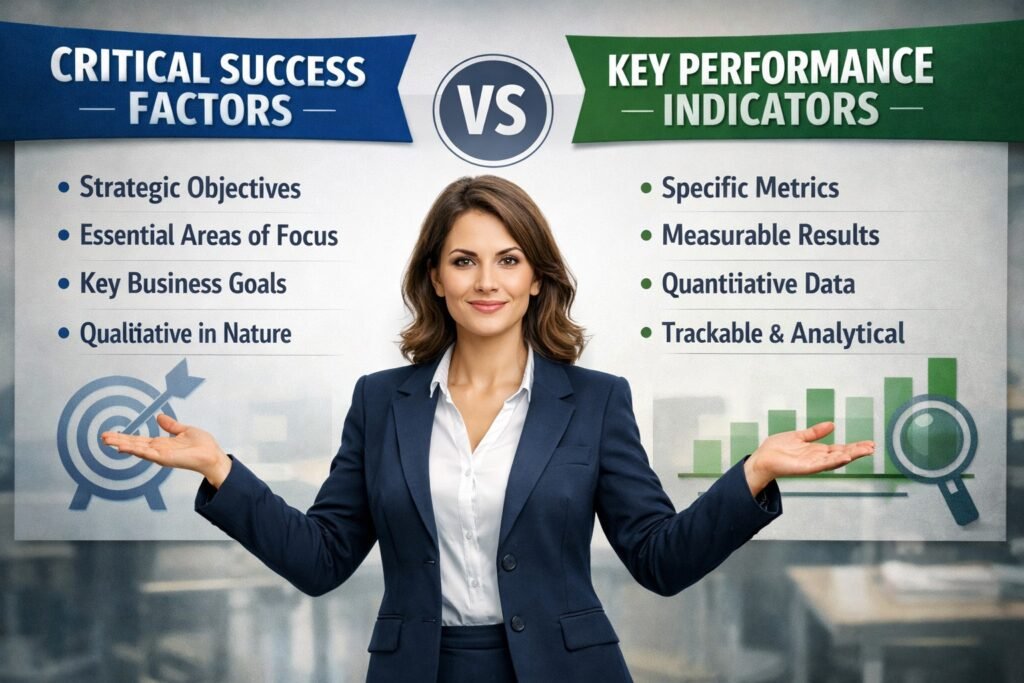
In business, understanding how to measure success is crucial for any organization striving for growth. Two terms often surfacing in strategic conversations are Critical Success Factors (CSFs) and Key Performance Indicators (KPIs). While they may seem interchangeable, these concepts serve different roles in charting a company’s path toward victory. In this article, we’ll dive deep into Critical Success Factors vs Key Performance Indicators, exploring their definitions, importance, and the relationship between them to help you better measure and achieve your business goals.
Understanding Critical Success Factors and Their Importance
Critical Success Factors are the essential areas of activity that must be performed well for an organization to achieve its goals and objectives. These factors are aligned closely with the company’s strategy and are inherently linked to the overall vision and mission of the business. For instance, a technology company may identify innovation and customer satisfaction as CSFs, recognizing that excelling in these areas is crucial for market leadership. By focusing on these pivotal areas, organizations can channel their resources effectively, ensuring they are making meaningful progress toward their strategic ambitions.
Identifying CSFs requires an in-depth analysis of both internal capabilities and external market conditions. Companies often conduct SWOT analyses (Strengths, Weaknesses, Opportunities, Threats) to pinpoint both the factors that will contribute to their success and the potential pitfalls to avoid. This analysis enables leaders to focus on what truly drives value, leading to more informed decision-making. It also fosters a culture of accountability, where teams understand what is expected of them and how their contributions directly impact the organization’s success.
Moreover, the importance of CSFs cannot be overstated. They serve as a roadmap, guiding the organization in its day-to-day operations and long-term strategies. When teams understand their CSFs, they can prioritize their tasks and allocate resources efficiently. This clarity not only enhances performance but also promotes alignment across departments ensuring that everyone is pulling in the same direction. In essence, CSFs are the foundation upon which organizational success is built, making them indispensable for any enterprise aiming for sustained growth.
Defining Key Performance Indicators for Business Success
Key Performance Indicators, on the other hand, are measurable values that demonstrate how effectively an organization is achieving its key business objectives. KPIs serve as a vital tool for gauging performance and tracking progress over time. For instance, a sales team might use revenue growth percentage or customer acquisition cost as KPIs to assess its effectiveness. By defining these indicators clearly, organizations can identify trends, make data-driven decisions, and adjust strategies based on actual performance.
KPIs can be categorized into two main types: lagging and leading indicators. Lagging indicators reflect past performance, giving organizations insight into how well they have achieved their goals. For example, total sales figures for the last quarter can tell a company how successful it has been in driving revenue. Leading indicators, conversely, forecast future performance and offer a more proactive approach. Metrics such as the number of leads generated or the conversion rate from leads to customers can signal whether the organization is on the right track to meet future objectives.
Choosing effective KPIs is a critical step in the measurement process. Organizations must ensure that their KPIs are aligned with their CSFs and overall strategic goals. This alignment ensures that everyone is focused on the same outcomes and that measurements are truly reflective of organizational success. Defining KPIs that are specific, measurable, attainable, relevant, and time-bound (SMART) can greatly enhance their effectiveness. In this way, KPIs serve not just as a measurement tool but as a powerful lever for driving performance improvement and achieving strategic objectives.
The Relationship Between Critical Success Factors vs Key Performance Indicators Explained
Understanding the relationship between Critical Success Factors and Key Performance Indicators is essential for effective performance management. While CSFs outline the areas vital for success, KPIs provide the specific metrics that allow you to measure progress in those areas. This complementary relationship helps organizations translate strategic goals into actionable objectives. For instance, if a CSF for a retail company is enhancing customer experience, a relevant KPI might be the Net Promoter Score (NPS), which measures customer satisfaction and loyalty.
The synergy between CSFs and KPIs creates a powerful framework for performance management. By establishing clear CSFs, organizations can identify which KPIs will provide the most relevant insights into their performance. This structured approach ensures that every metric tracked aligns with overarching business objectives, fostering a culture of accountability and focus. Additionally, regular reviews of both CSFs and KPIs allow organizations to pivot strategies as needed, ensuring they remain agile in a constantly changing marketplace.
Moreover, the relationship between CSFs and KPIs also facilitates communication across different teams and departments. When everyone understands the key success factors and the associated performance indicators, it promotes alignment and collaboration. Teams can work towards common objectives and celebrate achievements together, enhancing morale and productivity. In essence, the interplay of CSFs and KPIs creates a roadmap for success that not only drives results but also cultivates a cohesive organizational culture.
How to Identify Your Organization’s Critical Success Factors
Identifying Critical Success Factors is a critical step in aligning an organization’s strategy with its operational execution. To begin, leadership should engage in a comprehensive analysis of the industry landscape, assessing the competitive environment and market trends. This context allows organizations to pinpoint the areas where they must excel to maintain a competitive edge. For example, a healthcare organization may identify patient care quality as a CSF in response to increasing competition and regulatory pressures.
Another important approach is to leverage internal data and insights. Conducting employee surveys, customer feedback sessions, and performance reviews can provide valuable input on what factors are most critical to success. Engaging various stakeholders in the identification process ensures that the selected CSFs resonate across the organization. This inclusivity fosters a sense of ownership and accountability, making it more likely that teams will rally around these key areas.
Additionally, organizations should continuously reassess their CSFs in light of changing circumstances. Market dynamics, technological innovations, and shifts in consumer behavior can all influence what constitutes a critical success factor. By establishing a regular review process, organizations can adapt their focus to ensure they are always aligned with current realities. This proactive approach not only safeguards against stagnation but also promotes a culture of continuous improvement and agility throughout the enterprise.
Measuring Success: KPIs and Their Impact on Performance
Measuring success through Key Performance Indicators is an essential practice for understanding how well an organization is executing its strategy. The impact of effective KPI tracking extends beyond mere numbers; it influences decision-making, resource allocation, and overall organizational performance. By regularly monitoring KPIs, leaders gain critical insights into which areas are thriving and which require attention. For example, if a company’s customer retention rate KPI is declining, it signals the need for immediate action in customer service or product quality.
Furthermore, KPIs enable organizations to set clear expectations for performance. When teams understand what is being measured and why, they can align their efforts accordingly. This clarity fosters accountability and drives individuals to perform at their best. Regular KPI reviews also create opportunities for constructive feedback, enabling teams to learn from successes and failures. This cycle of measurement, reflection, and adjustment leads to continuous improvement, ultimately fostering a high-performance culture.
Moreover, the impact of KPIs goes beyond immediate performance metrics. By translating strategic objectives into quantifiable measures, KPIs help organizations stay focused on their long-term vision. They serve as a guiding light, ensuring that daily operations are aligned with broader strategic goals. By maintaining this alignment, organizations can create a sustainable competitive advantage that supports growth and success over time.
Aligning Critical Success Factors vs Key Performance Indicators for Strategic Business Goals
Aligning Critical Success Factors with Key Performance Indicators is essential for driving strategic business outcomes. When CSFs and KPIs are in harmony, organizations can ensure that every action taken is directed toward achieving overarching goals. This alignment begins with a clear understanding of the organization’s mission and vision, followed by identifying the key areas that will drive success. For example, if a company’s mission is to provide the best customer service in the industry, its CSFs might include employee training excellence and prompt customer response times, with corresponding KPIs to measure these efforts.
Regular alignment sessions among leadership teams can help maintain this focus. By reviewing both CSFs and KPIs in the context of changing business environments, organizations can pivot strategies as needed. This practice fosters a culture of adaptability, where teams remain open to change and responsive to new opportunities. Moreover, it strengthens collaboration between departments, ensuring that everyone works toward common goals and understands their role in the organization’s success.
Additionally, measuring the effectiveness of this alignment is paramount. Organizations should conduct regular assessments to determine whether their KPIs are accurately reflecting progress toward achieving their CSFs. If discrepancies arise, it may indicate the need for adjustment be it modifying CSFs or refining KPIs. This ongoing evaluation process ensures that the organization remains agile and focused on the metrics that truly drive success, ultimately facilitating sustained growth and innovation.
Common Pitfalls in Tracking CSFs and KPIs
While tracking Critical Success Factors and Key Performance Indicators is essential for organizational success, several common pitfalls can undermine these efforts. One significant challenge is the tendency to set too many KPIs, which can lead to confusion and dilute focus. When organizations attempt to monitor an overwhelming number of metrics, it becomes difficult to identify what truly matters. Instead, it’s crucial to prioritize a manageable number of KPIs that align directly with core CSFs and strategic objectives.
Another common pitfall is failing to involve relevant stakeholders in the identification and tracking of CSFs and KPIs. When leadership fails to engage teams across the organization, it can lead to a disconnect between what is being measured and the realities of daily operations. This disconnect can result in misalignment, as employees may not feel a sense of ownership over the metrics that drive their performance. Involving a diverse group of stakeholders in the process helps to ensure that the chosen metrics resonate with everyone and reflect the organization’s true priorities.
Finally, neglecting regular reviews of CSFs and KPIs can lead to outdated practices and missed opportunities for improvement. The business landscape is constantly changing; thus, organizations must be willing to adapt their metrics in response to new trends, challenges, and opportunities. Regular reviews not only ensure that tracking remains relevant but also foster a culture of continuous improvement where teams can learn and grow. By avoiding these pitfalls, organizations can effectively manage their CSFs and KPIs to drive sustainable success.
Best Practices for Monitoring and Adjusting Success Metrics
Monitoring and adjusting success metrics is an ongoing process that can significantly enhance organizational performance. First, it is vital to establish a regular review cycle for both CSFs and KPIs. By setting specific intervals such as quarterly or semi-annually organizations can ensure that metrics are continually evaluated in the context of changing business dynamics. These review sessions should involve cross-functional teams to foster diverse perspectives and insights, enabling a more comprehensive understanding of performance.
Another best practice is to utilize technology for tracking and reporting metrics. Modern analytics tools can automate data collection and provide real-time insights into performance. This allows organizations to respond quickly to trends and make data-driven decisions. For instance, dashboards that display KPIs visually can help teams quickly assess their performance and identify areas for improvement. Leveraging technology not only streamlines the process but also enhances transparency and accountability across the organization.
Finally, organizations should be open to adjusting their metrics as necessary. The business environment is fluid; therefore, what worked last year may not be relevant today. Leaders should encourage a culture of flexibility, where teams are empowered to propose changes to CSFs and KPIs based on their experiences and insights. By embracing this mindset, organizations can remain agile and responsive, positioning themselves for continued success in a competitive landscape.
Conclusion – Critical Success Factors vs Key Performance Indicators
Navigating the complex landscape of business success requires a nuanced understanding of Critical Success Factors vs Key Performance Indicators. By defining and measuring these elements effectively, organizations can align their strategies with actionable metrics, ensuring every team member is working toward common goals. As businesses evolve and adapt, maintaining a focus on CSFs and KPIs will be essential for sustaining growth and achieving victory in an ever-changing market landscape.
Hashtags: #BusinessSuccess #CSFs #KPIs #PerformanceManagement #Strategy #Critical Success Factors vs Key Performance Indicators
External Source: For further insights into essential business metrics, visit Forbes
Discover More great insights on Backlog Refinement and New Product Development Risks