
Backlog Refinement: Prioritization Strategy and Techniques for Organizations
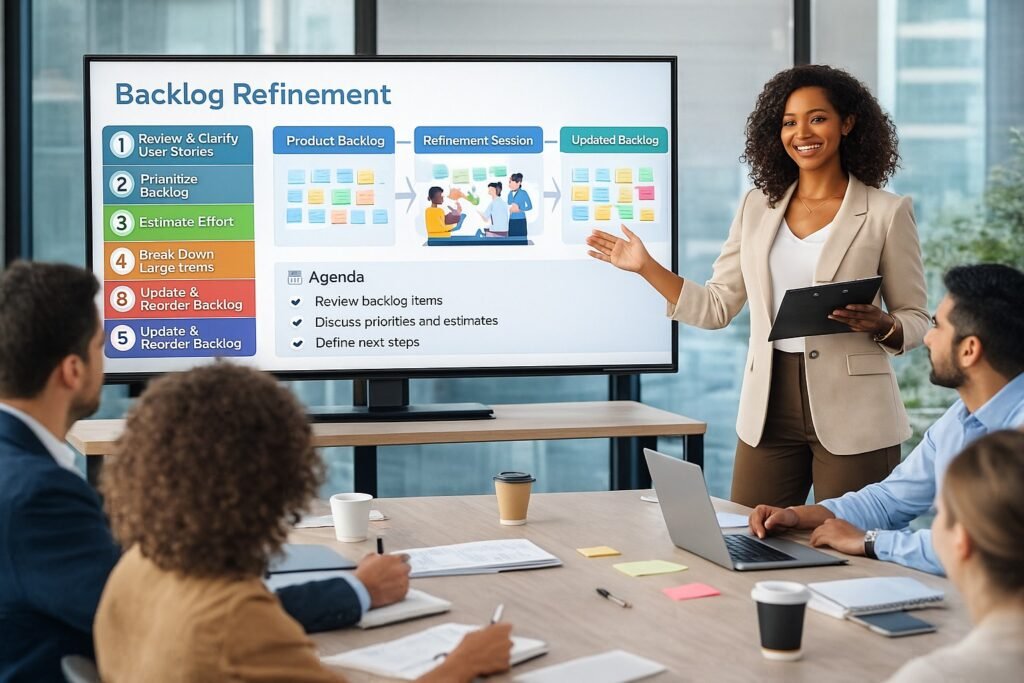
Backlog refinement is a crucial process within Agile project management, allowing teams to maintain a clear, organized, and actionable backlog. This practice not only enhances communication and collaboration among team members but also enables organizations to deliver better value to their customers. In this article, we will explore the significance of backlog refinement, its core principles, and effective techniques for engaging your team. We will also address common challenges, best practices, and the tools available to streamline this essential process in large organizations.
Understanding the Importance of Backlog Refinement Today
Backlog refinement, often referred to as backlog grooming, plays a pivotal role in Agile methodologies, ensuring that the product backlog remains relevant, prioritized, and actionable. In today’s fast-paced business environment, where customer needs and market conditions can shift rapidly, having a well-refined backlog is essential. It enables teams to respond to changes more effectively and ensures that the most important work is prioritized. This agility allows organizations to maintain a competitive edge and deliver products that truly meet customer expectations.
Moreover, backlog refinement encourages teamwork and collaboration. By bringing various stakeholders together product owners, developers, designers, and testers teams can share insights, ask questions, and discuss the feasibility of backlog items. This collective effort ensures that everyone is on the same page regarding priorities and expectations, fostering a culture of transparency and accountability. When all members of the team contribute to the refinement process, it leads to a shared understanding of project goals and a stronger commitment to achieving them.
Finally, a well-maintained backlog enhances planning and execution. When backlog items are clearly defined and prioritized, teams can better estimate the effort required for each task. This leads to more accurate sprint planning and a greater likelihood of meeting project deadlines. In essence, backlog refinement is not just about managing tasks; it is about optimizing processes, enhancing team dynamics, and ultimately driving project success.
Key Principles for Effective Backlog Refinement Sessions
To conduct effective backlog refinement sessions, certain key principles must be adhered to. First and foremost, regularity is important. Scheduling consistent refinement sessions whether bi-weekly or monthly helps keep the backlog fresh and manageable. Establishing a routine builds a healthy habit within the team, ensuring that backlog items are continuously evaluated and updated in alignment with project goals and stakeholder feedback. Consistency helps avoid overwhelming backlog sizes that can hinder productivity and clarity.
Another essential principle is inclusion. Engaging various stakeholders in the refinement process is crucial for gathering diverse perspectives. This includes not just the product owner and development team but also key business stakeholders and customers. Their insights can illuminate potential pitfalls, opportunities, or necessary changes that may not be apparent to the development team alone. Inclusion fosters a collaborative environment where everyone feels heard and valued, ultimately leading to a richer backlog with well-defined priorities.
Lastly, prioritize clarity and detail. Each backlog item should include clear acceptance criteria and a comprehensive description of the task. This not only sets clear expectations but also aids in the estimation process. When team members understand the requirements and the rationale behind each item, they are better equipped to provide accurate estimates and execute the tasks effectively. Detailed backlog items also reduce ambiguity, lowering the risk of misunderstandings later in the project cycle.
How to Identify and Prioritize Backlog Items Efficiently
Identifying and prioritizing backlog items is a critical skill for any product owner or project manager. The first step is to gather feedback from customers, stakeholders, and team members. Utilizing surveys, interviews, and direct conversations can provide valuable insights into what features or enhancements users find most compelling. This feedback should be continuously integrated into the backlog, ensuring that the team is always aligned with user needs and market demands.
Next, applying prioritization frameworks can help in organizing backlog items effectively. Techniques such as MoSCoW (Must have, Should have, Could have, Won’t have), the Value vs. Effort matrix, or Weighted Shortest Job First (WSJF) can offer structured approaches to prioritize based on urgency, value, and resource availability. By using these methodologies, teams can objectively determine which items should receive immediate attention and which can wait, ensuring that the most impactful tasks are completed first.
Finally, it’s essential to regularly re-evaluate priorities. As market conditions change or new insights are gathered, the initial priorities may shift. Holding periodic backlog refinement sessions allows teams to reassess the backlog and adjust priorities accordingly. This adaptive approach ensures that teams remain responsive to changes, maximizing their efficiency and the value delivered to customers.
Techniques for Engaging Your Team During Refinement
Engaging your team during backlog refinement sessions can greatly enhance the quality of the process. One effective technique is to set a clear agenda before each session. By outlining the objectives and expected outcomes, team members can come prepared with insights and suggestions. This clarity sets a productive tone and encourages active participation, making everyone feel responsible for the refinement process.
Another technique is to use visual aids, such as boards or digital tools, to illustrate the backlog items during discussions. Visual representations can help team members quickly grasp concepts and prioritize accordingly. Collaboration tools like Miro or Trello can facilitate this process, allowing teams to move items around as they discuss priority shifts. Visual aids can also help maintain engagement by providing a dynamic and interactive way to work through the backlog.
Lastly, consider incorporating icebreakers or team-building activities at the beginning of each session. Engaging in light, fun activities can create a relaxed atmosphere that encourages open communication. When team members feel comfortable with one another, they are more likely to share their opinions and contribute to the refinement process. A collaborative, engaging environment not only boosts morale but also leads to better outcomes during backlog refinement.
Common Challenges in Backlog Refinement and Solutions
Backlog refinement is not without its challenges. One common issue is a lack of engagement from team members. This can stem from unclear objectives or a perceived lack of importance of the session. To address this, it’s crucial to emphasize the value of backlog refinement in achieving project success. Share success stories from previous projects to illustrate how effective refinement has led to improved outcomes, and encourage team members to voice their opinions during sessions.
Another challenge is overloading the backlog, where teams find themselves with too many items that are insufficiently defined. This situation can lead to confusion and inefficiency. A solution is to regularly declutter the backlog by archiving or removing items that no longer align with project goals. Set criteria for backlog items based on relevance, feasibility, and priority, ensuring that only actionable and valuable tasks remain in focus.
Finally, estimation difficulties can pose a significant challenge during backlog refinement. Team members may struggle to provide accurate estimates due to unclear requirements or varying levels of experience. To mitigate this, implement consistent estimation techniques, such as Planning Poker or T-shirt sizing, and provide training for team members to improve their estimation skills. Ensuring that everyone understands the process and criteria for estimation will lead to more accurate planning and execution.
Best Practices for Maintaining a Healthy Backlog
Maintaining a healthy backlog requires diligence and discipline. One best practice is to regularly review and prioritize backlog items, ensuring that they remain relevant and actionable. Monthly or bi-weekly review sessions can help teams keep the backlog in check, allowing for adjustments based on feedback and changing market conditions. This practice helps avoid stagnation and ensures that the backlog continues to deliver value.
Another best practice is to enforce clear criteria for adding new items to the backlog. Not every idea or suggestion needs to become a backlog item. Develop a simple framework that evaluates the potential value and feasibility of new items before they are added. This approach helps prevent an overinflated backlog and ensures that only high-impact tasks are pursued.
Lastly, encourage a culture of collaboration and communication within the team. Foster an open environment where team members feel comfortable discussing backlog items, providing feedback, and suggesting changes. Regularly solicit input from team members and stakeholders to gather diverse perspectives, ensuring that the backlog is a living document that evolves with the team’s understanding of project needs.
Tools and Software to Streamline Backlog Refinement
In the digital age, various tools and software can assist in the backlog refinement process, enhancing efficiency and collaboration. Tools like Jira and Asana are designed specifically for Agile project management, enabling teams to create, prioritize, and track backlog items seamlessly. These platforms allow for easy collaboration and transparency, making it simple for team members to stay informed about progress and updates.
Additionally, digital whiteboards like Miro and Mural offer interactive spaces for teams to brainstorm and visualize backlog items. These tools can be especially useful during refinement sessions, where team members can collaboratively prioritize and discuss items in real time, making the process more engaging and productive. Visual representations can enhance understanding and help teams align on priorities.
Finally, leveraging collaboration tools like Slack or Microsoft Teams can facilitate ongoing communication about backlog items outside of refinement sessions. These platforms allow team members to share insights and updates, fostering a continual dialogue that can lead to more effective backlog management. By utilizing these tools, organizations can streamline their backlog refinement processes and enhance overall project efficiency.
Measuring the Success of Your Refinement Process
Measuring the success of your backlog refinement process is crucial for continuous improvement. One effective method is to track metrics such as the average lead time for backlog items. By analyzing how long it takes for items to move from the backlog to completion, teams can identify potential bottlenecks and make necessary adjustments to improve efficiency. Regularly reviewing these metrics can provide valuable insights into the effectiveness of refinement sessions.
Another key metric to consider is stakeholder satisfaction. Gathering feedback from customers and team members can help assess whether the backlog is effectively addressing their needs. Surveys or informal check-ins can provide insights into areas for improvement and help gauge the overall effectiveness of backlog refinement efforts. When stakeholders feel satisfied with the outcomes of the refinement process, it indicates that the team is successfully delivering value.
Finally, conduct regular retrospectives focused on the refinement process itself. Engaging team members in discussions about what worked well and what didn’t can lead to valuable insights for future sessions. By continuously iterating on the refinement process and adapting based on team feedback, organizations can foster a culture of improvement that enhances the overall effectiveness of their backlog management.
Backlog refinement is a fundamental aspect of Agile project management that can significantly impact team performance and project outcomes. By understanding its importance, adhering to key principles, and implementing effective engagement techniques, organizations can tackle common challenges and maintain a healthy backlog. Embracing best practices and utilizing the right tools will further streamline the refinement process, ensuring that teams remain agile and responsive to changing market demands. In today’s business landscape, effective backlog refinement is not just a task; it is a pathway to success.
Hashtags:
BacklogRefinement #AgileManagement #TeamEngagement #ProjectSuccess #ContinuousImprovement
External Source:
For a deeper dive into Agile methodologies and backlog management, visit Scrum Alliance for valuable resources and guidance.
One Comment
Comments are closed.