
Construction Company Business Plan: How To Write One
In the ever-evolving landscape of the construction industry, having a well-structured business plan is not just a luxury but a necessity. A construction company business plan serves as a roadmap, guiding entrepreneurs through the complexities of project management, financial planning, and market positioning. This article will explore the crucial aspects of developing a comprehensive business plan tailored specifically for construction enterprises. Whether you are a seasoned contractor or an emerging player in the field, understanding these components can dramatically influence your success and sustainability in the market.
Understanding the Importance of a Construction Business Plan
A construction business plan is essential for several reasons. First and foremost, it provides clarity on your company’s vision and objectives. By detailing your goals, potential challenges, and strategies to overcome them, the plan serves as a guiding document that keeps you focused on what truly matters. This clarity is pivotal in a domain where projects can be complex and multifaceted, often leading to costly mistakes if mismanaged.
Additionally, a robust business plan is a critical tool for securing financing. Investors and lenders want to see that you have a structured approach to running your business, understanding market demands, and managing financial risks. A well-articulated plan that includes detailed financial projections can significantly improve your chances of obtaining funds necessary for projects, equipment acquisitions, and growth initiatives.
Lastly, a business plan enables you to adapt to changing market conditions. The construction industry is subject to fluctuations, influenced by economic trends, labor market shifts, and technological advancements. A flexible business plan allows you to monitor these changes and adjust your strategies accordingly, ensuring that your company remains competitive and resilient in the face of uncertainty.
Key Components of a Construction Company Business Plan
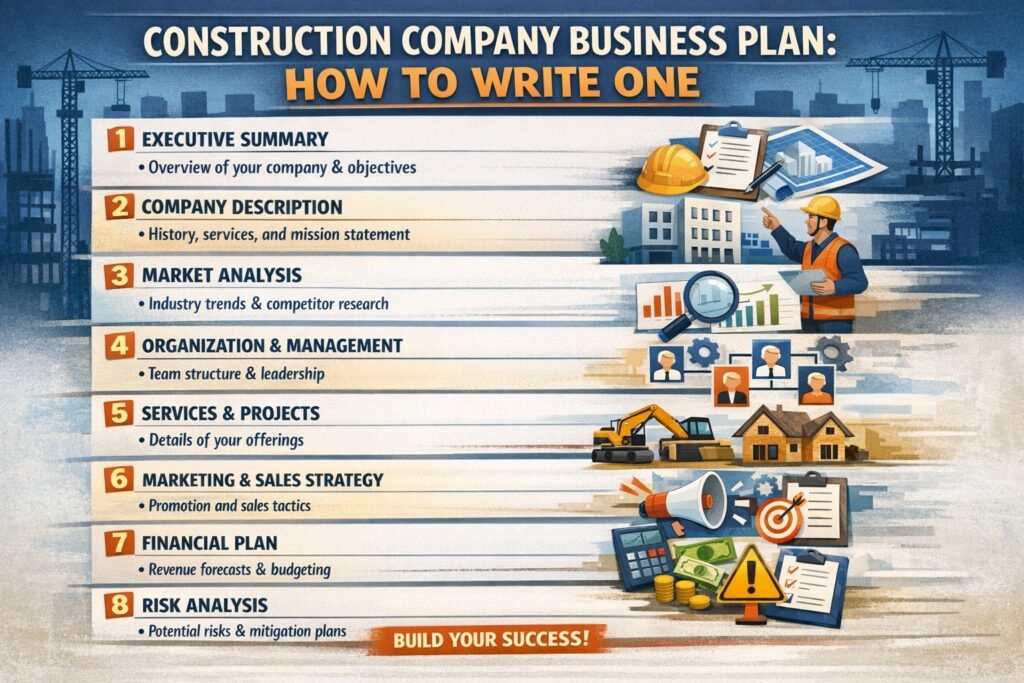
Creating a construction business plan involves several key components that must be meticulously crafted to suit your unique operational context. The executive summary is the first section that potential investors will read, so it should clearly outline your business goals, target market, and unique selling propositions. It should provide a snapshot of your company’s mission, vision, and the strategies you intend to implement to achieve your objectives.
Following the executive summary, the company description elaborates on your business’s structure, ownership, and the services you offer. This section should explain your expertise in the construction field, detailing your core competencies and how they differentiate you from competitors. For instance, if you specialize in eco-friendly building practices, make sure to emphasize this unique aspect in your plan.
Another critical component is the market analysis. This section requires thorough research to understand your target audience, industry trends, and competitive landscape. By analyzing local construction needs, demographics, and potential growth areas, you can create a more tailored approach to your services. This insight not only helps in positioning your brand correctly but also aids in anticipating market shifts that could impact your operations.
Market Research: Identifying Your Construction Niche
Understanding your market niche is paramount for any construction company aiming for long-term success. This starts with conducting thorough market research to identify specific segments that align with your expertise and service offerings. For example, if your company has a strong background in commercial construction, focus your efforts on industries that require such services, like retail or hospitality.
Furthermore, analyzing competitors within your niche will provide valuable insights into their strengths and weaknesses. Understanding what they offer, their pricing strategies, and customer feedback can help you identify gaps in the market that your company can fill. This competitive analysis is crucial; it allows you to develop targeted marketing strategies that highlight your unique offerings while addressing customer pain points that competitors may overlook.
Finally, it’s essential to stay updated on construction industry trends that may influence your chosen niche. For instance, if there’s a growing demand for sustainable building solutions, adapting your services to cater to eco-conscious consumers can put you ahead of the curve. Continual market research will enable you to pivot as necessary, ensuring your business remains relevant and competitive.
Financial Projections: Budgeting for Construction Projects
Accurate financial projections are the backbone of a successful construction business plan. These projections should encompass all anticipated costs, including labor, materials, permits, and equipment. A comprehensive budget not only helps in resource allocation but also sets realistic expectations for profitability and cash flow management.
When preparing your financial projections, it is vital to account for potential variances that may arise during project execution. For instance, unforeseen delays due to weather conditions or supply chain disruptions can lead to increased costs. By including contingencies in your budget, you can safeguard your business against unexpected financial strain.
Additionally, outlining your funding strategies is crucial. Whether you plan to self-finance, seek loans, or attract investors, detailing how you intend to secure the necessary capital for your projects shows financial prudence. Clear financial projections can enhance your credibility and persuade stakeholders of your business’s viability.
Crafting an Effective Marketing Strategy for Contractors
An effective marketing strategy is essential for any construction company seeking to attract new clients and retain existing ones. Start by identifying your target audience and understanding their needs, preferences, and pain points. This understanding will enable you to tailor your messaging and service offerings accordingly, ensuring you reach the right people with the right message.
Digital marketing has become a critical component in the construction sector. Developing a strong online presence through a user-friendly website, engaging social media channels, and targeted digital advertising can significantly increase your visibility. Additionally, leveraging platforms like LinkedIn can connect you with industry professionals and potential clients, further expanding your network.
Don’t forget traditional marketing methods as well. Networking at industry events, participating in local trade shows, and building relationships with real estate agents or architects can lead to valuable referrals. Implementing a mix of both digital and traditional marketing strategies will help you to broaden your reach and establish a strong brand identity in the construction space.
Legal Considerations and Compliance in Construction Plans
Navigating the legal landscape is crucial for construction companies. Compliance with local, state, and federal laws ensures that your business operates within the legal framework, minimizing risks associated with non-compliance. This includes obtaining the necessary licenses, permits, and insurance to protect your business and clients.
Moreover, understanding construction contracts is vital. Contracts outline the terms of engagement with clients, subcontractors, and suppliers, and any ambiguities can lead to disputes and financial losses. Invest time in drafting clear, comprehensive contracts that protect your interests while also being fair to all parties involved.
Additionally, consider employing legal counsel specializing in construction law to review your contracts and compliance requirements. This investment can save you from potential legal headaches down the line, allowing you to focus on what you do best—building quality structures and delivering exceptional service.
Building a Strong Team: Roles and Responsibilities Defined
A construction company is only as strong as its team. Defining roles and responsibilities clearly is essential for ensuring that every team member understands their contribution to the overall success of the project. Start by identifying the key roles necessary for your operations, such as project managers, site supervisors, and skilled laborers.
Once roles are identified, create detailed job descriptions that outline specific responsibilities, required skills, and performance expectations. This clarity not only helps in recruitment but also sets a benchmark for accountability within the team. Regular performance reviews and feedback can further enhance individual and team productivity.
Investing in training and development for your team is equally important. The construction industry is rapidly evolving, with new technologies and methodologies emerging regularly. Providing ongoing training opportunities not only empowers your workforce but also fosters loyalty and retention, ultimately contributing to your company’s success.
Monitoring and Adjusting Your Business Plan Over Time
A business plan should not be a static document; it requires continuous monitoring and adjustments based on performance and market conditions. Regularly reviewing your business plan enables you to identify what strategies are working and which areas need improvement. This proactive approach ensures that you stay aligned with your goals while adapting to industry shifts.
Establish key performance indicators (KPIs) that are relevant to your construction projects, such as project completion times, budget adherence, and client satisfaction ratings. Tracking these metrics will provide valuable insights into the effectiveness of your strategies and highlight areas where adjustments may be necessary.
Ultimately, being flexible and willing to pivot your strategies based on data-driven insights can significantly enhance your company’s resilience. By regularly revisiting and refining your business plan, you position your construction company for sustained growth and success in an ever-changing market.
In conclusion, a well-crafted construction company business plan is more than just a document; it is a strategic tool that can guide your enterprise towards long-term success. By understanding its importance, identifying key components, conducting market research, and continuously monitoring progress, you can navigate the complexities of the construction industry with confidence. The road ahead may be filled with challenges, but with a solid business plan, your construction company can build a strong foundation for future achievements.
Hashtags: #ConstructionBusiness #MarketResearch #FinancialProjections #TeamBuilding #BusinessPlan
External Source: For more insights on developing a construction business plan, visit ‘7 easy tips for writing your construction business plan’ at https://www.sage.com/en-gb/blog/writing-construction-business-plan/
Further insights at https://www.pmresourcehub.com/
One Comment
Comments are closed.