
Development Goals Examples: Best Practices for High Performance
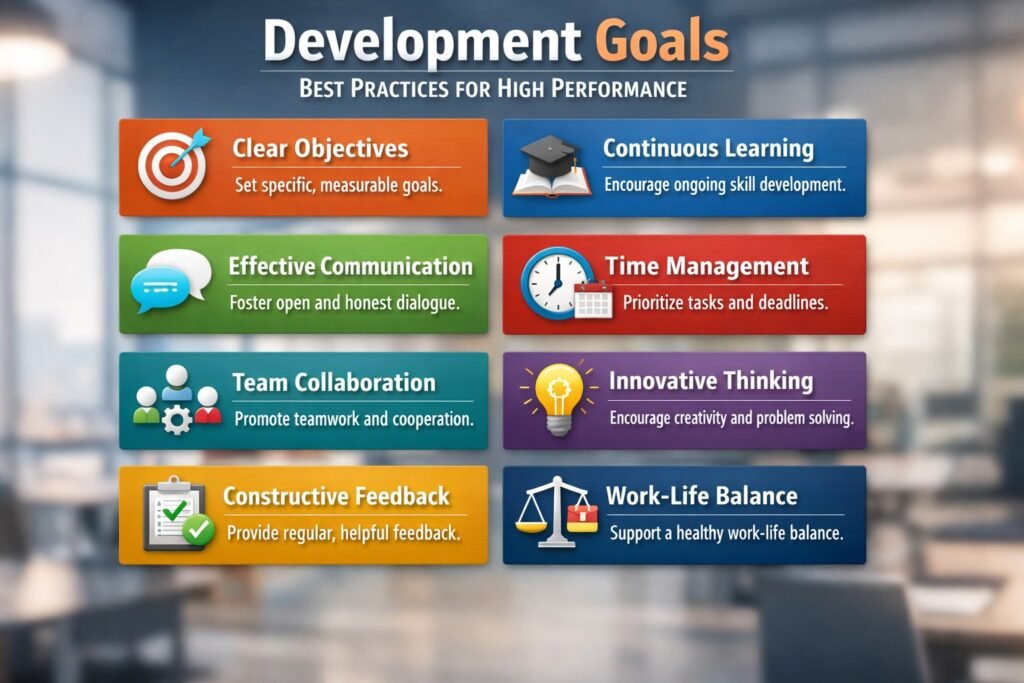
Developing a clear strategy for business growth is crucial for any organization. This often involves setting development goals that provide direction and measurable outcomes. In this article, we will explore Development Goals Examples, why they matter, how they align with corporate strategy, and best practices for achieving them. We will also discuss the importance of measuring success and avoiding common pitfalls along the way. With these insights, organizations can set themselves up for robust growth and sustained success.
Understanding Development Goals: A Quick Overview
Development goals are specific, measurable objectives that organizations set to guide their growth and improvement. These goals can range from enhancing employee skills to increasing market share, ultimately aiming to drive the company forward. By clearly defining these goals, businesses can better align their strategies and resources, focusing on what truly matters for their development journey.
To create effective development goals, it’s essential to ensure they are SMART: Specific, Measurable, Achievable, Relevant, and Time-bound. This framework helps businesses to set clear expectations and timelines, increasing the likelihood of achieving the desired outcomes. For instance, instead of simply stating the goal as “improve customer service,” a SMART goal would be “increase customer satisfaction scores by 20% over the next six months.” This clarity allows everyone in the organization to understand what success looks like.
Furthermore, development goals serve as a motivational tool for employees. When team members understand the overarching goals of the organization, they can see how their contributions directly impact business success. This not only fosters a sense of purpose but also enhances employee engagement and morale, leading to a more productive work environment.
Why Setting Development Goals Matters for Organizations
Setting development goals is paramount for organizations looking to maintain a competitive edge in their industry. These goals offer a framework for decision-making, helping leaders prioritize initiatives that drive growth and innovation. When development goals are clearly articulated, they create alignment across departments, ensuring that everyone is working toward the same objectives.
Moreover, development goals facilitate resource allocation. Organizations can assess where they need to invest their time, talent, and finances. For instance, if a goal is to boost digital marketing efforts, resources can be redirected toward hiring digital marketing specialists or investing in new technology. This strategic alignment ensures that resources are not wasted on initiatives that do not contribute to overall goals.
In a rapidly changing business landscape, organizations must be agile and adaptable. Development goals allow companies to monitor their progress and make necessary adjustments along the way. This ability to pivot ensures that they can respond to emerging trends or shifts in consumer behavior, ultimately enhancing their resilience and long-term viability.
Examples of Effective Development Goals for Enterprises
-
Expand Market Reach: A common development goal for enterprises is to expand their market share. For example, a technology company might aim to increase its customer base by 30% within the next year by launching targeted marketing campaigns and enhancing product offerings. This goal is specific and measurable, allowing the company to track its progress through sales data and customer feedback.
-
Enhance Employee Skills: Investing in employees is crucial for any organization. A development goal such as “increase training hours per employee by 50% over the next fiscal year” demonstrates a commitment to workforce development. This not only improves employee satisfaction but also boosts productivity and innovation within the company.
-
Improve Sustainability Practices: As environmental issues take center stage, many organizations set development goals related to sustainability. A goal like “reduce carbon emissions by 25% over the next five years” not only aligns with corporate social responsibility but also appeals to environmentally conscious consumers, potentially expanding the customer base.
Aligning Development Goals with Corporate Strategy
Aligning development goals with the overall corporate strategy is essential for ensuring that all efforts contribute to the organization’s vision. This alignment can be achieved through various methods, including regular strategy reviews and stakeholder engagement. By ensuring that development goals resonate with the corporate mission, companies can create a cohesive approach toward growth.
To facilitate this alignment, organizations might use tools such as balanced scorecards or strategic planning sessions. These tools help in translating high-level corporate strategies into actionable development goals. For example, if a corporate strategy emphasizes innovation, development goals could focus on increasing research and development (R&D) spending or launching new product lines.
Moreover, alignment ensures that all departments understand their roles in achieving the organization’s objectives. When employees see how their work contributes to broader goals, they are more likely to be motivated and engaged. This creates a unified organizational culture where everyone is pulling in the same direction, ultimately enhancing collective performance.
Measuring the Success of Development Goals in Business
Measuring the success of development goals is vital for assessing progress and making informed decisions. Organizations can utilize various metrics and KPIs (Key Performance Indicators) to evaluate their performance against set goals. For instance, if a goal involves increasing sales, metrics might include quarterly revenue growth, customer acquisition rates, and sales team performance.
Regularly reviewing these metrics not only provides insights into what is working but also highlights areas that may need adjustment. Companies might implement dashboards that display performance data in real time, promoting a culture of accountability and proactive management. These dashboards can visually represent progress, making it easier for stakeholders to grasp where the organization stands concerning its goals.
Additionally, qualitative measures such as employee feedback and customer satisfaction surveys can complement quantitative data. Understanding the sentiment behind the numbers can offer valuable insights into areas of improvement. Each of these approaches contributes to a comprehensive picture of success, enabling organizations to celebrate achievements and identify opportunities for growth.
Common Pitfalls in Setting Development Goals
Despite the benefits of setting development goals, organizations often stumble into common pitfalls. One significant issue is the lack of clarity. Goals that are vaguely defined can lead to confusion among employees, resulting in misaligned efforts and wasted resources. To avoid this, organizations must ensure that every goal is articulated clearly and is understood by all stakeholders.
Another common pitfall is the failure to involve employees in the goal-setting process. When development goals are set in a vacuum without input from the team members who will be responsible for achieving them, it can lead to disengagement. Involving employees in this process fosters a sense of ownership and accountability and increases the likelihood of successful outcomes.
Lastly, organizations may fall into the trap of setting too many goals. While it might seem ambitious to strive for numerous objectives, this can dilute focus and hinder progress. It’s often more effective to prioritize a few critical goals that align with the corporate strategy and can be realistically achieved within a set timeframe.
Best Practices for Development Goals Examples
To effectively achieve development goals, organizations can adopt several best practices. First, it’s essential to create an action plan that outlines the steps required to reach each goal. This plan should include specific tasks, timelines, and responsible parties, ensuring that everyone knows their role in the process.
Another best practice is to establish regular check-ins to monitor progress. Frequent reviews allow organizations to assess whether they are on track and make adjustments as necessary. These check-ins also provide opportunities for celebrating small wins, which can boost morale and motivate teams to continue working toward their goals.
Finally, fostering a culture of continuous improvement can significantly enhance goal achievement. Encouraging employees to share feedback and ideas for improvement not only enhances engagement but also leads to innovative solutions. By creating an environment where continuous learning and adaptation are valued, organizations are better equipped to meet and surpass their development goals.
Future Trends in Development Goals for Organizations
As the business landscape evolves, so too will the approach to development goals. One emerging trend is the increased emphasis on sustainability and social responsibility. Organizations are likely to set more goals related to environmental impact and ethical practices as consumers become more socially conscious. This shift aligns corporate success with positive societal contributions, fostering brand loyalty and trust.
Another trend is the rise of technology-driven goals, particularly in areas like data analytics and digital transformation. Organizations will increasingly focus on leveraging data to inform their decision-making and set informed development goals. This trend not only streamlines processes but also enhances the ability to measure success in real time.
Lastly, flexibility will become a cornerstone of development goals. In a world characterized by rapid change, organizations must adopt a more agile approach to goal setting. This might involve setting shorter-term goals that can be adapted as circumstances evolve, allowing businesses to respond swiftly to new challenges and opportunities. Embracing flexibility will enable organizations to remain competitive and thrive in dynamic environments.
Setting effective development goals is a strategic endeavor that can significantly impact an organization’s success. By understanding the importance of these goals, aligning them with corporate strategies, and following best practices, businesses can ensure they are on the right path toward achieving their objectives. As trends shift towards sustainability and flexibility, organizations must remain agile in their approach. With the right focus and commitment, development goals can be a powerful tool for growth and innovation.
Meta Description: Discover effective development goals examples for organizations, why they matter, best practices for achieving them, and future trends in corporate strategy. Learn how to align your goals with sustainability and flexibility for optimal success.
Tags: development goals, corporate strategy, business growth, employee engagement, sustainability, goal setting, performance metrics, organizational culture, agile business, future trends
Hashtags: #DevelopmentGoals #CorporateStrategy #BusinessGrowth #Sustainability #AgileBusiness
External Source: For further insights on ‘Four considerations for better goal setting and performance goal setting’ visit McKinsey & company https://www.mckinsey.com/capabilities/people-and-organizational-performance/our-insights/the-organization-blog/four-considerations-for-better-goal-setting-and-performance
Development Goals Examples: Best Practices for High Performance
One Comment
Comments are closed.