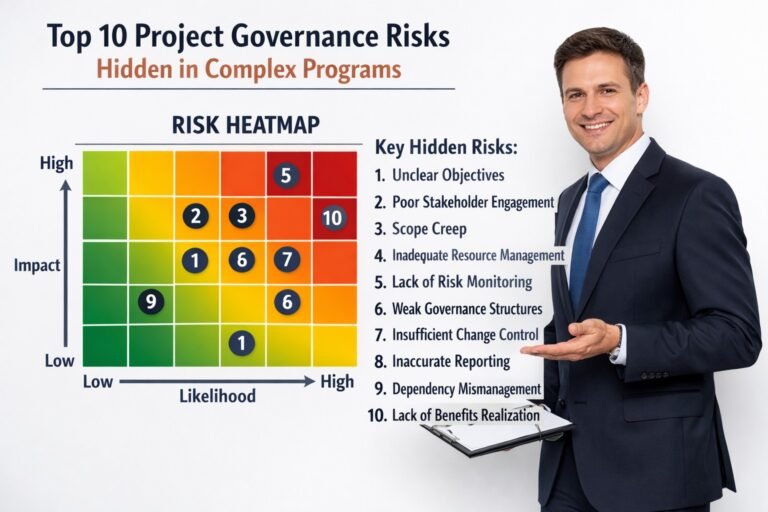
Program Governance vs Portfolio Governance: Strategic Oversight Compared
Understanding the nuances of governance within an organization is crucial for strategic oversight. Program governance and portfolio governance are two vital concepts that often get tangled. Each serves a unique purpose and caters to specific organizational needs. This article aims to dissect both governance types, explore their key differences, and understand their collective impact on strategic value creation.
Understanding Program Governance and Its Role in Strategy
Program governance focuses on the oversight of a collection of related projects aimed at achieving specific objectives. It ensures that the program aligns with organizational strategy and delivers value through coordinated management. A well-defined program governance structure involves stakeholders at various levels, from project managers to executive sponsors, ensuring that everyone is aligned on goals and outcomes. By establishing clear project governance roles and responsibilities, organizations can more effectively manage resources, timelines, and risks associated with complex programs.
The role of program governance extends beyond mere oversight; it also includes decision-making and conflict resolution. With multiple projects running simultaneously, discrepancies can arise, leading to resource contention and misaligned priorities. Effective program governance provides a structured approach for resolving these issues, fostering collaboration among teams, and ensuring that all projects within the program contribute meaningfully to the strategic objectives of the organization.
Moreover, successful program governance can significantly impact an organization’s adaptability to change. As market conditions evolve, programs may need to pivot or reorient their objectives. A governance framework that allows for agility and responsive decision-making can keep programs aligned with the broader business strategy while minimizing disruption. By investing in strong program governance, organizations can enhance their resilience and ensure that they remain competitive.
Defining Portfolio Governance for Corporate Oversight
Portfolio governance entails the oversight of an entire collection of programs and projects, aligning them with the strategic objectives of the organization. This governance layer provides a broader view, focusing on resource allocation, risk management, and performance monitoring across multiple programs. The primary goal of portfolio governance is to ensure that the cumulative output of all programs and projects contributes effectively to the organization’s long-term success.
A key responsibility of portfolio governance is prioritizing initiatives based on their alignment with strategic objectives and available resources. This requires establishing a governance board or committee that can evaluate proposals, assess risks, and allocate funding. By doing so, organizations can avoid overcommitting resources to less valuable initiatives, thereby maximizing returns on investment. The governance framework needs to encompass policies and procedures that facilitate transparency and accountability.
Additionally, portfolio governance plays a significant role in performance measurement. Organizations need to track the progress of various initiatives and assess their contributions to strategic goals. For technology portfolios, the U.S. Government Accountability Office explains how recurring IT portfolio reviews assess oversight, alignment and investment risk. This involves creating KPIs that reflect both individual program performance and overall portfolio health. By instituting a robust portfolio governance framework, organizations can more effectively manage their investments and drive sustainable growth.
Key Differences Between Program and Portfolio Governance
While both program and portfolio governance aim to ensure alignment with organizational strategy, their focus areas differ significantly. Program governance concentrates on the execution and oversight of related projects, whereas portfolio governance encompasses a broader scope, overseeing multiple programs and projects. This distinction is critical, as it affects how resources are allocated, risks are managed, and performance is measured.
Another key difference lies in their governance structures. Program governance typically involves a program manager who leads the coordination efforts, whereas portfolio governance requires a cross-functional governance committee that evaluates and prioritizes initiatives. This hierarchical structure in portfolio governance allows for more strategic decision-making, taking into account the interdependencies and trade-offs between various programs.
Moreover, the time horizons differ between the two governance types. Program governance tends to focus on short to medium-term objectives tied to specific project outcomes, while portfolio governance has a long-term perspective aimed at achieving overarching organizational goals. Understanding these differences can help organizations tailor their governance frameworks to meet their specific strategic needs effectively.
Benefits of Strong Program Governance in Organizations
Implementing strong program governance can yield a multitude of benefits for organizations. One of the primary advantages is enhanced decision-making capabilities. Clear roles, responsibilities, and decision-making structures enable teams to respond quickly to challenges and opportunities. This agility is essential in today’s fast-paced business environment, where the ability to adapt can make or break an initiative.
Another significant benefit is improved risk management. By establishing a structured governance framework, organizations can proactively identify and mitigate potential risks across projects. This includes not only operational risks but also strategic and reputational risks. Strong program governance ensures that potential issues are addressed promptly, which minimizes disruptions and preserves stakeholder confidence in the organization.
Finally, robust program governance fosters a culture of accountability and transparency. When teams understand the governance framework and their individual roles within it, they are more likely to take ownership of their tasks and deliverables. This leads to enhanced performance and a stronger alignment between individual project objectives and the strategic goals of the organization.
How Portfolio Governance Drives Strategic Value Creation
Portfolio governance plays a crucial role in driving strategic value creation within an organization. By overseeing multiple programs and projects, portfolio governance ensures that resource allocation aligns with strategic priorities. This alignment is essential for maximizing returns, as organizations can focus their efforts on initiatives that yield the highest impact on overall performance.
Moreover, effective portfolio governance facilitates better risk management across the organization. By evaluating risks at a portfolio level, governance committees can identify interdependencies and trade-offs between various programs. This holistic view enables organizations to make informed decisions that consider not only the benefits and risks of individual initiatives but also their collective impact on strategic objectives.
Additionally, portfolio governance fosters innovation by allowing organizations to experiment with new ideas while managing potential risks. By creating a structured approach to evaluate and prioritize new initiatives, organizations can strike a balance between pursuing innovative projects and safeguarding existing investments. This innovative spirit, coupled with a strong governance framework, can propel organizations towards sustainable growth and success.
Best Practices for Effective Governance in Programs
To achieve effective program governance, organizations should embrace several best practices. First, defining clear roles and responsibilities is essential. Each member of the governance structure should understand their specific contributions and how they fit into the larger program goals. This clarity not only promotes accountability but also enhances collaboration among diverse teams.
Another best practice is to establish regular communication channels. Frequent updates, meetings, and feedback loops foster a culture of transparency and openness. By keeping all stakeholders informed, organizations can address issues as they arise and ensure that everyone remains aligned on objectives and priorities. This proactive communication strategy can also bolster stakeholder engagement and buy-in.
Finally, organizations should continuously assess and refine their program governance processes, using PMO maturity models to identify capability gaps and improvement priorities. Regular reviews can uncover areas for improvement and adaptability, ensuring that governance structures evolve in line with changing business needs. By adopting a mindset of continuous improvement, organizations can enhance their program governance capabilities and better achieve their strategic objectives.
Aligning Programs and Portfolios for Organizational Success
Aligning programs and portfolios is crucial for ensuring that strategic goals are met within an organization. One way to achieve this alignment is through regular portfolio communication and review practices, where program performance is assessed against strategic objectives. These reviews allow organizations to adjust priorities and allocate resources accordingly, creating a cohesive approach to achieving goals.
Another key aspect of alignment is fostering collaboration between program and portfolio managers. By encouraging open dialogue, organizations can ensure that program managers understand portfolio priorities and vice-versa. This collaboration can lead to more effective resource allocation and risk management, ultimately enhancing the chances of success for both programs and the overall portfolio.
Lastly, organizations should invest in training and development for both program and portfolio governance teams. Strengthening their skills and knowledge will enable them to navigate the complexities of alignment more effectively. This investment in human capital can lead to improved decision-making and higher success rates for initiatives across the organization.
Future Trends in Governance: What to Expect Ahead
As organizations evolve, so too will the landscape of governance. One future trend is the increasing use of data analytics in governance practices. Leveraging data can provide insights into program performance and portfolio health, enabling informed decision-making. Organizations that adopt data-driven governance frameworks will likely gain a competitive edge in the marketplace.
Another trend is the growing emphasis on agile governance. Traditional governance structures can be rigid, hindering responsiveness. The future will likely see a shift towards more flexible governance models that adapt to changing business conditions and project requirements. This agility will be essential for organizations striving to remain innovative and competitive.
Finally, the role of technology in governance will continue to expand. Digital tools and platforms will enhance collaboration, streamline communication, and improve project tracking. Organizations that embrace these technologies will not only augment their governance capabilities but also foster a culture of transparency and accountability.
In summary, understanding the distinctions between program governance and portfolio governance is crucial for organizations striving for strategic success. Each type of governance serves its unique purpose within the broader organizational framework, contributing to value creation and sustainable growth. By investing in strong governance practices and aligning programs with portfolios, organizations can effectively navigate the complexities of today’s business environment.
Tags: Program Governance, Portfolio Governance, Strategic Oversight, Corporate Strategy, Risk Management, Decision-Making, Organizational Success, Governance Framework, Resource Allocation, Innovation
Hashtags: #ProgramGovernance #PortfolioGovernance #StrategicOversight #CorporateSuccess #RiskManagement