
Project Manager vs Program Manager: Top 10 Key Differences
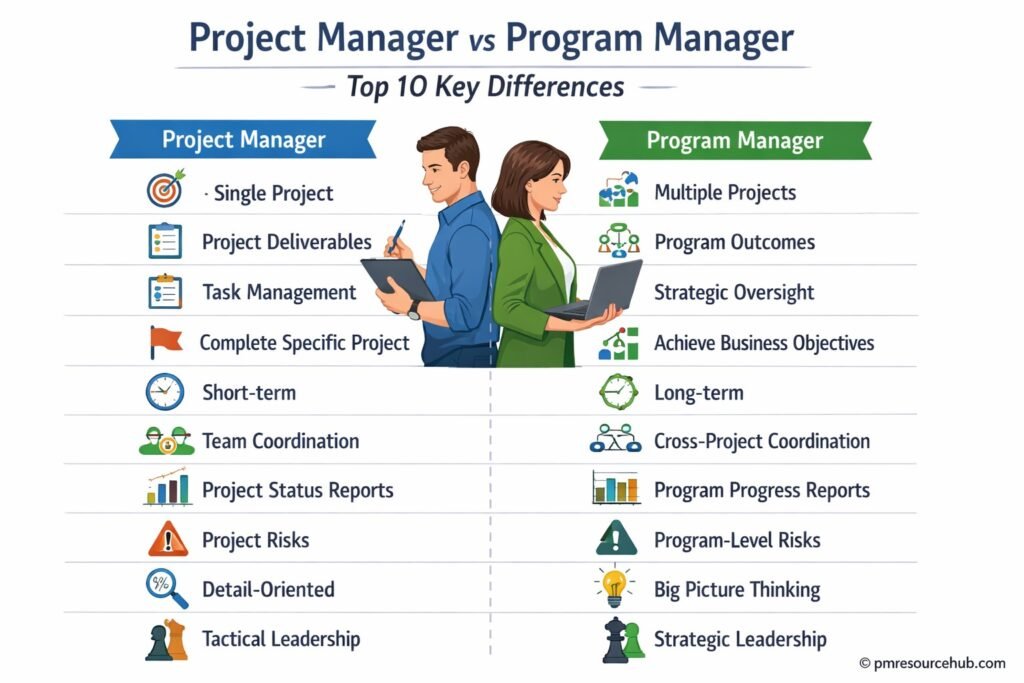
The distinctions between Project Manager vs Program Manager are often misunderstood, yet they play pivotal roles in the success of large organizations. Both positions involve leadership, management, and strategic planning, but they vary greatly in focus, scope, and responsibilities. Understanding these differences can help organizations optimize their resources and streamline operations. In this blog, we’ll delve into the top ten differences between Project Manager vs Program Manager, offering insights that can benefit both aspiring leaders and seasoned professionals alike.
Understanding the Roles: Project Manager vs Program Manager
At the core of every successful business operation lies effective leadership. Project managers are typically focused on the execution of specific, time-bound initiatives. They oversee individual projects, ensuring that deliverables are produced on schedule and within budget. Their primary responsibility is to achieve project objectives, manage project teams, and maintain quality standards. This role often requires a strong technical background and an acute attention to detail, as project managers must navigate the complexities of project timelines, budgets, and stakeholder expectations.
In contrast, program managers take a broader view, overseeing multiple related projects that contribute to larger organizational goals. They are responsible for aligning these projects with the company’s strategic vision, ensuring that each project supports overarching objectives. Program managers coordinate between various project teams and stakeholders, fostering collaboration and ensuring that resources are allocated effectively across projects. Their role often involves long-term planning and a keen understanding of how individual projects fit into the bigger picture.
The difference in focus between the two roles is stark. While project managers are often caught up in the day-to-day execution, program managers are strategists at heart, looking beyond immediate tasks to ensure that their programs deliver value over time. This means they need to possess a unique blend of skills, including leadership, communication, and an aptitude for strategic thinking.
Focus Areas: Deliverables vs. Strategic Goals
Project managers are primarily concerned with deliverables the tangible outputs of a project. They create detailed project plans, set timelines, and manage tasks to ensure that every component is completed efficiently. Their focus is on the ‘what’ and ‘when’ what needs to be done and when it should be completed. Success is measured through specific project metrics, such as completion time, budget adherence, and quality of deliverables. Essentially, project managers are the guardians of project execution, ensuring that all moving parts work seamlessly together.
On the other hand, program managers emphasize strategic goals and outcomes. Their role involves looking at the ‘why’ behind each project, understanding how it contributes to the organization’s mission and objectives. Program managers assess the interdependencies between projects and make decisions that align with the broader vision of the organization. They often develop performance indicators that go beyond project-specific metrics, focusing instead on the impact of various projects on the organization’s long-term success.
This difference in focus shapes the way both roles approach their work. While project managers may prioritize task completion and immediate results, program managers maintain a broader perspective, often needing to make trade-offs between projects to optimize overall success. This strategic alignment is crucial in today’s fast-paced business environment, where organizations must be agile and responsive to changes in their operating landscape.
Timeframes: Short-Term Projects vs. Long-Term Programs
Timeframes are another critical point of differentiation between project managers and program managers. Project managers typically operate on short-term timelines, with defined start and end dates for each initiative. Their work revolves around executing projects within these constraints, which often means quick decision-making and agile problem-solving skills. The urgency of completing tasks often leads project managers to focus on immediate outcomes and deliverables rather than long-term implications.
Conversely, program managers engage in long-term planning and evaluation. Programs can span several years, encompassing multiple projects that evolve over time. This extended timeframe allows program managers to consider factors such as market trends, technological advancements, and organizational capacity when making strategic decisions. They are responsible for ensuring that the program remains aligned with the company’s mission and adapts to changing circumstances.
The differing timeframes create unique challenges for each role. Project managers must be adept at managing short bursts of activity, often juggling multiple tasks and deadlines simultaneously. Meanwhile, program managers require patience and foresight, as they navigate complex interdependencies and long-term objectives. This distinction significantly influences how each manager approaches their responsibilities and measures success.
Scope Management: Project Boundaries vs. Program Flexibility
Scope management is a vital skill for both project and program managers, yet their approaches differ significantly. Project managers are tasked with defining and controlling the project scope, ensuring that all project deliverables are completed as specified. They establish clear boundaries for what is included in the project and what is not, often utilizing tools like scope statements and project charters to set expectations. This rigid framework helps prevent scope creep, which can derail timelines and budgets.
In contrast, program managers enjoy a degree of flexibility in their approach to scope. Since they oversee multiple projects, program managers must be adaptable when it comes to shifting priorities or reallocating resources. They often manage a portfolio of projects that may change based on strategic needs, market conditions, or emerging opportunities. This dynamic environment requires program managers to be skilled negotiators, able to balance competing interests and make informed decisions about where to invest resources for maximum impact.
The difference in scope management styles reflects the nature of the respective roles. While project managers focus on delivering what was initially promised, program managers must be prepared to pivot and adjust as organizational needs evolve. This flexibility can foster innovation and enable organizations to respond effectively to challenges, ultimately contributing to long-term success.
Resource Allocation: Individual Teams vs. Cross-Functional Needs
Resource allocation is a critical function for both project and program managers, albeit with different focuses. Project managers typically work with a defined set of resources team members, budgets, and tools specific to their project. They are tasked with efficiently utilizing these resources to achieve project goals. Effective resource management requires project managers to coordinate tasks, monitor workloads, and ensure that team members are not stretched too thin.
Program managers, however, operate on a broader scale when it comes to resource allocation. They must consider the needs of multiple projects, often requiring collaboration across various departments. This can involve negotiating for shared resources and balancing competing demands to ensure that all projects receive the support they need. Program managers must also be adept at evaluating which projects align best with strategic priorities and allocating resources accordingly.
The approach to resource allocation can significantly impact project and program success. Project managers focus on optimizing limited resources for immediate results, while program managers take a holistic view, ensuring that resource distribution aligns with organizational goals. This dynamic often leads to more efficient resource utilization across the organization, fostering a culture of collaboration and innovation.
Risk Management: Project Risks vs. Program-Level Challenges
Risk management is a fundamental aspect of both project and program management, yet the scope of risks they address varies significantly. Project managers are primarily focused on identifying and mitigating risks specific to their projects. They conduct risk assessments, develop mitigation strategies, and create contingency plans to address potential issues that could impact project timelines or outcomes. Their goal is to minimize risks to ensure successful project delivery.
Program managers, on the other hand, must consider risk at a program level, analyzing how risks within individual projects could affect the overall program. They must assess interdependencies and identify systemic risks that could impact multiple projects or the organization as a whole. This broader perspective allows program managers to implement strategies that address risks across the portfolio, ensuring that the entire program remains resilient and adaptable.
The difference in risk management approaches highlights the varying levels of responsibility for each role. Project managers must be diligent and detail-oriented in managing project risks, while program managers need to be strategic thinkers, capable of anticipating and addressing risks that span multiple projects. This distinction is particularly important in complex organizations, where the interplay of various projects can create unique challenges that require coordinated risk management efforts.
Stakeholder Engagement: Project Teams vs. Broader Stakeholders
Stakeholder engagement is crucial for both project and program managers, but their focus and methods differ. Project managers primarily engage with stakeholders directly related to their specific projects, such as team members, clients, and sponsors. They facilitate communication, gather feedback, and ensure that stakeholders are aligned with project objectives. This direct engagement is essential for building trust and ensuring that the project meets the needs of those involved.
In contrast, program managers must engage with a broader range of stakeholders, including executives, department heads, and external partners. Their role involves fostering collaboration across multiple projects and ensuring that all stakeholders understand how each project contributes to the organization’s strategic goals. Program managers often host stakeholder meetings, provide updates on program progress, and create communication strategies to keep everyone informed and engaged.
This difference in stakeholder engagement highlights the respective roles’ varying levels of influence and responsibility. Project managers focus on managing relationships within their project scope, while program managers must cultivate relationships that span the organization. This ability to engage and communicate effectively with diverse stakeholders is essential for driving program success and fostering a culture of collaboration.
Skills and Competencies: Technical Know-How vs. Leadership Qualities
When it comes to the skills and competencies required for success, Project Manager vs Program Managers exhibit distinct differences. Project managers often need a strong technical foundation related to their specific industry or project type. Familiarity with project management methodologies, tools, and techniques is essential for effectively executing projects. Their role often demands problem-solving skills, attention to detail, and the ability to manage timelines and budgets meticulously.
Conversely, program managers focus more on leadership qualities and strategic thinking. While they may possess technical knowledge, their primary role is to inspire and lead teams across multiple projects. Effective program managers excel in communication, collaboration, and stakeholder management, as they must bring diverse teams together to achieve a common goal. Leadership qualities such as emotional intelligence, adaptability, and conflict resolution are critical for navigating the complexities of program management.
These differences in skills and competencies dictate how each role operates within an organization. Project managers are often seen as task-oriented leaders, while program managers are viewed as strategic visionaries. This distinction shapes the dynamics of team interactions and influences the overall success of both projects and programs.
Conclusion – Project Manager vs Program Manager
Understanding the differences between Project Manager vs Program Manager is essential for organizations seeking to optimize their operations. By clearly defining roles, responsibilities, and approaches, businesses can enhance collaboration, streamline processes, and ultimately achieve their strategic goals. Embracing the unique strengths of each role can lead to greater innovation and adaptability in today’s ever-changing corporate landscape.
Hashtags: #ProjectManagement #ProgramManagement #Leadership #CorporateStrategy #BusinessSuccess
Call to Action: Explore more about effective Project Manager vs Program Manager at Asana
Discover More great Project Management resources at: