
Top 10 PRINCE2 Governance Principles Explained
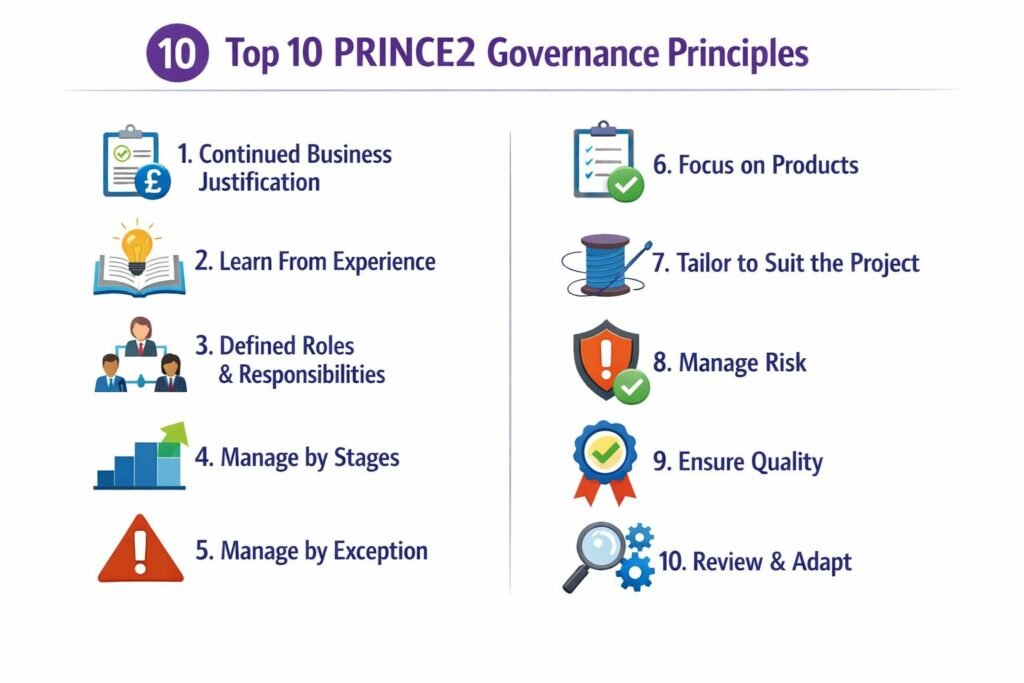
Understanding governance in project management is crucial for ensuring success, especially in large organizations. PRINCE2 (PRojects IN Controlled Environments) is a structured project management method that emphasizes governance principles to guide projects toward achieving their objectives. This article will break down the top 10 PRINCE2 governance principles in a simple and digestible way, making them relatable to anyone involved in project management.
Understanding PRINCE2 Governance Principles for Projects
PRINCE2 governance principles form the backbone of effective project management. These principles help project managers maintain control over the project lifecycle, ensuring alignment with organizational goals and stakeholder expectations. The principles advocate for a structured approach to project management while allowing flexibility to adapt to different organizational contexts. This blend of structure and adaptability is what makes PRINCE2 a popular choice in the corporate world.
At its core, PRINCE2 insists on a clear definition of roles and responsibilities, ensuring everyone involved knows what is expected of them. This clarity reduces confusion and increases accountability, leading to better project outcomes. Governance principles in PRINCE2 also stress the importance of regular reviews and audits, which provide an opportunity to assess progress and make necessary adjustments along the way.
Finally, PRINCE2’s governance principles focus on the importance of stakeholder engagement and communication. Projects rarely exist in a vacuum, and understanding the needs and concerns of stakeholders is vital for successful project delivery. By maintaining open lines of communication and actively involving stakeholders throughout the project lifecycle, PRINCE2 governance principles contribute to fostering trust and collaboration among all parties involved.
The Importance of Clearly Defined Roles and Responsibilities
Having defined roles and responsibilities is one of the cornerstones of effective project governance. In a PRINCE2 framework, each member of the project team has specific roles, which facilitates accountability and decision-making. These roles range from the project board, responsible for the overall direction, to team members who execute day-to-day tasks. This clarity ensures that everyone knows their part in the project, leading to a more organized and efficient workflow.
Moreover, well-defined roles help in resource allocation. When responsibilities are clear, it becomes easier to assign tasks to individuals or teams based on their expertise and capacity. This targeted approach not only enhances productivity but also aids in managing conflicts, as everyone understands their boundaries and the expectations associated with their roles. Ultimately, this leads to a more harmonious working environment, which is essential for project success.
Lastly, clearly defined roles and responsibilities enhance the reporting structure within a project. In a PRINCE2 environment, there are established lines of authority and communication that facilitate effective reporting and escalation of issues. When team members know who they report to and who they can turn to for support, it minimizes misunderstandings and streamlines decision-making processes, keeping the project on track and aligned with its objectives.
Managing Stakeholder Engagement Through Governance Principles
Stakeholder engagement is a critical element of project success, and PRINCE2 governance principles provide a structured way to manage this engagement effectively. The first step is to identify all stakeholders at the outset of the project. Understanding who has an interest in the project and the influence they wield can help in tailoring communication strategies to meet their needs. This proactive approach enables project managers to develop a stakeholder engagement plan that considers the varying levels of interest and influence.
Regular communication is another key aspect of managing stakeholder engagement. PRINCE2 encourages project managers to maintain transparent and open lines of communication with stakeholders throughout the project lifecycle. This involves not just sharing updates but also actively seeking input and feedback, which helps to keep stakeholders invested in the project’s success. By fostering an environment of collaboration, project managers can build stronger relationships with stakeholders, which can be advantageous when facing challenges.
Additionally, PRINCE2 governance principles advocate for the prioritization of stakeholder concerns during decision-making processes. By considering stakeholder perspectives, project managers can make informed choices that not only advance the project but also uphold stakeholder interests. This balanced approach to stakeholder engagement helps in reducing resistance to change and increases the likelihood of project acceptance and satisfaction upon delivery.
Effective Communication Strategies in PRINCE2 Governance
Communication is the lifeblood of any project, and PRINCE2 governance principles emphasize the need for effective communication strategies. The framework encourages project managers to develop a communication plan, which outlines how information will be disseminated to different stakeholders. This plan should specify the frequency, format, and channels of communication, ensuring that all stakeholders receive timely and relevant updates.
Using diverse communication channels can also enhance engagement. In the context of PRINCE2, utilizing a mix of meetings, emails, reports, and stakeholder workshops can cater to various preferences and increase the likelihood of stakeholder buy-in. By adapting communication methods to suit the audience, project managers can foster a more inclusive environment where feedback is welcomed and valued.
Furthermore, effective communication in PRINCE2 governance extends to conflict resolution. When issues arise, having a clear communication strategy allows for swift identification and resolution. Open dialogue can facilitate discussions around problems, leading to collaborative solutions that satisfy multiple stakeholders. By addressing conflicts proactively, project managers can maintain momentum and keep the project aligned with its objectives.
Aligning Project Objectives With Organizational Goals
One of the key tenets of PRINCE2 governance is the alignment of project objectives with the overarching goals of the organization. This alignment ensures that the project contributes to the strategic vision and mission of the organization, maximizing its value. At the beginning of the project, stakeholders must clearly articulate their objectives and how these fit within the larger organizational context. This clarity can serve as a north star throughout the project lifecycle.
The alignment process involves regular reviews and assessments to verify that the project is still on track to meet its objectives. These reviews act as checkpoints, where teams can assess whether their work aligns with the strategic goals of the organization. By incorporating this feedback loop, organizations can make informed decisions about necessary adjustments to keep the project aligned with its strategic vision.
Moreover, aligning project objectives with organizational goals fosters stakeholder confidence. When stakeholders see that a project is directly contributing to their strategic objectives, they are more likely to support it actively. This shared understanding can elevate the project’s priority within the organization and increase the resources allocated to it, further enhancing the potential for successful delivery.
Risk Management: A Key Component of PRINCE2 Governance
Risk management is a fundamental aspect of PRINCE2 governance principles. Projects invariably come with inherent risks, and the PRINCE2 framework emphasizes the need to identify, assess, and manage these risks proactively. During the initiation phase, project teams should conduct a comprehensive risk assessment to identify potential challenges that could derail the project.
Once risks are identified, it’s crucial to develop a risk management plan that outlines strategies for mitigating them. This plan should include predefined responses for various risk scenarios, ensuring that the team is prepared to tackle challenges as they arise. By actively managing risks, organizations can minimize negative impacts on the project and maintain momentum toward achieving their objectives.
Additionally, continuous monitoring of risks is vital. In a dynamic project environment, new risks may emerge, while existing ones may evolve. The PRINCE2 governance principles stipulate that regular risk reviews should be conducted to assess the current risk landscape. By doing so, project teams can adapt their risk management strategies as needed, ensuring that they are always one step ahead of potential challenges.
Monitoring and Controlling Projects Using PRINCE2 Principles
Monitoring and controlling are crucial components of PRINCE2 governance. These processes involve tracking project performance against established baselines and making necessary adjustments to keep the project on track. An effective monitoring plan will define key performance indicators (KPIs) and metrics that allow project managers to assess progress at various stages of the project lifecycle.
Regular status updates and performance reviews are essential for maintaining control over the project. PRINCE2 encourages the use of scheduled reviews, where teams can reflect on accomplishments and challenges, ensuring that corrective measures are implemented in a timely manner. By fostering an environment of accountability, project teams can stay aligned with their objectives and adapt to changing circumstances.
Moreover, controlling aspects of the project also involve change management. As projects progress, changes are often necessary to accommodate new information or stakeholder feedback. PRINCE2’s governance principles provide a structured approach for evaluating and approving changes, ensuring that they align with project objectives and do not compromise overall project integrity.
Continuous Improvement: Learning From Each Project Cycle
Continuous improvement is integral to the PRINCE2 governance framework. Each project provides opportunities for learning, and it’s essential for organizations to capture these lessons and apply them to future initiatives. This continuous improvement cycle involves conducting post-project reviews, where teams can reflect on what worked well, what didn’t, and how processes can be enhanced in future projects.
Documenting lessons learned is a best practice in PRINCE2 governance. By compiling insights from each project, organizations can create a repository of knowledge that informs future project planning and execution. This practice not only enhances efficiency but also fosters a culture of learning within the organization, where teams are encouraged to innovate and optimize their approaches.
Finally, implementing continuous improvement practices can lead to increased organizational agility. By learning from past experiences, organizations become better equipped to respond to emerging challenges and changing market conditions. This adaptability is crucial for maintaining competitive advantage in an ever-evolving business landscape.
In conclusion, understanding and implementing the top 10 PRINCE2 governance principles can significantly enhance project management success in large organizations. These principles provide a structured yet flexible approach to managing projects while ensuring alignment with organizational goals. By focusing on clear roles, stakeholder engagement, effective communication, risk management, and continuous improvement, organizations can drive their projects toward successful outcomes. Embracing these principles not only leads to better project delivery but also fosters a culture of collaboration and accountability that can benefit the entire organization.
Tags: PRINCE2, Project Management, Governance Principles, Stakeholder Engagement, Risk Management, Continuous Improvement, Corporate Strategy, Effective Communication, Organizational Goals, Monitoring Projects
Hashtags: #PRINCE2 #ProjectManagement #Governance #StakeholderEngagement #ContinuousImprovement
External Source: For more insights on PRINCE2 methodologies, visit https://www.axelos.com/best-practice-solutions/prince2.
Discover More great insights at
https://pmresourcehub.com/project-reporting/
https://pmresourcehub.com/risk-management/
https://pmresourcehub.com/consulting/