
Top 10 Project Governance Committees That Drive Executive Control
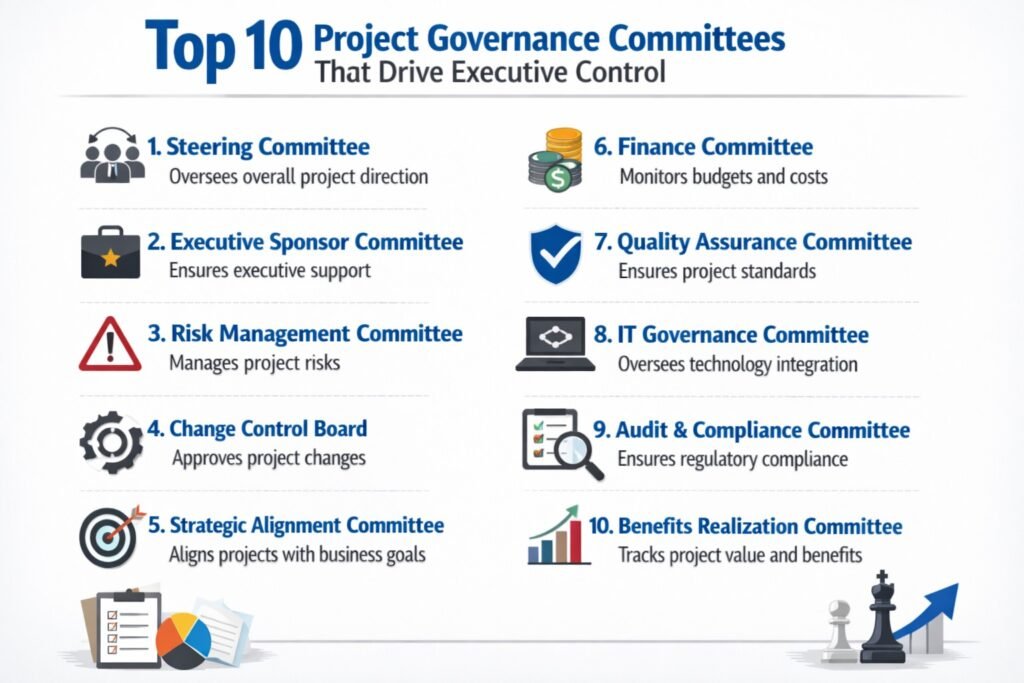
Project governance is a crucial aspect of effective project management, especially in large organizations. Governance committees play a pivotal role in ensuring that projects align with business objectives and are executed efficiently. These committees provide the oversight needed to guide project managers and teams, fostering accountability, transparency, and strategic alignment. In this article, we will delve into the top 10 project governance committees that drive executive control, exploring their functions, responsibilities, and the impact they have on project success.
Understanding the Role of Project Governance Committees
Project governance committees serve as the backbone of strategic project oversight in organizations. They provide structured frameworks that help manage risks, align stakeholder interests, and ensure project delivery meets predefined standards. These committees typically consist of senior executives, project managers, and other key stakeholders who collectively make decisions guiding project direction and resource allocation.
The primary role of these committees is to facilitate communication between various stakeholders, including project teams, executive management, and sometimes even external partners. By establishing clear lines of authority and accountability, governance committees help streamline decision-making processes. They ensure that project objectives align with organizational goals, thus maximizing the value delivered to stakeholders.
Additionally, governance committees are instrumental in setting policies and procedures for project initiation, execution, and closure. They regularly review project performance against established metrics and benchmarks, making adjustments and recommendations as necessary. This ongoing oversight helps organizations maintain control over complex projects and adapt to changing circumstances in real time.
Key Responsibilities of Effective Governance Oversight
Effective governance oversight involves several critical responsibilities that ensure project alignment with organizational strategy. One of the primary responsibilities is the approval of project charters, which outline the scope, objectives, and resources required. This approval process helps ensure that only the most viable projects receive funding and support, thereby optimizing resource allocation.
Another key responsibility is risk management. Governance committees are tasked with identifying potential risks at the project outset and throughout its lifecycle. They develop mitigation strategies to address these risks, ensuring that projects remain on track and within budget. This proactive approach to risk management minimizes the likelihood of project failure and enhances overall project success.
Furthermore, governance committees are responsible for stakeholder engagement. They facilitate open communication channels among stakeholders, ensuring their needs and concerns are considered in project planning and execution. This engagement not only fosters collaboration but also helps build trust, resulting in more successful project outcomes.
Types of Governance Committees in Project Management
Various types of governance committees exist within the realm of project management, each serving specific functions tailored to organizational needs. The steering committee is one of the most common types. Typically composed of senior executives and project sponsors, this committee provides strategic direction, approves major project milestones, and addresses high-level issues that may arise.
Another prevalent type is the project management office (PMO), which oversees multiple projects and ensures they align with the organization’s strategic objectives. The PMO typically provides tools, methodologies, and resources to project managers, enhancing consistency and efficiency across projects. This type of committee also plays a vital role in training and developing project management competencies within the organization.
Finally, there are specialized committees that focus on specific project aspects, such as compliance, quality assurance, or change management. These committees ensure that the project adheres to legal, regulatory, and internal standards, mitigating risks associated with non-compliance. Their specialized knowledge often brings valuable insights that enhance project performance and organizational credibility.
Criteria for Selecting the Right Governance Committee
Choosing the right governance committee is crucial for effective project oversight. Organizations should consider several criteria when selecting members for these committees. First and foremost, the expertise of committee members should align with the project’s scope and objectives. Including individuals with relevant experience and skills enhances the committee’s ability to make informed decisions and provide valuable guidance.
Another important criterion is the representation of diverse stakeholder interests. A well-rounded committee should include representatives from various departments, such as finance, operations, marketing, and IT. This diversity ensures that different perspectives are considered, leading to more holistic decision-making processes that reflect the organization’s broader objectives.
Finally, the size of the committee should be manageable. While it is important to include representatives from various functions, an overly large committee can lead to inefficiencies and decision-making gridlock. Striking the right balance between inclusivity and efficiency is vital for the committee’s effectiveness.
Real-World Success Stories of Governance in Action
Real-world examples can demonstrate the effectiveness of project governance committees in driving successful outcomes. One notable example is the implementation of a new enterprise resource planning (ERP) system at a large manufacturing company. The governance committee, comprising executives from different departments, ensured that the project aligned with organizational goals. Their oversight helped the company reduce implementation time by 25% while staying within budget, ultimately leading to increased efficiency across operations.
Another success story involves a healthcare organization that faced significant challenges in managing its IT projects. By establishing a dedicated governance committee, the organization improved its project prioritization processes. As a result, they successfully delivered critical IT upgrades, enhancing patient care services and achieving a 30% reduction in project delays.
Similarly, a financial services firm faced stringent regulatory requirements that complicated its project landscape. The governance committee they established ensured compliance with these regulations by integrating risk management practices into project planning. This approach not only helped the firm avoid costly penalties but also enhanced its reputation in the market, demonstrating the value of effective governance in navigating complex project environments.
Best Practices for Effective Committee Engagement
Engaging committee members effectively is essential for achieving desired outcomes. One best practice is to establish clear objectives and agendas for each meeting. Well-defined agendas help keep discussions focused and ensure that all relevant topics are addressed. It also allows members to come prepared, enhancing the quality of deliberations.
Another best practice is to encourage open communication among members. Creating an environment where everyone feels comfortable sharing their thoughts and concerns fosters collaboration and generates diverse ideas. Utilizing collaborative tools and technologies can enhance this engagement, especially in organizations with remote or distributed teams.
Finally, committees should regularly review and assess their performance. By setting key performance indicators (KPIs) to measure their effectiveness, governance committees can identify areas for improvement. Continuous feedback loops help committees adapt their strategies, ensuring they remain aligned with organizational objectives and responsive to changing project dynamics.
Challenges Faced by Governance Committees Today
Despite their importance, governance committees face several challenges in today’s rapidly changing business environment. One significant challenge is the increasing complexity of projects. As organizations tackle larger and more intricate initiatives, governance committees must navigate various risks and stakeholder interests, often leading to decision paralysis or delays.
Another challenge is the evolving regulatory landscape, especially for organizations in heavily regulated industries. Governance committees must stay abreast of new regulations and ensure that projects comply with these requirements. This often necessitates additional training and resources, placing further demands on already stretched committee members.
Additionally, maintaining engagement and accountability among committee members can be a daunting task. With busy schedules and competing priorities, members may struggle to dedicate adequate time and focus to governance responsibilities. Finding ways to keep members engaged and motivated is crucial to the committee’s success.
Future Trends in Project Governance Committees
As organizations continue to evolve, so too will the role of project governance committees. One emerging trend is the increased adoption of agile methodologies. Governance committees are beginning to adapt to these frameworks, allowing for greater flexibility and responsiveness in project oversight. This shift enables organizations to pivot quickly in response to changing market conditions or stakeholder needs.
Another trend is the growing emphasis on data-driven decision-making. Governance committees are increasingly leveraging analytics and performance metrics to guide their decisions, ensuring that actions are grounded in concrete evidence. This trend is likely to enhance accountability and transparency within governance processes, leading to more effective project outcomes.
Finally, we can expect to see a greater focus on sustainability and corporate social responsibility (CSR) in project governance. As organizations face mounting pressure to address environmental and social concerns, governance committees will play a crucial role in ensuring that projects align with sustainable practices and contribute positively to society.
Conclusion
Project governance committees play an essential role in driving executive control and ensuring project success in large organizations. By understanding the various types of committees, their responsibilities, and best practices for engagement, organizations can leverage these committees to optimize project outcomes. As we look to the future, adapting to emerging trends will be vital for governance committees to effectively navigate the complexities of modern project management.
To build on this, leading enterprises are increasingly recognising that governance committees must evolve from traditional oversight bodies into strategic enablers of value delivery. This means shifting focus beyond compliance and reporting towards proactive decision-making, risk anticipation, and alignment with organisational strategy. Committees that operate with clear mandates, defined escalation pathways, and data-driven insights are far better positioned to influence outcomes at pace and scale.
Furthermore, the integration of digital tools, real-time reporting dashboards, and advanced analytics is transforming how governance committees operate. Access to timely and accurate information enables more informed decisions, reduces latency in issue resolution, and enhances transparency across complex programme landscapes. In parallel, fostering strong collaboration between committees, delivery teams, and executive stakeholders ensures that governance is not perceived as a bottleneck but as a value-adding function embedded within the delivery lifecycle.
Another critical factor is the maturity of organisational culture. High-performing organisations embed governance principles into everyday operations, ensuring accountability, clarity, and consistency at all levels. This cultural alignment strengthens the effectiveness of governance committees, enabling them to act decisively while maintaining stakeholder confidence.
Ultimately, organisations that invest in modernising their governance structures, empowering their committees, and aligning them with strategic priorities will gain a significant competitive advantage. In an environment defined by rapid change and increasing complexity, effective governance is no longer optional it is a core capability for delivering sustainable success at enterprise scale.
Hashtags: #ProjectGovernance #ExecutiveControl #ProjectManagement #StakeholderEngagement #Agile
Call to Action: Explore further insights on what Is a Steering Committee in Project Management?
Discover free project management templates at Pmresourcehub