
Top 10 Project Scope Validation Techniques That Reduce Rework
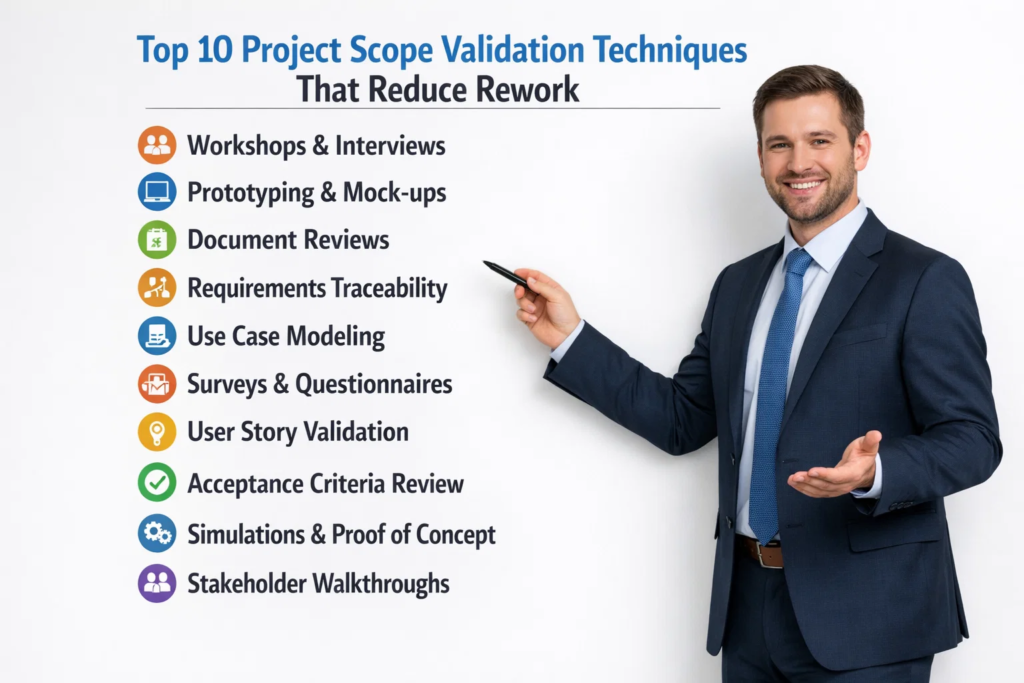
Effective project scope validation is essential for successful project management, particularly in large organizations. When the scope is poorly defined or validated, it can lead to significant rework, wasted resources, and project delays. By implementing robust scope validation techniques, organizations can ensure that projects remain aligned with their objectives and that stakeholder expectations are met. This article explores the top ten project scope validation techniques that not only enhance the clarity of project specifications but also significantly reduce rework.
Understanding Project Scope Validation for Better Outcomes
Project scope validation is the process of formally accepting completed project deliverables. It ensures that the project’s outputs align with the stakeholder requirements and the defined project scope. This phase typically occurs before the project’s final deliverables are accepted, serving as a checkpoint to confirm that the project is on track. The validation process is not just about ticking boxes; it involves ensuring quality, compliance, and stakeholder satisfaction.
Effective scope validation helps in identifying any discrepancies between what is delivered and what was promised. It allows project managers to address issues early in the project lifecycle, reducing the risk of costly rework later on. Through validation, teams can also gather feedback from stakeholders, leading to a more comprehensive understanding of their needs and expectations. This proactive approach not only enhances project outcomes but also fosters a culture of accountability and transparency within the team.
In large organizations, where multiple projects may run simultaneously, effective scope validation becomes even more critical. It ensures that resources are allocated efficiently and that projects do not drift away from their intended goals. By establishing a clear framework for validating the project scope, organizations can improve overall project performance and stakeholder satisfaction.
Common Challenges in Project Scope Validation You Should Know
Scope creep is one of the most common challenges in project scope validation. This occurs when additional features or requirements are added to the project without proper review or approval. As new demands arise, it’s easy for project teams to lose sight of the initial goals, leading to confusion and potential rework. Project managers must remain vigilant in monitoring scope changes and ensure that any modifications are thoroughly evaluated against the project’s objectives.
Another challenge is communication breakdown among stakeholders. In large organizations, differing priorities, languages, and objectives can create barriers to effective scope validation. When stakeholders are not on the same page, it can result in misinterpretations of requirements and expectations. This misalignment can lead to deliverables that do not meet stakeholder needs, ultimately resulting in rework or project delays.
Additionally, inadequate documentation can hinder the scope validation process. Without clear and comprehensive documentation, it becomes challenging to assess whether the project is meeting its objectives. Teams may struggle to understand the original scope, which can lead to inconsistencies in deliverables and a lack of accountability. Establishing a robust documentation process is critical to overcoming these challenges and ensuring that scope validation is carried out efficiently.
Key Benefits of Effective Scope Validation Techniques
Implementing effective scope validation techniques has numerous benefits for organizations. First and foremost, it enhances clarity and ensures everyone is aligned with the project objectives. When project scopes are well-defined and validated, stakeholders have a clear understanding of what to expect, which reduces the likelihood of misunderstandings and miscommunications. This clarity fosters trust and collaboration among team members and stakeholders alike.
Secondly, effective scope validation minimizes the risk of rework by catching issues early in the project lifecycle. By validating the project scope at various stages, teams can identify potential misalignments or gaps before they escalate into larger problems. This proactive approach saves time and resources, allowing teams to focus on delivering high-quality outcomes instead of constantly correcting mistakes.
Lastly, effective scope validation techniques lead to improved stakeholder satisfaction. By involving stakeholders throughout the validation process, project teams can gather valuable feedback and insights. This engagement ensures that the final deliverables not only meet project requirements but also exceed stakeholder expectations. Ultimately, this leads to stronger relationships and increased trust between project teams and stakeholders, contributing to the organization’s overall success.
Top 10 Techniques to Validate Project Scope Efficiently
-
Stakeholder Engagement: Involving stakeholders early and often is crucial. Regular meetings and updates keep everyone informed and allow for input throughout the project lifecycle. This engagement can prevent misalignments and ensure that stakeholder needs are continually met.
-
Requirements Gathering Workshops: Organizing workshops dedicated to gathering requirements can help clarify expectations and identify potential issues early. These sessions foster open communication and collaborative brainstorming, leading to a well-defined project scope.
-
Use of Prototypes and Mockups: Visual representations of the project can help stakeholders understand what is being delivered. Prototypes provide a tangible reference that can be validated against expectations, reducing ambiguity and rework.
-
Review Sessions: Regular review sessions with the project team and stakeholders allow for real-time feedback. These sessions help in identifying deviations from the scope and provide an opportunity to realign project objectives.
-
Change Control Processes: Implementing a formal change control process ensures that any modifications to the project scope are thoroughly evaluated and approved. This approach minimizes the risk of unauthorized changes that could lead to rework.
-
Scope Validation Checklists: Utilizing checklists that outline critical scope elements can serve as a valuable tool in the validation process. These checklists help ensure that all necessary components of the project scope are addressed and validated.
-
Documentation Reviews: Regular reviews of project documentation can help in identifying inconsistencies or gaps in scope definition. This practice not only aids in scope validation but also promotes accountability within the team.
-
Performance Metrics: Establishing performance metrics for assessing deliverables can provide objective criteria for validation. By measuring outcomes against predefined metrics, project managers can quickly identify areas that may require revision.
-
Feedback Loops: Creating feedback loops where stakeholders can provide input throughout the project helps to maintain alignment with the scope. These loops facilitate open communication and allow for timely adjustments based on stakeholder feedback.
-
Post-Implementation Reviews: Conducting reviews after project completion can provide valuable insights for future projects. This retrospective analysis allows teams to evaluate what worked well and what did not, informing better scope validation practices in the future.
Involving Stakeholders in Scope Validation Processes
The active involvement of stakeholders in scope validation processes is essential for project success. Engaging stakeholders throughout the project lifecycle ensures that their needs and expectations are understood and integrated into the project’s scope. This collaborative approach fosters an environment where stakeholders feel valued and heard, which can significantly enhance their commitment to the project’s success.
Regular stakeholder meetings and updates are vital for effective communication. These interactions provide opportunities to discuss project progress, gather feedback, and address any concerns that may arise. When stakeholders actively participate in the validation process, project managers can identify potential issues early and make necessary adjustments, thereby reducing rework and ensuring alignment with project objectives.
Moreover, the diversity of perspectives among stakeholders can lead to richer discussions and better outcomes. Different stakeholders may have unique insights or requirements that can shape the project scope more effectively. By leveraging this collective knowledge, organizations can create a more comprehensive and validated project scope that meets the needs of all parties involved.
Utilizing Checklists for Robust Scope Validation
Checklists are invaluable tools for ensuring thorough scope validation. They serve as reminders of all essential elements that need to be considered during the validation process. By creating a checklist that outlines critical components of the project scope, teams can systematically verify that each element has been addressed.
Using a checklist not only enhances accountability but also minimizes the risk of overlooking important details. In large organizations, where projects may involve multiple stakeholders and complex requirements, a checklist simplifies the validation process. It provides a structured approach that can be easily followed, ensuring that all aspects of the scope are reviewed and validated.
Additionally, checklists can serve as a form of documentation for future reference. By maintaining a record of validated items, project teams can create a repository of insights that can inform future projects. This ongoing documentation enhances the organization’s project management practices and contributes to continuous improvement.
Leveraging Technology to Enhance Scope Validation
Technology plays a crucial role in enhancing the scope validation process. Project management software can streamline various aspects of scope validation, from documentation to stakeholder engagement. With tools that facilitate real-time collaboration, project teams can gather feedback more efficiently and keep stakeholders informed throughout the project lifecycle.
Moreover, technology can assist in tracking and managing changes to the project scope. Change management tools allow project managers to document modifications, assess their impact, and communicate them effectively to stakeholders. This transparency ensures that all parties are aware of any changes, reducing the risk of miscommunication and rework.
Data analytics can also play a significant role in validating project scope. By analyzing performance metrics and stakeholder feedback, organizations can gain insights into how well the project aligns with its objectives. This data-driven approach enables teams to make informed decisions and adjustments, ultimately enhancing the effectiveness of the scope validation process.
Frequently Asked Questions: Project Scope Validation Techniques to Reduce Rework
What is project scope validation and why is it critical in enterprise project management?
Project scope validation is the formal process of reviewing and accepting completed deliverables to ensure they meet predefined stakeholder requirements and align with the approved project scope statement. In enterprise project management environments, where initiatives often involve cross-functional teams, regulatory considerations, and significant capital investment, scope validation acts as a strategic control mechanism.
Without effective scope validation, projects risk scope creep, misaligned expectations, compliance failures, and costly rework. A structured validation process ensures that deliverables meet agreed acceptance criteria, contractual obligations, and quality standards before progressing to subsequent phases. For large organizations managing complex portfolios, rigorous project scope validation safeguards enterprise value, protects budgets, and reinforces governance discipline.
How does project scope validation reduce rework and cost overruns?
Rework is one of the most expensive risks in project management. It often occurs when deliverables are developed based on incomplete requirements, unclear acceptance criteria, or misunderstood stakeholder expectations. Implementing robust scope validation techniques such as formal acceptance reviews, requirements traceability matrices, and milestone sign-offs ensures discrepancies are identified early.
By validating outputs at defined checkpoints, project teams can correct issues before they escalate into full-scale redesign or redevelopment. This proactive approach dramatically reduces waste, preserves resource allocation efficiency, and strengthens on-time project delivery. In enterprise settings, even a small reduction in rework can translate into substantial cost savings and improved portfolio performance.
What are the most effective project scope validation techniques for large organizations?
High-impact project scope validation techniques include structured stakeholder walkthroughs, acceptance criteria documentation, stage-gate reviews, quality assurance audits, prototype demonstrations, and requirements traceability validation. Enterprise PMOs often integrate automated workflow approvals and digital documentation repositories to ensure validation processes are standardized and auditable.
Additionally, using clearly defined deliverable acceptance checklists ensures that scope validation is objective rather than subjective. These techniques collectively enhance transparency, strengthen accountability, and reduce ambiguity across large-scale initiatives.
What is the difference between scope verification and scope validation?
While often used interchangeably, scope verification and scope validation serve distinct purposes. Scope verification focuses on confirming that project deliverables meet documented technical specifications and contractual requirements. Scope validation, on the other hand, centers on stakeholder acceptance ensuring that deliverables fulfill business objectives and expected outcomes.
In enterprise project governance frameworks, both processes are essential. Verification confirms compliance, while validation confirms satisfaction and strategic alignment. Integrating both ensures quality assurance and stakeholder alignment simultaneously.
How does stakeholder engagement improve scope validation outcomes?
Active stakeholder engagement is a cornerstone of successful scope validation. Early involvement through workshops, requirement confirmation sessions, and prototype reviews ensures expectations are clearly documented and understood.
When stakeholders participate in milestone validation checkpoints, they provide immediate feedback, reducing the likelihood of late-stage surprises. This collaborative approach enhances trust, accelerates approvals, and strengthens organizational alignment. In large enterprises, structured stakeholder communication frameworks significantly improve scope clarity and minimize conflict during final acceptance stages.
What common challenges affect project scope validation?
Several challenges can undermine effective scope validation, including vague requirements, evolving business priorities, inconsistent documentation, and insufficient stakeholder involvement. In complex enterprise environments, overlapping projects and competing resource demands can further complicate validation efforts.
Additionally, inadequate governance controls may result in informal approvals or skipped validation checkpoints. This increases the probability of downstream defects and operational disruption. Addressing these risks requires disciplined documentation practices, standardized validation workflows, and executive oversight.
How can PMOs strengthen project scope validation frameworks?
Enterprise PMOs play a critical role in institutionalizing best practices for project scope validation. By implementing standardized templates, governance policies, and performance metrics, PMOs ensure consistency across all programs and portfolios.
Advanced PMOs also leverage project management software with automated approval workflows, real-time tracking dashboards, and centralized document repositories. These digital tools enhance traceability, accelerate validation cycles, and create an auditable trail of acceptance decisions. This structured approach improves compliance, operational efficiency, and overall portfolio health.
How does requirements traceability support scope validation?
A requirements traceability matrix (RTM) links project deliverables directly to documented business requirements and acceptance criteria. This ensures that every output can be mapped back to an approved need or objective.
By using traceability tools, project managers can quickly identify gaps, redundancies, or misaligned features before formal acceptance. This structured linkage reduces ambiguity, enhances quality assurance, and strengthens governance transparency particularly in regulated industries or high-risk enterprise programs.
When should scope validation occur during the project lifecycle?
Scope validation should not be reserved for project closure. Instead, it should occur at predefined milestones throughout the lifecycle including phase completions, sprint reviews, prototype demonstrations, and key deliverable submissions.
Embedding validation checkpoints within stage-gate frameworks ensures continuous alignment and prevents cumulative errors. This incremental validation strategy significantly reduces risk exposure and improves overall delivery predictability.
What long-term benefits does strong scope validation provide to organizations?
Organizations that institutionalize rigorous project scope validation frameworks experience measurable improvements in delivery reliability, cost efficiency, stakeholder satisfaction, and strategic alignment. Over time, consistent validation practices cultivate a culture of accountability, precision, and high performance.
Reduced rework leads to optimized resource utilization, while improved acceptance clarity enhances executive confidence in project outcomes. In enterprise environments managing complex transformation initiatives, effective scope validation becomes a competitive advantage ensuring projects deliver not only outputs, but sustained business value.
Continuous Improvement in Project Scope Management Practices
Continuous improvement is essential in project scope management practices. By regularly evaluating and refining scope validation techniques, organizations can adapt to changing environments and stakeholder needs. This commitment to improvement fosters a culture of innovation, allowing teams to learn from past experiences and apply those lessons to future projects.
Establishing a feedback loop for post-project reviews can be a valuable practice. By analyzing what worked well and what did not, project teams can identify opportunities for enhancement in their scope validation processes. This reflective approach not only improves future project outcomes but also strengthens the organization’s overall project management capabilities.
In addition, investing in training and development for project managers and team members can enhance their skills in scope validation. By equipping teams with the necessary tools and knowledge, organizations can ensure that their scope validation practices are current and effective. This continuous investment in improvement helps organizations navigate the complexities of project management and achieve better outcomes.
Effective project scope validation is a vital component of successful project management, especially in large organizations. By implementing the top ten techniques discussed in this article, organizations can minimize rework, enhance stakeholder satisfaction, and ensure that projects align with their strategic objectives. Embracing a culture of continuous improvement and leveraging technology can further strengthen scope validation practices, enabling organizations to achieve their goals efficiently.
Meta Description: Discover top 10 project scope validation techniques that reduce rework, enhance stakeholder satisfaction, and improve project outcomes for organizations.
Hashtags: #ProjectManagement #ScopeValidation #StakeholderEngagement #ContinuousImprovement #ReworkReduction
External Source: For further insights on project management scope, visit the Project Management Academy
Explore Free Project Management Templates https://pmresourcehub.com/library
https://pmresourcehub.com/project-reporting/
https://pmresourcehub.com/risk-management/
https://pmresourcehub.com/consulting/