
Voice of the Customer Training: Enhancing Customer Insights
Voice of the Customer training (VOC) is becoming increasingly essential for organizations looking to enhance their customer insights. Understanding the voice of the customer allows businesses to tailor their products and services more effectively, leading to improved customer satisfaction and loyalty. This article will explore key aspects of VoC training, its benefits, and strategies for implementation, engaging employees, and analyzing feedback. Ultimately, it will provide actionable insights that can empower your organization to thrive in today’s competitive market.
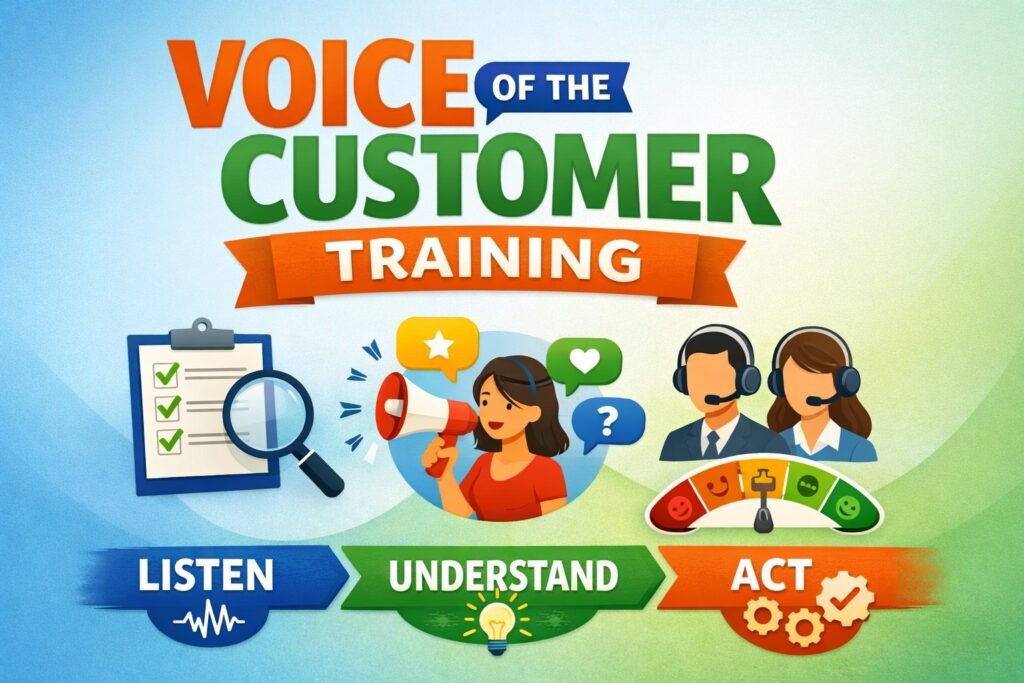
Understanding Voice of the Customer Training Essentials
Voice of the Customer training is designed to equip employees with the skills they need to empathize with customers and understand their needs, preferences, and pain points. This kind of training encompasses various methods, including surveys, interviews, and focus groups, to capture unfiltered customer feedback. The aim is to create a culture of listening, where every employee recognizes their role in enhancing customer experiences.
At its core, VoC training enables team members to identify and interpret customer sentiments effectively. This training not only fosters better customer interactions but also helps employees understand the broader implications of customer feedback on business operations. By embedding customer insight into the organizational DNA, companies can make informed decisions that align with customer expectations.
Moreover, investing in VoC training can lead to a unified approach to customer experience across the organization. When employees share a common understanding of customer needs, they can collaborate more effectively to implement changes that genuinely resonate with customers. This collective effort can result in a more cohesive brand image and a stronger market presence.
Key Benefits of Customer Insights for Your Organization
Understanding customer insights is vital for any organization aiming to succeed in a competitive marketplace. One of the primary benefits is that it allows for data-driven decision-making. Companies can leverage customer feedback to refine their products and services, ensuring they meet market demands. This focus on customer satisfaction translates into increased sales and retention rates, ultimately boosting the bottom line.
Another significant advantage is the ability to anticipate customer needs. By analyzing feedback trends and behaviors, organizations can identify emerging issues before they escalate into larger problems. This proactive approach not only enhances customer loyalty but also positions the organization as a responsive and caring entity in the eyes of its customers.
Furthermore, customer insights can foster innovation within the organization. Understanding the pain points of customers can inspire teams to develop new solutions or refine existing offerings. This can lead to a more agile and innovative corporate culture, allowing the organization to remain relevant and ahead of competitors.
Strategies to Implement Effective Voice of the Customer Training
To effectively implement VoC training, organizations should start by establishing clear objectives. Identify what you want to achieve with the training, whether it’s improving customer satisfaction scores, reducing churn, or enhancing product offerings. Clear goals will guide the training process and allow for measurable outcomes.
Next, create a structured training program that encompasses various learning formats. This could include workshops, online courses, and real-world scenarios. Engaging employees through diverse methods can cater to different learning styles and enhance retention. Additionally, consider incorporating role-playing exercises, where employees can practice their skills in realistic customer interaction scenarios.
Lastly, continuous reinforcement of VoC principles is crucial. After the initial training, organizations should regularly revisit the topics to ensure that employees remain engaged and informed. This can be done through refresher courses, regular feedback sessions, and updates on customer insights. Creating a culture of ongoing learning will ensure that customer insights remain a priority within the organization.
Engaging Employees in the Voice of the Customer Process
Engaging employees in the VoC process begins with fostering a culture of empathy and customer-centricity. Leadership must model this behavior, demonstrating the importance of customer feedback in decision-making. When employees see management prioritizing customer insights, they are more likely to follow suit and consider customer needs in their daily roles.
Encouraging participation in VoC initiatives is another effective strategy. Create avenues for employees to contribute their observations and insights from their interactions with customers. This could be through dedicated feedback sessions or internal platforms where employees can share their experiences and suggestions. When employees feel their voices matter, they become more invested in the overall customer experience.
Recognition and rewards for employees who excel in implementing VoC principles can also drive engagement. Celebrate successes and highlight the impact of customer insights on business outcomes. By making recognition a part of the organizational culture, companies can amplify employee motivation and commitment to the VoC process.
Analyzing Customer Feedback for Actionable Insights
Once customer feedback is collected, the next step is to analyze it effectively to extract actionable insights. Utilizing data analytics tools can help organizations sift through vast amounts of feedback, identifying trends and patterns that may not be immediately obvious. By employing techniques such as sentiment analysis and keyword extraction, businesses can gain a deeper understanding of customer sentiments.
It is also essential to segment feedback based on various factors, such as demographics, purchase history, and feedback type. Analyzing customer feedback in this manner allows organizations to tailor their responses and strategies more effectively. For instance, different customer segments may have unique needs that require distinct approaches.
Finally, translating insights into actionable strategies is crucial for driving change. Once patterns are identified, organizations should prioritize issues based on their impact and feasibility. Creating a roadmap for implementing changes based on customer feedback ensures that organizations can address key concerns while remaining aligned with their overall business goals.
Tools and Technologies to Enhance Customer Insights
Leveraging the right tools and technologies can significantly enhance the effectiveness of VoC efforts. Customer relationship management (CRM) systems are vital for storing and analyzing customer interactions and feedback. Integrating CRM with analytics tools allows organizations to create a comprehensive view of customer behavior and preferences.
Survey tools also play a critical role in capturing customer insights. Platforms such as SurveyMonkey, Typeform, and Google Forms enable organizations to design custom surveys that can yield valuable data. These tools also allow for real-time feedback, which can be instrumental in making timely adjustments to products or services.
Additionally, utilizing social listening tools can offer insights into customer sentiments expressed on social media platforms. Tools like Hootsuite and Sprout Social enable companies to monitor conversations and trends, ensuring they stay ahead of customer expectations. By integrating multiple technologies, organizations can build a robust system for gathering and analyzing customer insights.
Case Studies: Successful Voice of the Customer Initiatives
Exploring successful VoC initiatives can offer valuable lessons for organizations looking to enhance their customer insights. One notable example is Amazon, which has built its business model around customer feedback. By actively soliciting reviews and ratings, Amazon has been able to continuously refine its offerings. This commitment to the VoC process has resulted in high customer loyalty and satisfaction.
Another example is Starbucks, known for its emphasis on customer experience. The company employs various feedback mechanisms, such as the My Starbucks Idea platform, where customers can submit suggestions. Starbucks takes these insights seriously, often implementing ideas generated by customers, which fosters a sense of community and engagement.
Lastly, Lego’s “Ideas” platform allows fans to submit their own designs and vote on others. The company reviews these submissions to select projects for production. This proactive approach to customer input has not only led to new successful products but also strengthened brand loyalty among its customers.
Measuring the Impact of Customer Insights on Business Growth
To truly understand the value of customer insights, organizations must measure their impact on business growth. One way to do this is by tracking key performance indicators (KPIs) related to customer satisfaction and retention. Metrics such as Net Promoter Score (NPS) and Customer Satisfaction Score (CSAT) can provide tangible evidence of how customer insights translate into positive business outcomes.
Additionally, organizations should analyze the correlation between customer feedback and revenue growth. By assessing changes in sales or customer retention before and after implementing insights-driven strategies, businesses can quantify the financial benefits of their VoC initiatives.
Lastly, regularly reviewing the effectiveness of customer insight programs can reveal areas for improvement. Conducting quarterly assessments can help organizations refine their strategies and ensure that customer feedback continues to drive innovation and growth. By measuring the impact of customer insights, organizations can validate their investments in VoC training and initiatives.
Implementing Voice of the Customer training is not just a trend; it’s a vital strategy for organizations aiming to thrive in a customer-centric world. By understanding the essentials of VoC training, recognizing the benefits of customer insights, and employing effective strategies, companies can create a more engaging and responsive atmosphere. The journey of enhancing customer insights through VoC training will empower your organization to address customer needs proactively, fostering loyalty and growth in the long run.
Hashtags: #VoiceOfTheCustomer #CustomerInsights #EmployeeEngagement #BusinessGrowth #CustomerFeedback
further great insights at https://pmresourcehub.com/
External Source: For more on customer experience strategies, visit HubSpot’s Guide to Customer Feedback.
**FAQ Section for This Blog**
**1. What is Voice of the Customer (VoC) training?**
Voice of the Customer (VoC) training is a structured program designed to equip employees with the skills to effectively listen, comprehend, and analyze customer feedback. This training emphasizes empathy and alignment of business strategies with customer expectations, ultimately enhancing the overall customer experience.
**2. How does VoC training benefit organizations?**
VoC training enables organizations to make informed, data-driven decisions, anticipate customer needs, and drive innovation. By harnessing customer insights, companies can boost satisfaction and retention rates, which in turn leads to increased sales and a stronger competitive position in the market.
**3. What methods are utilized in VoC training?**
VoC training incorporates a variety of methods, including surveys, interviews, focus groups, role-playing exercises, and interactive workshops. These diverse approaches engage employees and cater to different learning styles, ensuring a thorough understanding and application of customer insights.
**4. How can organizations measure the success of their VoC initiatives?**
Organizations can evaluate the success of their VoC initiatives by monitoring key performance indicators (KPIs) such as Net Promoter Score (NPS) and Customer Satisfaction Score (CSAT). Additionally, analyzing revenue growth and customer retention both before and after implementing insights-driven strategies helps quantify the program’s impact.
**5. How frequently should VoC training be updated or reinforced?**
Ongoing reinforcement is essential; organizations should regularly revisit VoC principles through refresher courses, feedback sessions, and updates on customer insights. Cultivating a continuous learning culture ensures that customer needs remain at the forefront of business practices.
**6. Can small businesses benefit from VoC training?**
Absolutely! VoC training is valuable for organizations of all sizes. Small businesses, in particular, can use customer insights to deliver personalized experiences, foster loyalty, and gain a competitive advantage in their respective markets.
**7. What tools can support VoC training and initiatives?**
Numerous tools can enhance VoC initiatives, such as customer relationship management (CRM) systems for managing customer data, survey platforms like SurveyMonkey or Typeform for collecting feedback, and social listening tools, such as Hootsuite, to monitor customer sentiment on social media.
**8. How do I get started with VoC training?**
To begin, clearly define your objectives for VoC training. Develop a structured program that integrates various learning formats and actively engages employees. Additionally, establish a feedback loop to assess and refine your training based on insights gained from customer interactions.
One Comment
Comments are closed.