11 Steps to Transitioning Your Project Team into a Value Management Office (VMO)
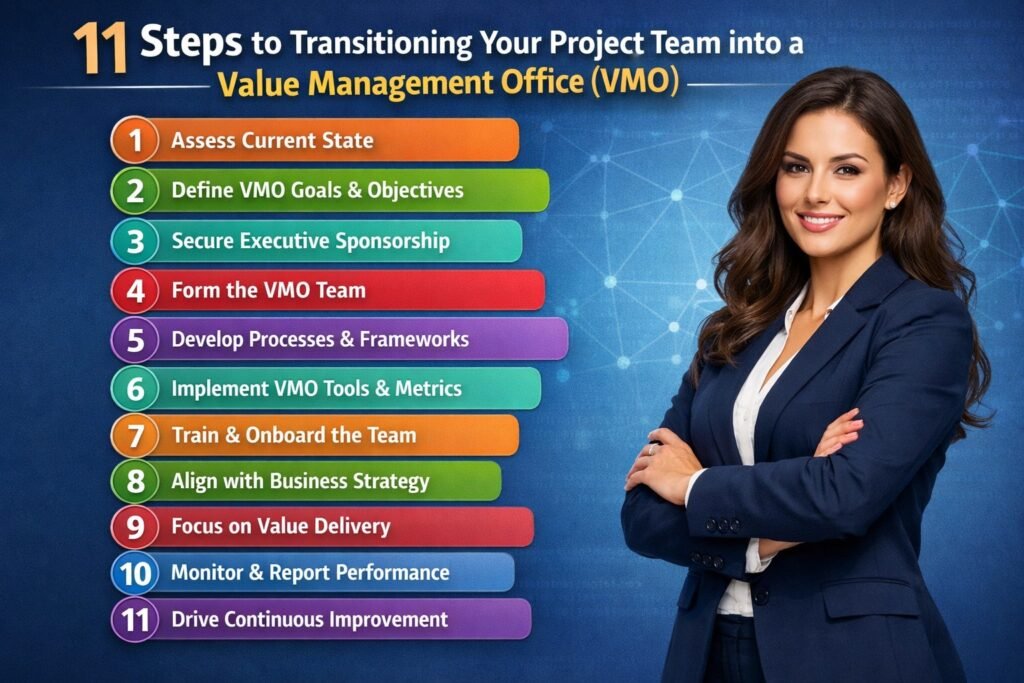
Transitioning a project team into a Value Management Office (VMO) can seem daunting. However, this shift is essential for organizations looking to maximize value creation while maintaining efficient project management practices. A VMO focuses on aligning projects with strategic objectives, measuring their value, and ensuring that resources are allocated effectively. This article outlines 11 Steps to Transitioning Your Project Team into a Value Management Office (VMO) for a successful transition, helping your organization thrive in a competitive landscape.
Understanding the Value Management Office (VMO) Concept
The Value Management Office (VMO) serves as a strategic entity within an organization that emphasizes the importance of delivering value through projects. Unlike traditional project management structures that primarily focus on timelines and budgets, a VMO centers on the value generated by each project. This shift in mindset encourages teams to think critically about how their work aligns with broader business goals and the impact it has on stakeholders. By prioritizing value management, organizations can foster a culture of continuous improvement and innovation.
A VMO’s primary role is to establish a framework for evaluating project performance based on value metrics. This includes not only financial returns but also qualitative benefits such as customer satisfaction and employee engagement. By adopting a comprehensive approach to value management, organizations can make informed decisions about which projects to prioritize, ensuring that resources are allocated to initiatives with the highest potential return on investment (ROI). The VMO thus acts as a bridge between strategic planning and project execution.
Furthermore, a VMO plays a critical role in fostering collaboration among cross-functional teams. By facilitating open communication and shared objectives, the VMO helps eliminate silos that can hinder project success. This collaborative environment encourages diverse perspectives and insights, leading to more innovative solutions. As a result, organizations can navigate the complexities of their projects more effectively, ultimately leading to enhanced business outcomes.
Why Transitioning to a VMO is Essential for Teams
Transitioning to a VMO is essential for organizations looking to remain competitive in an increasingly dynamic business environment. The traditional project management approach often leaves teams focusing solely on schedules and budgets, neglecting the value delivered to customers and stakeholders. In contrast, a VMO brings a more holistic perspective, allowing organizations to assess the overall impact of their projects. This shift not only enhances decision-making but also ensures that projects are aligned with strategic goals.
Moreover, as organizations evolve, the complex nature of projects requires a more sophisticated approach to management. A VMO provides the tools and methodologies necessary to navigate these complexities, fostering agility and responsiveness. In a world where change is constant, being able to adapt projects in real time according to shifting priorities is invaluable. A VMO empowers project teams to make data-driven decisions, enhancing their ability to deliver value consistently.
Additionally, transitioning to a VMO can significantly boost team morale and engagement. When team members understand how their work contributes to larger organizational objectives, they are more likely to feel a sense of purpose and ownership. This alignment fosters a culture of accountability and motivation, ultimately leading to improved project outcomes. By committing to a VMO, organizations invest not only in operational efficiency but also in their most critical asset their people.
Step 1: Assess Current Project Management Practices
Before transitioning to a VMO, it is crucial to conduct a thorough assessment of your organization’s current project management practices. This evaluation should focus on identifying strengths and weaknesses, as well as understanding how projects are currently aligned with strategic objectives. Gathering insights from team members, stakeholders, and project data can help paint a comprehensive picture of your existing processes.
Utilizing performance metrics and KPIs can provide valuable benchmarks for this assessment. Analyzing factors such as project delivery timelines, budget adherence, and stakeholder satisfaction can help identify areas for improvement. This data-driven approach will not only inform your transition strategy but also establish a baseline for measuring future success.
Finally, engaging with team members throughout the assessment process ensures that diverse perspectives are considered. This inclusive approach fosters a sense of ownership and collaboration, which will be vital as you move forward with implementing a VMO. The insights gathered during this assessment will serve as a foundation for defining clear objectives and tailoring the VMO framework to meet your organization’s unique needs.
Step 2: Define Value Management Objectives Clearly
Once you have assessed your current project management practices, the next step is to define clear value management objectives. These objectives should align with the broader strategic goals of the organization and provide a roadmap for the VMO’s activities. Taking the time to articulate specific, measurable, achievable, relevant, and time-bound (SMART) objectives will help ensure clarity and focus throughout the transition process.
Additionally, it is essential to involve stakeholders in this objective-setting phase. By incorporating their insights and expectations, you can create a more comprehensive understanding of what constitutes value within your organization. This collaborative approach not only strengthens buy-in but also sets a foundation for ongoing engagement as the VMO evolves.
Finally, regularly revisiting and refining these objectives is crucial as your organization grows and market conditions change. The value management landscape is dynamic, and flexibility will be key to ensuring that your VMO remains relevant. By establishing a culture of continuous improvement, you can ensure that value management objectives are consistently aligned with the organization’s strategic direction.
Step 3: Engage Stakeholders from the Start
Engaging stakeholders from the outset is a pivotal step in the transition to a VMO. Effective communication and collaboration with stakeholders including executives, project teams, and customers ensure that their needs and expectations are understood and addressed throughout the transition process. Engaging stakeholders early on helps create a sense of ownership and accountability, ultimately leading to greater success in implementing the VMO.
One effective way to engage stakeholders is through workshops or focus groups. These sessions can serve as a platform for discussing value management objectives, gathering feedback, and fostering a shared understanding of the VMO’s purpose. By actively involving stakeholders, you can build a strong foundation for collaboration and support that will be crucial as you move forward.
Additionally, maintaining open lines of communication throughout the transition process is essential. Regular updates, progress reports, and opportunities for feedback will help keep stakeholders informed and invested in the VMO’s development. By prioritizing stakeholder engagement, you are more likely to create a supportive environment that drives the successful implementation of the VMO.
Step 4: Develop a Value Management Framework
A robust value management framework is essential for guiding the activities of your VMO. This framework should outline key processes, methodologies, and tools that will be used to assess and measure value throughout the project lifecycle. Developing a clear framework helps establish consistency in how value is defined, evaluated, and communicated across the organization.
Begin by identifying the key components of your framework, including project selection criteria, value assessment methodologies, and reporting structures. Consider how these components will work together to support the VMO’s objectives and facilitate decision-making. A well-defined framework not only enhances clarity and accountability but also fosters a culture of value-driven thinking among project teams.
Moreover, ensure that your framework is flexible enough to adapt to changing organizational needs and market dynamics. As your organization evolves, your value management framework should be reviewed and refined to remain relevant. By creating a dynamic framework, you can empower your VMO to effectively navigate the complexities of project management while consistently delivering value.
Step 5: Train Your Team on VMO Principles
Training your team on the principles of value management is critical for ensuring a successful transition to a VMO. This training should focus on providing team members with the knowledge and skills necessary to understand and apply value management concepts in their day-to-day work. By equipping your team with the right tools and insights, you can foster a culture of value-driven decision-making.
Begin by developing a comprehensive training program that covers the fundamental principles of value management, including value creation, measurement techniques, and stakeholder engagement strategies. Incorporate various learning formats, such as workshops, online courses, and case studies, to cater to different learning styles and preferences. Engaging training materials can help make complex concepts more accessible and relatable to your team.
Additionally, encourage ongoing learning and development by providing opportunities for team members to deepen their understanding of value management. This can include mentorship programs, access to industry resources, or participation in relevant conferences and seminars. By fostering a culture of continuous learning, you can ensure that your team remains well-equipped to navigate the evolving landscape of project management.
Step 6: Implement Tools for Value Tracking and Analysis
Equipping your VMO with the right tools for value tracking and analysis is essential for gauging project performance and making informed decisions. Various software solutions and methodologies can help organizations track value metrics, assess project outcomes, and facilitate data-driven decision-making. Implementing these tools not only enhances your ability to measure success but also streamlines communication and collaboration among teams.
Begin by identifying the key value metrics that are most relevant to your organization. These could include financial metrics such as ROI, as well as qualitative measures like customer satisfaction and team engagement. Once these metrics have been established, explore software solutions that enable you to track and analyze these metrics effectively. Consider solutions that offer customizable dashboards, real-time reporting, and integration capabilities with existing systems.
Furthermore, ensure that your team is trained in utilizing these tools effectively. Providing hands-on training and support can help team members become proficient in leveraging technology to track and analyze value metrics. By fostering a culture that embraces data-driven decision-making, your organization can enhance its ability to deliver value consistently and effectively.
Step 7: Measure and Communicate Value Achievements
Measuring and communicating value achievements is a crucial aspect of sustaining a successful VMO. Regularly tracking progress against established value management objectives will help your organization understand the impact of its projects and make necessary adjustments along the way. Moreover, transparent communication of value achievements fosters a culture of accountability and recognition, motivating team members to continue striving for excellence.
Establish a consistent reporting framework that outlines how value achievements will be measured, documented, and communicated. This could involve quarterly reviews, performance dashboards, or stakeholder presentations that highlight key achievements and lessons learned. By sharing success stories and showcasing the tangible impact of value management efforts, you can reinforce the importance of the VMO and its role in driving organizational success.
Additionally, encourage a feedback loop where team members can provide insights and suggestions on how to improve value measurement and communication processes. By actively involving your team in this dialogue, you can create a sense of ownership and empower them to contribute to the continuous improvement of your VMO. Ultimately, regularly measuring and communicating value achievements will help solidify the VMO’s position as a strategic driver of organizational success.
Transitioning your project team into a Value Management Office is an essential step in maximizing value delivery and aligning projects with strategic goals. By following the steps outlined in this article, organizations can create a robust framework for value management that fosters collaboration, accountability, and continuous improvement. As you embark on this journey, remember that stakeholder engagement, team training, and ongoing measurement are critical to the VMO’s success. By investing in these areas, your organization can thrive in an increasingly competitive landscape.
Frequently Asked Questions (FAQ)
1. What is a Value Management Office (VMO)?
A Value Management Office (VMO) is a strategic function within an organization that focuses on maximizing value creation from projects and initiatives. Unlike traditional project management offices that primarily track budgets and timelines, a VMO evaluates projects based on value metrics, including financial returns, customer satisfaction, and strategic alignment. It ensures that resources are allocated to initiatives with the highest impact on organizational goals.
2. Why is transitioning to a VMO important?
Transitioning to a VMO is critical for organizations aiming to align projects with strategic objectives. It shifts the focus from completing tasks to generating measurable value. This approach enhances decision-making, ensures efficient resource allocation, and encourages teams to consider the broader business impact of their work, ultimately improving ROI and stakeholder satisfaction.
3. How does a VMO differ from a traditional PMO?
While a PMO emphasizes project execution, governance, and adherence to schedules and budgets, a VMO prioritizes the value derived from projects. The VMO evaluates both quantitative and qualitative benefits, ensuring that each project contributes meaningfully to organizational strategy. It acts as a bridge between strategy and execution rather than just overseeing project delivery.
4. What are the key functions of a VMO?
Key functions of a VMO include defining value metrics, assessing project portfolios for strategic alignment, prioritizing initiatives, monitoring performance based on value outcomes, and fostering collaboration across cross-functional teams. It also provides leadership with insights for informed decision-making and resource optimization.
5. How can a VMO improve decision-making?
By providing a structured framework for evaluating projects based on value, a VMO enables leaders to prioritize high-impact initiatives, reallocate resources efficiently, and make informed choices about project continuation or termination. This reduces waste and ensures maximum return on investment across the portfolio.
6. How does a VMO foster collaboration?
A VMO encourages open communication, shared goals, and cross-functional engagement. By breaking down silos and involving diverse teams in value assessment and project planning, it promotes innovative thinking and collective ownership of project outcomes.
7. What metrics does a VMO track?
A VMO tracks a combination of quantitative and qualitative metrics, such as financial ROI, customer satisfaction, employee engagement, risk mitigation, strategic alignment, and operational efficiency. These metrics provide a holistic view of project success beyond deadlines and budgets.
8. What are the challenges in establishing a VMO?
Common challenges include cultural resistance to change, lack of executive support, inconsistent value measurement practices, and difficulty in aligning cross-functional teams. Successful implementation requires strong leadership, clear frameworks, and ongoing training to instill a value-focused mindset.
9. How long does it take to see results from a VMO?
Organizations often see initial improvements in project prioritization, resource allocation, and strategic alignment within the first 6–12 months. Full cultural adoption and sustained value-driven results typically occur over 2–3 years, depending on organizational size and complexity.
10. Can a VMO be integrated with existing PMOs?
Yes. A VMO can complement a traditional PMO by adding a strategic value layer. While the PMO manages project execution and governance, the VMO evaluates value outcomes, ensuring that every initiative contributes meaningfully to the organization’s long-term goals.
Conclusion – 11 Steps to Transitioning Your Project Team into a Value Management Office (VMO)
Transitioning to a Value Management Office (VMO) represents a transformative step for organizations striving to maximize the strategic impact of their projects. Unlike traditional project management approaches that focus primarily on timelines, budgets, and deliverables, a VMO places value at the center of decision-making. By systematically assessing projects based on both quantitative metrics, such as financial return on investment, and qualitative outcomes, including customer satisfaction and employee engagement, organizations can ensure that every initiative contributes meaningfully to overarching business objectives. This shift from a task-focused mindset to a value-driven perspective empowers leaders and teams to make smarter, more informed decisions that drive long-term success.
A well-implemented VMO also fosters a culture of collaboration and accountability. By breaking down silos and encouraging cross-functional engagement, organizations create an environment where insights and expertise are shared openly. Teams gain a clear understanding of how their efforts impact broader strategic goals, which not only boosts motivation but also ensures alignment across departments. This transparency and shared ownership reduce risks associated with misaligned priorities and ineffective resource allocation, enhancing overall project outcomes.
Furthermore, a VMO equips organizations with the tools to adapt to evolving business environments. Through structured value assessments, organizations can quickly identify underperforming projects, reallocate resources to high-impact initiatives, and respond proactively to changes in market conditions or stakeholder expectations. This agility ensures that organizations remain competitive and focused on initiatives that deliver measurable results.
For executives and project leaders, the benefits of a VMO extend beyond individual projects. It provides a framework for continuous improvement, strategic portfolio management, and long-term organizational growth. By integrating value-focused governance into everyday project management practices, organizations can enhance efficiency, strengthen decision-making, and achieve sustainable success.
In summary, the VMO is not merely an operational function; it is a strategic enabler. By prioritizing value, promoting collaboration, and fostering continuous improvement, organizations can transform how they manage projects, optimize resources, and drive measurable business impact. For any organization looking to secure a competitive edge and maximize returns from its initiatives, establishing a Value Management Office is an essential step in the journey toward strategic excellence.
Hashtags
#ValueManagement #VMO #ProjectManagement #StakeholderEngagement #ContinuousImprovement
External Source
Explore how to transform a PMO into a VMO (Value Management Office) at Projectmanagement.com
Discover More great insights at www.pmresourcehub.com
Explore Free Project Management Templates https://pmresourcehub.com/library/