
12 Digital Program Challenges That Impact Project Delivery
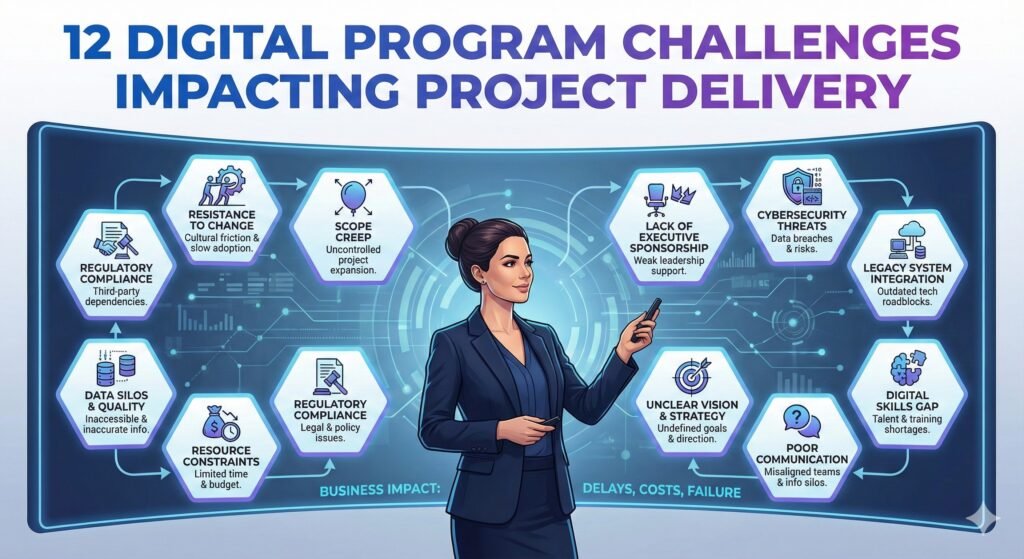
In today’s fast-paced digital environment, the successful delivery of projects hinges on navigating a myriad of challenges. As organizations pivot to digital-first strategies, understanding the intricacies of digital program management becomes essential. This article explores twelve significant challenges that can impact the delivery of digital projects, offering insights into each and suggesting ways to overcome these hurdles.
Understanding the Digital Landscape in Project Delivery
The digital landscape has transformed how organizations conduct business, fundamentally altering project delivery. Traditional project management methods often fall short in addressing the complexities inherent in digital initiatives. The rapid pace of technological advancement, coupled with evolving consumer expectations, has created an environment where agility and adaptability are paramount. This shift requires project managers to rethink their strategies and embrace new methodologies that align with digital trends.
One of the primary aspects of this digital landscape is the integration of various technologies and platforms. Organizations are often tasked with incorporating multiple tools ranging from cloud solutions to data analytics software. This diversity can lead to complications in project cohesion and synchronization, making it essential for teams to establish clear communication channels and protocols. Failing to do so can result in fragmented project efforts that hinder overall delivery success.
Moreover, the digital landscape is characterized by a plethora of stakeholders with varying interests and expectations. Each stakeholder group brings unique priorities to the table, complicating the decision-making process. Understanding these dynamics is crucial for project teams aiming to deliver successful outcomes. By fostering collaborative relationships and ensuring alignment among stakeholders, organizations can overcome challenges and drive projects to completion.
Common Challenges in Digital Program Management
One of the most prevalent challenges in digital program management is scope creep. As projects evolve, stakeholders often seek to introduce new features or change existing requirements. This can lead to stretched timelines, budget overruns, and ultimately, project failure. Maintaining a clear and agreed-upon scope from the outset is vital to mitigate this issue. Regular check-ins and updates can help manage expectations and keep the project on track.
Another challenge is the integration of legacy systems with new digital solutions. Many organizations have existing infrastructure that may not align seamlessly with newer technologies. This mismatch can create technical debt, leading to inefficiencies and increased maintenance costs. To address this, organizations should conduct thorough assessments of existing systems before implementing new solutions, ensuring compatibility and alignment with long-term strategic goals.
Additionally, data security and compliance are significant concerns in digital programs management. With the rise of cyber threats, organizations must prioritize safeguarding sensitive information while complying with regulatory requirements. This adds another layer of complexity to project delivery, demanding that project managers integrate security considerations into every aspect of their planning and execution processes. Regular training and updates can help teams stay informed about best practices in data security.
Stakeholder Engagement: The Hidden Hurdle
Engaging stakeholders effectively can be one of the most challenging aspects of project delivery. Often, stakeholder interests are not adequately aligned, making it difficult to achieve consensus. This disconnect can lead to frustration and disengagement, which may jeopardize project success. To combat this, project managers should prioritize stakeholder analysis early in the project lifecycle, identifying key players and their specific interests, and tailoring communication strategies accordingly.
Communication is not just about disseminating information but also about fostering a two-way dialogue. Project managers must create opportunities for stakeholders to voice their concerns and feedback. Regular workshops, updates, and status meetings can facilitate this engagement, allowing stakeholders to feel invested in the project’s success. When stakeholders feel heard, their commitment to the project often deepens, resulting in greater support and collaboration.
Another often overlooked aspect of stakeholder engagement is managing expectations. Clear expectations can help minimize conflicts and ensure everyone is on the same page regarding project goals and timelines. By setting realistic timelines and delivering frequent updates on progress, project managers can cultivate a culture of transparency that ultimately leads to a more collaborative environment.
Balancing Innovation with Risk Management
While innovation is a key driver of digital projects, it often comes with inherent risks. Organizations must find a balance between pushing the boundaries of what is possible and managing potential setbacks. This balancing act requires a robust risk management strategy that identifies potential pitfalls early on. Project managers should conduct regular risk assessments, integrating them into the overall project planning process.
One effective method for managing risk while fostering innovation is to adopt an iterative approach to project delivery. Agile methodologies allow teams to develop and test new ideas in smaller increments, enabling them to pivot quickly based on feedback and results. By breaking down projects into manageable parts, organizations can reduce the risks associated with large-scale rollouts while still reaping the benefits of innovative solutions.
Furthermore, a culture that embraces experimentation can encourage teams to innovate without the fear of failure. By framing failures as learning opportunities, organizations can cultivate an environment where team members feel empowered to take calculated risks. Celebrating small wins and allowing for adjustments based on lessons learned can help maintain momentum while ensuring that risks are managed effectively.
Resource Allocation: A Continuous Struggle
Resource allocation remains a critical challenge in digital program management. With multiple projects vying for the same pool of resources, project managers often struggle to balance competing demands. This can lead to resource shortages, which can compromise project timelines and quality. Organizations must adopt a strategic approach to resource planning, considering both current and future project needs.
One strategy to enhance resource allocation is to prioritize projects based on strategic alignment and potential ROI. By assessing which projects align most closely with organizational goals, leaders can allocate resources more effectively, ensuring that high-impact initiatives receive the attention they require. This prioritization process should be revisited regularly as project landscapes evolve.
Additionally, utilizing resource management tools can help project managers gain visibility into resource availability and utilization. These tools can facilitate better planning and allow teams to identify potential shortfalls before they impact project delivery. By fostering a proactive approach to resource allocation, organizations can enhance their capability to deliver projects successfully.
Navigating Team Dynamics in Digital Projects
Team dynamics play a significant role in the success of digital programs. High-performing teams that collaborate effectively can overcome challenges and deliver quality outcomes. However, team dynamics can be complex, especially in digital environments where remote work is increasingly common. Project managers must actively foster positive team interactions and address any underlying issues that may impede collaboration.
Communication is key in navigating team dynamics. Establishing clear communication protocols can help teams stay connected and informed, irrespective of their physical locations. Regular check-ins and virtual team-building activities can enhance rapport and camaraderie among team members. These initiatives can help break down silos and promote a collaborative spirit.
Conflicts are inevitable in any team setting, and project managers must be equipped to address them constructively. Encouraging open dialogue and providing conflict resolution resources can help teams navigate disagreements effectively. When team members feel respected and valued, they are more likely to contribute positively to the project, enhancing overall delivery outcomes.
The Role of Technology in Project Success
Technology serves as both an enabler and a potential barrier to project success. On the one hand, it offers tools that can streamline processes, enhance collaboration, and improve data-driven decision-making. On the other hand, the rapid pace of technological advancement can render certain tools obsolete or create an overwhelming number of options. Organizations must carefully evaluate their technology choices to ensure that they align with project needs and organizational goals.
Implementing the right project management tools can greatly enhance efficiency and visibility. Features such as task management, timeline tracking, and reporting can help teams stay organized and focused. However, it’s essential to provide adequate training to ensure that all team members can utilize these tools effectively. Investing in user-friendly, adaptable technologies can maximize adoption and minimize friction.
Moreover, organizations should consider the long-term implications of their technology decisions. Choosing scalable solutions can ensure that tools continue to support projects as organizations grow and evolve. Engaging in regular reviews of technology usage can also help identify areas where improvements can be made, ensuring that teams are equipped with the best tools for their needs.
Strategies to Overcome Digital Program Challenges
To effectively navigate the challenges of digital program management, organizations must adopt a proactive approach. One strategy is to foster a culture of continuous improvement. Encouraging teams to regularly assess their processes and outcomes can lead to valuable insights that drive efficiency and enhance project delivery. Implementing feedback loops can help identify areas for improvement and ensure that lessons learned are integrated into future projects.
Establishing strong leadership is also critical in overcoming challenges. Leaders should facilitate open dialogue and create an environment where team members feel comfortable sharing their ideas and concerns. By empowering teams and promoting a shared vision, organizations can enhance collaboration and drive successful project outcomes.
Lastly, investing in training and development is crucial for equipping teams with the skills needed to succeed in a digital environment. By providing ongoing learning opportunities, organizations can ensure their teams stay current with industry trends and best practices. This investment not only enhances team capability but also fosters a culture of innovation that can drive long-term success.
Frequently Asked Questions About Digital Program Management Challenges
What is digital program management and why is it critical for project success?
Digital program management refers to the structured governance, coordination, and execution of large-scale digital initiatives across an organization. It ensures that digital transformation projects—such as cloud migrations, system integrations, and platform implementations—are delivered on time, within budget, and aligned with strategic objectives. In today’s digital-first environment, strong program management is essential to reduce risk, manage complexity, and maximize return on investment (ROI).
What are the biggest challenges in digital project delivery?
Some of the most significant digital project delivery challenges include:
-
Scope creep and uncontrolled requirement changes
-
Legacy system integration issues
-
Rapid technology evolution
-
Stakeholder misalignment
-
Resource and skills shortages
-
Cybersecurity and compliance risks
-
Budget overruns and unrealistic timelines
Addressing these risks early improves delivery predictability and project performance.
Why do traditional project management methods struggle in digital environments?
Traditional project management approaches often rely on rigid planning cycles and fixed requirements. Digital initiatives, however, require agility, rapid iteration, and adaptive decision-making. The fast pace of technological change and evolving user expectations demand flexible frameworks such as Agile, hybrid delivery models, and continuous feedback loops.
How can organizations prevent scope creep in digital programs?
To control scope creep, organizations should:
-
Establish a clearly defined project scope and success criteria
-
Implement strong change control governance
-
Prioritize features using value-based frameworks
-
Conduct regular stakeholder alignment sessions
-
Maintain transparent communication on impacts to cost and timeline
Disciplined scope management protects budgets and delivery timelines.
What makes legacy system integration so challenging?
Legacy systems often lack compatibility with modern digital platforms, APIs, and cloud architectures. Integration challenges can create technical debt, data inconsistencies, and performance bottlenecks. Conducting comprehensive system audits, investing in middleware solutions, and planning phased migrations can significantly reduce integration risks.
How does stakeholder complexity impact digital program success?
Digital programs typically involve multiple departments, executives, IT teams, vendors, and external partners. Misaligned expectations and competing priorities can delay decision-making and derail progress. Clear governance structures, defined accountability, and executive sponsorship are critical to maintaining alignment and momentum.
What role does risk management play in digital transformation projects?
Risk management is a cornerstone of digital program management. Cybersecurity threats, regulatory compliance requirements, vendor dependencies, and technology obsolescence can significantly impact outcomes. Proactive risk identification, mitigation planning, and real-time performance monitoring help protect enterprise value.
How can organizations improve digital project delivery performance?
Organizations can strengthen digital delivery by:
-
Adopting Agile or hybrid methodologies
-
Implementing centralized program governance (PMO oversight)
-
Leveraging data analytics and real-time dashboards
-
Investing in digital skills training
-
Prioritizing continuous improvement practices
These strategies enhance operational agility and long-term scalability.
What are emerging trends shaping digital program management?
Key trends include AI-driven project analytics, automation of reporting processes, predictive risk modeling, cloud-native program management tools, and integrated portfolio dashboards. These innovations enable faster decision-making, stronger transparency, and more accurate forecasting in complex digital environments.
Conclusion
Digital program management presents a unique set of challenges that can significantly impact project delivery. By understanding these challenges and implementing effective strategies to address them, organizations can improve their project outcomes. Prioritizing stakeholder engagement, balancing innovation with risk management, and fostering strong team dynamics are just a few of the ways organizations can navigate this complex landscape. With the right approach, digital project delivery can not only meet expectations but exceed them, driving long-term organizational success.
Hashtags: #DigitalManagement #ProjectDelivery #StakeholderEngagement #Innovation #ResourceAllocation
External Source: For further reading on project management best practices explore Modern Project Management Challenges And How Tech Leaders Handle Them at Forbes
Discover our Latest Blog categories and explore the latest project management trends:
https://pmresourcehub.com/project-reporting/
https://pmresourcehub.com/risk-management/
https://pmresourcehub.com/consulting/
To provide a 360-degree view of project delivery, we have partitioned our 2026 knowledge base across our Reddit partner communities. Explore the other hubs below:
- 🏛️ Governance & Strategy: Visit r/Subreddit1 — Best for VMOs and Executive Leadership.
- 📊 Controls & Analytics: Visit r/Subreddit2 — Best for Scheduling, Dashboards, and P6.
- ⚡ Agile & Software: Visit r/Subreddit3 — Best for Scrum, Kanban, and Tech Stacks.
- 🏗️ Industry Specifics: Visit r/Subreddit4 — Best for Construction, Pharma, and Gov.
- 🤝 Leadership & Ops: Visit r/Subreddit5 — Best for Soft Skills and PM Templates.