Integrated Planning: Best Practices for Large Organizations
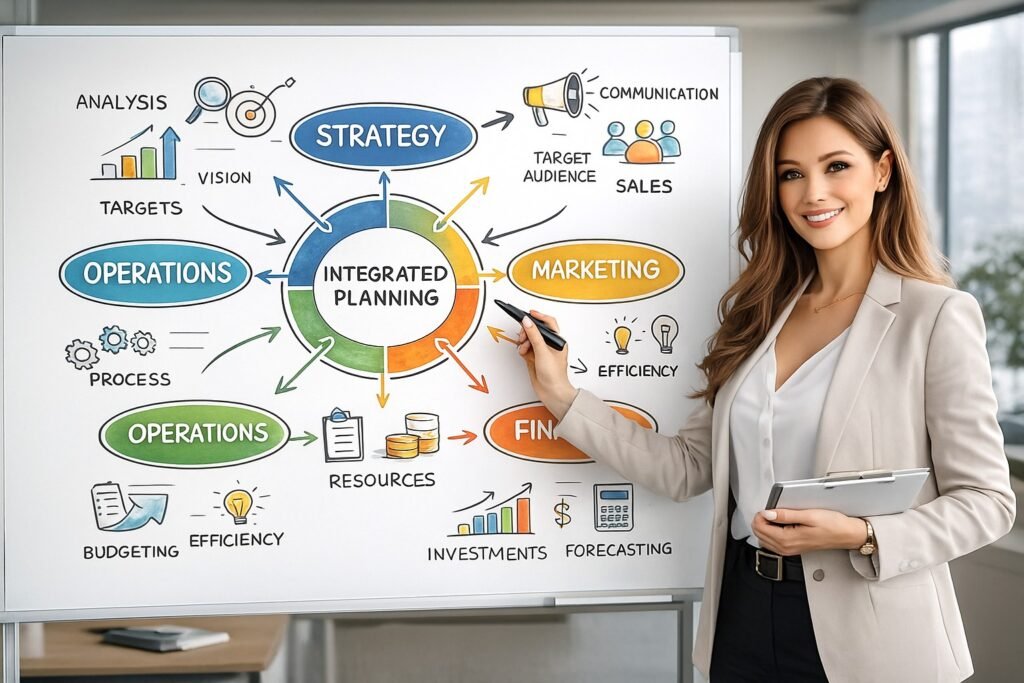
Integrated planning has emerged as a critical component for large organizations looking to navigate the complexities of modern business environments.
By aligning various departments and functions under a unified strategy, companies can enhance efficiency, improve resource allocation, and ultimately drive better outcomes.
This blog delves into the multifaceted nature of integrated planning, exploring its benefits, frameworks, tools, and challenges, while offering practical guidance for corporations aiming to adopt these strategies effectively.
Understanding Integrated Planning in Today’s Organizations
Integrated planning is a holistic approach that seeks to synchronize diverse business functions towards achieving common goals. Unlike traditional planning methods that often operate in silos, integrated planning merges financial planning, strategic objectives, operations, and marketing into a cohesive framework. This approach allows organizations to minimize redundancies, streamline processes, and foster collaboration among teams. Companies can respond more agilely to changes in the market landscape when all departments are aligned under a unified vision.
By encompassing all facets of an organization from human resources to supply chain management integrated planning enhances communication and transparency. For instance, when the finance team and marketing department collaborate closely, they can better forecast budgets and allocate resources based on real-time market analysis and customer feedback. This synergy helps organizations make informed decisions that are responsive to market demands, ultimately leading to improved business outcomes.
Moreover, integrated planning fosters a culture of accountability within organizations. When teams are aware of how their respective roles contribute to overarching business objectives, they are more likely to take ownership of their responsibilities. This alignment creates a shared vision that encourages employees to work together towards the common goal, which is crucial for long-term success in a competitive business environment.
Key Benefits of Integrated Planning for Large Enterprises
One of the primary benefits of integrated planning is enhanced decision-making capabilities. When data from various departments is aggregated and analyzed holistically, organizations can gain a clearer picture of their performance and market positioning. This comprehensive view allows decision-makers to identify trends, forecast future scenarios, and craft strategies that are informed by insights from multiple perspectives. As a result, companies can avoid costly missteps that often arise from isolated decision-making processes.
Another significant advantage is improved resource allocation. In large enterprises, various departments may compete for limited resources, leading to inefficiencies and waste. Integrated planning enables organizations to assess their needs more effectively and allocate resources in a way that maximizes ROI. By prioritizing initiatives that align with strategic goals, companies can ensure that their investments yield the best possible outcomes, ultimately driving growth and profitability.
Lastly, integrated planning promotes agility and responsiveness in an ever-changing business environment. In today’s fast-paced market, companies must continually adapt to shifting consumer preferences, technological advancements, and competitive pressures. An integrated planning framework allows organizations to pivot quickly, enabling them to seize new opportunities and mitigate risks before they escalate. This level of adaptability is essential for maintaining a competitive edge in today’s dynamic landscape.
Aligning Business Goals with Integrated Planning Frameworks
To effectively implement integrated planning, organizations must first align their business goals with the planning frameworks they choose to adopt. This involves setting clear objectives that resonate with all stakeholders, from executives to frontline employees. When everyone understands the company’s strategic vision, it becomes easier to develop integrated planning processes that reflect these goals.
Once objectives are established, companies can choose from various integrated planning frameworks, such as the Balanced Scorecard or the Integrated Business Planning (IBP) model. Each framework offers unique benefits and methodologies, but they all share the common goal of synchronizing business functions. By selecting a framework that aligns with their specific needs, organizations can create a structured approach that enhances collaboration and drives performance.
Moreover, continuous monitoring and evaluation of these frameworks are essential for ensuring that they remain aligned with evolving business goals. As market conditions change and new challenges emerge, companies must be willing to adapt their integrated planning processes to maintain alignment with their strategic objectives. This dynamic approach fosters resilience and long-term success in an increasingly complex business landscape.
Tools and Technologies Supporting Integrated Planning Efforts
The advent of advanced technologies has revolutionized integrated planning efforts for large organizations. Cloud-based platforms, data analytics tools, and collaboration software have made it easier for teams to share information and insights in real-time. For example, enterprise resource planning (ERP) systems enable organizations to track financial performance, inventory management, and supply chain logistics all in one platform. This integration facilitates smoother communication and data sharing across departments, reducing the likelihood of errors and misaligned objectives.
Additionally, predictive analytics tools have become increasingly popular in supporting integrated planning efforts. By leveraging historical data and advanced algorithms, organizations can forecast future trends and sales patterns more accurately. This insight aids in resource allocation and helps teams make informed decisions based on data rather than gut feelings. The ability to anticipate changes in the market landscape empowers companies to stay one step ahead of the competition.
Lastly, project management software is invaluable for keeping integrated planning initiatives on track. Tools like Asana or Trello allow teams to set milestones, assign tasks, and monitor progress toward strategic goals. By fostering accountability and transparency, these tools enhance collaboration among departments and ensure that everyone is working towards the same objectives. Ultimately, the right combination of tools and technologies can significantly bolster integrated planning efforts and drive better outcomes.
Overcoming Challenges in Integrated Planning Implementation
Despite the numerous benefits of integrated planning, organizations often encounter challenges during implementation. One of the most common hurdles is resistance to change. Employees accustomed to traditional planning methods may be hesitant to adopt new processes and tools. To mitigate this resistance, leadership must actively communicate the benefits of integrated planning and involve employees in the process. Offering training sessions and soliciting feedback can help ease the transition and encourage buy-in from team members.
Another challenge is data silos, which can hinder effective integrated planning. When departments operate in isolation, valuable information may remain inaccessible, leading to incomplete or inaccurate analyses. To overcome this, organizations must prioritize data integration across all platforms. Implementing enterprise-wide systems that facilitate data sharing can break down silos and promote a culture of collaboration. Ensuring that everyone has access to the same information is crucial for achieving alignment across departments.
Finally, measuring success can be a daunting task. Organizations may struggle to identify key performance indicators (KPIs) that accurately reflect the effectiveness of their integrated planning efforts. To overcome this, companies should focus on establishing clear KPIs tied to their strategic objectives. Regularly reviewing these metrics can provide valuable insights into performance and highlight areas for improvement. By implementing a robust measurement system, organizations can continuously refine their integrated planning processes and ensure long-term success.
Best Practices for Successful Integrated Planning Strategies
To ensure the effectiveness of integrated planning strategies, organizations should adopt several best practices. First and foremost, establishing a cross-functional team to oversee the integrated planning process is essential. This team should consist of representatives from various departments, including finance, operations, marketing, and human resources. By fostering diverse perspectives, organizations can develop more comprehensive planning strategies that address the needs of all stakeholders.
Another best practice is to leverage technology effectively. Investing in the right tools and platforms can enhance collaboration and streamline communication across departments. Organizations should evaluate their existing technology infrastructure and identify gaps that may hinder integrated planning efforts. By adopting modern solutions, companies can facilitate real-time sharing of information, allowing teams to make informed decisions quickly.
Lastly, organizations should foster a culture of continuous improvement. Integrated planning should not be viewed as a one-time initiative but rather as an ongoing process. Regularly soliciting feedback from employees and stakeholders can help identify areas for enhancement. Organizations should be willing to adapt their planning frameworks and processes based on insights gained from these discussions. This commitment to continuous improvement can significantly boost the effectiveness of integrated planning strategies over time.
Measuring Success: Metrics for Integrated Planning Impact
Measuring the success of integrated planning efforts is crucial for organizations aiming to optimize their strategies. One effective way to do this is by tracking key performance indicators (KPIs) that align with business objectives. Common metrics include revenue growth, cost reduction, and customer satisfaction. These quantitative measures provide tangible evidence of how integrated planning impacts the overall performance of the organization.
In addition to quantitative metrics, organizations should also consider qualitative assessments to gauge the effectiveness of their integrated planning initiatives. Employee engagement surveys, feedback sessions, and stakeholder interviews can offer valuable insights into how well teams are collaborating and whether they feel aligned with the company’s strategic goals. This qualitative data can provide a more complete picture of integrated planning effectiveness.
Furthermore, organizations should establish regular review cycles to analyze the performance of their integrated planning efforts. By evaluating both quantitative and qualitative metrics, companies can identify areas for improvement and make data-driven decisions to refine their planning processes. This ongoing evaluation helps organizations stay agile and responsive to changing market conditions, ultimately contributing to long-term success.
Future Trends in Integrated Planning for Corporations
As businesses continue to evolve, integrated planning will inevitably adapt to new trends and challenges. One notable trend is the increasing reliance on artificial intelligence and machine learning to support decision-making processes. Advanced algorithms can analyze vast amounts of data, identify patterns, and generate insights that were previously unattainable. This shift towards data-driven decision-making will empower organizations to optimize their integrated planning efforts further.
Another emerging trend is the growing emphasis on sustainability and corporate social responsibility. As consumers become more environmentally conscious, organizations must integrate these values into their planning processes. This involves aligning business objectives with sustainable practices, such as reducing waste and promoting ethical sourcing. By integrating social and environmental considerations into their planning frameworks, companies can enhance their brand reputation and attract a loyal customer base.
Lastly, remote work is reshaping how organizations approach integrated planning. As teams become more dispersed, leveraging technology for collaboration and communication is essential. Organizations must adopt flexible planning frameworks that accommodate remote work dynamics while ensuring alignment across departments. This adaptability will be crucial for maintaining efficiency and productivity in a rapidly changing work environment.
Integrated planning represents a significant opportunity for large organizations seeking to enhance efficiency, collaboration, and overall performance. By aligning business goals, leveraging technology, and adopting best practices, companies can navigate the complexities of today’s market landscape more effectively. As integrated planning continues to evolve, organizations must remain agile and responsive to emerging trends, ensuring that they are well-positioned for long-term success. Embracing this comprehensive approach will not only improve internal processes but also create a foundation for sustainable growth in an increasingly competitive environment.
Here’s a detailed, enterprise-focused FAQ section for your blog on Integrated Planning. Subtitles are formatted as H3 and the answers are framed for corporate and large organization audiences.
Frequently Asked Questions
What is integrated planning in an enterprise context?
Integrated planning is a holistic approach that aligns multiple business functions—finance, operations, marketing, HR, and supply chain—under a unified strategy. It ensures decisions are coordinated, resources are allocated efficiently, and all departments work toward common organizational objectives.
How does integrated planning differ from traditional planning?
Traditional planning often occurs in functional silos, with each department creating plans independently. Integrated planning merges these efforts, enabling cross-functional visibility, collaboration, and a single source of truth for organizational strategy and execution.
Why is integrated planning critical for large organizations?
Large organizations operate complex, interdependent systems. Without integration, misaligned priorities, duplicated efforts, and inefficient resource allocation are common. Integrated planning ensures enterprise-wide coordination, supports governance, and reduces operational risk, enabling better outcomes at scale.
What are the key benefits of integrated planning?
Integrated planning provides multiple strategic advantages:
-
Enhanced efficiency: Reduces redundancy and streamlines processes.
-
Improved resource allocation: Ensures capital, talent, and time are used optimally.
-
Better decision-making: Provides a single view of enterprise priorities.
-
Increased agility: Enables faster response to market changes and disruptions.
-
Stronger accountability: Teams understand how their actions contribute to organizational goals.
How does integrated planning improve collaboration across departments?
By providing a shared framework and unified objectives, integrated planning encourages teams to coordinate actions, share insights, and anticipate interdependencies. For example, finance and marketing teams can align budgets with market campaigns, reducing delays and improving ROI.
What governance structures support integrated planning?
Effective governance includes clear decision-making authorities, defined escalation paths, planning cycles, and cross-functional steering committees. Large enterprises often establish integrated planning boards that review objectives, monitor progress, and ensure alignment with corporate strategy.
What tools and frameworks support integrated planning?
Enterprises often use:
-
Enterprise Resource Planning (ERP) systems for financial and operational data integration
-
Project Portfolio Management (PPM) tools to align initiatives with strategic objectives
-
Integrated Business Planning (IBP) frameworks for forecasting and scenario analysis
-
Collaboration platforms to facilitate cross-functional communication
How does integrated planning handle change or market disruption?
Integrated planning builds flexibility into decision-making by linking scenarios, forecasts, and operational plans. When market conditions shift, leaders can quickly reassess priorities, reallocate resources, and adjust execution without disrupting the overall strategy.
What challenges do organizations face when adopting integrated planning?
Common challenges include:
-
Resistance to cultural change and breaking down silos
-
Difficulty standardizing processes across diverse departments
-
Complexity in consolidating data from multiple systems
-
Maintaining engagement and accountability across large teams
Enterprises address these challenges through leadership alignment, structured training, governance enforcement, and incremental implementation.
Can integrated planning drive measurable performance improvements?
Yes. Enterprises that adopt integrated planning typically see better alignment between strategy and execution, higher resource productivity, reduced operational risk, faster decision cycles, and improved financial performance.
How does integrated planning support long-term strategic goals?
By ensuring all functional areas work toward shared objectives, integrated planning strengthens the connection between day-to-day execution and long-term enterprise strategy. This alignment supports sustainable growth, stakeholder confidence, and competitive advantage over time.
Is integrated planning a one-time initiative or an ongoing practice?
It is an ongoing practice. Large organizations continuously update integrated plans to reflect market changes, organizational shifts, and evolving corporate objectives. Continuous monitoring and iteration ensure that integrated planning remains relevant and effective over time.
Here’s a detailed, enterprise-focused conclusion for your Integrated Planning blog, expanded to over 300 words:
Conclusion
Integrated planning is no longer a discretionary practice or an optional enhancement for large organizations. In today’s complex business environment, where enterprises operate across multiple functions, geographies, and regulatory landscapes, alignment is essential for sustained success. By bringing finance, operations, marketing, HR, and other critical functions under a cohesive planning framework, organizations can reduce inefficiencies, minimize duplicated efforts, and make decisions that are grounded in enterprise-wide visibility rather than isolated perspectives. This alignment ensures that resources whether financial, human, or technological are allocated strategically to support the organization’s overarching objectives.
The benefits of integrated planning extend beyond operational efficiency. Enterprises that adopt this approach experience improved agility, enabling them to respond proactively to market shifts, regulatory changes, or unforeseen disruptions. By linking planning to measurable outcomes and key performance indicators, leadership can monitor execution, identify risks early, and make informed adjustments without jeopardizing strategic priorities. Moreover, integrated planning fosters accountability and transparency, creating a culture where teams understand how their individual contributions impact the enterprise as a whole. This cultural alignment strengthens collaboration, encourages ownership, and ultimately enhances overall performance.
Successful implementation requires more than tools or frameworks it requires disciplined governance, clear decision rights, and ongoing communication. Organizations must ensure that planning cycles, reporting mechanisms, and cross-functional steering structures are designed to reinforce integration rather than create additional complexity. Continuous monitoring, iterative adjustments, and scenario-based forecasting are critical to maintain relevance in dynamic markets. Enterprises that commit to integrated planning not only optimize operational outcomes but also gain a strategic advantage, building resilience, credibility with stakeholders, and a clear path to achieving long-term growth.
In conclusion, integrated planning transforms fragmented organizational efforts into a coherent strategy that drives both efficiency and effectiveness. For large enterprises, it is a cornerstone capability that connects daily execution to strategic goals, enhances collaboration, and enables leaders to make confident, data-driven decisions. By embedding integrated planning into corporate processes and culture, organizations position themselves to operate with precision, adaptability, and a competitive edge in a rapidly evolving business landscape.
Hashtags: #IntegratedPlanning #BusinessStrategy #Collaboration #ResourceManagement #FutureTrends
External Source: For further reading on integrated planning frameworks, visit PL Projects https://plprojects.co.uk/integrated-planning-project-management/
Explore Free Project Management Templates https://pmresourcehub.com/library/