11 Features of Adaptive PPM Tools That Outperform Traditional Gantt Charts
In project management, organizations are continually seeking ways to enhance productivity and improve outcomes. Traditional Gantt charts, while once the gold standard for planning and scheduling, often fall short when it comes to addressing the complexities of modern projects. Enter adaptive Project Portfolio Management (PPM) tools, which offer a plethora of features designed to outperform Gantt charts. In this article, we’ll explore 11 key features of adaptive PPM tools that not only enhance project visibility and control but also foster collaboration, efficiency, and proactive decision-making.
Understanding the Shift from Gantt Charts to Adaptive PPM
The evolution of project management tools reflects the changing landscape of work. Gantt charts provide a visual representation of project schedules, allowing managers to track tasks, deadlines, and resources. However, they can become cumbersome, especially in dynamic environments where project scopes change frequently. Traditional Gantt charts often result in static views that may not accurately represent real-time project progress or facilitate quick adjustments, leading to missed deadlines and miscommunication among teams.
Adaptive PPM tools address these limitations by offering a more flexible and responsive approach to project management. They not only allow for real-time updates but also provide various functionalities that cater to the diverse needs of teams and stakeholders. This adaptability is crucial in today’s corporate landscape, where agility and quick decision-making are paramount. As organizations increasingly adopt Agile methodologies and prioritize collaboration, the demand for more advanced project management tools continues to rise.
With adaptive PPM tools, organizations can achieve greater alignment between project goals and business objectives. This shift signifies a move towards a more holistic view of project management, emphasizing continuous improvement and value delivery. By leveraging the features of adaptive PPM tools, teams can foster innovation, enhance stakeholder engagement, and ultimately, drive better business outcomes.
Key Features That Enhance Project Visibility and Control
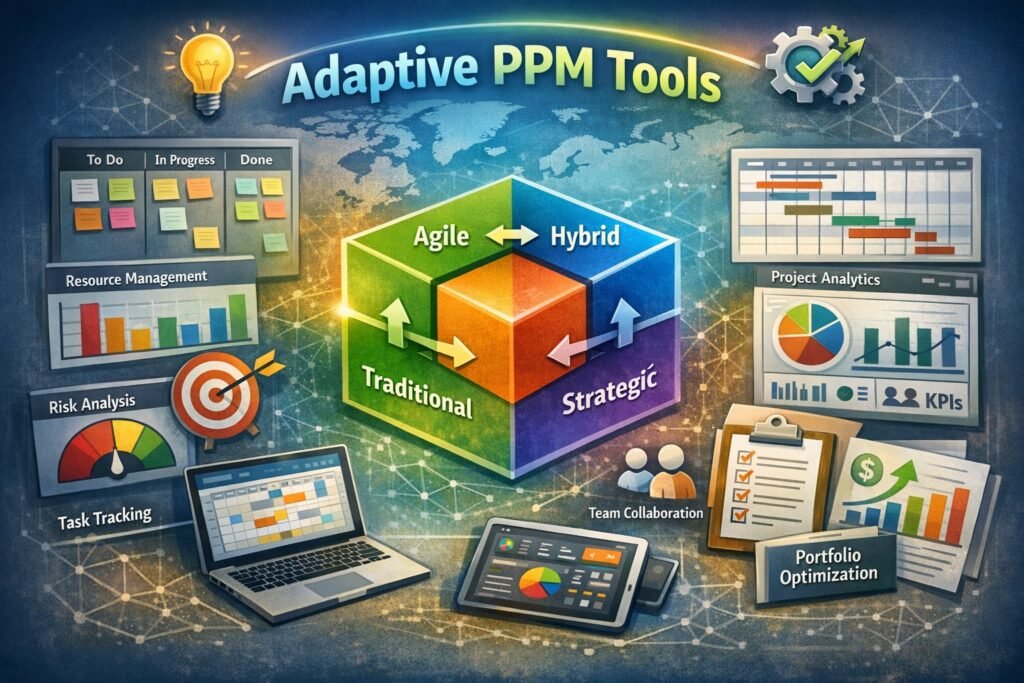
One of the standout features of adaptive PPM tools is enhanced project visibility. Unlike traditional Gantt charts, which can be limited to a linear timeline, adaptive PPM tools provide a multi-dimensional view of project status. This allows project managers and stakeholders to see not just when tasks are due, but also how they interconnect and impact each other. Through visualizations such as Kanban boards and timelines, teams can quickly assess the health of a project and identify bottlenecks or areas needing attention.
In addition to visibility, adaptive PPM tools allow for better control over projects. This control comes from the ability to easily reallocate resources, adjust timelines, and pivot strategies as needed. For instance, if a particular task falls behind schedule, project managers can quickly adjust resource allocation or re-prioritize tasks to keep the project on track. This level of responsiveness is often unattainable with traditional Gantt charts, which require significant manual updates and can become outdated quickly.
Furthermore, adaptive PPM tools often integrate with other business systems, providing a seamless flow of information. This integration ensures that all stakeholders are on the same page, reducing the risk of miscommunication and ensuring that project objectives align with organizational goals. By enhancing visibility and control, these tools empower teams to work more efficiently, ultimately leading to successful project outcomes.
Real-Time Collaboration Tools: A Game Changer for Teams
Effective collaboration is a cornerstone of successful project management, and adaptive PPM tools are designed with this in mind. Real-time collaboration features allow teams to communicate directly within the project management platform, eliminating the need for multiple external communication channels. This centralization not only streamlines communication but also ensures that all discussions and decisions are documented and easily accessible.
Moreover, real-time updates enable teams to remain aligned, even when working remotely or across different time zones. This capability is particularly valuable for large organizations with distributed teams. Project managers can share updates, assign tasks, and receive feedback instantly, empowering team members to take ownership of their responsibilities and contribute actively to project success.
The ability to collaborate in real time fosters a culture of transparency and accountability. Team members can track each other’s progress and provide assistance when needed, nurturing a collaborative spirit that ultimately enhances productivity. As organizations continue to embrace remote work and agile project management practices, the importance of real-time collaboration tools cannot be overstated.
Customizable Dashboards for Tailored Project Insights
Another significant advantage of adaptive PPM tools is the ability to create customizable dashboards. These dashboards allow project managers and team members to visualize key metrics and insights that matter most to them. Unlike traditional Gantt charts, which provide a one-size-fits-all view of project timelines, customizable dashboards can be tailored to display specific data points, such as task statuses, resource allocations, and performance metrics.
This level of customization enables organizations to focus on the most relevant information, ensuring that stakeholders can make informed decisions quickly. For instance, a project manager might want to track the progress of critical tasks closely while also monitoring overall project health metrics. With customizable dashboards, they can create a view that emphasizes these areas without unnecessary clutter.
Furthermore, the ability to modify these dashboards in real time means that teams can adapt their focus as projects evolve. If new priorities emerge or if a project faces unexpected challenges, stakeholders can adjust their dashboards to reflect the current situation, providing a dynamic and responsive view of project performance. This feature not only enhances insights but also empowers teams to take proactive steps to address potential issues.
Predictive Analytics: Anticipating Issues Before They Arise
Predictive analytics is a game-changing feature of adaptive PPM tools that sets them apart from traditional Gantt charts. By leveraging historical data and advanced algorithms, these tools can identify trends and patterns that may indicate potential risks or challenges. This capability allows project managers to anticipate issues before they escalate, facilitating proactive decision-making.
For example, if a team consistently misses deadlines on specific tasks or if resource allocation patterns reveal a potential overload, predictive analytics can flag these concerns. Armed with this information, project managers can take steps to address potential roadblocks, whether it’s reallocating resources, adjusting timelines, or implementing team training.
The ability to foresee and mitigate risks not only enhances project outcomes but also fosters a culture of continuous improvement. By regularly analyzing project performance and adapting strategies based on insights gained from predictive analytics, organizations can refine their processes and drive greater efficiency over time. This forward-thinking approach is essential in an environment where project success is measured not just by completion, but by the value delivered to the organization.
Resource Management Tools That Optimize Team Efficiency
Resource management is a critical component of successful project management, and adaptive PPM tools excel in this area. By providing comprehensive insights into resource availability and utilization, these tools help project managers allocate resources effectively, ensuring that the right people are working on the right tasks at the right times. This strategic alignment is especially important for large organizations that juggle multiple projects simultaneously.
Adaptive PPM tools often include features such as resource capacity planning and workload balancing. These features allow project managers to visualize resource allocations across projects, helping them identify potential over- or under-utilization. By adjusting assignments based on these insights, organizations can optimize team efficiency and minimize burnout, leading to higher morale and productivity.
Additionally, effective resource management fosters a culture of accountability within teams. When team members understand their workload and see how their contributions impact overall project success, they are more likely to take ownership of their responsibilities. This enhanced accountability, combined with data-driven insights, allows organizations to maximize the value derived from their resources while minimizing waste.
Integration Capabilities with Existing Business Systems
The ability to integrate seamlessly with existing business systems is another compelling feature of adaptive PPM tools. In large organizations, project management is often intertwined with other functions such as finance, human resources, and customer relationship management. Adaptive PPM tools facilitate this integration by enabling data sharing and collaboration across multiple platforms, breaking down silos that often hinder project success.
For instance, an adaptive PPM tool can connect with financial systems to provide project managers with real-time budget updates and expenditure tracking. This integration ensures that projects remain within financial constraints and allows for quicker adjustments if overspending occurs. Additionally, it provides stakeholders with a holistic view of project performance, connecting project timelines with financial outcomes.
Moreover, integration capabilities enhance data accuracy and reduce the risk of errors that can arise from manual data entry. By enabling automatic updates and synchronization between systems, organizations can ensure that all stakeholders have access to consistent and up-to-date information. This connectivity not only streamlines project management processes but also empowers teams to make data-driven decisions that align with broader organizational goals.
Enhanced Reporting Features for Stakeholder Engagement
Effective communication with stakeholders is paramount in project management, and adaptive PPM tools offer enhanced reporting features that facilitate this communication. Unlike traditional Gantt charts, which may only convey timelines, adaptive PPM tools provide comprehensive reporting capabilities that allow project managers to present project status, risks, and performance metrics in a clear and engaging manner.
With customizable reporting, project managers can tailor their updates to meet the specific needs of different stakeholders. For instance, executives may require high-level summaries highlighting key performance indicators, while team members may benefit from more detailed reports that focus on task completion and individual contributions. This flexibility ensures that all stakeholders are informed and engaged, fostering a sense of ownership in the project’s success.
Moreover, enhanced reporting features often include visual data representations, such as graphs and charts, which help convey complex information more effectively. By transforming data into visual formats, project managers can communicate insights in a way that is easily digestible and engaging. This not only improves stakeholder understanding but also encourages greater involvement and support for the project.
In conclusion, the shift from traditional Gantt charts to adaptive PPM tools marks a significant evolution in project management. By leveraging features such as enhanced visibility, real-time collaboration, predictive analytics, and customizable dashboards, organizations can optimize project outcomes and drive efficiency. As project complexities increase and the need for agility becomes paramount, adaptive PPM tools emerge as essential assets for modern enterprises. Embracing these tools can empower teams, foster collaboration, and ultimately lead to more successful project delivery.
Frequently Asked Questions (FAQ) – Adaptive PPM Tools vs Gantt Charts
1. What is the primary difference between a Gantt chart and an adaptive PPM tool?
A Gantt chart primarily focuses on task scheduling and timelines, whereas an adaptive Project Portfolio Management (PPM) tool delivers enterprise-wide visibility, real-time analytics, portfolio governance, and dynamic resource optimization across multiple projects and programs.
2. Why are traditional Gantt charts insufficient for complex programs?
Gantt charts are largely static planning mechanisms that struggle to accommodate frequent scope changes, cross-project dependencies, and shifting priorities, limiting their effectiveness in complex, fast-paced environments.
3. What does “adaptive” mean in the context of PPM tools?
Adaptive PPM refers to systems engineered to respond dynamically to evolving project conditions, enabling real-time updates, predictive forecasting, and scenario modeling to support proactive management decisions.
4. How do adaptive PPM tools enhance project visibility?
They provide centralized dashboards, portfolio-level reporting, integrated analytics, and live performance metrics, giving PMOs and executives comprehensive insight into risk exposure, resource utilization, and strategic alignment.
5. Can adaptive PPM tools support Agile, hybrid, and traditional methodologies?
Yes. Adaptive PPM platforms are designed to manage diverse delivery frameworks simultaneously, allowing organizations to integrate Agile, hybrid, and waterfall approaches within a unified governance structure.
6. How do adaptive PPM tools improve decision-making?
Through advanced reporting, predictive analytics, real-time KPIs, and scenario planning capabilities, these tools empower leadership to make data-driven, forward-looking decisions rather than relying on static project schedules.
7. Do adaptive PPM tools completely replace Gantt charts?
Not entirely. Many adaptive PPM solutions still offer Gantt-style timeline views, but they extend far beyond basic scheduling by incorporating portfolio oversight, strategic prioritization, and governance controls.
8. How do adaptive PPM tools strengthen resource management?
They enable enterprise capacity planning, skills-based allocation, workload balancing, and forecasting, ensuring optimal deployment of resources across multiple concurrent initiatives.
9. Are adaptive PPM tools only suitable for large enterprises?
While particularly beneficial for enterprise-scale portfolios, mid-sized organizations managing complex or multi-project environments can also gain significant value from adaptive PPM capabilities.
10. What measurable outcomes can organizations expect from adopting adaptive PPM tools?
Organizations often achieve improved portfolio transparency, enhanced strategic alignment, reduced risk exposure, accelerated delivery cycles, stronger stakeholder confidence, and optimized resource utilization.
11. How do adaptive PPM tools support alignment with business strategy?
They connect project investments directly to strategic objectives, performance indicators, and value metrics, ensuring that prioritization and funding decisions are driven by measurable business impact.
12. What should organizations evaluate before transitioning from Gantt charts to adaptive PPM?
Leaders should assess portfolio complexity, governance maturity, reporting requirements, integration needs, change management readiness, and executive sponsorship to ensure a successful and scalable implementation.
Hashtags
ProjectManagement #AdaptivePPM #Collaboration #Analytics #ResourceManagement
Discover More great insights at https://www.pmresourcehub.com
Explore Free Project Management Templates https://pmresourcehub.com/library/
Explore Gartner’s blog on Adaptive PPM Tools https://www.gartner.com/reviews/market/adaptive-project-management-and-reporting