Project Controls Dashboards That Improve Decision-Making
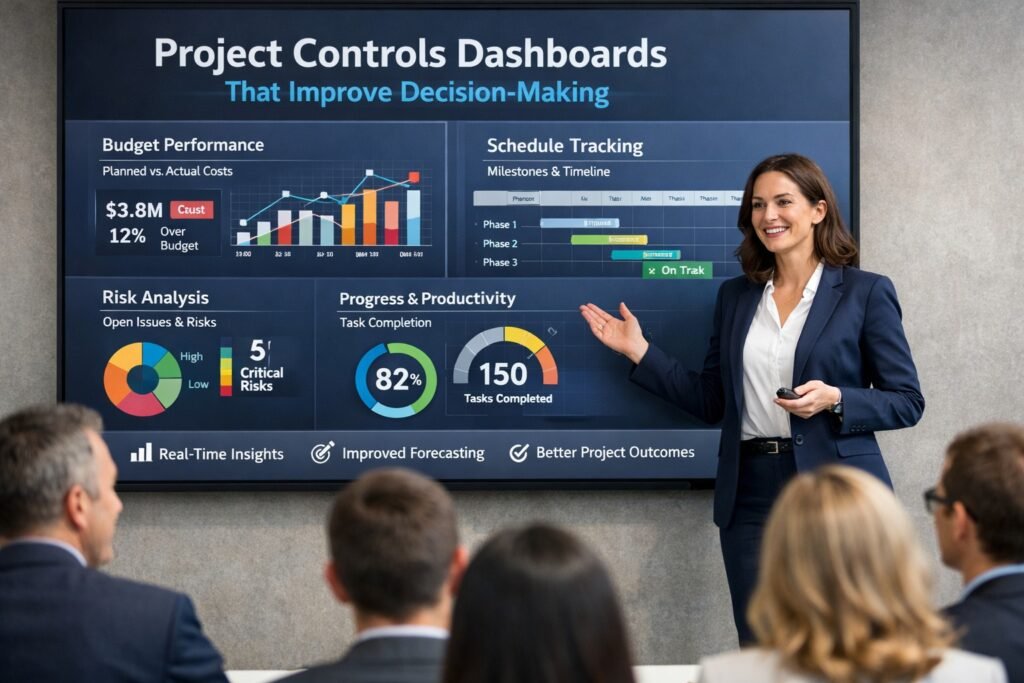
Project controls dashboards have fundamentally transformed the way modern organizations manage, monitor, and optimize their projects. In an increasingly complex and data-driven business environment, leaders can no longer rely on fragmented spreadsheets, static reports, or delayed status updates to guide critical decisions. Instead, they require real-time, high-impact visibility into cost performance, schedule adherence, risk exposure, and resource utilization. Project controls dashboards deliver this strategic advantage by converting complex project data into intuitive, visually compelling interfaces that empower faster, smarter decision-making.
These advanced dashboards consolidate essential performance metrics such as earned value data, cost variance, schedule performance index (SPI), and forecast at completion into centralized, easy-to-navigate platforms. By transforming raw data into actionable intelligence, project controls dashboards eliminate ambiguity and dramatically reduce the time required to interpret project health. Executives and project managers gain immediate clarity, enabling them to detect emerging risks, identify performance gaps, and implement corrective actions before minor issues escalate into major disruptions.
In today’s competitive landscape, where time is money and margins are tightly managed, access to accurate, real-time insights can mean the difference between project success and costly delays. Delayed reporting often results in reactive management, missed milestones, and budget overruns. In contrast, dynamic dashboards provide predictive visibility, allowing organizations to anticipate challenges, optimize resource allocation, and maintain alignment with strategic objectives. This proactive approach strengthens governance, enhances accountability, and significantly improves overall project outcomes.
Beyond operational control, project controls dashboards foster transparency and cross-functional collaboration. By serving as a single source of truth, they break down information silos and ensure that stakeholders from PMOs to executive leadership are aligned around consistent, data-backed insights. This shared visibility enhances communication, builds trust, and reinforces performance ownership across teams.
This article explores how project controls dashboards enhance decision-making through real-time analytics, advanced visualization, and performance forecasting. It examines the essential features that drive project success and highlights emerging trends such as AI-driven analytics and automated reporting that are shaping the future of project controls. By leveraging powerful dashboard solutions, organizations can elevate project performance, reduce risk, and consistently deliver measurable business value.
Understanding the Importance of Project Controls Dashboards
In today’s fast-paced business environment, organizations are often juggling multiple projects simultaneously. The complexity of managing these initiatives necessitates a robust system for tracking progress, costs, and overall performance. Project controls dashboards serve as a vital tool in this regard, allowing stakeholders to visualize essential metrics in real-time. By presenting data in a coherent format, these dashboards facilitate informed decision-making and strategic alignment across departments.
Moreover, project controls dashboards act as a communication bridge among team members and executives. They provide a centralized platform where everyone can access critical project data, eliminating information silos that could hinder collaboration. This transparency fosters accountability and enables teams to address issues before they escalate. As a result, organizations can better manage risks, allocate resources efficiently, and ultimately drive project success.
Finally, the importance of project controls dashboards goes beyond mere project tracking. These dashboards empower organizations to analyze past performance and forecast future outcomes. By leveraging historical data, teams can draw insights that guide future project planning and execution. This proactive approach not only enhances the likelihood of meeting deadlines and budgets but also cultivates a culture of continuous improvement within the organization.
Key Features of Effective Decision-Making Dashboards
To be truly effective, project controls dashboards must incorporate several key features that facilitate data analysis and decision-making. First and foremost, an intuitive user interface is crucial. Dashboards should present complex data in an easily digestible format, using clear visuals, charts, and graphs. This ensures that stakeholders can quickly comprehend the information and make well-informed decisions without getting bogged down in data overload.
Another essential feature is real-time data integration. Effective dashboards pull in live data from various sources, offering stakeholders a current snapshot of project status. This capability allows teams to track project performance and make necessary adjustments on the fly. The ability to monitor key performance indicators (KPIs) in real time can dramatically improve response times to emerging challenges, leading to better outcomes.
Lastly, customization options are vital for addressing the diverse needs of various stakeholders. Different team members from project managers to executive leaders require different data perspectives. Dashboards that allow users to tailor views based on individual roles enable more effective decision-making. By providing relevant insights to each stakeholder, organizations can ensure that everyone is aligned and working towards common goals.
How Dashboards Enhance Project Visibility and Tracking
Visibility is a cornerstone of effective project management. Project controls dashboards enhance visibility by compiling data from various sources into a single, cohesive view. This holistic perspective allows team members and leadership to track project milestones, budget expenditures, and resource allocation seamlessly. When stakeholders have visibility into project workflows, they can identify bottlenecks and make necessary adjustments proactively, rather than reactively.
Furthermore, dashboards facilitate the tracking of both quantitative and qualitative data. While metrics such as budget adherence and timeline compliance are crucial, qualitative factors like stakeholder satisfaction or team morale also play a significant role in project success. By integrating these different types of data, dashboards present a more balanced view of project health, enabling informed decisions that take multiple factors into account.
Moreover, enhanced visibility provided by dashboards can drive a culture of accountability within the organization. When team members know that their contributions are being tracked and reported, they are more likely to take ownership of their tasks. This accountability can foster a stronger commitment to project goals and timelines, ultimately enhancing overall performance.
Integrating Real-Time Data for Better Decisions
Real-time data integration is a game-changer for organizations looking to improve their decision-making processes. By incorporating live data feeds into project controls dashboards, teams can monitor ongoing activities and performance indicators as they happen. This immediate access to information enables managers to respond swiftly to challenges or changes in project scope, ensuring that teams are not left scrambling in the face of unforeseen issues.
Another benefit of real-time data integration is the ability to conduct proactive risk management. With access to up-to-the-minute metrics, project managers can identify potential risks early and implement mitigating strategies before they escalate. This proactive approach not only helps in keeping projects on track but also builds confidence among team members and stakeholders alike.
Additionally, real-time data allows organizations to maintain a competitive edge. In industries where speed and adaptability are crucial, having access to current information enables businesses to make quicker, more informed decisions. This advantage can be the difference between leading the market and falling behind, highlighting the importance of integrating real-time data into project controls dashboards.
Customizing Dashboards to Meet Organizational Needs
Customization is key to maximizing the effectiveness of project controls dashboards. Every organization has unique workflows, objectives, and reporting requirements. By allowing users to tailor dashboards to their specific needs, organizations can ensure that the information presented is relevant and actionable. Customization options may include selecting which KPIs to display, choosing appropriate visualizations, and setting up alerts for critical thresholds.
Notably, custom dashboards can cater to the varying levels of technical expertise among users. While executive leaders may prefer high-level summaries, project managers may require more detailed data. By allowing for such distinctions in dashboard design, organizations can enhance user engagement and ensure that everyone has the insights necessary to make informed decisions.
Moreover, ongoing feedback from users can drive continuous improvement in dashboard design. Organizations should regularly solicit input from stakeholders to identify which features and data are most useful. This iterative approach not only keeps dashboards aligned with organizational needs but also fosters a sense of ownership among users, further enhancing their commitment to utilizing these tools effectively.
Case Studies: Successful Dashboard Implementations
Examining real-world examples of successful dashboard implementations can provide valuable insights for organizations looking to enhance their project controls. One notable case is a large construction firm that integrated a project controls dashboard across its various departments. By doing so, they consolidated data from project management, finance, and resource allocation into one accessible platform. As a result, the organization improved its project tracking capabilities and achieved a 20% reduction in project overruns, demonstrating the tangible benefits of effective dashboards.
Another compelling case involves a major IT services provider that implemented a customizable dashboard for its project managers. By allowing teams to tailor their dashboard views to reflect specific project metrics, the organization saw a 30% increase in on-time project delivery. This success underscored the importance of both real-time data integration and user customization. The company’s project managers were empowered with the right information at the right time, enabling them to make informed decisions swiftly.
Lastly, a leading manufacturing company adopted project controls dashboards to enhance cross-departmental collaboration. By providing a shared platform for data visualization, the organization improved communication among engineering, supply chain, and production teams. This collaborative approach led to a 25% improvement in resource utilization and reduced operational inefficiencies. These case studies illustrate how tailored dashboard implementations can drive significant improvements in project performance and decision-making.
Common Pitfalls to Avoid with Project Dashboards
While project controls dashboards offer numerous advantages, organizations must be aware of common pitfalls that can hinder their effectiveness. One of the most significant issues is the risk of information overload. When dashboards are cluttered with excessive data and visualizations, users may struggle to identify the key insights they need. To avoid this, organizations should focus on presenting only the most relevant data and KPIs, ensuring that dashboards remain user-friendly.
Another common pitfall is the lack of user training and onboarding. If team members are not adequately trained on how to use the dashboard effectively, they may underutilize this powerful tool. Organizations should invest time in providing training sessions and resources, ensuring that all stakeholders understand how to navigate the dashboard, interpret data, and leverage insights for better decision-making.
Finally, neglecting regular updates and maintenance can lead to outdated information on dashboards. In order to remain effective, dashboards need to pull in real-time data consistently. Organizations must ensure that data sources are integrated correctly and that teams are monitoring the accuracy of the information presented. By proactively managing dashboards and keeping them current, organizations can maximize their value and drive better decision-making.
Future Trends in Project Controls Dashboards and Analytics
As technology continues to evolve, so too will project controls dashboards and the analytics that drive them. One emerging trend is the use of artificial intelligence (AI) and machine learning algorithms to enhance data analysis capabilities. By leveraging these advanced technologies, organizations can gain deeper insights into project performance, identify trends, and even predict potential risks before they occur. This predictive capability will revolutionize project management, enabling teams to make more informed decisions.
Another trend to watch is the increasing focus on mobile accessibility. As remote work becomes more prevalent, having access to project controls dashboards on mobile devices will be essential. Organizations are likely to invest in responsive design and mobile-friendly features to ensure that team members can access crucial project data from anywhere, at any time. This flexibility will further empower decision-makers to act quickly and efficiently in an ever-changing business landscape.
Lastly, the integration of collaborative features within dashboards is set to rise. As organizations seek to foster a culture of teamwork and accountability, dashboards that allow for commenting, sharing insights, and collaborating on projects in real time will become invaluable. These features can enhance communication and collective problem-solving, leading to improved project outcomes and a more united organizational front.
What Are Project Controls Dashboards and Why Are They Critical for Project Success?
Project controls dashboards are advanced visual tools designed to consolidate complex project data into clear, actionable insights. They enable decision-makers to monitor progress, track costs, and evaluate performance in real-time, reducing risks and ensuring projects stay on schedule and within budget.
How Do Project Controls Dashboards Improve Decision-Making?
By presenting key metrics such as schedule variance, cost performance, and resource utilization in an intuitive format, dashboards allow executives and project managers to make fast, informed decisions. Real-time visibility helps identify potential issues early, enabling proactive interventions that prevent delays and costly overruns.
What Key Features Should Organizations Look for in Project Controls Dashboards?
Top dashboards offer features like customizable KPI tracking, interactive reporting, real-time data integration, trend analysis, and predictive forecasting. These capabilities enhance portfolio visibility, streamline reporting, and support strategic decision-making across multiple projects simultaneously.
How Do Project Controls Dashboards Enhance Collaboration and Accountability?
Dashboards centralize project data, providing teams and executives with a single source of truth. This transparency eliminates communication silos, clarifies responsibilities, and fosters accountability. Team members can quickly see how their tasks impact overall project goals, improving collaboration and alignment.
Can Project Controls Dashboards Help With Risk Management?
Yes. By continuously monitoring key performance indicators and visualizing potential bottlenecks or deviations, dashboards enable proactive risk identification. Teams can implement mitigation strategies before issues escalate, safeguarding timelines, budgets, and overall project quality.
How Do Dashboards Support Long-Term Project Planning and Continuous Improvement?
Beyond tracking current projects, dashboards leverage historical data to analyze trends, evaluate past performance, and forecast future outcomes. This data-driven approach informs strategic planning, optimizes resource allocation, and promotes a culture of continuous improvement within the organization.
Are Project Controls Dashboards Suitable for Large Enterprises?
Absolutely. For organizations managing complex, multi-project portfolios, dashboards provide enterprise-level visibility. They allow stakeholders to monitor multiple initiatives simultaneously, prioritize resources effectively, and align project outcomes with broader business objectives.
What Are the Emerging Trends in Project Controls Dashboards?
Modern dashboards are increasingly integrating AI-powered analytics, predictive modeling, and cloud-based collaboration features. These innovations enhance real-time insights, automate reporting, and improve decision-making speed, keeping organizations agile in competitive markets.
How Can Organizations Maximize ROI With Project Controls Dashboards?
By implementing dashboards strategically, organizations can reduce project delays, optimize resource usage, improve stakeholder communication, and enhance overall project quality. The result is higher efficiency, cost savings, and improved return on investment across all initiatives.
This FAQ section highlights how project controls dashboards transform project management into a proactive, data-driven, and highly efficient process, helping enterprises achieve measurable success.
Conclusion
In conclusion, project controls dashboards have emerged as indispensable tools for modern organizations seeking to optimize project performance, enhance decision-making, and drive measurable results. By consolidating complex data into clear, actionable visuals, these dashboards provide real-time insights that enable project managers, executives, and stakeholders to monitor progress, track budgets, assess risks, and allocate resources efficiently. The visibility they offer is not just a convenience it is a strategic advantage that empowers organizations to act proactively, address issues before they escalate, and maintain alignment with overarching business objectives.
Moreover, project controls dashboards foster transparency and accountability across teams. By creating a single source of truth for project information, they eliminate communication silos, enhance collaboration, and clarify individual and departmental responsibilities. This centralized approach ensures that every team member understands their role in achieving project goals, boosting engagement and promoting a culture of performance excellence. For large enterprises managing complex, multi-project portfolios, this level of insight is essential to avoid costly delays, optimize resource utilization, and consistently meet or exceed project expectations.
Beyond immediate project tracking, dashboards provide invaluable historical insights and predictive analytics. By leveraging data from past projects, organizations can identify trends, improve forecasting, and refine strategies for future initiatives. This forward-looking perspective supports continuous improvement, helping organizations learn from experience, mitigate risks more effectively, and strengthen their project management maturity over time.
As technology continues to advance, project controls dashboards are integrating AI, predictive modeling, and enhanced collaboration tools, further increasing their strategic value. By adopting these innovative solutions, organizations can stay agile, make informed decisions faster, and maintain a competitive edge in an increasingly complex business landscape.
Ultimately, the implementation of robust project controls dashboards transforms project management from a reactive process into a proactive, data-driven discipline. Organizations that invest in these tools not only enhance operational efficiency and reduce risks but also drive greater business value, ensuring that projects deliver measurable outcomes and contribute meaningfully to long-term strategic objectives. Embracing dashboards is no longer optional it is a critical step toward achieving sustained project success and enterprise-wide excellence.
Hashtags: #ProjectManagement #Dashboards #DecisionMaking #RealTimeData #Analytics
External Source: Explore Project Dashboards at the APM https://www.apm.org.uk/blog/how-to-create-actionable-business-and-project-dashboards/
Discover More great insights at https://www.pmresourcehub.com
Explore Free Project Management Templates https://pmresourcehub.com/library/