
SOP Metrics That Measure Process Effectiveness
Introduction
In today’s hyper-competitive and performance-driven business environment, operational efficiency is no longer optional it is a strategic necessity. Large organizations must continuously optimize processes, eliminate waste, and improve execution speed to maintain a sustainable competitive advantage. This is where Standard Operating Procedures (SOPs) and, more importantly, SOP metrics become mission-critical. Measuring process effectiveness through clearly defined, data-driven SOP metrics enables enterprises to move beyond assumptions and make informed, high-impact decisions that directly improve productivity, compliance, and profitability.
SOP metrics provide powerful visibility into how well processes are functioning across departments, regions, and business units. By systematically tracking performance indicators such as cycle time, error rates, compliance levels, and resource utilization, organizations can identify operational bottlenecks, uncover hidden inefficiencies, and implement targeted process improvements. This structured measurement approach transforms SOPs from static documentation into dynamic performance management tools that drive measurable results.
For enterprise organizations managing complex workflows and cross-functional operations, the ability to monitor and optimize process effectiveness at scale is a game changer. Accurate SOP measurement enhances quality control, strengthens governance, reduces operational risk, and supports continuous improvement initiatives. It empowers leadership teams with real-time performance insights, enabling faster decision-making and more strategic resource allocation.
Moreover, aligning SOP metrics with broader business objectives ensures that operational improvements directly contribute to revenue growth, customer satisfaction, regulatory compliance, and long-term scalability. Organizations that prioritize structured SOP performance measurement consistently outperform competitors by fostering accountability, transparency, and operational excellence.
In this article, we will explore the critical importance of SOP metrics, examine the most impactful performance indicators for large enterprises, and highlight best practices for successful implementation. We will also discuss emerging trends, including automation and advanced analytics, that are reshaping how organizations measure and optimize process effectiveness in today’s rapidly evolving digital landscape.
Understanding SOP Metrics for Process Effectiveness
SOP metrics are quantifiable measures that help organizations assess the performance and efficiency of their processes. These metrics provide insights into how well standard operating procedures are being followed, allowing organizations to identify areas for improvement. By tracking these metrics, companies can ensure compliance, enhance quality control, and ultimately boost overall performance.
Different types of SOP metrics exist, each designed to measure specific aspects of process effectiveness. For example, metrics can include cycle time, error rates, compliance levels, and employee productivity. Understanding the various metrics available empowers organizations to tailor their approach to meet unique operational challenges and strategic objectives.
Stakeholders across various departments need to be involved in defining and understanding these metrics. This collaborative effort will ensure that everyone is aligned on the goals of the SOPs and how to track their success. An effective communication strategy is vital for fostering a culture of accountability and continuous improvement within the organization.
Key Benefits of Measuring Process Effectiveness
Measuring process effectiveness through SOP metrics offers numerous advantages for large organizations. One major benefit is the ability to pinpoint inefficiencies and redundancies within operational workflows. By identifying problem areas, companies can implement targeted improvements that enhance performance and reduce costs.
Another benefit is the enhancement of decision-making capabilities. With data-driven insights derived from SOP metrics, managers can make informed decisions that align operational performance with strategic objectives. This level of insight helps organizations respond to market changes, adapt to customer needs, and stay ahead of the competition.
Measuring process effectiveness also supports compliance and quality assurance efforts. Organizations that track SOP metrics can more easily monitor adherence to industry regulations and standards. This not only minimizes the risk of potential legal issues but also fosters a culture of quality that can lead to increased customer satisfaction and loyalty.
Commonly Used SOP Metrics in Enterprises
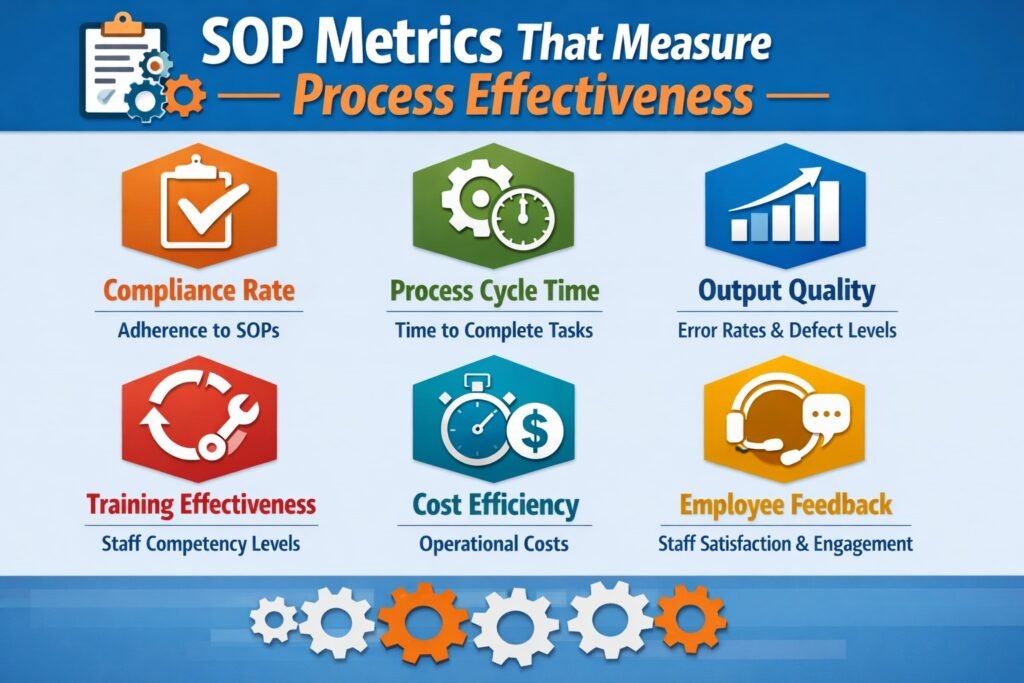
Organizations utilize various SOP metrics to evaluate their processes effectively. Some of the most commonly used metrics include cycle time, which measures the total time taken to complete a process from start to finish. Shorter cycle times often indicate more efficient processes, while longer ones may highlight inefficiencies that need to be addressed.
Another popular metric is the error rate, which quantifies the frequency of mistakes or defects in the process. High error rates can lead to increased costs, wasted resources, and diminished customer satisfaction. By closely monitoring this metric, organizations can implement corrective actions to improve quality and reduce errors.
Compliance levels are also crucial when evaluating SOP effectiveness. This metric assesses how well employees adhere to established procedures and guidelines. By ensuring compliance, organizations can minimize risks and maintain a consistent quality of service, ultimately creating a more reliable and trustworthy operation.
How to Select Relevant SOP Metrics for Your Team
Choosing the right SOP metrics is essential to accurately assess process effectiveness. The first step in this process involves identifying the key performance indicators (KPIs) that align with your organization’s strategic goals. These KPIs should be relevant to the specific processes you wish to evaluate and should provide actionable insights.
Once the KPIs are established, organizations should involve team members in the selection process. Engaging frontline employees who work directly with the processes can yield valuable insights into which metrics will provide the most relevant data. Their input can help identify practical metrics that will facilitate continuous improvement and empower employee ownership of the processes.
Finally, organizations should regularly review and reassess their chosen metrics. As business environments evolve, so too should the metrics being used to measure effectiveness. By adapting to changing circumstances, organizations can ensure that they are consistently capturing the most pertinent data to drive improvements in their processes.
Analyzing Data: Turning Metrics into Insights
Once SOP metrics have been collected, the next step is data analysis. This involves examining the metrics to identify trends, patterns, and anomalies that provide insights into process effectiveness. By visualizing data through dashboards, charts, or reports, organizations can make sense of the information and focus on key areas for improvement.
An effective analysis should not only highlight areas that require attention but also identify best practices that can be scaled across the organization. For example, if a particular team consistently demonstrates a low error rate, their methods can be documented and shared with other teams to promote best practices and drive performance improvements.
Additionally, organizations should consider employing advanced analytics tools that utilize artificial intelligence or machine learning to predict future outcomes based on historical data. By embracing technology, businesses can enhance their ability to make proactive, data-driven decisions that lead to improved operational effectiveness.
Implementing Metrics to Drive Continuous Improvement
Implementing SOP metrics is just the beginning; the real challenge lies in leveraging those metrics to foster a culture of continuous improvement. Organizations should establish regular review sessions to discuss metric performance and any potential areas for enhancement. This collaborative approach encourages employees to share successes and challenges, fostering a team-oriented environment focused on growth.
Training programs can be developed to help employees understand the importance of SOP metrics and their role in driving process effectiveness. By equipping staff with the skills and knowledge needed to interpret and act on the data, organizations can create a workforce that is both engaged and empowered.
Finally, organizations should celebrate wins, no matter how small. Recognizing improvements and achievements fosters a positive culture around metric-driven initiatives. This, in turn, encourages ongoing participation in the continuous improvement process, leading to sustained enhancements in overall performance.
Challenges in Measuring Process Effectiveness
While the benefits of measuring process effectiveness are evident, organizations often face challenges in this endeavor. One significant challenge is the complexity of data collection. Gathering accurate data from various sources can be time-consuming and may require specialized tools or expertise.
Another challenge is ensuring data accuracy and consistency. Inconsistent data can lead to misleading interpretations, making it difficult to draw actionable insights from the metrics. Organizations must prioritize data integrity and implement standardized data collection processes to ensure reliable results.
Moreover, change resistance can be a significant obstacle when implementing new SOP metrics. Employees may be hesitant to adopt new procedures or may feel overwhelmed by additional responsibilities. To combat this, organizations should focus on effective communication and change management strategies to foster buy-in and support throughout the transition.
Future Trends in SOP Metrics and Process Management
As organizations continue to adapt to a rapidly changing business landscape, several trends in SOP metrics and process management are emerging. One notable trend is the increasing reliance on data analytics and artificial intelligence to drive decision-making. As these technologies continue to advance, organizations will leverage them to uncover deeper insights and enhance process effectiveness.
Moreover, the integration of real-time monitoring tools is becoming more prevalent. These tools provide organizations with immediate feedback on process performance, enabling faster responses to emerging issues and opportunities. This shift towards real-time data monitoring will empower organizations to be more agile and adaptive in their operations.
Lastly, organizations are placing greater emphasis on collaborative performance management. Encouraging cross-departmental collaboration in the development and evaluation of SOP metrics fosters a sense of shared responsibility and accountability. This trend will likely lead to more comprehensive and effective process improvement initiatives that align with broader organizational goals.
Here is a structured SEO-optimized FAQ section for your blog, using strong, high-value keywords such as SOP metrics, process effectiveness, operational efficiency, enterprise performance, and continuous improvement.
Frequently Asked Questions About SOP Metrics and Process Effectiveness
What are SOP metrics and why are they critical for enterprise performance?
SOP metrics are quantifiable performance indicators used to measure how effectively Standard Operating Procedures (SOPs) are executed across an organization. These metrics are critical for enterprise performance because they provide data-driven insights into operational efficiency, compliance levels, quality control, and productivity. By tracking SOP metrics, organizations can reduce inefficiencies, minimize risk, and ensure consistent process execution at scale.
How do SOP metrics improve process effectiveness?
SOP metrics improve process effectiveness by identifying bottlenecks, performance gaps, and compliance deviations in real time. Metrics such as cycle time, error rates, throughput, and adherence rates allow leaders to pinpoint inefficiencies and implement targeted process improvements. This structured measurement approach drives operational excellence and supports continuous improvement initiatives.
What are the most important SOP metrics for large organizations?
The most impactful SOP metrics for enterprise environments typically include:
-
Cycle Time: Measures the time required to complete a process from start to finish.
-
Error Rate: Tracks defects or non-compliance incidents.
-
Compliance Rate: Assesses adherence to defined procedures and regulatory standards.
-
Productivity Metrics: Evaluates output per employee or per team.
-
Cost per Process: Determines financial efficiency and cost optimization opportunities.
These key performance indicators (KPIs) help organizations align operations with strategic business objectives.
How can organizations align SOP metrics with strategic goals?
To align SOP metrics with strategic objectives, organizations must link operational KPIs directly to enterprise-level performance indicators such as revenue growth, customer satisfaction, risk mitigation, and cost reduction. Executive sponsorship, cross-functional collaboration, and governance frameworks ensure that SOP performance measurement supports broader business strategy.
What role does leadership play in implementing SOP metrics?
Leadership plays a decisive role in driving SOP metric adoption and accountability. Executives and operational managers must champion a data-driven culture, communicate the importance of performance measurement, and ensure transparency in reporting. Strong leadership commitment fosters employee engagement, compliance, and continuous process optimization.
How do SOP metrics support compliance and risk management?
SOP metrics provide measurable oversight of regulatory compliance, internal controls, and operational risks. By tracking adherence rates and deviation trends, organizations can proactively mitigate risks before they escalate into major operational or financial issues. This strengthens governance and protects enterprise reputation.
What are common challenges when measuring SOP effectiveness?
Common challenges include inconsistent data collection, lack of standardized measurement frameworks, resistance to change, and insufficient stakeholder engagement. Overcoming these barriers requires clear communication, proper training, digital performance tracking tools, and executive alignment.
What are future trends in SOP performance measurement?
Emerging trends in SOP metrics include automation, real-time analytics dashboards, AI-driven performance insights, and predictive process optimization. Large enterprises are increasingly leveraging digital transformation tools to enhance visibility, improve accuracy, and drive proactive decision-making across complex operational environments.
In conclusion, measuring process effectiveness through SOP metrics is a vital practice for large organizations aiming to thrive in today’s competitive landscape. By understanding the importance of these metrics and implementing relevant strategies, businesses can optimize their operations, enhance decision-making, and foster a culture of continuous improvement. As organizations embrace the future of process management, adapting to emerging trends will be key to maintaining a competitive edge.
Hashtags: #SOPMetrics #ProcessEffectiveness #ContinuousImprovement #DataAnalysis #BusinessStrategy
External Source Reference: For more insights on the importance of SOP and process management, visit https://sopheroes.com/using-metrics-to-measure-process-improvement-in-your-sops/
Discover More great insights at https://www.pmresourcehub.com
Explore Free Project Management Templates https://pmresourcehub.com/library/