Top 7 RAID Management Best Practices to Prevent Project Scope Creep
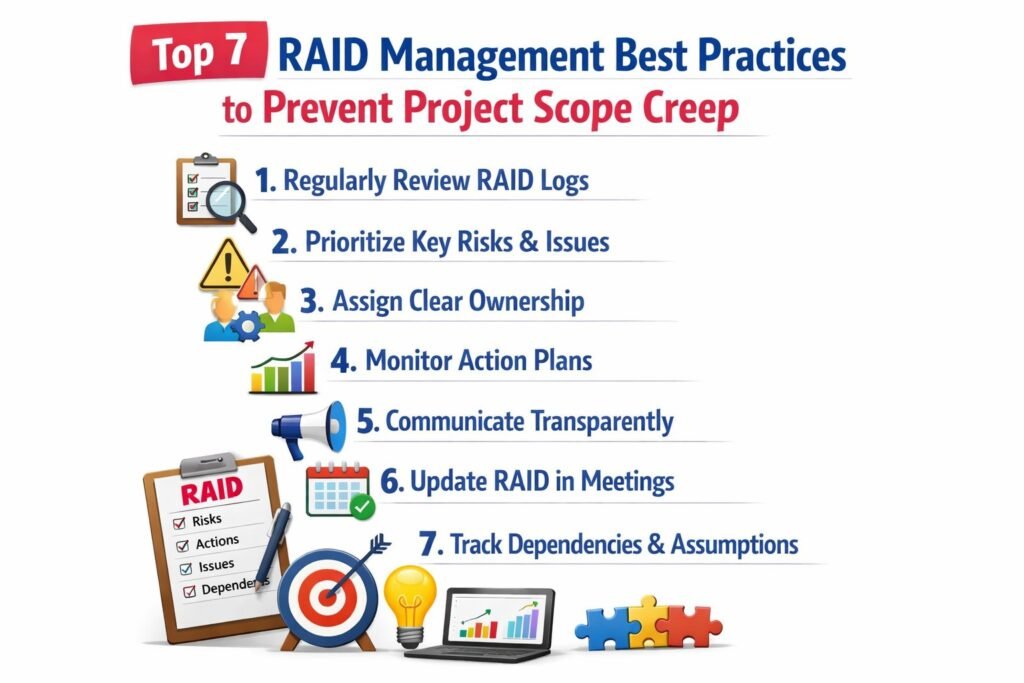
In project management, maintaining control over project scope is crucial for delivering successful outcomes. RAID (Risks, Assumptions, Issues, and Dependencies) management plays a vital role in this control, acting as a framework for identifying and addressing the factors that can lead to scope creep. Scope creep, the gradual expansion of project boundaries, can derail timelines and inflate budgets, rendering a project ineffective. To combat this, adopting best practices in RAID management is essential. This article outlines the top 7 RAID Management Best Practices that will help large organizations effectively manage RAID elements and prevent scope creep, ensuring projects stay on track.
Understanding RAID Management Best Practices and Its Importance in Projects
RAID management provides a structured approach to managing the uncertainties that can impact a project. It focuses on identifying and documenting risks, assumptions, issues, and dependencies throughout the project’s lifecycle. By being proactive in addressing these elements, project managers can anticipate potential challenges and mitigate them before they escalate into significant problems. This structure not only aids in fostering clear communication but also enhances accountability among team members.
Large organizations that incorporate RAID management into their project frameworks experience improved clarity and focus. For example, when project teams clearly understand existing risks and assumptions, they can make better-informed decisions. This clarity often leads to more effective collaboration across departments, as everyone is aligned on objectives and aware of potential pitfalls. As such, RAID management plays an integral role in optimizing resource allocation and ensuring all stakeholders are on the same page.
Additionally, RAID management can be critical for aligning team members and stakeholders toward shared goals. With established processes in place for managing risks and issues, projects are less likely to veer off course. When all parties recognize the importance of sticking to the planned scope, project success rates improve significantly, adding value to the organization and enhancing its reputation for delivering on commitments.
Key Principles to Identify Project Risks Early and Effectively
Identifying project risks early is a cornerstone of successful RAID management. The first principle involves creating a comprehensive risk register at the project’s outset. This document should include potential risks, their likelihood of occurrence, potential impacts, and mitigation strategies. By documenting risks early, project teams can track them throughout the project lifecycle, allowing for timely interventions that can prevent escalation.
Another essential principle is involving diverse stakeholders in the risk identification process. Engaging team members from various departments fosters a more comprehensive understanding of potential risks. Different perspectives can uncover risks that may not be evident to a single department. Additionally, when team members feel included in the process, they are more likely to take ownership of their areas, leading to proactive management of risks.
Monitoring and reviewing risks regularly is crucial for maintaining awareness and control. Set specific intervals for reviewing the risk register to ensure that new risks are identified and previously documented risks are updated. By integrating risk assessments into regular project meetings, you can keep the conversation alive and maintain a proactive approach to potential challenges.
The Role of Assumptions in RAID Management Best Practices and Scope Management
Assumptions form the bedrock of project planning, yet they can be a double-edged sword. The first step in managing assumptions is to document them clearly. Each assumption should be evaluated for its validity and impact on the project. By identifying and documenting assumptions upfront, project teams can formulate strategies to validate or invalidate them as the project progresses.
Another important aspect is regularly revisiting assumptions. As conditions change and new information arises, assumptions made at the project’s start may no longer hold. Implementing a regular review of assumptions helps teams stay adaptable. If an assumption proves false, it is imperative to adjust the project plan accordingly to prevent scope creep and misalignment of objectives.
Finally, fostering a culture of open communication around assumptions is vital. Encourage team members to voice concerns about any assumptions they feel are risky or uncertain. Creating an atmosphere where team members feel safe discussing assumptions can lead to early identification of problems and facilitate proactive adjustments that keep the project on track.
RAID Management Best Practices for Keeping Issues Documented and Visible
Visibility is key when it comes to managing issues effectively. The first best practice is to establish a centralized issue log that is accessible to all team members and stakeholders. This log should detail each issue, the responsible party for resolution, and timelines for resolution. An accessible log ensures that everyone is aware of existing issues, promoting accountability and timely action.
Transparency in the issue management process enhances collaboration among team members. Holding regular meetings to review the issue log allows teams to discuss the status of each issue, share insights, and brainstorm solutions together. This collaborative approach not only accelerates issue resolution but also builds team cohesion, as members feel collectively responsible for overcoming obstacles.
Moreover, prioritizing issues based on their potential impact on project scope can help teams focus their efforts effectively. Implement a system to categorize issues by urgency and severity, allowing project managers to allocate resources accordingly. By addressing high-impact issues first, teams can mitigate risks to project scope while maintaining momentum toward project goals.
Strategies for Maintaining Regular RAID Reviews and Updates
Regular RAID reviews are essential for keeping project objectives aligned. One effective strategy is to incorporate RAID reviews into weekly or bi-weekly project meetings. By making RAID updates a standard agenda item, teams can remain vigilant about risks, assumptions, issues, and dependencies. This routine ensures that RAID elements are consistently monitored and addressed.
In addition, utilizing visual aids such as dashboards can enhance the RAID review process. Dashboards provide an at-a-glance view of the current status of risks, issues, and other elements, making it easier for teams to identify areas that need attention. By implementing visual tracking tools, organizations can foster a more engaging and efficient review process, enabling quick decision-making.
Finally, documenting lessons learned during RAID reviews is crucial for continuous improvement. After each review, capture insights and strategies that worked or didn’t work. This knowledge can be invaluable for future projects, as it equips teams with valuable lessons and enhances their ability to prevent scope creep in subsequent initiatives.
Effective Communication Channels for Stakeholder Engagement
Effective communication is vital for stakeholder engagement in any project. Establishing robust communication channels from the outset ensures that all stakeholders are informed about project developments, risks, and changes. Regular status updates via emails, newsletters, or dedicated project management tools can keep stakeholders engaged and informed.
Moreover, encourage two-way communication with stakeholders to foster collaboration. Organizing stakeholder feedback sessions can provide valuable insights and perspectives that contribute to better decision-making. When stakeholders feel their input is valued, they are more likely to support project objectives and help mitigate potential scope creep.
Lastly, consider leveraging technology to streamline communication. Tools like Slack, Microsoft Teams, and project management software can facilitate real-time communication among stakeholders. By providing a platform for continuous dialogue, organizations can create a more responsive environment that allows for quick adjustments and clarifications, ultimately reducing the risk of scope creep.
How to Handle Changes Without Letting Scope Creep Occur
Change is inevitable in project management, but handling it effectively is crucial for preventing scope creep. Establishing a formal change management process is the first step. This process should include clear guidelines for submitting change requests, evaluating their impact, and obtaining necessary approvals. By standardizing how changes are managed, organizations can maintain control over project scope.
Another effective strategy is to assess the impact of changes on project timelines and budgets before implementation. Engaging key stakeholders in this assessment ensures that all perspectives are considered. If a proposed change is likely to affect project scope significantly, teams must discuss potential trade-offs and whether the change aligns with project objectives.
Finally, communicating changes to all team members and stakeholders promptly is essential. Transparency about why changes are occurring, along with how they will affect the project, helps manage expectations. By keeping everyone informed, project teams can foster a sense of shared ownership over the project’s direction, reducing resistance and minimizing potential scope creep.
Utilizing Tools and Technology for RAID Management Best Practices Success
In today’s digital age, leveraging tools and technology can greatly enhance RAID management. Project management software like Asana, Trello, and Jira allows teams to document and track RAID elements in real time. These platforms offer features such as collaborative dashboards and automated notifications, making it easier for teams to stay on top of risks and issues.
Additionally, consider utilizing data analytics tools to gain insights into project performance. By analyzing historical data on project risks, teams can identify patterns and trends that may inform future projects. This data-driven approach enables organizations to anticipate risks more accurately and apply lessons learned from past experiences, reducing the likelihood of scope creep.
Lastly, investing in training for team members on how to use these tools effectively is crucial. No matter how advanced the technology is, it is only as good as the people using it. Providing training ensures that team members are equipped with the skills needed to maximize the capabilities of RAID management tools, ultimately leading to more successful project outcomes.
Conclusion – RAID Management Best Practices
Effective RAID management is the linchpin to preventing scope creep in large projects. By implementing best practices such as regular reviews, stakeholder engagement, and leveraging technology, organizations can navigate the complexities of project management with greater confidence. These strategies not only help maintain control over project scope but also foster a collaborative environment where all team members are aligned and focused on achieving project goals. In today’s fast-paced business landscape, mastering RAID management is not just an asset, it’s a necessity for delivering successful projects on time and within budget.
Hashtags: #RAIDManagement #ProjectManagement #ScopeCreep #RiskManagement #StakeholderEngagement
External Source: For more insights on effective RAID management practices, Explore Miro
Explore these Great Blogs:
https://pmresourcehub.com/simple-project-why-keeping-projects-simple-can-bring-success/
https://pmresourcehub.com/clickup-project-management-how-clickup-enhances-project-delivery/