
Emotional Intelligence in Project Management: Key Skills for High-Performing Teams
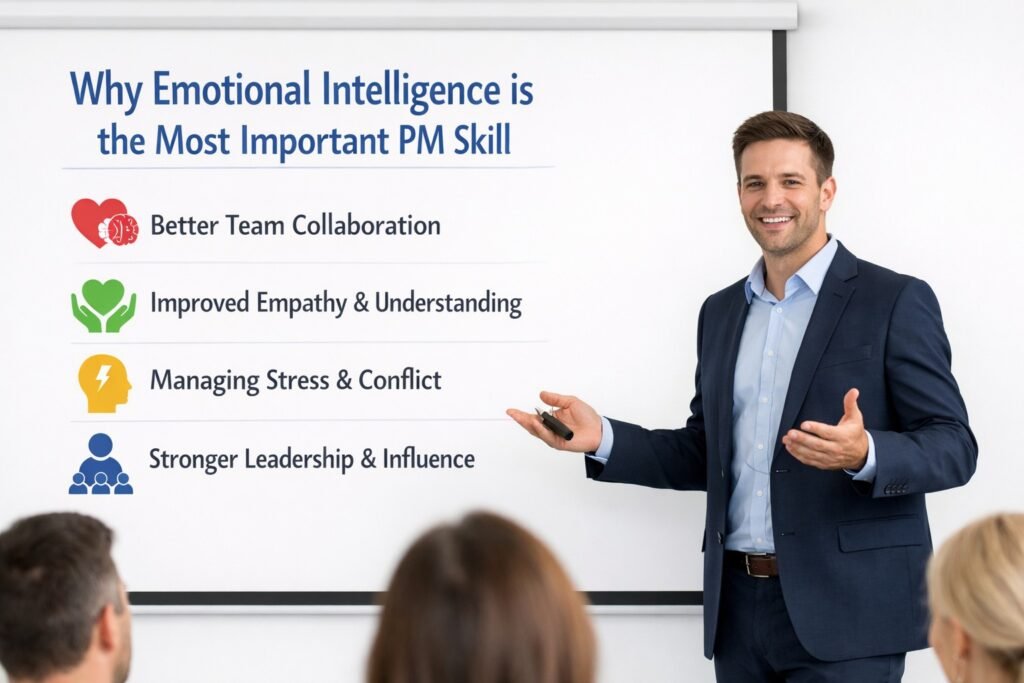
Emotional intelligence (EI) has emerged as an essential skill for project managers in today’s fast-paced corporate environment. It goes beyond managing tasks and timelines; it’s about understanding and managing emotions both your own and those of your team members. This article explores why Emotional Intelligence in Project Management is the most important skill for PM’s, delving into various facets such as team dynamics, communication, conflict resolution, and stakeholder engagement.
Understanding Emotional Intelligence in Project Management
Emotional intelligence refers to the ability to recognize, understand, and manage one’s own emotions while also being aware of the emotions of others. In project management, this skill is vital for fostering a productive and positive work environment. A project manager with high EI can navigate the complexities of human interactions, making it easier to lead diverse teams toward a common goal.
Moreover, emotional intelligence can be broken down into four key components: self-awareness, self-regulation, social awareness, and relationship management. Self-awareness allows a project manager to understand their emotional triggers and how they affect their decision-making. Self-regulation helps in managing these emotions effectively, ensuring that stress doesn’t hinder performance. Social awareness allows project managers to perceive team dynamics, while relationship management skills facilitate effective collaboration.
In an industry where time is often of the essence, the ability to empathize with team members can foster a sense of belonging and commitment. When team members feel valued and understood, they are more likely to be engaged and productive. Thus, understanding emotional intelligence is not just an asset for project managers; it’s a cornerstone of successful project management.
The Role of Emotional Intelligence in Project Management Team Dynamics
Team dynamics can make or break a project. A project manager’s emotional intelligence plays a pivotal role in shaping these dynamics. By understanding and managing emotions, project managers can create an environment where collaboration thrives. In a corporate landscape filled with diverse personalities and backgrounds, emotional intelligence equips project managers with the tools to identify and address any interpersonal issues swiftly.
High emotional intelligence enables project managers to foster a culture of open communication. Team members who feel comfortable expressing their thoughts and feelings are more likely to contribute innovative ideas. This open dialogue can lead to creative problem-solving and a more effective project outcome. By actively listening and validating team members’ emotions, a project manager can cultivate trust and cohesion, essential elements for any successful team.
Furthermore, emotionally intelligent project managers are adept at recognizing when team morale is low. They can take proactive steps to address any discontent, whether through team-building activities or individual check-ins. By maintaining a healthy team dynamic, project managers can reduce turnover and enhance productivity, ultimately leading to a more successful project outcome.
How Emotional Intelligence Enhances Communication Skills
Effective communication is at the heart of successful project management. Emotional intelligence enhances a project manager’s ability to communicate clearly and empathetically. By tuning into the feelings and perspectives of others, project managers can tailor their messages to resonate better with their audience. This is particularly important in high-stakes environments, where miscommunication can lead to project delays or failure.
Moreover, emotionally intelligent project managers are skilled at non-verbal communication. They can pick up on body language and tone, allowing them to adjust their approach in real-time. For instance, if a team member appears disengaged during a meeting, an emotionally intelligent project manager can address the issue directly, encouraging participation and ensuring that everyone feels included.
Active listening, a crucial component of effective communication, is significantly enhanced by emotional intelligence. By genuinely listening to team members, project managers can gather valuable insights and feedback, which can improve project planning. This open line of communication creates a culture of transparency, fostering a sense of shared responsibility that is vital for project success.
Emotional Intelligence: The Key to Conflict Resolution
Conflict is an inevitable part of project management, but how it is handled can determine the success or failure of a project. Emotional intelligence equips project managers with essential skills for conflict resolution. By recognizing and managing their own emotions, as well as understanding the emotions of others, project managers can diffuse tense situations more effectively.
One important aspect of emotional intelligence in conflict resolution is empathy. Project managers who can empathize with team members’ feelings can approach conflicts with a more balanced perspective. Rather than taking sides or assigning blame, they can mediate discussions in a way that addresses the root cause of the conflict while fostering a collaborative approach to problem-solving.
Moreover, emotionally intelligent project managers are better at framing conflicts as opportunities for growth. They encourage team members to express their viewpoints openly and guide them in finding common ground. By doing so, they not only resolve the immediate issue but also enhance team cohesion, leading to a healthier, more resilient project environment.
Building Trust Through Emotional Intelligence Techniques
Trust is the foundation of any successful team, and emotional intelligence is critical in building and maintaining that trust. Project managers who demonstrate empathy, authenticity, and vulnerability can create an environment where team members feel secure. This psychological safety encourages team members to share ideas and take risks, which can lead to innovative solutions.
One effective technique for building trust through emotional intelligence is transparency. By openly sharing project goals, challenges, and decisions, project managers can foster a sense of ownership among team members. When individuals feel they are part of the decision-making process, their commitment to the project increases, ultimately enhancing performance.
Additionally, regular check-ins and feedback sessions are crucial for maintaining trust. By actively seeking feedback from team members, project managers can show that they value their contributions. This ongoing dialogue not only fosters trust but also creates a culture of continuous improvement, where team members feel empowered to voice concerns and suggest improvements.
Emotional Intelligence and Stakeholder Engagement Strategies
Stakeholder engagement is a vital part of project management, and emotional intelligence plays a significant role in this area. Project managers with high emotional intelligence can build strong relationships with stakeholders by understanding their needs, concerns, and motivations. This understanding allows for more tailored communication strategies, ensuring that stakeholders feel heard and valued.
Moreover, emotionally intelligent project managers are adept at managing expectations. By being transparent about project timelines, challenges, and milestones, they can build credibility with stakeholders. A project manager who understands the emotional dynamics at play can navigate these relationships more effectively, leading to higher levels of stakeholder satisfaction.
Lastly, incorporating emotional intelligence into stakeholder engagement strategies can promote collaboration. When stakeholders feel connected to the project and its goals, they are more likely to contribute positively to its success. By leveraging emotional intelligence in communication and relationship-building, project managers can enhance stakeholder engagement and drive project success.
Measuring the Impact of Emotional Intelligence in Project Management
Measuring the impact of emotional intelligence on project outcomes can be challenging but is essential for understanding its value. Various metrics can be utilized, such as team performance, stakeholder satisfaction, and project delivery timelines. By tracking these metrics, organizations can correlate high emotional intelligence with successful project outcomes.
For example, organizations might conduct regular surveys to assess team morale and engagement levels. These surveys can provide insights into how emotional intelligence practices are influencing team dynamics and overall project performance. Additionally, tracking project timelines and budget adherence can highlight the efficiencies gained through effective emotional intelligence application.
Furthermore, case studies and success stories can serve as qualitative measures of emotional intelligence’s impact. Documenting instances where emotional intelligence led to conflict resolution, enhanced communication, or improved stakeholder engagement can provide compelling evidence of its effectiveness. By measuring these outcomes, organizations can make a strong case for prioritizing emotional intelligence in their project management practices.
Developing Emotional Intelligence in Project Management
Developing emotional intelligence is an ongoing journey that project managers can undertake to enhance their effectiveness. One practical way to start is through self-reflection. Project managers should regularly assess their emotional responses in various situations to identify areas for improvement. This self-awareness is the first step in developing emotional intelligence.
Another effective approach is to seek feedback from peers and team members. Constructive feedback can provide insights into how project managers are perceived and help them recognize blind spots in their emotional awareness. Peer coaching and mentorship can also be invaluable, offering a supportive environment for practicing emotional intelligence skills.
Finally, training programs focused on emotional intelligence can provide structured learning experiences. Workshops and seminars can introduce project managers to tools and techniques for improving their emotional intelligence. By investing in emotional intelligence development, organizations can cultivate a cadre of project managers capable of leading with empathy and effectiveness.
Frequently Asked Questions: Emotional Intelligence in Project Management
What is emotional intelligence and why is it critical for project managers?
Emotional intelligence refers to the ability to recognise, understand, and manage your own emotions while also effectively responding to the emotions of others. For project managers operating in complex corporate environments, this capability is essential because project success depends heavily on people, not just processes.
In enterprise settings, project managers must navigate diverse teams, competing priorities, and high-pressure situations. Emotional intelligence enables them to maintain composure, make balanced decisions, and foster a collaborative environment. Without it, even technically strong project managers can struggle to gain trust, influence stakeholders, or maintain team cohesion.
How does emotional intelligence improve team dynamics in projects?
Emotional intelligence strengthens team dynamics by creating an environment of trust, respect, and open communication. Project managers with high EI can identify shifts in team morale, recognise unspoken concerns, and address issues before they escalate.
In large organisations, teams are often cross-functional and culturally diverse. Emotional intelligence helps bridge these differences by encouraging empathy and understanding. When team members feel heard and valued, collaboration improves and productivity increases.
Strong team dynamics also reduce friction, improve engagement, and enhance overall delivery performance. This is particularly important in high-stakes projects where alignment and cooperation are critical.
Can emotional intelligence impact project outcomes directly?
Yes, emotional intelligence has a direct impact on project outcomes. While technical planning and execution are important, the ability to manage people effectively often determines whether a project succeeds or fails.
Projects with high emotional intelligence leadership tend to experience fewer conflicts, better stakeholder alignment, and higher levels of team engagement. This leads to improved delivery timelines, stronger adoption of outcomes, and better overall business value.
In enterprise environments, where complexity and interdependencies are high, emotionally intelligent leadership becomes a key differentiator in achieving consistent results.
How does emotional intelligence support effective communication?
Effective communication in project management goes beyond sharing updates or reports. It involves understanding the audience, tailoring messages, and ensuring clarity while maintaining sensitivity to context.
Emotional intelligence enables project managers to read the room, adjust their communication style, and respond appropriately to different stakeholders. For example, communicating with senior executives requires a different tone and focus compared to engaging with operational teams.
Additionally, emotionally intelligent project managers are strong listeners. They actively seek feedback, interpret non-verbal cues, and ensure that communication is two-way. This reduces misunderstandings and strengthens relationships across the project ecosystem.
What role does emotional intelligence play in conflict resolution?
Conflict is inevitable in project environments, especially in large organisations where multiple stakeholders have competing priorities. Emotional intelligence equips project managers with the ability to handle these situations constructively.
Rather than avoiding or escalating conflict, emotionally intelligent leaders address it directly while remaining calm and objective. They seek to understand all perspectives, identify root causes, and guide discussions toward mutually beneficial solutions.
This approach not only resolves issues more effectively but also strengthens relationships and builds trust. Over time, it contributes to a more resilient and collaborative team culture.
How does emotional intelligence enhance stakeholder engagement?
Stakeholder engagement is a critical success factor in project management. Emotional intelligence allows project managers to understand stakeholder expectations, concerns, and motivations at a deeper level.
By demonstrating empathy and awareness, project managers can build stronger relationships and influence stakeholder decisions more effectively. This is particularly important in enterprise projects where stakeholder alignment can be complex and politically sensitive.
Emotionally intelligent engagement also improves transparency and trust. Stakeholders are more likely to support initiatives when they feel understood and involved in the process.
Can emotional intelligence be developed or is it an innate skill?
Emotional intelligence can be developed with conscious effort and practice. While some individuals may naturally exhibit higher levels of EI, it is not a fixed trait.
Project managers can improve their emotional intelligence by focusing on self-awareness, seeking feedback, and reflecting on their interactions. Training programmes, coaching, and real-world experience also play a significant role in developing these capabilities.
In corporate environments, organisations increasingly invest in leadership development programmes that include emotional intelligence as a core competency. This reflects its growing importance in driving effective project delivery.
What are the key signs of a project manager with high emotional intelligence?
Project managers with high emotional intelligence demonstrate consistent behaviours that positively influence their teams and stakeholders. These include staying calm under pressure, actively listening, and responding thoughtfully rather than reacting impulsively.
They are also skilled at building relationships, managing conflict, and maintaining team morale during challenging phases of a project. Their communication is clear, empathetic, and tailored to the audience.
In enterprise settings, these behaviours translate into stronger leadership presence, better stakeholder alignment, and more successful project outcomes.
How does emotional intelligence help in managing stress and pressure?
Project environments are often high-pressure, with tight deadlines, resource constraints, and shifting priorities. Emotional intelligence helps project managers manage stress effectively by maintaining self-control and perspective.
Self-awareness allows them to recognise stress triggers, while self-regulation enables them to respond calmly and constructively. This prevents negative emotions from impacting decision-making or team dynamics.
By modelling composure and resilience, emotionally intelligent project managers also influence their teams positively, creating a more stable and productive working environment.
Why is emotional intelligence considered more important than technical skills?
Technical skills are essential for planning and execution, but they are not sufficient on their own. Projects are delivered by people, and managing those people effectively requires emotional intelligence.
In enterprise environments, technical challenges can often be solved through processes or tools. However, issues related to communication, conflict, and stakeholder alignment require human insight and emotional awareness.
Emotional intelligence enables project managers to lead effectively, build trust, and drive collaboration. These capabilities are often the deciding factor in whether a project delivers its intended value.
How can organisations embed emotional intelligence into project management practices?
Organisations can embed emotional intelligence by incorporating it into leadership development, performance evaluations, and project management frameworks. This includes training programmes focused on communication, empathy, and conflict resolution.
Encouraging a culture of feedback and continuous improvement also supports the development of emotional intelligence. Leaders should model emotionally intelligent behaviours, setting the standard for teams.
In enterprise environments, integrating emotional intelligence into project governance and leadership expectations ensures that it becomes a core competency rather than an optional skill.
Conclusion
Emotional Intelligence in Project Management is an indispensable skill for project managers in today’s corporate landscape. By mastering this skill, project managers can navigate complex team dynamics, enhance communication, and resolve conflicts effectively while building trust and engaging stakeholders. As organizations recognize the value of emotional intelligence, investing in its development will lead to improved project outcomes and a more cohesive work environment.
Hashtags: #EmotionalIntelligence #ProjectManagement #Leadership #Teamwork #StakeholderEngagement
External Source: For further insights into emotional intelligence in project management, visit the institute of Project Management:
Further Project Management Resources