
Top 10 Project Management Trends That Will Dominate the Future
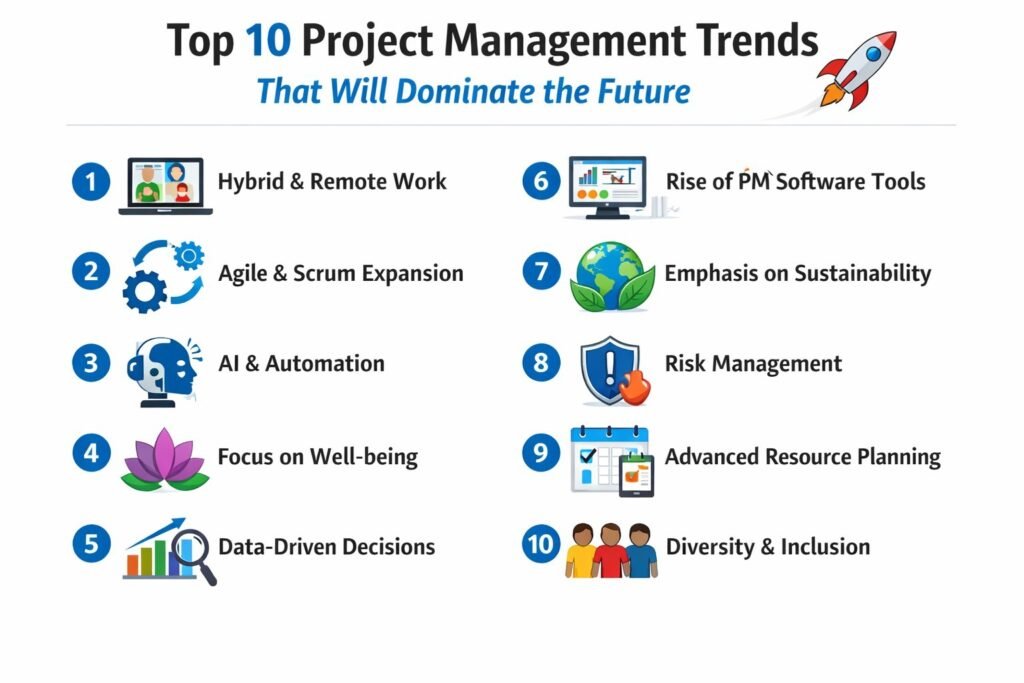
In today’s rapidly shifting business landscape, project management is evolving at an unprecedented pace. The integration of technology, a growing emphasis on sustainability, and the adaptation to a diverse workforce are just a few of the trends reshaping the future of project management. Organizations must stay ahead of the curve to ensure successful project execution and team collaboration. This article explores ten key trends that are set to dominate the project management landscape in the coming years, providing insights and practical guidance for large organizations looking to thrive.
Emerging Technologies Revolutionizing Project Management
The project management field is witnessing a technological renaissance, with tools and platforms that are fundamentally changing how projects are managed. Artificial intelligence (AI) is leading the charge, offering predictive analytics that can foresee potential risks and challenges before they arise. This capability allows project managers to proactively address issues, greatly enhancing the likelihood of project success. Additionally, the advent of blockchain technology is creating new opportunities for transparency and accountability in project documentation and contract management, ensuring that all stakeholders are on the same page.
Moreover, virtual reality (VR) and augmented reality (AR) are creating immersive experiences that can enhance project visualization and stakeholder engagement. For instance, VR can be used for project simulations, allowing teams to explore potential outcomes in a controlled environment. This can be particularly useful in sectors like construction and engineering, where visualizing complex projects can significantly reduce misunderstandings and miscommunications. As these technologies mature, project managers must be equipped with the knowledge to leverage them effectively.
Lastly, Internet of Things (IoT) devices are providing real-time data that can be invaluable for project tracking and monitoring. With IoT, project managers can gather performance metrics and resource usage statistics on-the-fly, allowing for more informed decision-making. Organizations that harness these emerging technologies will undoubtedly gain a competitive edge in the project management arena, driving innovation and fostering efficiency.
The Rise of Remote Project Management Tools and Practices
The COVID-19 pandemic has accelerated the adoption of remote work, making remote project management tools more essential than ever before. Platforms such as Trello, Asana, and Microsoft Teams have become staples in managing projects from afar, enabling teams to collaborate seamlessly regardless of location. These tools not only facilitate communication but also allow for real-time progress tracking, which is critical in keeping projects on schedule and within budget.
With the rise of remote work, organizations are also becoming more aware of the importance of maintaining team morale and engagement. Virtual team-building activities, regular check-ins, and open communication channels are now integral components of project management. Leaders must adapt their styles to foster a sense of belonging and togetherness among remote teams, ensuring that everyone feels connected and valued, despite physical distances.
Furthermore, the flexibility that remote project management offers can lead to increased productivity. Many studies suggest that employees working from home report higher levels of job satisfaction and work-life balance, which can translate into more focused and productive work hours. Organizations that successfully implement remote project management practices will not only enhance their operational efficiency but also contribute to a healthier workplace culture.
Agile Methodologies: The Future of Project Execution
Agile methodologies have revolutionized project execution by enabling teams to adapt quickly to changes and feedback. Unlike traditional project management approaches, which often follow a rigid, linear path, Agile promotes iterative development and continuous improvement. This flexibility is particularly valuable in industries where customer needs and market conditions can change rapidly, as it allows organizations to pivot their strategies without derailing the entire project.
The rise of Agile has also brought about various frameworks, such as Scrum and Kanban, which help teams define roles, responsibilities, and workflows. These frameworks empower team members to take ownership of their tasks while promoting transparency and collaboration. Organizations that embrace Agile principles often see enhanced team dynamics and greater project success rates, as teams are better equipped to respond to challenges and capitalize on opportunities.
Additionally, the integration of tools designed for Agile project management, such as Jira and ClickUp, is becoming increasingly important for large organizations. These platforms streamline workflows, provide real-time visibility into project progress, and facilitate communication among team members. As Agile methodologies continue to penetrate the corporate landscape, organizations must ensure their teams are adequately trained and equipped to utilize these practices effectively.
Data-Driven Decision Making in Project Management
In an era where data is abundant, project managers are leveraging analytics to inform their decision-making processes. Data-driven decision-making enhances the reliability of forecasts, helping project managers identify trends and make informed choices. For example, by analyzing historical project data, managers can estimate timelines and budgets more accurately, reducing the likelihood of overruns and delays.
Moreover, real-time data analytics tools allow project managers to monitor performance and make adjustments on-the-fly. This capability is crucial for identifying potential bottlenecks and inefficiencies early in the project lifecycle. Organizations that utilize data analytics tools can gain insights into team performance, resource allocation, and stakeholder engagement, enabling them to make proactive adjustments that enhance project outcomes.
Additionally, the use of dashboards and visualization tools is becoming increasingly common in project management. These tools provide a visual representation of key performance indicators (KPIs), making it easier for stakeholders to understand project progress and make informed decisions. As data becomes more integral to project management, organizations that cultivate a culture of data literacy will be better positioned to achieve their strategic goals.
Sustainability: A Key Focus for Future Projects
The growing emphasis on sustainability is reshaping project management practices across various industries. Organizations are increasingly recognizing the importance of incorporating sustainable practices into their project lifecycles. This shift is not just about compliance with regulations; it is about meeting stakeholder expectations and enhancing brand reputation. For instance, developers are now prioritizing green building practices, while manufacturers are focusing on reducing waste and carbon footprints throughout the supply chain.
Project managers play a crucial role in implementing sustainability initiatives. They must not only consider the environmental impact of their projects but also engage stakeholders in discussions about sustainability goals. This includes assessing the lifecycle of materials used, evaluating energy efficiency, and exploring options for recycling or repurposing materials. By embedding sustainability into project planning, organizations can contribute to a healthier planet while also appealing to an increasingly eco-conscious consumer base.
Furthermore, the integration of sustainability metrics into project performance assessments is becoming essential. Organizations that measure their sustainability efforts alongside traditional performance metrics can identify areas for improvement and showcase their commitment to corporate social responsibility. As sustainability continues to gain traction, project managers must be prepared to lead their teams in adopting these practices to ensure long-term success.
Enhanced Collaboration Through AI and Automation
Artificial intelligence and automation are not just buzzwords; they are becoming vital components of collaborative project management. AI-powered tools can assist in task allocation, risk assessment, and even scheduling, allowing project managers to focus more on strategic decision-making. For instance, AI can analyze historical project data to suggest the best resources for a given task, enhancing overall efficiency and productivity.
Automation is also streamlining repetitive tasks, such as status reporting and data entry, freeing up team members to concentrate on higher-value projects. This leads to a more agile and responsive team dynamic, where employees are able to contribute creatively and strategically, rather than being bogged down by administrative tasks. As project management becomes more complex, organizations must embrace these technologies to stay competitive.
Moreover, enhanced collaboration through AI and automation is not just limited to internal teams. These technologies can facilitate better communication with external stakeholders, such as clients, suppliers, and partners. For instance, automated reporting tools can provide real-time updates to stakeholders, ensuring that everyone remains informed and engaged throughout the project lifecycle. Organizations that leverage AI and automation will likely see stronger collaboration, improved performance, and ultimately, greater project success.
The Importance of Soft Skills in Leadership Roles
As project management evolves, the importance of soft skills such as communication, empathy, and adaptability has never been more critical. Effective project leaders must be able to foster collaboration among diverse teams while navigating complex interpersonal dynamics. This involves actively listening to team members, understanding their individual strengths, and facilitating open dialogue to resolve conflicts.
In addition to interpersonal skills, emotional intelligence is becoming increasingly important for project leaders. Leaders with high emotional intelligence can recognize their own emotions and those of others, allowing them to manage team dynamics more effectively. This skill set not only enhances team morale but also drives performance, as team members feel valued and understood in their roles. Organizations that prioritize soft skills training for their project managers will create a more engaged and productive workforce.
Lastly, adaptability is key in a rapidly changing project environment. Leaders must be willing to pivot their strategies and approaches in response to new challenges or opportunities. This requires a proactive mindset and a commitment to continuous learning and improvement. By developing their soft skills, project managers can ensure that they are well-equipped to lead their teams through the complexities of the modern project landscape.
10 Project Management Trends – Adapting to a Global Workforce and Diverse Teams
As companies continue to expand their reach across borders, the importance of embracing a global workforce and diverse teams cannot be overstated. Cultural diversity brings a wealth of perspectives and ideas that can drive innovation and creativity in project management. However, managing a diverse team also presents unique challenges that require sensitivity and awareness.
Project managers must develop an understanding of cultural differences and how they impact communication styles, team dynamics, and decision-making processes. This involves fostering an inclusive environment where all team members feel comfortable sharing their insights and experiences. Additionally, training initiatives focused on cultural competency can equip project managers with the skills needed to navigate these dynamics effectively.
Furthermore, leveraging technology to bridge geographical gaps is crucial in a global workforce. Tools that facilitate virtual collaboration, such as video conferencing and project management software, can help teams stay connected and aligned regardless of their physical locations. By embracing diversity and adapting to a global workforce, organizations can enhance collaboration and drive project success.
The future of project management is set to be influenced by a multitude of trends that emphasize technology, collaboration, and sustainability. Organizations must be proactive in adopting these trends, as they will not only enhance project outcomes but also foster a more engaged and productive workforce. By understanding and embracing these shifts, project managers can lead their teams toward greater success in an increasingly complex and fast-paced business world.
Hashtags: #ProjectManagement #Agile #Sustainability #Collaboration #RemoteWork
External Source: Explore Project Management Trends in 2026 from the Knowledge Academy
Explore Free Project Management Templates https://pmresourcehub.com/library/