
Top 10 Agile Backlog Prioritization Techniques That Deliver Value
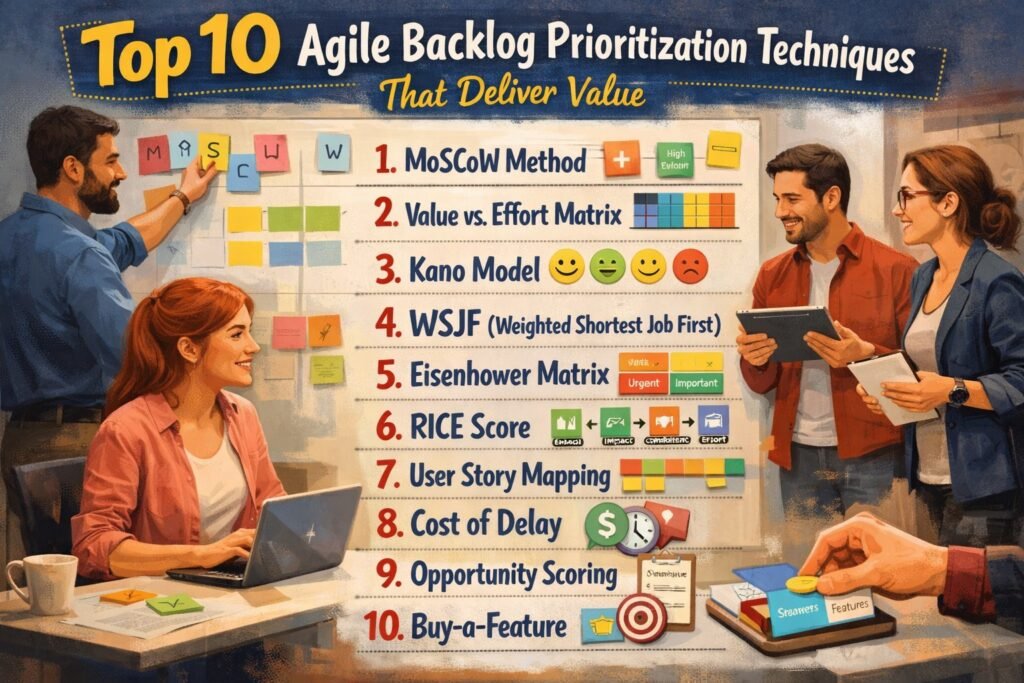
The Agile methodology has revolutionized the way teams approach project management, emphasizing flexibility and responsiveness. However, one of the most critical aspects of Agile is how teams prioritize their backlogs. Effective backlog prioritization ensures that the most valuable features are delivered first, enhancing customer satisfaction and driving business success. In this article, we will explore the top ten Agile backlog prioritization techniques that deliver real value, offering insights and actionable tips for large organizations looking to optimize their project management strategy.
Understanding Agile Backlog Prioritization Techniques Clearly
In Agile project management, backlog prioritization is a vital process that determines which items in the backlog should be worked on next. This involves assessing each task, feature, or user story based on various criteria, including customer value, business impact, and development effort. By using structured prioritization techniques, teams can ensure that they focus their efforts on delivering the most significant benefits to stakeholders.
Different organizations may use different prioritization techniques depending on their specific needs, project goals, and team dynamics. This flexibility is one of the strengths of Agile, as it allows teams to tailor their approach to fit their unique challenges and objectives. However, the effectiveness of prioritization relies heavily on understanding each technique’s principles and best practices. A clear grasp of these will help teams navigate the complexities of prioritization and make informed decisions that drive value.
Effective prioritization not only leads to better product outcomes but also fosters collaboration and communication within teams. By engaging stakeholders in the prioritization process, teams can gain insights into customer needs and expectations, enabling them to align their efforts with market demands. In this way, Agile backlog prioritization becomes a strategic tool that enhances both project delivery and customer satisfaction.
Why Prioritization Matters in Agile Project Management
In the fast-paced world of Agile project management, prioritization is not just a nice-to-have; it is a critical necessity. With limited resources and time, teams must focus on high-value tasks that contribute to the project’s overall goals. Prioritization allows teams to make informed choices about where to allocate their efforts, ensuring that they maximize their impact and efficiency. This is especially crucial in larger organizations, where resources may be spread across multiple projects.
Moreover, effective prioritization enhances team morale and productivity. When team members understand the rationale behind prioritization decisions, they are more likely to feel engaged and motivated. Clear priorities provide a sense of direction and purpose, enabling teams to work collaboratively toward common goals. In contrast, a lack of effective prioritization can lead to confusion, wasted effort, and frustration.
Additionally, prioritization plays a pivotal role in stakeholder communication. By transparently sharing prioritization criteria and decisions, teams can build trust and alignment with stakeholders, leading to stronger partnerships and improved project outcomes. This open dialogue not only facilitates better decision-making but also helps teams respond quickly to changing needs and priorities as the project progresses.
The MoSCoW Method: Must-Haves, Should-Haves, and More
The MoSCoW Method is a widely recognized prioritization technique that categorizes backlog items into four distinct groups: Must-Have, Should-Have, Could-Have, and Won’t-Have. This classification approach helps teams identify critical features that are essential for project success, while also allowing for flexibility in accommodating less vital tasks. By clearly defining each category, teams can focus on delivering the most critical items first, ensuring that the product meets core user needs.
“Must-Have” items are non-negotiable requirements that must be delivered for the project to be considered successful. These are often aligned with the project’s minimal viable product (MVP) criteria. “Should-Have” items are important but not absolutely essential; while they add significant value, their absence will not halt project progress. “Could-Have” items are desirable but not necessary, and they can be deprioritized if time and resources become constrained. Finally, “Won’t-Have” items are explicitly ruled out for the current project phase, allowing teams to remain focused and avoid scope creep.
One of the key advantages of the MoSCoW Method is its simplicity. The straightforward categorization makes it easy for teams to assess the relative importance of backlog items at a glance. Moreover, it promotes collaborative discussions among team members and stakeholders, fostering alignment and understanding around project priorities. This clarity is particularly beneficial in larger organizations where multiple teams may be involved in delivering various aspects of a project.
The Value vs. Effort Matrix: A Smart Approach
The Value vs. Effort Matrix is an effective prioritization technique that visually represents the relationship between the expected value of a task and the effort required to achieve it. By plotting items on a two-axis grid, teams can quickly identify tasks that deliver high value with minimal effort. This approach allows organizations to make informed decisions about which features to prioritize based on their potential return on investment.
To utilize the Value vs. Effort Matrix effectively, teams begin by assessing each backlog item for its value to the customer or business. This could be based on factors such as revenue generation, customer satisfaction, or competitive advantage. Next, they estimate the effort required to implement each feature, which can include time, resources, and complexity. Once items are plotted on the matrix, teams can easily identify “quick wins”—tasks that offer substantial value with relatively low effort.
The visual nature of the Value vs. Effort Matrix facilitates discussions among team members and stakeholders, leading to collaborative decision-making. It also enables teams to focus on maximizing their impact by concentrating on high-value, low-effort tasks. By doing so, organizations can optimize their resource allocation and enhance project outcomes, ultimately delivering greater value to customers and stakeholders.
Using the Kano Model to Enhance Customer Satisfaction
The Kano Model is a powerful tool for understanding customer needs and preferences, categorizing features based on their potential to satisfy users. It classifies features into five categories: Must-Be, Performance, Delighters, Indifferent, and Reverse. This categorization helps teams prioritize backlog items based on how well they align with customer expectations, ultimately enhancing customer satisfaction and loyalty.
“Must-Be” features are basic requirements that customers expect, and their absence can lead to dissatisfaction. “Performance” features improve customer satisfaction as their quality increases; the better these features are, the more satisfied customers will be. “Delighters” are unexpected features that can significantly boost customer satisfaction, although their absence does not cause dissatisfaction. “Indifferent” features provide no significant impact on customer satisfaction, while “Reverse” features can lead to dissatisfaction if included.
By utilizing the Kano Model, teams can better understand which features will have the greatest impact on customer satisfaction. This understanding allows organizations to prioritize backlog items that align with customer preferences and expectations. Moreover, the Kano Model fosters a customer-centric approach to prioritization, ensuring that teams focus on delivering maximum value to end-users. In an increasingly competitive landscape, this focus on customer satisfaction is essential for long-term success and differentiation.
Weighted Shortest Job First: Balancing Value and Time
The Weighted Shortest Job First (WSJF) is a prioritization technique that accounts for both the value of a feature and the time required to deliver it. This method is particularly valuable in large organizations where multiple teams are working on various tasks simultaneously. By using WSJF, teams can make informed decisions that balance the need for quick delivery with the importance of value delivery.
To calculate the WSJF score, teams need to assess three key components: the cost of delay, the duration of the job, and the weighted shortness of the job. The cost of delay estimates the potential revenue loss or customer dissatisfaction caused by delaying a feature, while the duration of the job estimates the time required for implementation. By dividing the cost of delay by the duration, teams can generate a WSJF score that helps prioritize features based on their overall value and urgency.
One of the primary benefits of WSJF is that it promotes a focus on delivering high-value features quickly, aligning with Agile principles of rapid iteration and continuous improvement. By emphasizing both value and time, organizations can optimize their backlog prioritization process and ensure that they are delivering features that meet customer needs while also maximizing their resource investment.
RICE Scoring: Prioritizing Based on Reach, Impact, and More
RICE scoring is a prioritization framework that evaluates backlog items based on four key factors: Reach, Impact, Confidence, and Effort. This method is designed to help teams make data-driven decisions about which features to prioritize, ensuring that they focus on tasks that offer the highest potential for return on investment. RICE scoring is particularly useful for larger organizations that need to evaluate multiple projects simultaneously.
To apply RICE scoring, teams begin by assessing each backlog item for its Reach, which refers to the number of users or customers that will be affected by the feature. Next, they evaluate the Impact, estimating how significantly the feature will contribute to overall user satisfaction or business goals. Confidence measures how certain the team is about their estimates, while Effort quantifies the resources and time required to implement the feature. By scoring each item based on these criteria, teams can generate a prioritized list that reflects both potential value and feasibility.
RICE scoring promotes transparency and consistency in prioritization decisions, allowing teams to align their efforts with strategic business objectives. Additionally, this framework encourages collaborative discussions among team members, fostering a culture of data-driven decision-making. By focusing on evidence rather than assumptions, organizations can enhance their ability to deliver meaningful value to customers and stakeholders.
Scrum Techniques: Effective Backlog Management Strategies
Scrum is one of the most widely adopted Agile frameworks, and it includes various techniques for effective backlog management. Techniques such as Sprint Planning, Backlog Refinement, and Daily Stand-ups are essential for ensuring that teams stay focused on delivering value throughout the project lifecycle. Each of these techniques plays a vital role in creating a well-organized and prioritized backlog.
Sprint Planning sessions allow teams to review and prioritize backlog items for the upcoming sprint. During these sessions, team members collaborate to assess the feasibility of delivering selected items, ensuring that they align with project goals and timelines. Backlog Refinement, also known as backlog grooming, is an ongoing process where teams regularly review and update backlog items to ensure that they are relevant, well-defined, and prioritized according to current project needs.
Daily Stand-ups serve as a quick check-in for team members to discuss progress, obstacles, and priorities for the day. These meetings foster communication and collaboration, enabling teams to stay aligned and focused on their sprint goals. By utilizing Scrum techniques for effective backlog management, organizations can enhance their ability to deliver value consistently, adapt to changing needs, and maintain a strong focus on customer satisfaction.
In conclusion, effective backlog prioritization is essential for maximizing value delivery in Agile project management. By employing techniques such as MoSCoW, Value vs. Effort Matrix, and RICE scoring, teams can ensure that they are focusing on the most impactful tasks. Additionally, leveraging frameworks like Scrum can enhance collaboration and communication, ultimately leading to better project outcomes. For large organizations looking to implement or refine their Agile strategies, mastering these prioritization techniques will be instrumental in achieving success.
Hashtags: #Agile #ProjectManagement #BacklogPrioritization #Scrum #CustomerSatisfaction
Call to Action: For more insights on Agile methodologies and effective project management strategies, visit Atlassian.
Discover More great insights at
https://pmresourcehub.com/library/strategic-assumption-validation-template-free-word-download/