
Change Management vs Project Management: Integrating People and Processes
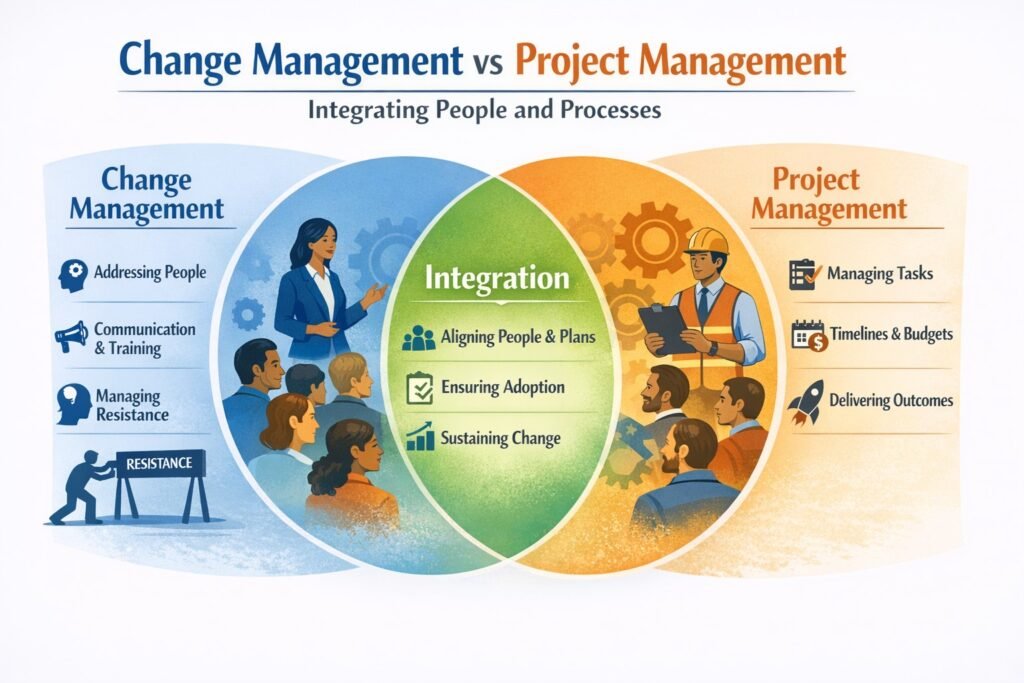
Change is an inevitable aspect of any organization, and managing it effectively can determine the success or failure of strategic initiatives. While change management and project management are two distinct disciplines, they often overlap and complement each other in practice. Understanding their differences and integrating people and processes effectively is crucial for large organizations aiming for sustainable growth. This article explores Change Management vs Project Management, highlighting the importance of both integration and collaboration.
Understanding the Core Differences Between Change and Project Management
Change management focuses primarily on the human aspects of organizational transformation. It encompasses the strategies and processes that help individuals adapt to changes within an organization. Whether it’s a new technology, a shift in company culture, or a leadership transition, change management aims to mitigate resistance and facilitate smooth transitions. By understanding the feelings, perceptions, and behaviors of employees, change management creates a supportive environment that fosters acceptance and engagement.
On the other hand, project management is predominantly concerned with the successful execution of specific projects. It involves planning, organizing, and managing resources to achieve defined objectives within a specified timeframe and budget. Project managers are responsible for overseeing the project lifecycle, ensuring that deliverables meet quality standards, and that stakeholders are informed and engaged throughout the process. While project management deals with processes, change management concentrates on the people involved in those processes, making both essential for organizational success.
The interplay between these two disciplines is vital. A project may have clear objectives and timelines, but without effective change management, the likelihood of achieving those objectives diminishes significantly. Conversely, change initiatives may fail if they are not structured as projects with clear steps, deliverables, and accountability. Understanding these distinctions and overlaps is the foundation for integrating change and project management effectively.
The Role of People in Change Management Strategies
People are the heart of any organization, and their engagement is paramount during periods of change. Change management strategies must prioritize communication, support, and training to ensure that employees feel valued and informed. Open lines of communication help dispel uncertainty and build trust, allowing team members to express their concerns and seek clarification. By actively involving employees in the change process, organizations can foster a sense of ownership that drives enthusiasm and commitment.
Furthermore, it’s essential to identify change champions within the organization individuals who can influence their peers and help facilitate the transition. These champions can serve as advocates for the change, providing support, and sharing their personal stories about how the change positively impacts them. Training programs tailored to equip employees with the necessary skills and knowledge can further ease the adaptation process, reducing anxiety and resistance.
Lastly, organizations must recognize that change can be met with resistance, which is a natural human reaction. Effective change management acknowledges this resistance and addresses it head-on through empathy and understanding. By actively listening to employee concerns and providing reassurance, organizations can create a culture of resilience where individuals feel empowered to embrace change rather than resist it.
Integrating Processes: Bridging Change and Project Management
Integrating change management and project management processes can create a seamless flow that enhances the likelihood of success for both initiatives. One effective approach is to incorporate change management principles into the project management lifecycle. This integration ensures that as projects are developed and executed, the human aspects of the change are also considered, leading to smoother transitions and better outcomes.
A practical example of this integration is to include change management activities within project planning and execution phases. For instance, scheduling regular check-ins with stakeholders, providing updates on progress, and soliciting feedback can help keep everyone aligned. Additionally, it’s essential to identify potential risks associated with change and develop contingency plans. By addressing these risks early on, organizations can mitigate their impact and ensure that the project remains on track.
Furthermore, leveraging tools and technologies that facilitate collaboration between project and change management teams can improve efficiency. Project management software can incorporate change management dashboards, providing real-time insights into employee sentiment and engagement. Such visibility allows leaders to make informed decisions and adjust strategies as needed, ultimately bridging the gap between change and project management.
Key Skills Required for Effective Change and Project Management
The skills required for successful change and project management are complementary yet distinct. Project managers must possess strong organizational and analytical skills, enabling them to plan, execute, and monitor projects effectively. They should be adept at risk management and problem-solving, capable of navigating unexpected challenges that arise during project execution. Additionally, excellent communication skills are vital for liaising with various stakeholders, ensuring everyone is informed and aligned with the project’s objectives.
Conversely, change managers need to have a high emotional intelligence, allowing them to empathize with employees and understand their perspectives. Strong interpersonal skills are crucial for building relationships and trust within teams. Change managers should also be skilled in conflict resolution, as managing resistance and addressing concerns is a significant part of their role. Moreover, strategic thinking is essential to align change initiatives with organizational goals, ensuring that the people aspect remains a priority throughout the process.
Both roles require adaptability and a willingness to learn. Change is unpredictable, and both project and change managers must be prepared to pivot and adjust their strategies as circumstances evolve. By developing these skills and fostering a culture of collaboration, organizations can enhance their ability to manage change effectively and achieve project success.
Overcoming Resistance: Engaging Stakeholders During Change
Resistance to change is a common challenge that organizations face, and engaging stakeholders is vital to overcoming it. Understanding the sources of resistance whether fear of the unknown, perceived loss of control, or lack of trust is the first step in addressing concerns. Engaging stakeholders early in the change process helps create a sense of ownership and reduces feelings of alienation. By soliciting their input and actively incorporating their feedback, organizations can tailor their change strategies to better meet the needs of their teams.
Creating a transparent atmosphere where stakeholders feel safe to express their concerns is crucial. Regular communication through town halls, updates, and one-on-one discussions can help dispel rumors and clarify the reasons behind the change. Furthermore, sharing success stories from peers who have embraced change can provide inspiration and motivation. Highlighting the benefits of the change not only for the organization but also for individual employees can foster a more positive outlook.
Another effective strategy is to provide adequate training and resources to equip stakeholders with the skills necessary to adapt to the changes. By investing in employee development, organizations signal their commitment to their teams’ success, alleviating fears and building confidence in the change process. This proactive approach to engaging stakeholders can significantly reduce resistance and increase the likelihood of successful change implementation.
Practical Tips for Successful Integration of Both Approaches
Successful integration of change management and project management involves a concerted effort from both teams. One practical tip is to establish a shared framework or methodology that includes elements from both disciplines. This framework should clearly outline roles, responsibilities, and expectations to ensure everyone is on the same page. Regular joint meetings between change and project management teams can facilitate communication and collaboration, enabling both sides to stay aligned on objectives and progress.
Another key to effective integration is to leverage technology that supports both project management and change management activities. Tools like integrated project management software can provide dashboards that display not just project milestones but also change readiness indicators. This holistic view allows managers to monitor both project performance and employee sentiment, making it easier to identify potential issues early on.
Lastly, organizations should prioritize continuous feedback loops throughout the project lifecycle. By regularly soliciting input from stakeholders and team members, organizations can make necessary adjustments in real-time. This adaptability not only enhances the integration of change and project management but also fosters a culture of collaboration and responsiveness that can improve overall organizational performance.
Measuring Success: KPIs for Change and Project Management
Measuring the success of both change management and project management initiatives is critical for ensuring continuous improvement. Key Performance Indicators (KPIs) provide tangible metrics to evaluate the effectiveness of both disciplines. For project management, common KPIs include project completion rates, budget adherence, and stakeholder satisfaction. These metrics help assess whether the project is on track and meeting its objectives.
In terms of change management, KPIs should focus on employee engagement and adoption rates. Metrics such as training completion rates, employee feedback scores, and change readiness assessments can provide valuable insights into how well employees are adapting to the new changes. Tracking these KPIs over time enables organizations to identify trends and areas for improvement, as well as celebrate successes.
Ultimately, both sets of KPIs should be reviewed in conjunction to provide a holistic view of organizational performance. For instance, if a project is completed on time and within budget but employee adoption rates are low, it may indicate that change management efforts need to be strengthened. By aligning KPIs from both disciplines, organizations can ensure that they are not only completing projects successfully but also achieving the intended outcomes of those projects in terms of employee engagement and satisfaction.
Real-World Examples of Integration in Large Organizations
Many large organizations have successfully integrated change management and project management to drive transformation initiatives. For instance, a global technology firm recently underwent a major system upgrade that required significant changes to its internal processes. The company employed a dual approach, with project managers overseeing the technical aspects of the system implementation while change managers focused on employee training and engagement. By aligning their efforts, the organization achieved a smooth transition, with employee adoption rates exceeding expectations.
Another example is a multinational consumer goods company that launched a new product line. The project management team was responsible for the product development and launch timeline, while the change management team worked to prepare sales and marketing staff for the new offerings. Through collaborative planning and communication, the teams ensured that all employees were well-equipped and informed, resulting in a successful launch and positive market reception.
These examples demonstrate that effective integration of change and project management can yield significant benefits for large organizations. When both approaches are aligned, organizations can navigate complex transformations more effectively, leading to improved outcomes and a more engaged workforce.
Conclusion – Change Management vs Project Management
In conclusion, understanding the distinctions between change management and project management, while recognizing their interdependency, is crucial for large organizations. By integrating both disciplines effectively, organizations can foster a culture of collaboration that enhances employee engagement and drives successful project outcomes. As companies navigate the complexities of change, adopting a holistic approach ensures that both people and processes are aligned for sustained success.
Hashtags: #ChangeManagement #ProjectManagement #EmployeeEngagement #OrganizationalSuccess #Collaboration
External Source: For further reading on change management strategies Prosci
Discover More great project resources at