
Project Charter vs Business Case: Defining Purpose vs Justifying Investment
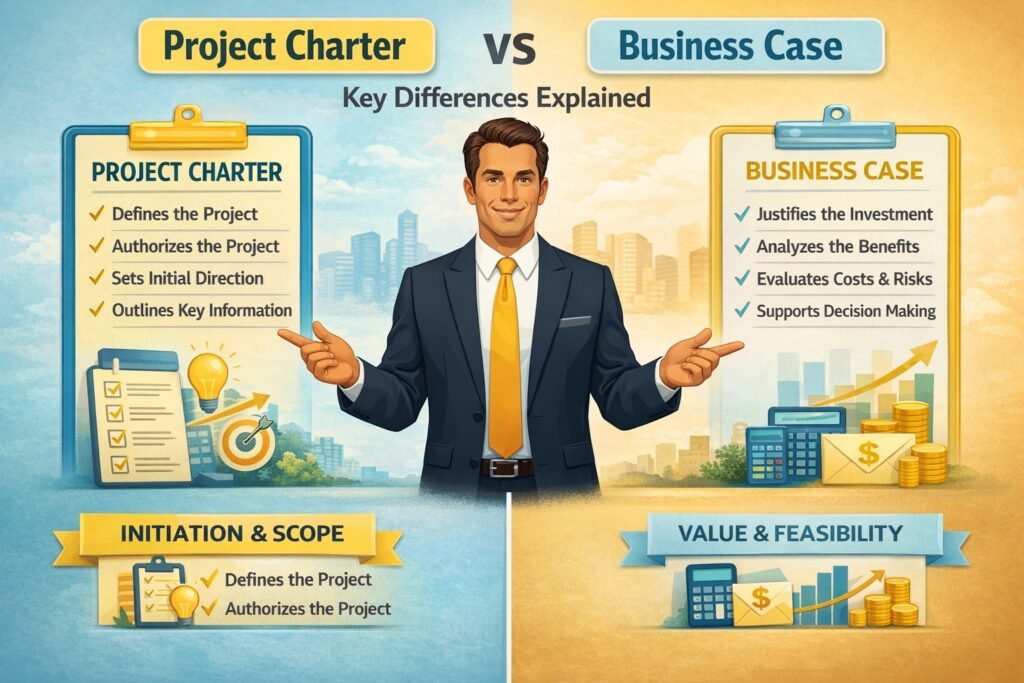
Understanding the distinction between a Project Charter vs Business Case is essential for any organization aiming to streamline project management and optimize investment strategies. While both documents serve critical functions in project execution, they focus on different objectives. The Project Charter sets the stage for what the project aims to accomplish, while the Business Case justifies the investment required to realize that vision. With the right understanding of these two elements, organizations can enhance their strategic alignment and improve outcomes.
Understanding the Project Charter: A Strategic Overview
A Project Charter is essentially the blueprint for any project. It outlines the vision, objectives, and scope, providing clear boundaries for what the project will and won’t cover. This document is usually created at the outset of a project and is essential for garnering initial buy-in from stakeholders. By defining the project’s purpose and goals, the Project Charter lays the groundwork for further planning and execution.
In many executive business simulations and leadership games, the distinction between a Project Charter and a Business Case is used as a core mechanic to teach resource allocation and strategic planning. Understanding these documents is the first step in moving from a theoretical ‘business game’ to real-world project execution.
In larger organizations, the Project Charter can be particularly beneficial as it helps to ensure that all team members are aligned with the project’s objectives. This clarity can foster communication among diverse teams, which is crucial in corporate environments where multiple stakeholders may have conflicting priorities. It serves as a reference point throughout the project lifecycle, ensuring that everyone is focused on achieving the same goals.
Moreover, a well-crafted Project Charter can act as a safeguard against scope creep. By clearly defining what the project entails, teams can avoid getting sidetracked by additional requests or changes that could derail the project. This makes it an indispensable tool for project managers who need to maintain focus and control over their initiatives.
What is a Business Case and Why It Matters
A Business Case is a document that presents the justification for an investment in a specific project or initiative. It outlines the rationale for undertaking the project, often including financial analysis, risk assessment, and anticipated benefits. The primary goal of a Business Case is to ensure that decision-makers understand why the investment is necessary, making it easier to secure funding and resources.
In a corporate context, the importance of a Business Case cannot be overstated. It not only answers the question of “why” a project should be pursued but also addresses concerns regarding its feasibility. A well-prepared Business Case should reflect market research, competitive analysis, and any relevant industry trends, offering a comprehensive view that supports the proposal.
Additionally, a strong Business Case aligns with the organizational strategy. It demonstrates how the proposed project contributes to broader business goals and objectives, making it easier for stakeholders to see the value it brings. This alignment can be a game-changer in large organizations where resources are often limited and must be allocated judiciously.
Key Differences: Project Charter vs Business Case Purpose versus Justifying Investment
When it comes to the key differences between a Project Charter and a Business Case, the first thing to note is their primary focus. The Project Charter is oriented toward defining the purpose and scope of the project. It serves to clarify what the project intends to achieve and sets the stage for detailed planning. In contrast, the Business Case is all about justifying the investment. It provides the necessary evidence and rationale for why stakeholders should commit resources to the project.
Another significant difference lies in the audience. The Project Charter is typically aimed at project team members and internal stakeholders who will be involved in executing the project. It is a working document that teams will reference throughout the project lifecycle. The Business Case, however, is directed toward decision-makers, such as executives and financial officers, who need to evaluate the project’s potential return on investment before committing resources.
Finally, the nature of the content is different. A Project Charter will include high-level information about project goals, deliverables, timelines, and key stakeholders. On the other hand, a Business Case will contain detailed analyses, such as cost-benefit analysis, risk assessments, and alignment with strategic objectives. Understanding these differences is crucial for organizations aiming to develop both documents effectively.
How Project Charters Define Project Scope and Objectives
One of the primary functions of a Project Charter is to define the scope of the project clearly. This involves laying out what is included in the project as well as what is excluded. By establishing these boundaries, organizations can prevent scope creep and ensure that the project remains on track. A well-defined scope is especially beneficial in large organizations where multiple projects may be vying for attention and resources.
The Project Charter also articulates specific objectives, which are often categorized as SMART: Specific, Measurable, Achievable, Relevant, and Time-bound. This framework not only clarifies what success looks like but also provides a benchmark against which progress can be measured. In enterprise settings, well-articulated objectives facilitate the monitoring and evaluation of project milestones and outcomes.
Moreover, the Project Charter serves as a communication tool that can help align various teams and stakeholders. By clearly outlining the objectives and scope, it promotes a shared understanding of the project’s purpose, thereby fostering collaboration. This alignment is particularly crucial in large organizations where diverse teams may have differing priorities and perspectives on what constitutes a successful project.
Business Case Essentials: Making the Case for Investment
Creating a compelling Business Case requires a combination of thorough research and clear communication. The Business Case should start with a clear statement of the problem or opportunity that the project aims to address. This initial section sets the stage for why the project is necessary and what risks would be involved in not pursuing it. By articulating this clearly, decision-makers can better grasp the urgency and importance of the investment.
Following the problem statement, the Business Case should include a detailed analysis of the financial implications. This often involves cost projections, potential return on investment, and a breakdown of resource requirements. In large organizations, stakeholders expect a rigorous financial analysis to support any significant investment, making this section vital for gaining approval.
Finally, a well-structured Business Case should also address potential risks and challenges. This includes discussing how risks will be managed, possible contingencies, and the metrics that will be used to measure success. By proactively addressing these elements, organizations can reassure stakeholders that they are not only aware of the challenges but have also developed strategies to mitigate them.
Aligning Project Charters with Business Strategy
For organizations to reap the maximum benefits from their projects, it is essential to align Project Charters with overarching business strategies. This alignment ensures that every project contributes to the organization’s long-term goals. When project objectives are in harmony with business strategies, it becomes easier to secure stakeholder buy-in and allocate resources effectively.
One way to achieve this alignment is to involve senior leadership in the Project Charter development process. Their insights can help frame the project in the context of organizational goals, thereby ensuring that it resonates with decision-makers. This collaboration is crucial for larger organizations where various projects may compete for the same resources, making strategic alignment all the more important.
Additionally, regular reviews of the Project Charter against business objectives can help ensure ongoing alignment. As business strategies evolve, it may be necessary to adapt the Project Charter accordingly. This flexibility not only enhances project viability but also demonstrates to stakeholders that the organization is committed to achieving its strategic goals through effective project management.
Best Practices for Developing a Strong Business Case
Developing a robust Business Case involves adhering to several best practices. First, it is crucial to conduct thorough market research to provide a solid foundation for the argument. This includes gathering data on market trends, competitive positioning, and potential customer needs. Having this data at your fingertips will not only strengthen the Business Case but also instill confidence among stakeholders.
Another best practice is to involve cross-functional teams in the Business Case development process. By incorporating insights from various departments such as finance, marketing, and operations, the Business Case can be more comprehensive and persuasive. This collaboration fosters a sense of ownership and can lead to richer insights that enhance the quality of the proposal.
Finally, clarity and conciseness are key when presenting the Business Case. Stakeholders often have limited time, making it essential to present the information in a clear and engaging manner. Visual aids such as charts, graphs, and tables can help distill complex information into digestible formats, making it easier for decision-makers to assess the proposal quickly.
Common Pitfalls in Project Charter vs Business Case
While Project Charters and Business Cases are invaluable tools, organizations often fall into certain pitfalls when developing them. One common issue is a lack of stakeholder involvement. When key stakeholders are not included in the development process, the resulting documents may not adequately reflect their needs and concerns. This can lead to misalignment and, ultimately, project failure.
Another frequent pitfall is insufficient detail. A vague Project Charter can lead to confusion among team members regarding their roles and responsibilities, while an underdeveloped Business Case may fail to convince stakeholders of the project’s value. Both documents should provide enough detail to guide project execution and investment decisions effectively.
Lastly, failing to revisit and update these documents throughout the project lifecycle can be detrimental. As projects evolve, so too should the Project Charter and Business Case. Regular reviews can help ensure that the documents remain relevant and aligned with changing business objectives. This agility is particularly important in large organizations where market conditions and strategic priorities may shift rapidly.
In the world of project management, understanding the differences and roles of a Project Charter and a Business Case can significantly enhance the effectiveness of an organization’s initiatives. By clearly defining purpose through the Project Charter and justifying investment with a robust Business Case, organizations can streamline their processes, ensure alignment with strategic objectives, and ultimately drive better outcomes. These foundational documents not only support project success but also foster a culture of transparency and accountability that is vital for long-term growth.
Hashtags: #ProjectManagement #BusinessCase #ProjectCharter #InvestmentStrategy #StrategicAlignment
External Reference: For further insights on writing effective project management business cases, visit the Asana
Explore Project Resources Project Dependencies and Waterfall Projects