
How Project Managers Improve Resilience in Supply Chain Operations
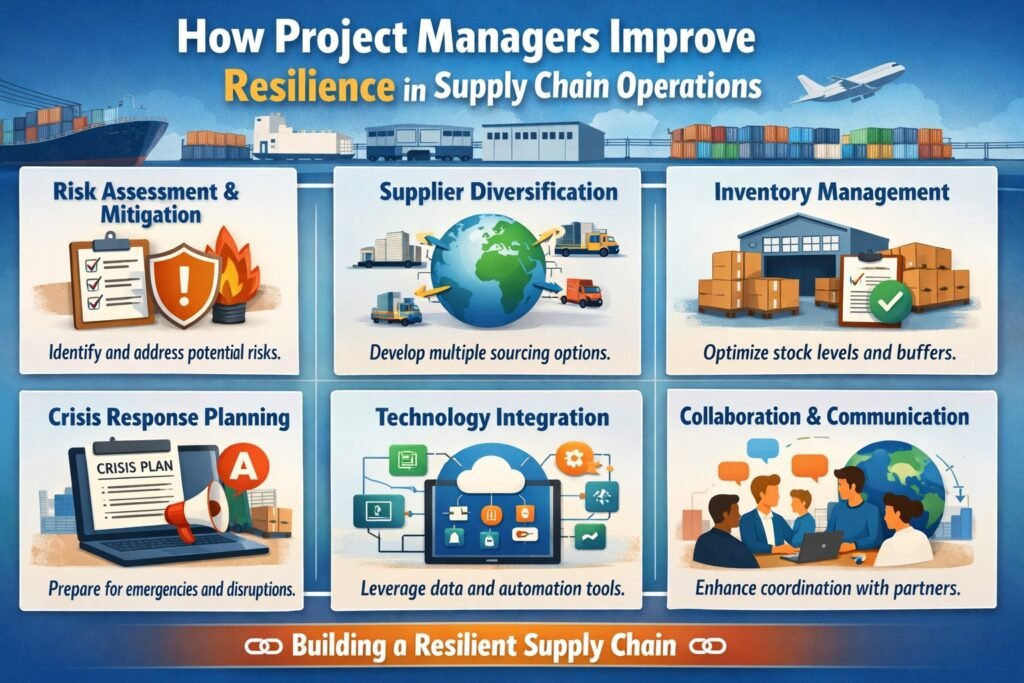
In today’s rapidly changing business landscape, supply chain resilience has become a vital focus for organizations aiming to maintain operational efficiency and competitive advantage. Project managers play a critical role in enhancing this resilience, ensuring that supply chain operations can adapt to disruptions while maximizing efficiency.
This article explores how project managers contribute to building robust and flexible supply chains, employing strategic methodologies and innovative technologies to address challenges and seize opportunities. Please Enjoy reading this blog How Project Managers Improve Resilience in Supply Chain Operations
Understanding Resilience in Supply Chain Operations Today
Supply chain resilience refers to the capacity of a supply chain to prepare for and respond to unexpected disruptions, ensuring continuity of operations and minimizing losses. Today’s supply chains face a myriad of challenges, from geopolitical uncertainties and natural disasters to fluctuating consumer demands and technological advancements. Organizations must recognize these complexities and build resilience to maintain a competitive edge. A resilient supply chain is not only robust against disruptions but also agile in adapting to new market conditions.
In recent years, the COVID-19 pandemic has underscored the importance of resilience in supply chain management. Many companies faced significant challenges due to sudden shifts in demand, transportation restrictions, and workforce shortages. These disruptions highlighted the need for strategic planning and adaptability, pushing organizations to rethink their supply chain strategies. A resilient supply chain not only mitigates risks but also capitalizes on market opportunities, driving growth even in the face of adversity.
As supply chains become increasingly interconnected and globalized, the importance of resilience only grows. Companies are now prioritizing risk assessment, agile processes, and strategic partnerships. This focus enables organizations to promptly react to disruptions and adapt their operations as necessary. With project managers at the helm, these strategies can be executed effectively, fostering an environment where resilience is ingrained into the company culture and operational practices.
The Role of Project Managers in Supply Chain Resilience
Project managers are pivotal in enhancing supply chain resilience through their unique skill sets and strategic oversight. They orchestrate various elements of the supply chain, ensuring that all components function harmoniously. By employing project management methodologies, they can implement frameworks that promote agility and responsiveness to change. This ability allows organizations to prepare for potential disruptions and to respond effectively when they occur.
One of the key responsibilities of project managers is risk assessment and mitigation. They systematically identify potential vulnerabilities within the supply chain and develop contingency plans to address them. By conducting regular assessments and involving cross-functional teams, project managers ensure that the entire organization is aligned in its approach to resilience. This proactive stance helps to minimize the impact of unforeseen events and fosters a culture of continuous improvement.
Additionally, project managers serve as the communication backbone of supply chain operations. They facilitate collaboration between different departments and external partners, ensuring transparency and alignment. This effective communication is crucial for swiftly addressing issues as they arise, allowing for quicker decision-making and problem-solving. By championing the importance of resilience across the organization, project managers help cultivate a mindset that values adaptability and innovation.
Key Strategies for Building Operational Resilience
Building resilience in supply chain operations requires a multifaceted approach. One effective strategy is to diversify suppliers and sources of materials. By not relying solely on a single supplier or region, organizations can mitigate risks associated with disruptions caused by natural disasters, political upheavals, or economic downturns. Project managers play a crucial role in identifying reliable alternative suppliers and negotiating contracts that safeguard the organization against potential supply shortages.
Another key strategy is adopting an agile supply chain framework. Agile methodologies emphasize flexibility and responsiveness, allowing organizations to adapt to changes in demand quickly. Project managers can implement agile practices by promoting cross-functional collaboration and creating iterative processes that facilitate rapid adjustments. This agility ensures that companies can pivot effectively in response to market fluctuations, thereby enhancing operational resilience.
Investing in employee training and development is also essential for building resilience. A well-trained workforce is better equipped to handle unexpected challenges and to innovate in response to changing circumstances. Project managers can initiate training programs that focus on critical skills such as problem-solving, communication, and adaptability. By fostering a culture of learning, organizations can empower employees to take initiative and contribute to resilient supply chain operations.
Risk Management: A Project Manager’s Essential Tool
Effective risk management is a cornerstone of supply chain resilience, and project managers are at the forefront of this process. They employ various tools and techniques to identify, assess, and mitigate risks associated with supply chain operations. By conducting thorough risk assessments, project managers can pinpoint vulnerabilities and prioritize them accordingly. This proactive approach allows organizations to allocate resources effectively and develop strategies that minimize potential disruptions.
One commonly used tool in risk management is the risk matrix, which helps project managers categorize risks based on their likelihood and potential impact. This visual representation simplifies the decision-making process, allowing managers to focus on high-priority risks and implement targeted mitigation strategies. Regularly updating the risk matrix ensures that new threats are identified and addressed promptly.
In addition to risk assessment, project managers also play a vital role in crisis management. When disruptions occur, they are responsible for activating contingency plans and coordinating the response. This may involve reallocating resources, communicating with stakeholders, and adjusting production schedules. By maintaining a clear focus on risk management, project managers can ensure that the organization remains resilient and agile in the face of adversity.
Enhancing Communication Across the Supply Chain
Effective communication is vital for building resilience in supply chain operations, and project managers are key facilitators in this domain. They create channels for transparent information sharing among teams, suppliers, and stakeholders. This transparency builds trust and fosters collaboration, enabling all parties involved to respond swiftly to challenges and changes in the supply chain environment.
Regular communication helps to ensure that everyone is aligned regarding objectives, expectations, and potential risks. Project managers can implement tools such as dashboards and reporting systems to monitor supply chain performance and share essential information with stakeholders. By providing real-time insights, these tools empower teams to make data-driven decisions, enhancing the overall resilience of the supply chain.
Moreover, project managers advocate for open dialogue and feedback within the team. Encouraging team members to voice concerns and suggestions fosters a culture of continuous improvement, which is crucial for resilience. When employees feel comfortable sharing their insights, organizations can proactively identify areas for enhancement and strengthen their supply chain operations against potential challenges.
Leveraging Technology for Supply Chain Flexibility
In an increasingly digital world, technology plays a pivotal role in enhancing supply chain resilience. Project managers leverage various technological tools to improve flexibility and responsiveness in operations. For instance, implementing advanced analytics can provide organizations with insights into customer demand trends, enabling them to adjust production schedules and inventory levels proactively.
Moreover, technologies such as artificial intelligence (AI) and machine learning can optimize supply chain processes by predicting potential disruptions and suggesting alternative courses of action. Project managers can work with IT teams to integrate these technologies into existing systems, ensuring seamless operations across the supply chain. By harnessing data-driven insights, organizations can make informed decisions that enhance their resilience.
Cloud-based solutions also facilitate flexibility by enabling remote access to critical supply chain information. Project managers can implement cloud platforms that allow teams to collaborate and share information in real-time, regardless of their location. This capability is particularly valuable during disruptions when teams may need to operate remotely. By embracing technology, project managers can drive innovation and enhance the overall resilience of supply chain operations.
Case Studies: Successful Resilience Implementations
Several organizations have successfully enhanced their supply chain resilience through effective project management. One notable example is Procter & Gamble, which implemented a digital supply chain strategy that allowed them to respond swiftly to changing consumer demands during the COVID-19 pandemic. Through advanced analytics and real-time data sharing, they were able to adjust production and distribution schedules, ensuring product availability while minimizing excess inventory.
Another case is Unilever, which adopted a multi-sourcing strategy to mitigate risks associated with reliance on single suppliers. By diversifying their supplier network, they enhanced their ability to respond to disruptions, such as raw material shortages and transportation challenges. Project managers played a crucial role in orchestrating these changes, ensuring that the organization remained agile and resilient in the face of unforeseen challenges.
These case studies highlight the importance of strategic planning and effective project management in building supply chain resilience. By embracing innovation and fostering collaboration, organizations can successfully navigate disruptions and capitalize on new opportunities, enhancing their overall operational effectiveness.
Future Trends in Supply Chain Resilience Management
Looking ahead, several trends are emerging that will shape the future of supply chain resilience management. One significant trend is the increasing adoption of sustainability practices. As organizations strive to reduce their environmental impact, they are also recognizing the importance of sustainable supply chains in enhancing resilience. Project managers will play a critical role in integrating sustainability into supply chain operations, ensuring that organizations are prepared for future regulatory and market demands.
Another trend is the continued advancement of technology, particularly in the areas of automation and artificial intelligence. As these technologies evolve, they will further enhance supply chain flexibility and responsiveness. Project managers will need to stay abreast of these developments and adapt their strategies accordingly to leverage new tools effectively.
Lastly, the importance of collaboration in building resilient supply chains will only grow. Organizations must strengthen relationships with suppliers and partners, fostering a culture of shared responsibility and accountability. Project managers will be instrumental in facilitating these collaborations, ensuring that all stakeholders are aligned in their efforts to enhance resilience and navigate the complexities of the modern supply chain landscape.
Case Study: Strengthening Supply Chain Resilience Through Strategic Project Management
Background
A global consumer electronics manufacturer faced severe supply chain disruptions following a series of external shocks, including semiconductor shortages, transportation delays, and regional lockdowns. The organization relied heavily on a small group of overseas suppliers, creating significant concentration risk. Lead times increased by 40%, order fulfillment rates dropped below 75%, and operational costs escalated due to expedited shipping and emergency procurement. Executive leadership mandated a supply chain resilience transformation initiative led by a senior project manager.
Challenges Identified
The initial diagnostic assessment revealed several structural weaknesses:
-
Overdependence on single-source suppliers in high-risk regions
-
Limited real-time visibility into supplier inventory and logistics status
-
Reactive risk management practices with no formal contingency framework
-
Siloed communication between procurement, logistics, and operations teams
-
Inadequate performance monitoring metrics tied to disruption response
These vulnerabilities exposed the organization to cascading operational risks and financial instability during global disruptions.
Project Strategy and Implementation
The assigned project manager implemented a structured resilience framework built on four pillars: risk mitigation, technology enablement, supplier diversification, and governance alignment.
1. Comprehensive Risk Assessment:
A formal risk register was developed, mapping supplier criticality, geographic exposure, and probability-impact scoring. Scenario planning workshops were conducted to simulate disruption events and define mitigation triggers.
2. Supplier Diversification:
The procurement strategy was restructured to onboard secondary and tertiary suppliers across different regions. Local sourcing options were evaluated to reduce geopolitical and transportation risks.
3. Technology Integration:
A cloud-based supply chain visibility platform was implemented to provide real-time tracking of inventory, shipments, and supplier performance. Predictive analytics tools were introduced to improve demand forecasting accuracy and inventory optimization.
4. Cross-Functional Governance:
The project manager established a supply chain resilience task force, integrating procurement, logistics, finance, IT, and operations. Weekly risk review meetings and KPI dashboards ensured continuous monitoring and rapid decision-making.
Measurable Outcomes
Within 12 months, the organization achieved:
-
25% reduction in supplier concentration risk
-
30% improvement in on-time delivery performance
-
18% reduction in expedited shipping costs
-
Enhanced demand forecast accuracy by 22%
-
Implementation of a formalized business continuity framework
Most importantly, during a subsequent regional disruption, the company maintained operational continuity with minimal service interruption demonstrating measurable resilience gains.
Key Takeaways
This case study illustrates how structured project management practices directly enhance supply chain resilience. By combining risk analysis, supplier diversification, digital transformation, and governance alignment, project managers can proactively safeguard operations. Resilience is not achieved through isolated initiatives but through disciplined execution, cross-functional coordination, and data-driven oversight. Organizations that embed these principles into their supply chain strategy are better positioned to withstand disruption and sustain long-term competitive advantage.
Frequently Asked Questions (FAQ)
1. Why is resilience important in supply chain operations?
Resilience in supply chain operations refers to the ability to anticipate, prepare for, respond to, and recover from disruptions while maintaining continuity of service. In today’s globalized and interconnected economy, supply chains face risks such as geopolitical instability, supplier insolvency, transportation delays, cyber threats, and natural disasters. Project managers play a critical role in embedding resilience strategies that minimize operational downtime, protect revenue streams, and maintain customer satisfaction. A resilient supply chain not only mitigates risk but also strengthens competitive advantage and long-term sustainability.
2. How do project managers identify supply chain risks early?
Project managers use structured risk management frameworks, including risk registers, scenario planning, and probability-impact assessments, to identify vulnerabilities across procurement, logistics, warehousing, and distribution. They collaborate with cross-functional teams to conduct supplier audits, assess geopolitical exposure, and analyze performance data. Early risk detection allows for proactive mitigation strategies such as contingency planning, buffer inventory, or diversified sourcing.
3. What role does supplier diversification play in supply chain resilience?
Supplier diversification reduces dependency on a single vendor or geographic region. Project managers strategically onboard multiple suppliers, including local and regional alternatives, to reduce concentration risk. This approach ensures continuity of materials and services during disruptions while strengthening negotiation leverage and supply stability.
4. How do project managers use technology to strengthen supply chain resilience?
Technology is a key enabler of resilient supply chains. Project managers implement digital tools such as enterprise resource planning (ERP) systems, predictive analytics, real-time tracking platforms, and supply chain visibility dashboards. These technologies provide data-driven insights, improve demand forecasting, and enable faster response to disruptions. Automation and AI-driven analytics further enhance decision-making and operational agility.
5. What is the importance of contingency planning in supply chain management?
Contingency planning ensures that predefined response strategies are in place when disruptions occur. Project managers develop business continuity plans, emergency procurement processes, and alternative logistics routes. By conducting stress tests and simulation exercises, they validate readiness and reduce reaction time during crises.
6. How does cross-functional collaboration improve supply chain resilience?
Supply chain resilience requires alignment between procurement, operations, finance, IT, and logistics teams. Project managers facilitate structured communication, governance frameworks, and performance metrics to ensure coordinated decision-making. Collaborative planning enhances transparency, accelerates issue resolution, and strengthens organizational adaptability.
7. How do performance metrics support resilient supply chain operations?
Project managers define key performance indicators (KPIs) such as supplier lead times, inventory turnover, order fulfillment rates, and risk exposure scores. Continuous monitoring of these metrics allows for early detection of inefficiencies or bottlenecks. Data-driven performance management supports ongoing optimization and resilience improvement.
8. What long-term strategies do project managers implement to future-proof supply chains?
To future-proof supply chains, project managers integrate strategic sourcing, digital transformation, sustainability initiatives, and agile operating models. They focus on building adaptable systems that can respond quickly to market fluctuations and emerging risks. Long-term resilience planning ensures operational continuity, cost control, and sustained value delivery in an increasingly volatile global environment.
Conclusion: How Project Managers Improve Resilience in Supply Chain Operations
In an era defined by global volatility, economic uncertainty, and rapid technological advancement, supply chain resilience has become a strategic imperative rather than an operational afterthought. Disruptions whether caused by geopolitical instability, natural disasters, cyber threats, supplier insolvency, or sudden demand fluctuations can severely impact organizational performance. Within this complex environment, project managers serve as critical enablers of resilience by embedding structured governance, proactive risk management, and agile execution frameworks into supply chain operations.
Effective project management strengthens supply chain resilience by transforming reactive responses into proactive strategies. Through comprehensive risk assessments, scenario planning, and contingency development, project managers anticipate potential vulnerabilities before they escalate into operational crises. They coordinate cross-functional collaboration across procurement, logistics, finance, IT, and operations, ensuring that decision-making remains aligned and transparent. This integrated approach reduces bottlenecks, accelerates response times, and improves organizational adaptability during periods of disruption.
Technology integration further enhances resilience. By implementing digital supply chain solutions such as predictive analytics, real-time visibility platforms, and performance monitoring dashboards, project managers enable data-driven decision-making. These tools improve demand forecasting accuracy, optimize inventory management, and provide early warning signals for emerging risks. As a result, organizations gain the agility required to pivot quickly while maintaining service levels and customer satisfaction.
Long-term resilience also depends on strategic initiatives such as supplier diversification, sustainable sourcing practices, and continuous performance optimization. Project managers play a pivotal role in driving these initiatives, balancing cost efficiency with risk mitigation and long-term value creation. By establishing measurable key performance indicators and fostering a culture of continuous improvement, they ensure that resilience becomes embedded within the supply chain’s operational DNA.
Ultimately, resilient supply chains are built through disciplined planning, strong leadership, and adaptive execution. Project managers, equipped with structured methodologies and strategic foresight, are uniquely positioned to strengthen supply chain operations, protect organizational continuity, and deliver sustainable competitive advantage in an increasingly unpredictable global marketplace.
Hashtags: #SupplyChain #ProjectManagement #Resilience #Technology #Agile
External Source: For further insights into supply chain resilience, visit CIPS https://www.cips.org/intelligence-hub/supply-chain-management/supply-chain-resilience#item-block-1
Discover More great insights at http://www.pmresourcehub.com
Explore Free Project Management Templates https://pmresourcehub.com/library/
https://pmresourcehub.com/resources/
https://pmresourcehub.com/pmo-risk/