
How To Set Activities Small Business: Proven Strategies for Success
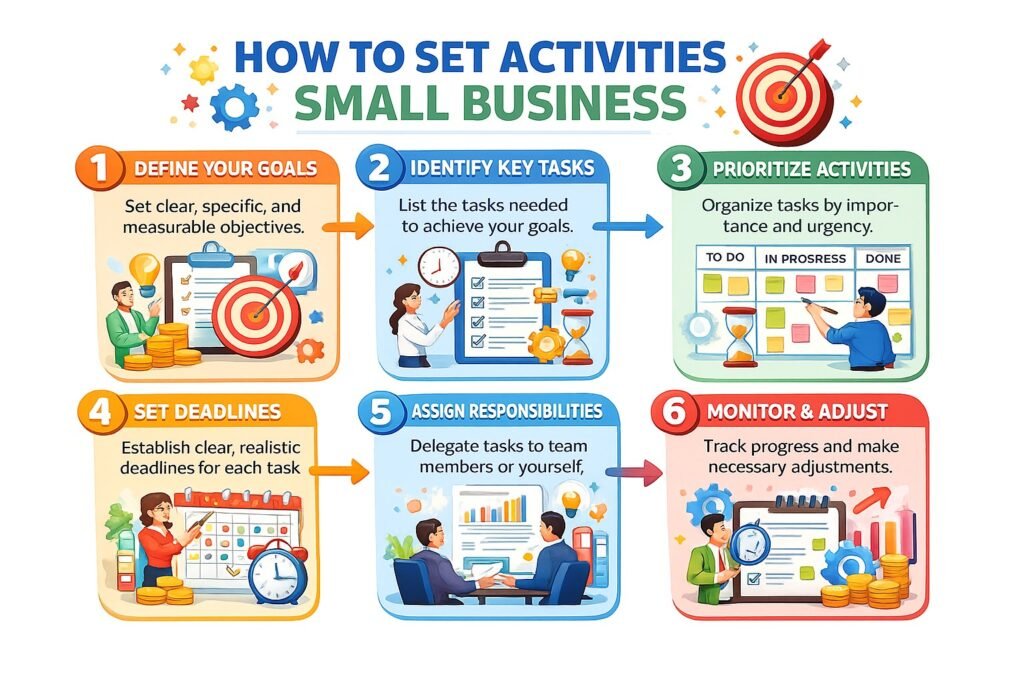
Understanding the Importance of Activity Setting for Small Businesses
Activity setting is more than just creating a to-do list; it’s about aligning every task with your long-term vision. For small businesses, where resources are often limited, prioritizing activities can lead to more significant impacts. When activities are organized and purposeful, they create a framework that your team can rely on, reducing confusion and increasing accountability. This level of structure not only enhances productivity but also helps in making informed decisions that drive growth.
Additionally, effective activity setting allows businesses to allocate resources wisely. By determining which activities yield the highest returns, you can focus your time and budget on what truly matters. This strategic focus can lead to improved efficiency, enabling small businesses to compete with larger enterprises. Moreover, when activities are clearly defined, you’re able to track progress over time, making adjustments as necessary to maximize results.
Small businesses also benefit from improved employee morale when activities are well-defined. A clear set of goals and activities provides employees with a sense of purpose, knowing exactly what they need to focus on. When team members understand their roles within the larger strategy, they’re more likely to engage deeply with their work, fostering a positive workplace culture. Ultimately, this alignment leads to higher productivity and employee retention, essential elements for any successful business.
Identifying Your Business Goals and Objectives Clearly
Before you can set activities, it’s vital to identify your business goals and objectives. Start by defining what success looks like for your company; this could involve revenue targets, market expansion, or customer satisfaction levels. Engaging in a SWOT analysis (Strengths, Weaknesses, Opportunities, Threats) can also provide clarity on where your business stands and what areas require more focus. By understanding your objectives, you can create a roadmap that aligns all activities towards meeting these goals.
Once your goals are set, break them down into specific, measurable objectives. For instance, instead of stating a goal like “increase sales,” refine it to “increase sales by 20% in the next six months.” This level of specificity allows for clearer activity setting, as you can plan initiatives directly linked to achieving these measurable objectives. Involving stakeholders in this process can also ensure that your goals resonate throughout the organization, making it easier to unify efforts.
Regularly revisiting your goals is essential for maintaining alignment. As the business environment changes, so may your objectives. Establish a routine for reviewing and revising your goals, ensuring they remain relevant and achievable. This ongoing evaluation allows you to adapt your activities accordingly, keeping your business agile and responsive to market demands.
Choosing the Right Activities to Support Your Business Vision
With clear goals in place, the next step is to choose activities that align with your business vision. Begin by brainstorming potential activities that could help achieve your objectives. This could range from marketing campaigns, product development, or community outreach initiatives. Consider using techniques such as mind mapping to visualize how different activities connect and support your overarching goals.
As you evaluate potential activities, prioritize them based on their feasibility and impact. Assess the resources required for each activity, including time, personnel, and financial investment. Creating a weighted scoring system can help you objectively evaluate which activities are likely to yield the highest returns. This evaluated approach ensures that you are investing resources in activities that align best with your business strategy.
Engaging your team in this selection process is also beneficial. Employees often have unique insights into what activities may resonate with customers or enhance operational efficiency. By involving them in the decision-making process, you not only gain valuable perspectives but also foster a sense of ownership and accountability. This collaborative approach can lead to more innovative and effective activity planning.
Creating a Flexible Schedule for Planned Activities
Once activities are chosen, it’s essential to create a flexible schedule to implement them. A well-structured schedule allows teams to stay organized while accommodating unforeseen challenges. Begin by mapping out your activities on a calendar, ensuring to set deadlines that incentivize timely completion. This visual representation helps everyone involved see the big picture at a glance.
However, flexibility is key. Businesses often face unexpected changes, whether that’s market fluctuations, budget adjustments, or team shifts. Create buffer times within your schedule to allow for adjustments without derailing progress. Encouraging your team to communicate openly about any challenges they encounter can help maintain momentum and adapt plans accordingly.
Regular check-ins are also crucial in maintaining this flexibility. Schedule weekly or monthly meetings to assess progress, discuss roadblocks, and recalibrate timelines if necessary. This iterative process ensures that everyone remains aligned and engaged, and that activities are continually adjusted to align with the broader business goals.
Monitoring and Evaluating Your Activities Over Time
Monitoring and evaluating activities is critical for long-term success. Establish key performance indicators (KPIs) that will help you measure the effectiveness of each activity. These might include metrics such as sales growth, lead generation, or customer engagement rates. Regularly reviewing these KPIs allows you to see what’s working and what isn’t, enabling you to make informed decisions about future activities.
Employing a project management tool can enhance this monitoring process. Tools like Trello or Asana can provide real-time updates on task completion and allow for effective communication among team members. Additionally, these platforms can facilitate the documentation of lessons learned, which is invaluable for future planning. By tracking successes and failures, you can refine your approach and drive better results over time.
Finally, don’t forget to communicate findings with your team. Sharing insights about what activities yielded positive outcomes boosts morale and encourages the team to remain engaged. Using data to celebrate wins, no matter how small, reinforces the importance of activity setting and encourages a culture of continuous improvement.
Engaging Employees in the Activity Planning Process
Engaging employees in the activity planning process is essential for fostering a collaborative and innovative work environment. Start by creating open channels of communication, where team members feel comfortable sharing their ideas and suggestions. Consider conducting brainstorming sessions or feedback surveys to gather diverse perspectives on potential activities.
Involving employees not only improves the quality of your planning but also enhances buy-in. When team members contribute to the planning process, they’re more likely to feel invested in the outcomes. This sense of ownership can lead to higher motivation and accountability, driving better performance across the board. Moreover, it can help in identifying potential challenges early on, allowing for proactive solutions to be developed.
Additionally, consider forming cross-functional teams for specific activities. This approach brings together individuals from different departments, promoting collaboration and diverse thinking. Leveraging the unique strengths of each team member can lead to more innovative solutions and, ultimately, more effective activities aligned with your business objectives.
Leveraging Technology to Enhance Business Activities
In today’s digital age, leveraging technology can significantly enhance the efficiency and effectiveness of your business activities. Begin by identifying tools that can streamline daily operations, such as customer relationship management (CRM) software or project management platforms. These tools can automate routine tasks, freeing up valuable time for your team to focus on high-impact activities.
Moreover, utilizing data analytics tools can provide insights into customer behavior and market trends. Understanding these insights allows you to tailor your activities to better meet customer needs and preferences. Whether it’s through targeted marketing campaigns or personalized product offerings, technology can help you create activities that resonate with your audience.
Don’t overlook the power of social media either. Platforms like Facebook, LinkedIn, and Instagram can be invaluable for promoting activities, engaging with customers, and building brand awareness. By leveraging these digital channels, small businesses can reach wider audiences and generate buzz around their activities, ultimately driving engagement and sales.
Adapting Your Activities Based on Market Feedback and Trends
Adaptability is crucial for small businesses in a constantly changing marketplace. Regularly seek feedback from customers and stakeholders to understand their perceptions and experiences with your activities. Surveys, focus groups, or online reviews can offer valuable insights that inform how you might need to adjust your activities. Listening to your audience not only enhances customer satisfaction but can also guide your strategic planning.
Staying abreast of industry trends is equally important. Subscribe to relevant publications, attend webinars, or join professional networks to remain informed about shifts in your sector. This knowledge enables you to pivot your activities proactively, capitalizing on new opportunities or mitigating potential risks. When your business remains agile in the face of change, you can maintain a competitive edge.
Finally, encourage a culture of innovation within your team. Empower employees to experiment with new ideas and approaches, recognizing that not every activity will yield immediate success. By fostering an environment where calculated risks are embraced, you enhance your ability to adapt and evolve, ensuring your business activities remain relevant and effective.
Setting activities for a small business is more than a task; it’s a strategic framework that supports your long-term vision. From identifying goals to engaging your team and leveraging technology, each step is integral to fostering a thriving enterprise. By remaining adaptable and regularly evaluating your efforts, you ensure that your business not only survives but flourishes in an ever-changing market landscape.
Frequently Asked Questions
What does “setting activities” mean for a small business?
Setting activities means deliberately defining, prioritizing, and sequencing the work your business needs to do in order to achieve its goals. It goes beyond listing tasks and focuses on deciding which activities matter most, who owns them, when they should happen, and how success will be measured. For small businesses, this creates clarity and prevents time and resources from being consumed by low-impact work.
How is activity setting different from day-to-day task management?
Task management focuses on execution, completing individual actions as they arise. Activity setting is more strategic. It links groups of tasks to specific business objectives such as growth, customer retention, or operational efficiency. Effective activity setting ensures daily work contributes to long-term outcomes rather than reacting to short-term pressures.
Why is activity setting especially important for small businesses?
Small businesses operate with limited time, budget, and people. Without structured activity setting, effort is often spread too thin across competing priorities. Clear activities help owners and teams focus on what delivers the highest return, reduces wasted effort, and improves decision-making. This discipline allows small businesses to scale more sustainably and compete more effectively.
How often should a small business review its activities?
Activities should be reviewed regularly, typically on a monthly or quarterly basis. Frequent reviews allow businesses to assess progress, identify bottlenecks, and adjust priorities based on performance or market changes. In fast-moving environments, shorter review cycles help ensure activities remain relevant and aligned with business goals.
How do business goals influence activity setting?
Business goals define the destination, while activities define the route. Clear goals allow you to design activities that directly support desired outcomes such as revenue growth, customer satisfaction, or efficiency gains. Without defined goals, activities become reactive and disconnected, making it difficult to measure progress or justify where time and resources are spent.
Who should be involved in setting business activities?
While business owners often lead activity setting, involving key team members improves alignment and execution. Employees who contribute to defining activities are more likely to understand priorities, take ownership, and stay engaged. Collaboration also helps surface practical insights about workload, feasibility, and dependencies.
How do you prioritize activities when everything feels important?
Prioritization starts with impact. Activities should be evaluated based on how strongly they contribute to core business objectives, their urgency, and the resources they require. Focusing on high-impact, revenue-generating, or risk-reducing activities first helps prevent overload and ensures progress where it matters most.
Can activity setting help reduce employee stress and burnout?
Yes. Clearly defined activities reduce uncertainty, conflicting demands, and last-minute urgency. When employees know what is expected and why it matters, they can plan their work more effectively. This clarity improves morale, reduces stress, and supports healthier workloads.
How do you measure whether activities are working?
Activities should be linked to measurable outcomes such as sales growth, customer retention, process efficiency, or cost reduction. Tracking progress against these indicators allows you to evaluate effectiveness and refine activities over time. Measurement turns activity setting into a continuous improvement process rather than a one-off exercise.
What tools can support activity setting for small businesses?
Simple tools such as spreadsheets, task management software, or lightweight project management platforms are often sufficient. The key is consistency and visibility rather than complexity. Tools should help track priorities, ownership, deadlines, and progress without adding unnecessary administrative overhead.
How does activity setting support long-term business growth?
Consistent activity setting builds discipline, focus, and accountability. Over time, this creates predictable execution, better resource allocation, and clearer performance insights. These capabilities are essential for scaling operations, attracting talent, and adapting to market changes while maintaining control and direction.
Conclusion – How To Set Activities Small Business: Proven Strategies for Success
Setting activities effectively is a foundational discipline for small businesses seeking sustainable growth and long-term stability. When activities are deliberately aligned to clearly defined goals, they provide structure, focus, and direction in an environment where resources are limited and demands are constant. Rather than reacting to daily pressures, business owners can guide their teams toward work that delivers measurable value and supports strategic objectives.
Well-defined activities also strengthen accountability and execution. Teams understand priorities, responsibilities, and success criteria, which reduces confusion and improves productivity. Over time, this clarity enables better decision-making, more efficient use of time and budget, and a stronger connection between effort and outcomes. As markets evolve and conditions change, businesses with disciplined activity setting are better positioned to adapt without losing momentum.
Ultimately, activity setting transforms ambition into action. By regularly reviewing priorities, measuring results, and refining activities, small businesses can build a repeatable operating rhythm that supports growth, engages employees, and creates a resilient foundation for the future.
Hashtags: #SmallBusiness #ActivityPlanning #EmployeeEngagement #BusinessGrowth #MarketTrends
External Source: For more insights on small business growth strategies, visit Entrepreneur.