PLM vs ERP: Enhancing Product Development and Business Efficiency
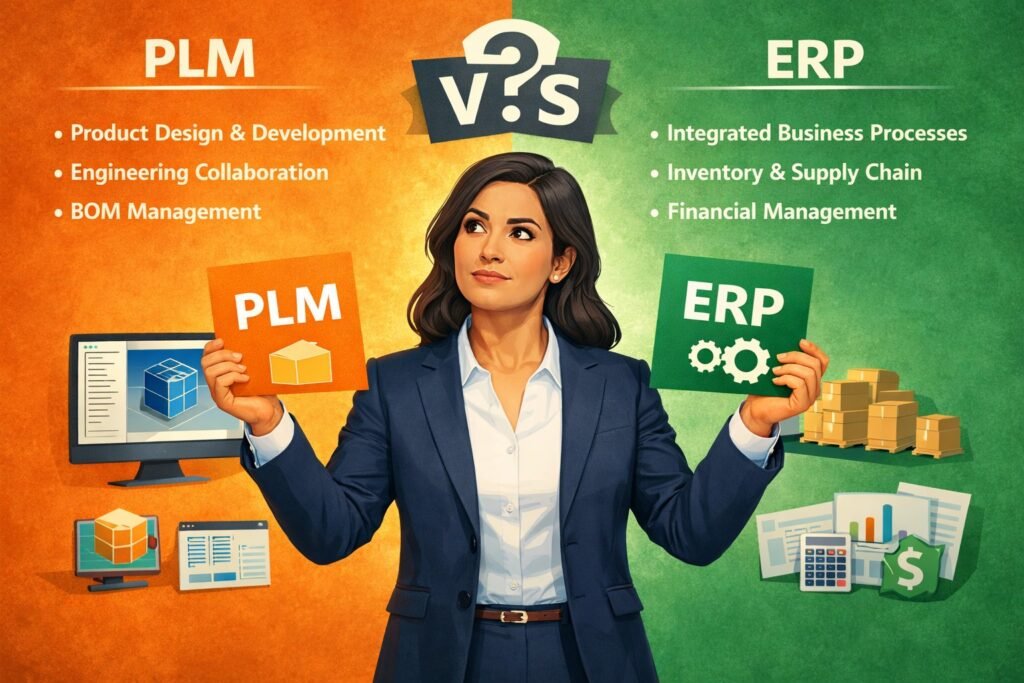
The business landscape is evolving rapidly, and organizations are increasingly seeking tools to help streamline their operations. Two essential systems often discussed in this context are Product Lifecycle Management (PLM) and Enterprise Resource Planning (ERP). While both systems serve pivotal roles in enhancing organizational efficiency, they cater to different needs and functions. Understanding the distinctions between PLM vs ERP systems, how they complement one another, and their respective impacts on product development and business processes can provide valuable insights for organizations considering their implementation.
Understanding the Key Differences Between PLM and ERP Systems
Product Lifecycle Management (PLM) and Enterprise Resource Planning (ERP) systems are designed to manage different aspects of a business. PLM primarily focuses on the entire lifecycle of a product, from its conception and design to its eventual retirement. It includes functionalities that support product data management, project management, and compliance throughout the product’s life. In contrast, ERP encompasses a broader range of business functions, including finance, human resources, supply chain management, and customer relationship management. Essentially, while PLM is product-centric, ERP is organization-centric.
One of the fundamental differences lies in their data structures and processes. PLM systems manage complex product data and documentation, which is especially critical in industries like manufacturing and pharmaceuticals, where detailed compliance and innovation tracking are crucial. On the other hand, ERP systems integrate various business processes into a cohesive system, focusing on resource allocation, operational efficiency, and financial management. The data processed by ERP is more transactional and operational in nature, emphasizing productivity and resource management across departments.
Moreover, the user experience in these systems reflects their core focus areas. PLM systems are tailored for product teams, engineers, and designers, offering collaborative tools that facilitate innovation and product development. Conversely, ERP systems are designed for a broader user base, including finance teams, supply chain managers, and HR personnel, providing them with the tools to manage workflows, budgets, and operational tasks effectively. This distinction highlights how organizations must align their choice between PLM and ERP based on their strategic goals.
How PLM and ERP Systems Complement Each Other Strategically
While PLM and ERP systems serve different functions, they can complement each other strategically within an organization. The integration of PLM and ERP can create a seamless flow of information that enhances decision-making and operational efficiency. For example, a well-integrated PLM system can feed critical product data into the ERP system, ensuring that all departments have access to accurate and up-to-date information. This synergy helps organizations respond more quickly to market changes or product modifications.
Collaboration between the two systems can also improve time-to-market. In industries where speed is vital, having a streamlined process that combines the strengths of both PLM and ERP can lead to quicker approval processes and more efficient resource allocation. By leveraging PLM’s product-focused insights and ERP’s operational capabilities, organizations can enhance their responsiveness and adaptability, ultimately leading to better customer satisfaction.
Moreover, integrating PLM and ERP can lead to improved compliance and risk management. In industries like aerospace and medical devices, regulatory compliance is paramount. By ensuring that product data from PLM systems is accurately reflected in ERP systems, organizations can maintain better oversight and control over compliance-related documentation. This kind of integration not only mitigates risks but also positions companies as trustworthy entities in the eyes of regulators and consumers.
The Impact of PLM on Product Development and Lifecycle
PLM systems significantly impact product development by fostering collaboration and innovation among cross-functional teams. By centralizing product data and documentation, PLM enables teams, including engineering, marketing, and manufacturing, to work from the same information, reducing discrepancies and misunderstandings. This collaborative environment encourages creativity, allowing teams to experiment with new ideas and designs while ensuring that everyone is aligned with the product vision and goals.
Furthermore, PLM systems facilitate faster iterations and modifications based on real-time feedback. Design changes can be made swiftly and communicated across departments, allowing organizations to respond to customer needs and market feedback more effectively. For instance, if a particular feature in a product is not resonating with customers, teams can quickly review and revise the design without the cumbersome delays often associated with traditional processes. This agility not only enhances the product’s market fit but also strengthens customer loyalty.
Additionally, PLM plays a critical role in long-term product strategy by providing insights into product performance and market trends over time. Organizations can leverage historical data from PLM to inform their future product development efforts, identifying areas for innovation or improvement based on past successes and failures. This strategic foresight can drive more sustainable growth and help organizations maintain a competitive edge in the marketplace.
ERP Systems: Streamlining Business Processes and Operations
ERP systems are designed to streamline various business processes and enhance operational efficiency. By integrating core business functions such as finance, supply chain, and human resources, ERP provides a holistic view of an organization’s operations. This integration helps eliminate silos, ensuring that every department has access to the same data and that workflows are coordinated across the organization, leading to improved efficiency and reduced operational costs.
One of the key benefits of ERP systems is their ability to automate routine tasks, freeing up employees to focus on more strategic initiatives. For instance, automated invoicing and payroll processing can significantly reduce the time spent on administrative tasks, allowing finance teams to concentrate on budget analysis and financial planning. This not only enhances productivity but also contributes to employee satisfaction, as staff can engage in more meaningful work.
Moreover, the analytics capabilities of ERP systems enable organizations to make data-driven decisions. With real-time insights into key performance indicators, businesses can identify trends, forecast demand, and allocate resources more effectively. For example, by analyzing sales data, an organization can determine which products are performing well and adjust inventory levels accordingly. This proactive approach to resource management can significantly enhance an organization’s responsiveness to market changes and customer preferences.
Key Industries Benefiting from PLM and ERP Implementations
Various industries stand to benefit from the implementation of PLM and ERP systems, each leveraging these tools to address unique challenges. The manufacturing sector, for instance, relies heavily on both systems to manage the complexities of production, supply chain logistics, and compliance. Manufacturers use PLM to ensure product quality and innovation while integrating ERP to maintain efficient production schedules and inventory management.
In the aerospace and defense industry, compliance and stringent regulations necessitate robust PLM systems to manage detailed product documentation and data throughout the product lifecycle. Simultaneously, ERP systems help these organizations streamline operations, manage budgets, and monitor project timelines effectively. This dual approach ensures that companies can innovate while maintaining compliance and operational efficiency.
Additionally, the consumer goods sector has recognized the value of integrating PLM and ERP systems to enhance product development and distribution. Companies in this industry often face fast-changing consumer preferences and fierce competition. By leveraging PLM for rapid product development and ERP for efficient supply chain management, organizations can more quickly bring new products to market while ensuring optimal distribution and customer satisfaction.
Choosing the Right System: PLM vs ERP in Your Organization
Selecting the right system between PLM and ERP depends on an organization’s specific needs, size, and industry. Organizations focused on product innovation and development may find that a robust PLM system is essential for managing their product lifecycle effectively. In contrast, businesses that require comprehensive resource management across various functions may lean towards ERP systems, especially if they operate in industries where operational efficiency is critical.
It’s also crucial to consider the potential for integration between the two systems. Many organizations benefit from implementing both PLM and ERP, as the synergy between these systems can lead to greater operational efficiency. Evaluating the specific functionalities of both systems and their alignment with organizational goals is key to making an informed decision.
Furthermore, engaging stakeholders from various departments during the selection process can provide valuable insights. Product managers, finance teams, and supply chain experts can offer perspectives on their specific needs and how each system can address them. By involving a cross-functional team in the decision-making process, organizations can ensure that they select a solution that meets their unique requirements and drives long-term success.
Common Misconceptions About PLM and ERP Solutions
Despite their importance, there are several misconceptions surrounding PLM and ERP systems. One common myth is that PLM is only relevant for manufacturing companies. In reality, any organization that develops products can benefit from PLM, including those in industries such as fashion, technology, and pharmaceuticals. These sectors also require collaboration, compliance, and innovation, making PLM a valuable tool for managing product lifecycles effectively.
Another misconception is that ERP systems are solely focused on financial management. While financial operations are a significant component, ERP encompasses a wide range of business processes, including supply chain, inventory management, and human resources. Organizations that view ERP as merely a financial tool may overlook its broader capabilities and benefits, limiting their potential for operational efficiency and integration.
Lastly, some organizations believe that implementing either PLM or ERP will lead to immediate results. In reality, both systems require careful planning, customization, and training to realize their full potential. Success in implementing PLM and ERP systems involves a commitment to change management and continuous improvement, ensuring that employees are equipped to leverage these tools effectively.
Future Trends: The Evolution of PLM and ERP Technologies
As technology continues to evolve, both PLM and ERP systems are expected to undergo significant transformations. One notable trend is the increasing adoption of cloud-based solutions. Cloud technology offers enhanced scalability, flexibility, and accessibility, allowing organizations to access their systems from anywhere and collaborate more effectively. This shift is particularly beneficial for organizations with distributed teams or those operating in various geographical locations.
Artificial intelligence (AI) and machine learning are also poised to play a pivotal role in the future of PLM and ERP systems. These technologies can analyze vast amounts of data to provide insights into customer preferences, production efficiency, and market trends. By harnessing AI-driven analytics, organizations can make more informed decisions and optimize their operations in real-time, enhancing both product development and resource management processes.
Additionally, the integration of the Internet of Things (IoT) with PLM and ERP systems is expected to drive innovation. IoT devices can provide real-time data on product performance and usage, enabling organizations to refine their offerings based on actual user experiences. This level of responsiveness can lead to more customer-centric product development, ultimately enhancing market competitiveness and consumer satisfaction.
Understanding the differences between PLM and ERP systems is crucial for organizations aiming to enhance efficiency and innovation. While they serve distinct functions, their integration can lead to significant improvements in product development, operational efficiency, and overall business performance. As technology continues to evolve, staying informed about trends and advancements in both PLM and ERP systems will be essential for organizations looking to maintain their competitive edge in today’s dynamic market.
Frequently Asked Questions
What is the primary difference between PLM and ERP systems?
The primary difference lies in focus. PLM is product-centric and manages product data, design, compliance, and lifecycle decisions. ERP is organization-centric and manages financials, operations, resources, and enterprise-wide processes. PLM governs how products are created and evolved, while ERP governs how the business operates around them.
Can PLM and ERP replace each other?
No. PLM and ERP are not substitutes. They solve different problems and operate at different stages of the value chain. Attempting to use ERP as a product lifecycle system or PLM as an operational backbone typically results in data gaps, process inefficiencies, and governance issues.
Which system should be implemented first, PLM or ERP?
This depends on business priorities. Organizations with complex product portfolios, regulatory requirements, or high R&D intensity often benefit from implementing PLM first. Organizations focused on operational efficiency, cost control, or enterprise consolidation often prioritize ERP. In mature enterprises, both are implemented with a defined integration strategy.
How do PLM and ERP systems work together?
PLM and ERP systems complement each other through data integration. PLM manages product definitions, specifications, and changes. ERP consumes approved product data to drive manufacturing, procurement, inventory, and financial processes. Clear ownership and integration points are critical to avoid duplication or data conflict.
Is PLM only relevant for manufacturing organizations?
No. While manufacturing is a common use case, PLM is also widely used in industries such as pharmaceuticals, medical devices, consumer goods, aerospace, and technology. Any organization managing complex products, regulatory documentation, or frequent design changes can benefit from PLM.
Why do enterprises struggle with PLM and ERP implementations?
Most challenges stem from governance, not technology. Common issues include unclear data ownership, overlapping system responsibilities, poor change management, and lack of executive alignment. Successful implementations treat PLM and ERP as strategic platforms rather than IT tools.
Which system has greater impact on time to market?
PLM typically has a greater direct impact on time to market. By improving collaboration, change control, and product data accuracy, PLM reduces rework and delays during development. ERP impacts downstream efficiency but usually does not accelerate product innovation cycles.
How do PLM and ERP differ in terms of users?
PLM users are primarily product managers, engineers, designers, quality teams, and regulatory stakeholders. ERP users span finance, procurement, supply chain, HR, and operations. This difference influences system design, user experience, and adoption strategies.
Is ERP enough for managing product compliance and documentation?
ERP can store compliance-related data, but it is not designed to manage complex product documentation, version control, or engineering change processes. PLM provides structured control over product compliance throughout the lifecycle, which is critical in regulated industries.
What risks arise if PLM and ERP are poorly integrated?
Poor integration can lead to inconsistent product data, incorrect bills of materials, procurement errors, production delays, and financial inaccuracies. At enterprise scale, these risks directly affect cost control, regulatory exposure, and customer satisfaction.
How should executives evaluate PLM versus ERP investments?
Executives should evaluate PLM and ERP based on strategic outcomes, not feature lists. PLM investments support innovation, compliance, and product governance. ERP investments support operational efficiency, financial control, and scalability. The strongest enterprises treat both as complementary pillars of enterprise architecture.
Conclusion
In an enterprise environment where complexity, scale, and regulatory pressure continue to increase, understanding the distinction between PLM and ERP is not a theoretical exercise. It is a practical leadership requirement. These platforms solve fundamentally different problems, serve different stakeholder groups, and influence decision making at different points in the value chain. Treating them as interchangeable systems creates blind spots that undermine product integrity, operational efficiency, and strategic execution.
PLM provides the structured backbone for product innovation. It governs how products are conceived, designed, validated, and evolved over time. For organizations operating in manufacturing, life sciences, engineering, or asset intensive industries, PLM protects intellectual property, enforces compliance, and ensures that design decisions are traceable and auditable. Without PLM discipline, product complexity increases risk, slows time to market, and weakens control over regulatory exposure.
ERP, by contrast, translates product intent into operational reality. It manages how resources are planned, funded, procured, produced, and delivered at scale. ERP connects strategy to execution through financial control, supply chain coordination, workforce management, and performance reporting. When implemented well, it provides executives with the visibility and confidence needed to manage margins, cash flow, and enterprise wide performance.
Hashtags: #PLM #ERP #BusinessEfficiency #ProductDevelopment #TechTrends
External Source: For more insights on PLM and ERP, visit PTC https://www.ptc.com/en/blogs/plm/plm-and-erp
Discover our Blog categories to read the latest project management trends:
https://pmresourcehub.com/agile/
https://pmresourcehub.com/project-management/
https://pmresourcehub.com/project-management-software/