
Smart Homes Using AI in India Opening Up New Possibilities: A Definitive Guide
Table of Contents
A Consumer Revolution With Enterprise-Scale Implications
India’s smart home journey has moved far beyond novelty lighting systems and voice-controlled speakers. Artificial intelligence is now reshaping how homes are designed, operated, secured, and experienced. What makes this shift particularly powerful in India is scale. A rapidly expanding middle class, aggressive digital infrastructure investment, affordable sensors, and AI-driven platforms are converging to create one of the world’s most dynamic smart home markets.
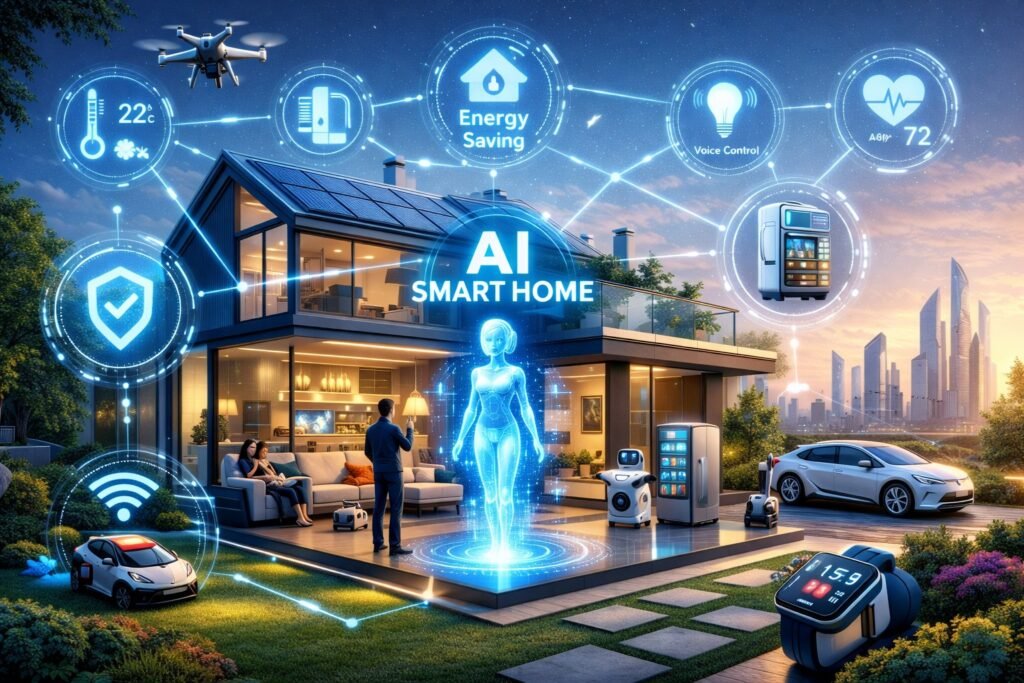
For large organizations, developers, utilities, telecom providers, insurers, and technology enterprises, smart homes using AI in India are not just consumer products. They represent a strategic ecosystem play. Homes are becoming intelligent nodes connected to enterprise platforms, data models, and service networks that unlock new revenue, efficiency, and engagement opportunities.
This blog explores how AI-powered smart homes in India are opening up new possibilities, from consumer convenience to enterprise-grade transformation.
India’s Smart Home Momentum
India’s urban housing growth, smart city programs, and broadband expansion have laid the foundation for mass adoption of connected homes. What differentiates the current wave is AI-driven intelligence layered on top of connected devices.
AI enables smart homes to move from reactive to predictive, from rule-based automation to learning systems that adapt to behavior, context, and preferences. For consumers, this feels intuitive and almost invisible. For enterprises, it creates continuous engagement and long-term value creation.
Key adoption drivers include:
• Affordable smart devices manufactured locally
• High smartphone penetration across income segments
• Strong acceptance of digital payments and subscription models
• Increasing comfort with voice interfaces in multiple Indian languages
• Enterprise investment from real estate, telecom, and energy providers
This combination makes India uniquely positioned to leapfrog traditional home automation models.
AI as the Intelligence Layer
AI is the differentiator that transforms connected homes into smart living environments. Instead of simple on and off commands, AI systems analyze patterns, predict needs, and optimize outcomes.
Context-Aware Automation
AI systems learn daily routines, occupancy patterns, climate preferences, and energy usage behaviors. Lighting adjusts based on natural light and activity. Climate systems pre-cool homes before arrival. Appliances optimize operation during off-peak energy hours.
For enterprises, this intelligence generates valuable behavioral insights while maintaining consumer trust through privacy-first architectures.
Voice and Multilingual Interaction
India’s linguistic diversity demands AI systems that understand regional languages and accents. Enterprise-grade AI assistants now support Hindi, Tamil, Telugu, Marathi, Bengali, and more.
This has expanded smart home adoption beyond tech-savvy urban elites into mass-market segments. Enterprises benefit from broader market penetration without increasing complexity for users.
Predictive Maintenance
AI-enabled homes can detect anomalies in appliances, electrical systems, and water usage. Early warnings reduce damage, service costs, and downtime.
This creates opportunities for appliance manufacturers, insurance firms, and facilities service providers to offer proactive support models rather than reactive claims handling.
Security and Safety at Enterprise Scale
Home security is one of the strongest AI adoption catalysts in India. Concerns around property protection, elderly safety, and child monitoring are driving demand for intelligent systems.
AI-Powered Surveillance
Smart cameras using computer vision can distinguish between people, animals, vehicles, and normal background activity. False alerts are reduced, and meaningful incidents are escalated instantly.
Enterprises can integrate these systems with centralized monitoring centers, subscription-based security services, and insurance risk models.
Facial and Behavioral Recognition
AI systems recognize familiar faces and identify unusual behavior patterns. Elderly residents falling, children leaving designated zones, or doors opening at odd hours can trigger alerts.
This opens partnerships between healthcare providers, assisted living services, and smart home platform providers.
Energy Management and Sustainability
India’s energy demand continues to grow, and AI-powered smart homes play a crucial role in balancing consumption with sustainability.
Intelligent Energy Optimization
AI analyzes consumption patterns, weather forecasts, and grid load data to optimize energy usage. Homes automatically shift non-essential loads to off-peak hours.
For utilities and energy enterprises, this enables demand response programs and grid stability at scale.
Integration With Solar and Storage
AI manages rooftop solar panels, battery storage, and electric vehicle charging to maximize cost savings and reduce grid dependency.
Real estate developers and energy companies can package smart homes as sustainability-first living solutions, aligning with ESG commitments.
Real Estate Developers and Smart Communities
Large real estate developers in India are increasingly embedding AI-enabled smart home infrastructure at the construction stage.
Smart Homes as a Value Proposition
AI-driven living environments command premium pricing, higher occupancy rates, and stronger brand differentiation. Developers can position projects as future-ready rather than technology-heavy.
Community-Level Intelligence
Beyond individual homes, AI can optimize common areas, parking, elevators, security gates, and energy usage across entire communities.
For enterprises, this creates long-term service revenue through platform licensing, analytics, and operational management contracts.
Telecom and Platform Ecosystems
Telecom operators play a central role in India’s smart home expansion. High-speed connectivity is the backbone of AI-driven living.
Bundled Smart Living Services
Enterprises are bundling broadband, smart devices, AI platforms, and support services into single subscriptions. This reduces customer acquisition costs and increases lifetime value.
Data and Insights Monetization
Anonymized, consent-based insights from smart home platforms help enterprises improve products, forecast demand, and personalize services.
Responsible data governance remains critical to sustaining trust and regulatory compliance.
Consumer Experience Without Complexity
Despite advanced technology, successful smart homes feel simple. AI abstracts complexity and presents benefits in intuitive ways.
Invisible Intelligence
Consumers do not want to manage dashboards or configure rules constantly. AI learns passively and intervenes only when needed.
This principle guides enterprise design decisions, prioritizing outcomes over features.
Reliability and Trust
Smart homes must work consistently. Enterprises investing in robust AI models, edge computing, and redundancy gain long-term consumer loyalty.
Industry-Specific Enterprise Opportunities
Banking and Insurance
AI-powered homes reduce risk through surveillance, predictive maintenance, and incident prevention. Insurers can offer lower premiums tied to smart home adoption.
Banks can integrate smart home upgrades into housing finance products.
Healthcare and Assisted Living
Remote health monitoring, emergency detection, and AI-driven alerts support aging populations and chronic care management.
Enterprises can extend healthcare beyond hospitals into homes.
Retail and Consumer Brands
Smart kitchens, connected appliances, and AI-driven replenishment systems enable new retail partnerships and usage-based commerce models.
Practical Guidance for Enterprises Entering This Space
Focus on Ecosystems, Not Devices
Winning enterprises build platforms that integrate devices, data, services, and partners seamlessly.
Invest in Localization
AI models must reflect Indian lifestyles, climate conditions, and cultural behaviors. Localization is not optional.
Prioritize Privacy and Transparency
Clear data policies, opt-in models, and visible consumer controls are essential for sustained adoption.
Design for Scale From Day One
Enterprise-grade architectures ensure performance across millions of homes without degradation.
Sample Enterprise Dashboard Metrics
| Area | Metric | Business Value |
|---|---|---|
| Energy | Peak load reduction | Utility cost optimization |
| Security | Incident response time | Risk reduction |
| Engagement | Monthly active households | Revenue growth |
| Maintenance | Predictive alerts resolved | Service efficiency |
Measurable Outcomes Being Achieved
• Reduced energy consumption across smart communities
• Lower insurance claims due to proactive risk detection
• Higher property values for AI-enabled developments
• Improved customer retention for telecom and platform providers
These results demonstrate why smart homes using AI in India are no longer experimental. They are commercially proven at scale.
The Road Ahead
AI-powered smart homes in India are evolving into intelligent living ecosystems that benefit consumers and enterprises alike. As adoption accelerates, the organizations that succeed will be those that balance innovation with trust, simplicity with scale, and personalization with governance.
Smart homes are becoming strategic infrastructure, not consumer gadgets. India’s market conditions make it one of the most important smart living laboratories in the world.
External Source Call-to-Action
Explore industry insights on India’s smart home and AI adoption trends from a global technology perspective:
https://www.mckinsey.com/industries/technology-media-and-telecommunications/our-insights
Hashtags
#SmartHomes #AIinIndia #DigitalLiving #EnterpriseTechnology #FutureHomes