
The Role of AI in Portfolio Management: A Complete Guide
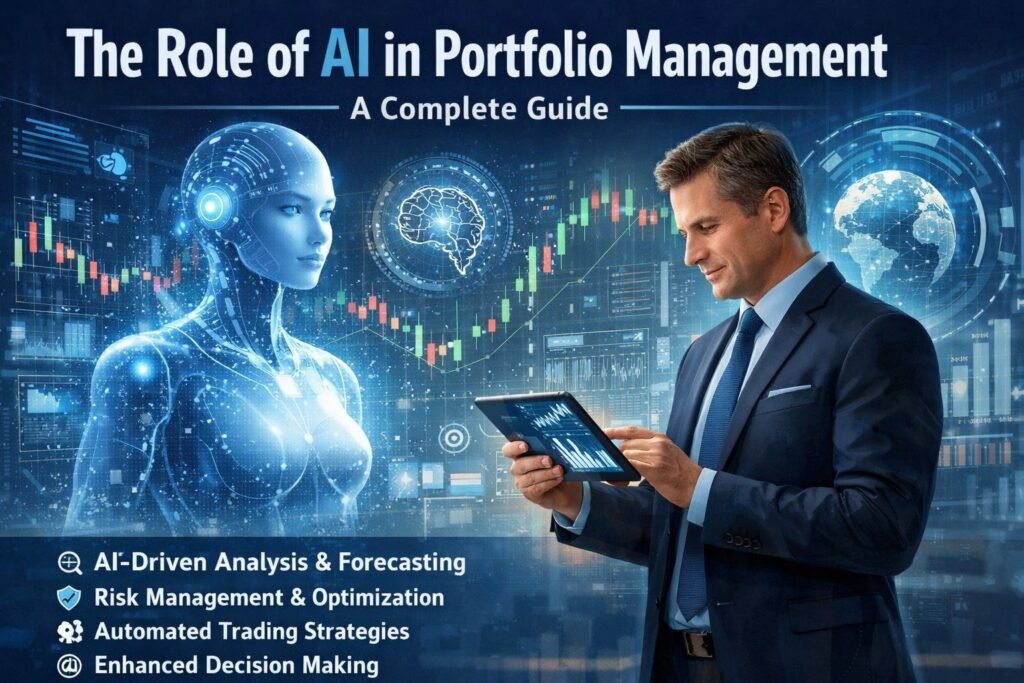
In today’s fast-paced financial landscape, AI in Portfolio Management has evolved through the integration of artificial intelligence. This technology is reshaping how organizations strategize, analyze, and optimize their investments. From predictive analytics to real-time data processing, AI provides portfolio managers with invaluable insights and tools that enhance decision-making. Here’s a look at seven powerful ways AI is being utilized in portfolio management, transforming the way investment strategies are developed and executed.
Enhancing Investment Strategies with AI Insights
AI has the potential to completely revolutionize traditional investment strategies by providing unparalleled insights. In portfolio management, it analyzes vast datasets, including historical performance, market conditions, and economic indicators, to identify trends and correlations that human analysts might overlook. With machine learning algorithms, AI can continually improve its predictions based on new data, leading to more refined and effective investment strategies.
For organizations, this means that investment decisions are increasingly data-driven. Portfolio managers can leverage AI insights to discover emerging market trends, sector performance shifts, and risk factors. Companies that adopt AI-driven strategies often report improved returns and reduced volatility, as the technology allows for a more nuanced understanding of market dynamics.
Moreover, AI can simulate different investment scenarios, allowing portfolio managers to test and adjust their strategies in real time. These simulations can reveal the potential outcomes of various investment decisions, providing a deeper understanding of risk and reward. This capability is particularly beneficial for large organizations managing diverse portfolios across multiple sectors.
Predictive Analytics for Market Trends and Performance
Predictive analytics is one of the most powerful applications of AI in portfolio management. By analyzing historical data and current market conditions, AI algorithms can forecast market trends and asset performance. This insight enables portfolio managers to make informed decisions about future investments, optimizing their portfolios for maximum returns.
Using predictive analytics, organizations can identify patterns in market behavior, helping them to anticipate changes and adjust their strategies accordingly. For example, AI might highlight that a particular sector is poised for growth based on historical trends, guiding managers to allocate resources strategically. This proactive approach allows firms to capitalize on emerging opportunities ahead of their competitors.
Additionally, predictive analytics can enhance risk management. By forecasting potential downturns or volatility, AI enables managers to adjust their portfolios in advance, protecting assets and maintaining stability. As the financial landscape becomes increasingly complex, predictive tools powered by AI are essential for maintaining a competitive edge.
Automating Portfolio Rebalancing for Optimal Growth
Portfolio rebalancing is a crucial aspect of investment management, ensuring that a portfolio remains aligned with an investor’s goals and risk tolerance. AI simplifies this process through automation, allowing portfolio managers to maintain optimal asset allocation without the need for constant manual intervention. Automated rebalancing systems can monitor market conditions and adjust portfolios in real time, ensuring that they remain aligned with investment objectives.
Automation not only saves time but also reduces the chances of human error. In large organizations with complex portfolios, manual rebalancing can be cumbersome and prone to mistakes. AI-driven solutions can streamline this process, allowing managers to focus on strategy rather than logistics. This efficiency can result in enhanced performance and reduced management costs.
Furthermore, automated rebalancing can be tailored to individual investors’ needs. By utilizing AI, firms can create customized portfolios that automatically adjust to changing market conditions. This personalized approach enhances client satisfaction and retention, as investors feel their unique goals are being prioritized.
Risk Assessment: AI’s Role in Identifying Threats
Another significant benefit of AI in portfolio management is its ability to enhance risk assessment. Traditional risk assessment methods often rely on historical data and subjective judgments, which can lead to oversights. AI, on the other hand, leverages advanced algorithms to analyze vast quantities of data, identifying potential threats and vulnerabilities with greater accuracy.
Through AI-powered risk assessment tools, organizations can monitor their portfolios for signs of distress, such as sudden market shifts or economic downturns. These tools can offer real-time alerts, enabling portfolio managers to take swift action when needed, thus mitigating potential losses. This proactive approach to risk management can be a game-changer for large organizations with diverse and complex investments.
Moreover, AI can assess the interconnectedness of various assets, providing insights into systemic risks that may not be visible through traditional analysis. Understanding these relationships is crucial for large enterprises, as it allows them to adjust their portfolios to minimize exposure to correlated risks. In a volatile market, this insight can prove invaluable for safeguarding investments.
Personalized Investment Recommendations Through AI
One of the most exciting applications of AI in portfolio management is its ability to deliver personalized investment recommendations. By analyzing individual investor profiles, including risk tolerance, financial goals, and investment history, AI can tailor recommendations that align with each investor’s needs. This level of personalization enhances client experience, leading to higher satisfaction and loyalty.
Organizations can leverage AI to create dynamic investment strategies that evolve with the investor’s changing circumstances. For instance, if an investor’s risk tolerance decreases or their financial goals shift, AI can automatically adjust the investment strategy to reflect these changes. This adaptability is crucial in maintaining a client-centric approach in an increasingly competitive market.
Furthermore, personalized recommendations can extend beyond basic investment advice. AI can provide insights on specific asset classes, sectors, or geographical regions, helping investors make informed decisions about where to allocate their resources. By providing this level of detail, organizations can foster trust and transparency with their clients, essential elements in building long-lasting relationships.
Enhancing Decision-Making with Machine Learning Models
Machine learning models are at the forefront of AI applications in portfolio management, transforming how decisions are made. These models can analyze historical and real-time data to provide actionable insights, offering a level of analysis that surpasses traditional methods. By continuously learning from new data, machine learning algorithms can refine their predictions and recommendations over time, ensuring that portfolio managers always have the most accurate information at their fingertips.
For large organizations, the ability to leverage machine learning for decision-making can result in more effective investment strategies. By automating the analytical process, firms can reduce the time spent on data analysis, allowing portfolio managers to focus on strategic decision-making. This shift not only enhances efficiency but also leads to improved investment outcomes as managers can make faster, data-driven decisions.
Additionally, machine learning can assist in identifying potential investments that align with an organization’s strategic goals. By analyzing a range of factors, including macroeconomic indicators, market sentiment, and competitor performance, machine learning models can uncover hidden opportunities. This capability is especially beneficial for large enterprises looking to expand their portfolios while mitigating risk.
Leveraging Natural Language Processing in Research
Natural Language Processing (NLP) is an innovative area of AI that allows machines to understand and interpret human language. In portfolio management, NLP can be utilized to analyze news articles, social media posts, and financial reports, providing portfolio managers with valuable insights into market sentiment and emerging trends. By processing vast amounts of textual data, NLP can reveal insights that might be missed through traditional analysis.
Organizations can use NLP to monitor public sentiment regarding specific companies or sectors, helping them to make informed investment decisions. For instance, if a surge in negative sentiment emerges about a particular stock, portfolio managers can react quickly, adjusting their strategies to mitigate potential losses. This agility is essential in today’s fast-paced market, where information spreads rapidly.
Moreover, NLP can enhance fundamental analysis by extracting key insights from earnings reports and other financial documents. By automating the extraction of critical data, organizations can streamline their research processes, allowing analysts to focus on strategic decision-making rather than data collection. This efficiency can lead to better-informed investments and, ultimately, improved portfolio performance.
Real-Time Data Analysis for Agile Portfolio Management
In an era where markets can change in an instant, the ability to analyze real-time data is crucial for effective portfolio management. AI-enabled tools can process live market data, enabling portfolio managers to respond swiftly to changing conditions. This agility allows organizations to capitalize on opportunities as they arise and minimize risks by making timely adjustments to their portfolios.
AI can track a multitude of variables, from stock prices to economic indicators, providing portfolio managers with a comprehensive view of the market landscape. This real-time analysis is essential for large organizations that must navigate complex and dynamic environments. By leveraging AI, firms can develop strategies that respond to real-time information, enhancing their competitive edge.
Additionally, AI can integrate real-time data with historical analysis, providing a holistic view of performance and potential trends. This integrated approach allows portfolio managers to make informed decisions based on a combination of past performance and current conditions. As the financial landscape continues to evolve, organizations that harness real-time data analysis will be better positioned to thrive.
Frequently Asked Questions (FAQ)
What is AI-driven portfolio management?
AI-driven portfolio management refers to the use of artificial intelligence, machine learning algorithms, and advanced analytics to optimize asset allocation, risk assessment, and investment decision-making. Instead of relying solely on traditional financial modeling, AI systems analyze massive datasets in real time, uncover hidden correlations, and generate predictive insights that enhance strategic portfolio performance.
How does AI improve investment strategy development?
AI enhances investment strategies by processing vast volumes of structured and unstructured data, including historical pricing trends, macroeconomic indicators, earnings reports, and market sentiment signals. Machine learning models continuously refine forecasts as new data becomes available, enabling dynamic strategy optimization. This data-driven precision supports improved return profiles and reduced downside exposure.
How does predictive analytics strengthen portfolio performance?
Predictive analytics leverages historical and real-time data to forecast potential market movements and asset behavior. By identifying patterns invisible to manual analysis, AI enables proactive rebalancing, volatility mitigation, and opportunity identification. For enterprise portfolio managers overseeing diversified holdings, predictive modeling enhances capital allocation efficiency and strategic agility.
Can AI reduce portfolio risk?
Yes. AI enhances risk management by continuously monitoring market signals, liquidity indicators, and geopolitical developments. Advanced algorithms can detect early warning signals of volatility, credit exposure shifts, or sector downturns. This real-time risk intelligence allows organizations to adjust asset allocation strategies before adverse impacts escalate.
How does AI support real-time portfolio monitoring?
AI platforms process high-frequency market data, performance metrics, and risk indicators instantly. Automated dashboards provide portfolio managers with up-to-date analytics, enabling faster decision cycles and more responsive governance oversight. This real-time intelligence is especially critical in volatile financial environments where rapid market shifts can impact returns.
Does AI replace human portfolio managers?
AI augments rather than replaces human expertise. While algorithms excel at data analysis and pattern recognition, strategic judgment, ethical oversight, and contextual decision-making remain human-led functions. The most effective portfolio management models integrate AI-driven insights with experienced financial leadership to create a hybrid decision framework.
How does AI enable scenario simulation in investment planning?
AI can simulate multiple economic and market scenarios, stress-testing portfolios against potential downturns, interest rate changes, regulatory shifts, or sector disruptions. These scenario analyses allow organizations to evaluate resilience, optimize diversification strategies, and enhance long-term capital preservation.
What competitive advantage does AI provide in portfolio management?
Organizations that integrate AI into portfolio management gain superior analytical depth, faster decision-making capabilities, and enhanced predictive accuracy. This results in stronger risk-adjusted returns, improved volatility control, and more strategic capital deployment. In highly competitive financial markets, AI-driven portfolio optimization creates measurable performance differentiation.
What should organizations consider before adopting AI in portfolio management?
Key considerations include data quality, regulatory compliance, cybersecurity safeguards, algorithm transparency, and governance oversight. Financial institutions must ensure that AI systems operate within compliance frameworks while maintaining auditability and accountability. A structured implementation roadmap ensures sustainable adoption and long-term value realization.
Is AI suitable for large, diversified portfolios?
AI is particularly effective for large, complex portfolios spanning multiple asset classes and geographic markets. The technology excels at managing scale, identifying cross-market correlations, and processing diversified risk variables. For enterprise investment teams, AI enhances strategic oversight and performance optimization at scale.
By integrating artificial intelligence into portfolio management frameworks, organizations can strengthen predictive accuracy, accelerate decision-making, and drive superior investment outcomes in today’s fast-moving financial ecosystem.
Conclusion
Artificial intelligence is no longer a futuristic concept in portfolio management; it is a transformative force redefining how modern investment strategies are designed, executed, and optimized. In today’s volatile and data-saturated financial markets, organizations that rely solely on traditional analysis risk falling behind more technologically advanced competitors. AI-powered portfolio management delivers a decisive strategic advantage by combining predictive analytics, real-time monitoring, advanced risk modeling, and intelligent scenario simulation into a cohesive, performance-driven framework.
By integrating AI into portfolio governance structures, investment leaders gain deeper market visibility, enhanced forecasting accuracy, and faster decision cycles. Machine learning algorithms continuously refine strategy recommendations, enabling dynamic asset allocation and proactive risk mitigation. This level of analytical precision strengthens capital efficiency, improves risk-adjusted returns, and enhances long-term portfolio resilience.
Moreover, AI does not replace financial expertise it amplifies it. When human strategic judgment is paired with advanced algorithmic intelligence, organizations create a powerful hybrid decision model that balances quantitative rigor with contextual insight. This fusion drives smarter investment choices, stronger stakeholder confidence, and more sustainable growth trajectories.
As financial markets grow increasingly complex, the competitive edge will belong to organizations that embrace AI-driven portfolio optimization. From enhanced investment strategy development to enterprise-level risk management, artificial intelligence is rapidly becoming the cornerstone of high-performance portfolio management. Institutions that invest in AI capabilities today position themselves for superior agility, strategic clarity, and enduring financial success in tomorrow’s dynamic global economy.
Hashtags: #PortfolioManagement #AIFinance #InvestmentStrategies #RiskManagement #DataAnalysis
External Source Reference: For further insights on AI in Portfolio Management, visit Wall Street Prep https://www.wallstreetprep.com/knowledge/ai-in-portfolio-management/
Discover More great insights at https://www.pmresourcehub.com
Explore Free Project Management Templates https://pmresourcehub.com/library/