
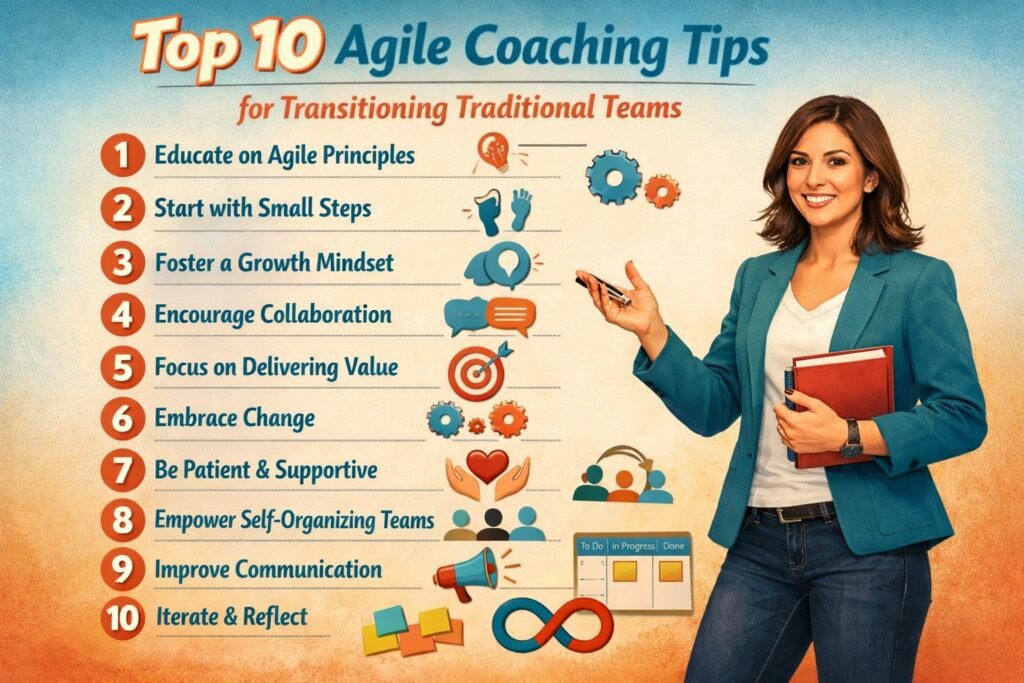
Top 10 Agile Coaching Tips for Transitioning Traditional Teams
Transitioning from traditional project management methods to Agile can feel overwhelming for many teams, especially in large organizations accustomed to hierarchical structures. As Agile practices gain traction, leaders often seek guidance on how to navigate this shift effectively. This article aims to provide actionable coaching tips for Agile coaches and team leaders, helping traditional teams embrace Agile methodologies. With the right strategies in place, organizations can unlock the full potential of their teams, fostering collaboration, innovation, and flexibility in a fast-paced environment.
Here are 10 powerful Agile coaching tips for transitioning traditional teams:
- Educate teams on Agile principles
Build understanding of Agile values, iterative delivery, and customer-centric thinking. - Assess team readiness first
Evaluate current skills, culture, and openness to change before introducing Agile practices. - Build a strong Agile mindset
Encourage adaptability, experimentation, and continuous learning. - Strengthen communication practices
Use daily stand-ups, transparent discussions, and clear information sharing. - Leverage Agile collaboration tools
Platforms like digital boards and chat tools support real-time teamwork. - Facilitate effective Agile ceremonies
Sprint planning, reviews, and retrospectives keep teams aligned and improving. - Promote collaboration over individual performance
Agile success is driven by team outcomes, not individual output. - Create cross-functional teams
Diverse skills enable faster decision-making and innovation. - Measure progress with Agile metrics
Track velocity, customer satisfaction, and value delivery. - Embed continuous improvement
Use retrospectives and feedback loops to refine processes.
Understanding Agile: The Key to Transition Success
To successfully transition to Agile, it’s crucial to first understand the core values and principles of Agile methodologies. Agile is built on the foundations of collaboration, customer-oriented development, and iterative progress. This mindset shift is essential, as traditional project management often emphasizes planning and control, while Agile focuses on adaptability and responsiveness to change. Educating team members about Agile’s principles, such as the Agile Manifesto, can lay a solid groundwork for the transition.
Moreover, it’s vital to recognize that Agile is not a one-size-fits-all solution. Different frameworks, like Scrum, Kanban, and Lean, can be tailored to suit various organizational needs and cultures. Understanding these frameworks allows leaders to select the best approach for their teams. For example, larger teams may benefit from Scrum’s structured sprints, while smaller teams might find Kanban’s visual management more effective. This customization can lead to greater buy-in from team members, as they see frameworks that resonate with their unique workflows.
Finally, fostering an environment where continuous learning is encouraged will pave the way for Agile success. Teams should be motivated to experiment and innovate, even if it means making mistakes along the way. Encouraging an open dialogue about Agile practices will not only build trust but also enhance team cohesion. As they adapt to the Agile mindset, teams will gradually become more comfortable with change, setting the stage for a successful transition.
Assessing Your Team’s Readiness for Agile Practices
Before diving into Agile methodologies, it’s essential to assess your team’s readiness for this shift. Start by evaluating the current team dynamics, skills, and attitudes toward change. Engaging team members in discussions about their experiences with traditional project management can provide valuable insights. This assessment can be done through surveys, one-on-one interviews, or group workshops, allowing team members to voice their concerns, expectations, and aspirations regarding Agile practices.
Identifying gaps in knowledge and skills is another vital component of this readiness assessment. Teams may require training in Agile methodologies, tools, or specific techniques to bridge these gaps. Conducting training sessions or workshops led by experienced Agile coaches can equip team members with the necessary knowledge and skills. Furthermore, pairing less experienced team members with Agile champions within the organization can facilitate peer learning and mentorship, enhancing the overall readiness for Agile practices.
Finally, it is crucial to establish a supportive environment where team members feel safe to express their concerns. Resistance to change is natural, and addressing these concerns openly can lead to a smoother transition. Encourage team members to share their fears and questions during workshops or team meetings. By fostering a culture of psychological safety, you will create a strong foundation for Agile adoption, enabling your team to embrace new practices with confidence.
Building a Strong Agile Mindset Within Your Team
To build a successful Agile culture, it is essential to instill a strong Agile mindset within your team. This mindset involves encouraging collaboration, promoting a customer-centric approach, and embracing flexibility. Leaders should model these behaviors, demonstrating a commitment to Agile values. By sharing success stories of Agile transformations, you can inspire team members to adopt this mindset, showing them the tangible benefits of Agile practices.
Another critical aspect of nurturing an Agile mindset is fostering team ownership. Encourage team members to take responsibility for their work and decision-making processes. This empowerment not only enhances motivation but also fosters accountability. Providing autonomy allows individuals to experiment with new solutions and approaches, ultimately leading to more innovative outcomes. Regularly revisiting and reflecting on team goals will help maintain focus on delivering value to customers.
Finally, ongoing training and development are vital to sustaining an Agile mindset. Consider implementing regular workshops, lunch-and-learn sessions, or Agile meetups to keep team members engaged and informed about best practices. Encouraging participation in industry conferences or online courses can also help broaden their knowledge. Emphasizing the importance of lifelong learning will reinforce the Agile principle of adapting to change and continuously improving.
Effective Communication Strategies for Agile Teams
Clear and effective communication is a cornerstone of Agile practices. Establishing open lines of communication among team members fosters collaboration and helps address issues promptly. Regular stand-up meetings are an excellent way to create opportunities for team members to share updates, discuss challenges, and celebrate accomplishments. These brief, focused meetings help maintain alignment and promote transparency within the team.
Additionally, leveraging digital communication tools can enhance collaboration, especially for distributed teams. Tools like Slack, Microsoft Teams, or Trello can facilitate real-time communication and enable team members to share information efficiently. Creating designated channels for specific projects or topics encourages team members to engage in meaningful conversations, ultimately strengthening team bonds and improving workflow.
Moreover, it’s essential to encourage feedback within your team. Constructive feedback is vital for Agile success, as it enables continuous improvement. Implementing regular retrospective meetings allows team members to reflect on their processes, identify areas for enhancement, and celebrate successes. By fostering a culture of open feedback, you create an environment where team members feel valued and empowered to contribute to the team’s growth.
Facilitating Productive Agile Ceremonies and Meetings
Agile ceremonies are critical to maintaining momentum and ensuring alignment within your team. These ceremonies include sprint planning, daily stand-ups, sprint reviews, and retrospectives. Each meeting serves a specific purpose, and facilitating them effectively is crucial to maximizing their value. Start by establishing clear objectives for each ceremony and communicating these to the team. This clarity helps set expectations and encourages active participation.
During sprint planning, collaboratively defining the backlog items with the team is important. Encourage team members to ask questions and share their perspectives to ensure a shared understanding of the tasks at hand. Additionally, utilize timeboxing to keep discussions focused and efficient. This practice helps prevent meetings from dragging on and encourages timely decision-making.
In sprint reviews, celebrate accomplishments and provide constructive feedback. Invite stakeholders to participate and share their perspectives on the work completed. This inclusivity not only fosters transparency but also strengthens relationships with stakeholders, ultimately enhancing collaboration. Finally, in retrospectives, encourage open dialogue about what worked well and what could be improved. By focusing on actionable insights, you empower your team to implement changes that drive continuous improvement.
Emphasizing Collaboration Over Individual Performance
Transitioning to Agile requires a cultural shift from individual performance to team collaboration. In traditional environments, individual achievements often take center stage, whereas Agile emphasizes the importance of collective success. Leaders should actively promote a team-oriented mindset, celebrating shared accomplishments and encouraging collaboration among team members. This shift can be achieved through team-building activities, collaborative projects, and recognition of group achievements.
One effective way to foster collaboration is to implement cross-functional teams. These teams bring together individuals with diverse skill sets, allowing them to work together on projects and share responsibilities. By leveraging each member’s strengths, you create a more cohesive team that is better equipped to tackle challenges and deliver value to customers. This collaborative environment encourages knowledge sharing and promotes a sense of belonging among team members.
Furthermore, establishing clear roles and responsibilities within the team can enhance collaboration. While Agile encourages flexibility, having defined roles ensures that everyone knows their contributions and expectations. This clarity fosters accountability and empowers team members to collaborate effectively. By prioritizing teamwork over individual performance, you will cultivate an Agile culture that drives success and innovation.
Measuring Progress: Metrics for Agile Success
Measuring progress in Agile environments differs significantly from traditional metrics that focus on output. In Agile, the emphasis is on delivering value to customers and fostering continuous improvement. Start by defining key performance indicators (KPIs) that align with your team’s goals. These KPIs can include metrics like customer satisfaction, time-to-market, and team velocity. By focusing on these metrics, you can assess your team’s effectiveness and identify areas for improvement.
One popular Agile metric is the velocity measure, which captures the amount of work completed in a given sprint. This metric helps teams gauge their capacity and plan future sprints effectively. However, it’s essential to remember that velocity should not be the sole focus. Emphasizing customer feedback and satisfaction is equally important, as it ensures that the work being done aligns with customer needs and expectations.
Finally, incorporating qualitative feedback is crucial for measuring Agile success. Encourage team members and stakeholders to share their insights on the team’s performance and areas for improvement. Regularly reviewing this feedback can provide valuable insights into the team’s dynamics and help identify adjustments needed for future sprints. By combining quantitative metrics with qualitative feedback, you will create a comprehensive understanding of your team’s progress and areas for growth.
Agile Coaching Tips – Continuous Improvement:
Continuous improvement is a fundamental aspect of Agile methodologies, rooted in the idea of learning from experiences and incorporating feedback. Establishing feedback loops allows teams to regularly assess their processes, identify challenges, and implement changes. Start by incorporating regular retrospective meetings to review successes and areas of improvement. These discussions encourage team members to share their insights and promote a culture of openness.
Moreover, creating an environment where experimentation is encouraged can lead to innovative solutions. Embrace a mindset that views failures as learning opportunities. Encourage teams to test new ideas and approaches, even if they may not lead to immediate success. This willingness to experiment fosters creativity and allows teams to discover new ways of working that improve efficiency and effectiveness.
Finally, ensure that lessons learned from feedback loops are documented and shared across the organization. Sharing successful practices and insights can help other teams learn and avoid common pitfalls. Implementing a centralized repository for best practices or creating a community of practice can facilitate knowledge sharing and enhance collaboration across teams. By prioritizing continuous improvement, your organization can adapt to change and thrive in an Agile environment.
Transitioning traditional teams to Agile methodologies can be a challenging journey, but with the right strategies and mindset, organizations can unlock significant benefits. By focusing on building a strong Agile culture, fostering collaboration, and embracing continuous improvement, teams can navigate the transition successfully. The tips outlined in this article serve as a roadmap for Agile coaches and leaders, guiding them in supporting their teams as they embark on this transformative journey. Embrace the Agile mindset, and watch your teams flourish in a rapidly evolving world.
Hashtags: #AgileTransformation #AgileCoaching #TeamCollaboration #ContinuousImprovement #ProjectManagement
External Source: For more insights on Agile practices, visit Scrum Alliance.
Discover More great insights at https://www.pmresourcehub.com
Explore Free Project Management Templates https://pmresourcehub.com/library/