Top 10 Project Governance Risks Hidden in Complex Programs
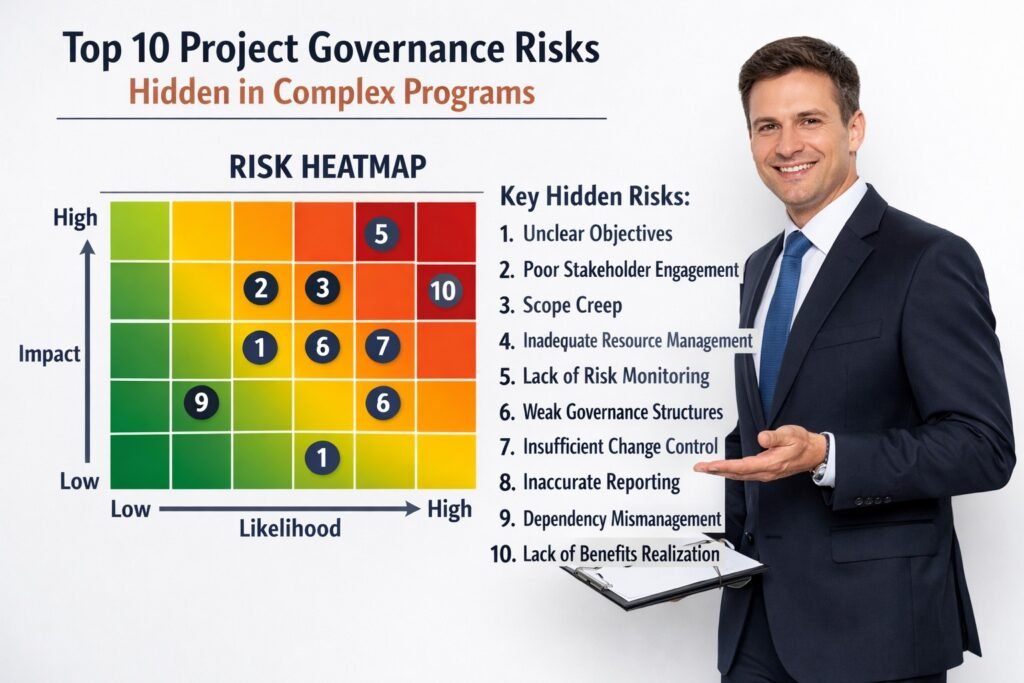
Understanding the intricacies of project governance within complex programs is essential for organizations looking to enhance their project success rates. As businesses engage in multifaceted initiatives, the hidden risks associated with governance frameworks can undermine even the best-laid plans. This article delves into the top ten governance risks that lurk beneath the surface, offering insights and strategies for organizations to navigate these challenges and ensure project success.
Understanding Project Governance Risks in Complex Programs
Project governance serves as the backbone of any complex program, providing the structural framework that guides decision-making, accountability, and resource allocation. Within large organizations, the stakes are high, as the success of projects can significantly impact the overall business strategy. Effective governance encompasses not just the processes and policies that guide project execution, but also the cultural aspects that influence stakeholders’ engagement and commitment.
In complex programs, governance must adapt to the dynamic nature of the project environment. This adaptability is crucial, as the intricate interplay between stakeholders, resources, and timelines can create unforeseen challenges. Organizations need to foster a governance framework that is resilient yet flexible, ensuring that it can respond to changing project landscapes while maintaining clarity in decision-making processes. This balance between structure and adaptability is vital for preemptively identifying risks and aligning project goals with broader organizational objectives.
Moreover, the effectiveness of project governance in complex programs hinges on the clarity of roles and responsibilities. When stakeholders understand their contributions and expectations, it fosters a collaborative environment that can mitigate risks. Conversely, ambiguity in governance structures can lead to conflicts, misalignment, and ultimately project failure. Organizations must prioritize establishing clear governance frameworks that articulate the decision-making hierarchy and communication pathways to enhance accountability and keep the project on track.
Top 10 Project Governance Risks in Complex Programs – Summary Table
| # | Project Governance Risk | Description | Impact on Complex Programs |
|---|---|---|---|
| 1 | Lack of Stakeholder Engagement | Key stakeholders are not actively involved in governance discussions, decision-making, or oversight activities. | Leads to weak strategic alignment, poor decision support, and resistance to project outcomes. |
| 2 | Unclear Roles and Responsibilities | Governance structures fail to clearly define authority, accountability, and decision rights among stakeholders. | Causes confusion, decision delays, duplicated efforts, and accountability gaps. |
| 3 | Stakeholder Misalignment | Different departments or leaders pursue conflicting priorities such as innovation, cost control, or compliance. | Creates strategic conflict, slows approvals, and undermines program cohesion. |
| 4 | Poor Communication Across Governance Layers | Communication between executives, program leadership, and project teams is inconsistent or unclear. | Results in misunderstandings, lack of transparency, and delayed risk escalation. |
| 5 | Insufficient Governance Documentation | Governance processes, policies, and decision frameworks are poorly documented or inconsistently applied. | Leads to inconsistent decision-making, procedural confusion, and governance inefficiencies. |
| 6 | Ineffective Resource Allocation | Governance bodies lack visibility into resource capacity and competing project priorities. | Causes resource conflicts, project delays, and inefficient use of organizational assets. |
| 7 | Outdated Governance Frameworks | Governance models are not regularly reviewed or updated to reflect evolving project environments. | Creates misalignment with current strategy, operational needs, and market conditions. |
| 8 | Overreliance on Technology | Organizations depend heavily on dashboards and project tools without sufficient human judgment. | Reduces critical thinking in governance decisions and increases the risk of oversight failures. |
| 9 | Information Overload | Governance reporting structures generate excessive data without clear prioritization or insight. | Executives struggle to identify critical risks, leading to delayed responses. |
| 10 | Failure to Learn from Past Governance Failures | Organizations do not analyze previous governance breakdowns or capture lessons learned. | Leads to repeated mistakes and stagnant governance maturity. |
Identifying Hidden Project Governance Risks
While many organizations focus on the visible aspects of governance, such as processes and documentation, numerous hidden risks can derail projects. One of the most prevalent risks revolves around the lack of stakeholder engagement. In complex programs, stakeholders often span various departments or even organizations, and failing to engage them effectively can lead to misaligned objectives and resistance to change. Regular communication, feedback loops, and involvement in decision-making are crucial to reducing this risk.
Another hidden risk lies in the insufficient documentation of governance processes. Complex programs often involve multiple teams, each with its own procedures and methodologies. When governance processes are not well-documented and communicated, it can lead to inconsistencies, confusion, and ultimately, poor decision-making. Organizations must invest in maintaining comprehensive, accessible documentation that outlines governance policies and procedures, ensuring all team members can align their efforts with the project’s objectives.
Additionally, the dynamic nature of complex programs means that governance frameworks must be regularly reviewed and updated. Stagnation in governance processes can lead to a misalignment with evolving project needs or organizational priorities. Organizations should establish mechanisms for continuous assessment of their governance frameworks, allowing for timely updates that reflect changes in project scope, stakeholder priorities, or external market conditions. Proactive risk identification in governance can prevent larger issues down the line.
The Impact of Stakeholder Misalignment on Projects
Stakeholder misalignment is a prevalent issue in complex programs, often resulting in conflicting interests that can derail project success. Each stakeholder group may have its own priorities, values, and expectations, which can lead to tension if not properly managed. For instance, a project team focused on innovation may clash with a finance department emphasizing cost control, creating an environment ripe for conflict and diminishing overall project effectiveness.
To mitigate stakeholder misalignment, organizations should foster an inclusive decision-making process that actively engages all relevant parties. Regular stakeholder workshops, feedback sessions, and collaborative planning can help ensure that all voices are heard and that diverse perspectives are considered in project planning. By creating an environment where stakeholders feel their interests are acknowledged, organizations can enhance collaboration and reduce the risk of misalignment.
Moreover, organizations should prioritize stakeholder mapping and analysis at the project’s outset. Understanding the motivations, concerns, and influences of each stakeholder group allows project leaders to anticipate potential conflicts and address them proactively. By aligning stakeholder objectives with the overall project goals from the beginning, organizations can create a more harmonious environment that facilitates smoother project execution and greater buy-in from all parties involved.
Navigating Resource Allocation Challenges Effectively
Resource allocation is a critical aspect of project governance, particularly in complex programs that often involve competing demands for limited resources. Mismanagement of resources can lead to delays, cost overruns, and project failure. One common challenge is the lack of visibility into resource availability and utilization across different teams and departments. Organizations must implement robust resource management tools and processes that provide real-time insights into resource allocation, enabling project managers to make informed decisions.
Additionally, organizations should establish clear prioritization criteria for resource allocation. In complex programs, where multiple projects may compete for the same resources, it’s essential to have a systematic approach that aligns resource allocation with strategic business goals. By creating a prioritization framework that evaluates projects based on their potential impact, urgency, and alignment with organizational strategy, project leaders can ensure resources are allocated where they are most needed, reducing the risk of project delays.
Furthermore, fostering a culture of collaboration between departments can enhance resource allocation efficiency. By encouraging cross-functional teams to work together and share resources, organizations can minimize bottlenecks and optimize resource utilization. Regular scheduling meetings and collaborative planning sessions can facilitate communication and ensure everyone is on the same page, ultimately improving the project governance process.
How Poor Communication Leads to Project Governance Risks
Effective communication is a cornerstone of successful project governance, yet poor communication remains a significant risk in complex programs. Miscommunication can lead to misunderstandings, misaligned objectives, and ultimately governance failures. One common pitfall is the failure to establish regular communication channels among stakeholders, leading to a lack of information sharing and transparency. Organizations must implement consistent communication strategies that keep everyone informed and engaged, reducing the risk of confusion and conflict.
Another communication challenge arises from the sheer volume of information in complex programs. Stakeholders may become overwhelmed by data, leading to information overload and disengagement. To counter this, organizations should prioritize clarity and brevity in their communications. Utilizing concise reporting formats, visual aids like dashboards, and targeted updates can help streamline information sharing and ensure stakeholders remain focused on critical project elements.
Moreover, organizations should actively solicit feedback from stakeholders regarding communication practices. Understanding how stakeholders prefer to receive information can help tailor communication approaches and foster a more inclusive environment. Regularly assessing communication effectiveness and making adjustments based on stakeholder feedback can enhance overall project governance and stakeholder satisfaction.
Assessing the Role of Technology in Risk Management
Technology plays an increasingly vital role in project governance, particularly in managing risks associated with complex programs. Modern project management tools can enhance visibility, facilitate collaboration, and streamline governance processes. For instance, project management software can provide dashboards that offer real-time insights into project progress, resource allocation, and stakeholder engagement, enabling project leaders to identify risks proactively.
However, organizations must also acknowledge the potential risks that come with relying on technology. Over-dependence on tools can lead to complacency, where team members rely solely on software for decision-making rather than critical thinking and judgment. Organizations should emphasize the importance of human oversight in conjunction with technology, ensuring that teams are equipped to analyze data critically and make informed decisions based on insights generated by tools.
Additionally, training and support for technology adoption are essential to minimize risks associated with implementation. As organizations invest in new technologies, they should prioritize comprehensive training programs that equip team members with the skills needed to use tools effectively. By fostering a culture of continuous learning and adaptation, organizations can harness technology’s benefits while mitigating associated governance risks.
Strategies for Mitigating Governance Risks Proactively
To ensure project governance is robust and resilient, organizations must adopt proactive strategies for mitigating risks. One effective approach is to conduct regular risk assessments throughout the project lifecycle. By identifying potential governance risks early on, organizations can implement targeted interventions to address them before they escalate. This proactive stance ensures that projects remain aligned with objectives and reduces the likelihood of delays or budget overruns.
Another key strategy is to establish a governance risk management team responsible for overseeing governance frameworks and risk mitigation efforts. This team should include representatives from various departments, ensuring a comprehensive understanding of the challenges facing the project. By fostering a culture of accountability and collaboration, organizations can enhance their ability to respond to emerging risks and ensure that governance remains aligned with organizational goals.
Additionally, leveraging technology for risk management can significantly enhance governance effectiveness. Implementing risk management software can provide organizations with tools to track, assess, and report on governance risks in real time. By automating risk identification and reporting processes, organizations can gain valuable insights that inform decision-making and facilitate timely interventions to mitigate risks.
Learning from Past Failures in Project Governance
Reflecting on past project governance failures can provide valuable lessons for organizations looking to improve their governance frameworks. One common theme in governance failures is the absence of clear roles and responsibilities among stakeholders, leading to confusion and inefficiency. Organizations must take the time to evaluate their governance structures, ensuring that roles are clearly defined, and responsibilities are communicated effectively to all parties involved.
Furthermore, failures often stem from a lack of stakeholder engagement and buy-in. Organizations should prioritize building relationships with stakeholders from the outset, fostering a collaborative atmosphere that encourages input and feedback. By learning from past missteps, organizations can adopt more inclusive practices that enhance stakeholder commitment and minimize the risk of governance failures.
Lastly, organizations should assess how they respond to governance failures when they occur. Establishing a culture of learning rather than blame can encourage teams to analyze failures critically and identify opportunities for improvement. By fostering a mindset of continuous improvement, organizations can develop more resilient governance frameworks that adapt to the complexities of modern projects, ultimately leading to greater success.
Frequently Asked Questions About Project Governance Risks in Complex Programs
What is project governance and why is it critical for complex programs?
Project governance refers to the framework of structures, policies, processes, and decision-making mechanisms that guide how projects and programs are directed, controlled, and monitored within an organization. In complex enterprise programs, governance ensures that initiatives remain aligned with corporate strategy while maintaining accountability across multiple stakeholders.
Large-scale programs often involve numerous workstreams, cross-functional teams, external vendors, and significant financial investment. Without a well-defined governance structure, decision-making can become fragmented, priorities may conflict, and accountability can weaken. Governance provides the mechanisms necessary to coordinate these moving parts effectively.
Another critical function of project governance is strategic alignment. Complex programs often exist to support major organizational transformations such as digital modernization, global expansion, or operational restructuring. Governance frameworks ensure that program objectives continue to support broader corporate goals while providing leadership with visibility into progress, risks, and outcomes.
Effective governance also establishes clear escalation paths and oversight mechanisms. When issues arise, decision-makers must know who has the authority to intervene and how resolutions will be implemented. In organizations lacking these structures, problems can escalate silently until they threaten program delivery.
Ultimately, project governance is the foundation that ensures transparency, accountability, and strategic discipline throughout the lifecycle of complex programs.
Why do governance risks often remain hidden in large programs?
Governance risks often remain hidden because complex programs operate within multi-layered organizational environments where responsibilities, reporting lines, and authority levels may overlap. These conditions make it difficult for organizations to identify structural weaknesses in governance frameworks until problems begin to surface.
One of the most common reasons these risks remain unnoticed is the assumption that formal governance structures automatically translate into effective governance practices. Many organizations establish steering committees, reporting frameworks, and escalation processes, yet these mechanisms may not function as intended in practice. Meetings may occur regularly, but critical decisions might still be delayed or avoided due to unclear authority or conflicting stakeholder priorities.
Another reason hidden risks persist is the political nature of large enterprise programs. Senior stakeholders may hesitate to raise concerns that challenge existing governance structures, particularly if those structures were designed by executive leadership. As a result, governance weaknesses can persist unaddressed.
Complex programs also involve rapidly changing environments. Organizational priorities, market conditions, and resource availability can shift quickly, making governance frameworks outdated if they are not regularly reviewed and adjusted. When governance models fail to evolve alongside program complexity, risks accumulate beneath the surface.
Organizations that actively evaluate governance effectiveness, rather than assuming its effectiveness, are better positioned to identify these hidden vulnerabilities before they affect delivery outcomes.
How does unclear decision-making authority create governance risks?
Unclear decision-making authority is one of the most significant governance risks in complex programs because it can lead to delays, confusion, and inconsistent direction. When stakeholders do not fully understand who has the authority to approve changes, allocate resources, or resolve conflicts, decisions can stall.
In large programs, multiple governance bodies often exist, including steering committees, program boards, architecture councils, and executive sponsors. Without clearly defined responsibilities, these groups may unintentionally duplicate efforts or avoid making decisions altogether.
This ambiguity often leads to decision escalation cycles, where issues are repeatedly pushed to higher levels of leadership without resolution. Teams may wait weeks for approvals that should have been handled at a lower governance level. Over time, these delays accumulate and begin to impact delivery timelines and budgets.
Unclear authority can also encourage informal decision-making channels. Teams may bypass governance processes entirely and rely on personal relationships or unofficial agreements to move work forward. While this may provide short-term progress, it undermines transparency and increases long-term risk.
Establishing clearly defined governance roles, documented decision rights, and structured escalation pathways helps eliminate these risks and ensures that programs maintain operational momentum.
How can poor stakeholder engagement weaken governance frameworks?
Stakeholder engagement is essential for effective project governance because governance bodies rely on active participation, informed oversight, and timely decision-making. When key stakeholders disengage or participate inconsistently, governance frameworks lose their effectiveness.
In complex programs, stakeholders often include executives, program sponsors, business leaders, technology teams, and external partners. Each group brings unique expertise and perspectives that contribute to better decisions. However, when stakeholders view governance activities as administrative obligations rather than strategic responsibilities, oversight becomes superficial.
Another issue arises when governance meetings focus primarily on status reporting rather than decision-making. If stakeholders attend meetings only to review updates rather than resolve challenges, governance bodies may fail to address emerging risks quickly.
Disengaged stakeholders also reduce organizational accountability. When leadership is not actively involved in governance processes, teams may struggle to secure resources, escalate issues, or align priorities across departments.
Organizations can strengthen governance by ensuring stakeholders clearly understand their responsibilities, the strategic value of their participation, and the impact their decisions have on program success.
What role does communication play in reducing governance risks?
Communication is one of the most powerful tools for preventing governance risks because it ensures that information flows efficiently between leadership, program teams, and stakeholders. Poor communication structures often create blind spots where risks develop unnoticed.
Effective governance communication ensures that decision-makers receive timely, accurate, and actionable information. Without this visibility, leaders may struggle to assess program health or make informed strategic decisions.
Communication breakdowns frequently occur when organizations rely on overly complex reporting structures. Excessive documentation, fragmented reporting tools, and inconsistent communication channels can overwhelm stakeholders and obscure critical insights.
Clear governance communication should focus on concise reporting, transparent escalation processes, and structured information flows. Program dashboards, executive summaries, and structured governance meetings can help maintain visibility while preventing information overload.
Strong communication practices also foster organizational trust, enabling stakeholders to raise concerns early and collaborate on solutions before problems escalate.
How does misalignment between governance and strategy create risks?
Governance frameworks must remain closely aligned with organizational strategy. When governance structures fail to reflect evolving strategic priorities, programs may continue delivering outputs that no longer support business objectives.
This misalignment often occurs when governance frameworks are designed at the beginning of a program but rarely revisited. Over time, corporate strategies may shift due to market conditions, regulatory changes, or leadership transitions. If governance models remain static, they may continue enforcing outdated priorities.
Strategic misalignment can also occur when governance bodies focus primarily on operational metrics rather than strategic outcomes. For example, a program may meet schedule and budget targets while failing to deliver meaningful business value.
To avoid this risk, organizations must regularly review governance frameworks to ensure they continue to support current strategic goals, transformation initiatives, and enterprise priorities.
What governance practices help organizations manage complex programs successfully?
Organizations that successfully manage complex programs typically implement governance practices that emphasize clarity, accountability, and adaptability. These practices help ensure that governance frameworks remain effective as programs evolve.
One key practice is establishing clearly defined governance structures that outline decision rights, responsibilities, and escalation pathways. When stakeholders understand how decisions are made and who is accountable, governance processes become more efficient.
Another important practice involves continuous governance monitoring. Rather than assuming governance structures are working as intended, organizations should regularly evaluate governance effectiveness through program reviews, stakeholder feedback, and performance metrics.
Successful organizations also prioritize transparency and data-driven oversight. Executive dashboards, risk reporting frameworks, and program performance indicators provide leadership with the visibility needed to make informed decisions.
Finally, effective governance frameworks incorporate flexibility. Complex programs operate in dynamic environments, and governance models must evolve as new challenges emerge. Organizations that adapt their governance structures proactively are better equipped to manage uncertainty and maintain program momentum.
How can organizations strengthen governance to reduce hidden program risks?
Strengthening governance requires a proactive approach that goes beyond establishing formal structures. Organizations must actively cultivate governance practices that support strategic alignment, leadership engagement, and operational transparency.
The first step is conducting governance maturity assessments to evaluate how effectively current frameworks support program delivery. These assessments often reveal gaps in decision-making authority, stakeholder participation, and risk management processes.
Organizations should also implement structured governance reviews throughout the program lifecycle. Regular reviews allow leadership to assess whether governance structures remain aligned with evolving program complexity and organizational priorities.
Investing in governance training and leadership development can also improve effectiveness. When stakeholders understand governance principles and their responsibilities within the framework, decision-making becomes more efficient and collaborative.
Ultimately, strong governance is not simply about compliance or reporting structures. It is about creating an environment where leaders can make informed decisions quickly, teams remain aligned with strategic goals, and risks are identified before they threaten program success.
Conclusion – Project Governance Risks
Navigating the hidden risks associated with project governance in complex programs is a vital endeavor for organizations striving for success. By understanding the intricacies of governance, identifying potential risks, and implementing proactive strategies, businesses can mitigate challenges and enhance project outcomes. Learning from past failures is also crucial in fostering a culture of resilience and continuous improvement, ensuring that organizations are well-prepared to tackle future complexities in project governance.
Tags:
Hashtags: #ProjectGovernance #RiskManagement #StakeholderEngagement #ContinuousImprovement #ResourceAllocation
External Source: Explore How risky are your project risks?, visit the APM
Discover More great insights at https://www.pmresourcehub.com
Explore Free Project Management Templates https://pmresourcehub.com/library/