Top 7 Risk Management Software Features for Enterprise-Grade Protection
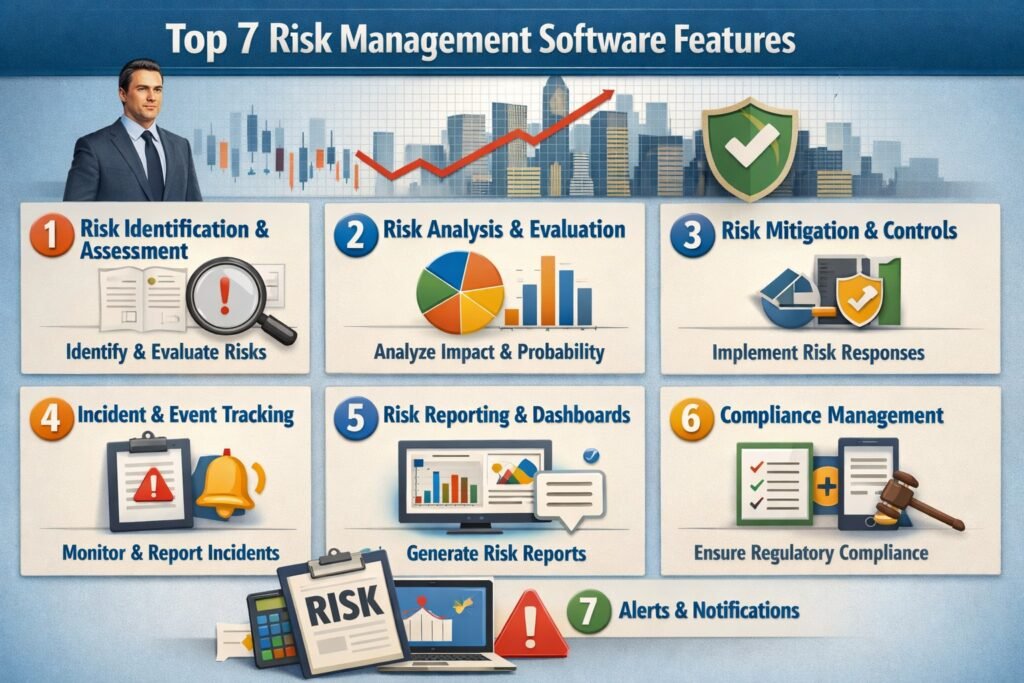
Understanding enterprise risk management is crucial for organizations that aim to thrive in a complex, ever-changing environment. Risk management software can serve as a vital tool in achieving resilience, enabling businesses to identify, analyze, and mitigate risks effectively. With the right features, these solutions can help safeguard an enterprise’s assets, reputation, and overall operational integrity. In this article, we will explore the top seven risk management software features that can provide enterprise-grade protection and elevate your risk management strategies to new heights.
Understanding the Importance of Risk Management Software
In today’s fast-paced business environment, effective risk management is more than just a compliance necessity; it has become a strategic imperative. Enterprises face an array of risks ranging from operational to cyber threats, making it essential to adopt a proactive approach. Risk management software can streamline this process, enabling organizations to identify potential threats, assess their impact, and develop mitigation strategies. The right software not only enhances visibility but also fosters a culture of risk awareness across the organization, empowering employees at all levels to contribute to risk management efforts.
Moreover, risk management software can support data-driven decision-making. Instead of relying on intuition or manual processes, organizations can utilize analytics to gain insights into risk trends and behaviors. This capability allows companies to allocate resources more effectively and prioritize risk management initiatives based on real, actionable data. By centralizing risk information, these solutions provide stakeholders with a comprehensive view of risk exposure, thus facilitating informed decisions that align with corporate objectives.
Lastly, the regulatory landscape is becoming increasingly stringent, especially for large enterprises. Compliance with various regulations can be a daunting task, but risk management software can simplify this process. By automating the documentation and reporting required for compliance, organizations can minimize the administrative burden and reduce the risk of non-compliance. Overall, investing in robust risk management software is essential for any enterprise seeking to navigate the complexities of today’s business environment successfully.
Key Features to Enhance Enterprise Risk Strategies
When selecting risk management software, it’s crucial to look for features that can significantly enhance your enterprise risk strategies. One of the most vital features is a comprehensive risk identification module. This feature allows organizations to catalog potential risks in various categories, from financial to operational and reputational. By having a complete risk inventory, enterprises can prioritize their risk management efforts and allocate resources effectively.
Another essential feature is a sophisticated risk assessment tool that employs qualitative and quantitative methods. This tool allows organizations to analyze the probability and impact of identified risks, helping them to develop appropriate strategies for mitigation. Whether it’s through risk scoring or heat maps, having a clear visual representation of risk levels enables decision-makers to grasp the current risk landscape quickly. This capability is crucial for aligning risk management with business objectives and ensuring that high-priority risks receive the attention they deserve.
In addition to risk identification and assessment, the ability to model scenarios is another powerful feature of effective risk management software. Scenario modeling enables organizations to simulate various risk events and understand their potential impacts. By forecasting outcomes in different scenarios, enterprises can prepare more effectively for potential disruptions. This proactive approach not only enhances resilience but can also lead to significant cost savings over time, making it a critical feature in any enterprise-grade risk management software.
Real-Time Monitoring for Proactive Risk Mitigation
Real-time monitoring is a game-changer for enterprise risk management, transforming how organizations respond to emerging threats. This feature allows for continuous surveillance of key risk indicators (KRIs) that signal potential risk events. By having access to real-time data, risk managers can identify anomalies or shifts that could indicate an impending risk, enabling them to act swiftly before issues escalate. This proactive monitoring is particularly beneficial for large organizations, where the volume of data can make it challenging to detect risks immediately.
Furthermore, real-time alerts keep stakeholders informed about significant changes in the risk landscape. When a KRI crosses a predetermined threshold, the system can automatically trigger alerts to the appropriate team members, ensuring that the right people are notified in a timely manner. This feature not only enhances responsiveness but also fosters a culture of accountability, as team members can quickly mobilize to address emerging risks.
The integration of real-time monitoring with machine learning and AI technologies offers even greater advantages. These advanced technologies can analyze vast amounts of data and identify patterns that may not be evident to human analysts. By leveraging these insights, organizations can enhance their predictive capabilities and better prepare for potential risks. In today’s dynamic business environment, the ability to monitor risks in real time can be a significant competitive advantage for enterprises.
Automated Reporting and Analytics for Informed Decisions
Automated reporting and analytics are vital features that can streamline the risk management process and improve decision-making. Traditional reporting methods can be time-consuming and prone to errors, making it challenging for organizations to maintain accurate records. Risk management software that offers automated reporting capabilities can eliminate these inefficiencies by generating real-time reports on risk exposure, compliance status, and mitigation efforts. This functionality allows for quick dissemination of vital information to stakeholders, enabling more informed and timely decision-making.
Moreover, the analytics component provides deeper insights into risk trends and patterns. By analyzing historical data, risk managers can identify recurring issues and evaluate the effectiveness of mitigation strategies over time. This data-driven approach not only helps in refining risk management practices but also supports strategic planning initiatives. By understanding the underlying factors that contribute to risk, organizations can develop targeted strategies that enhance their overall risk posture.
Another key advantage of automated reporting and analytics is the ability to visualize data through dashboards and intuitive interfaces. These tools help stakeholders grasp complex risk information quickly, making it easier to communicate findings to non-technical team members. Effective visualization enhances collaboration among departments, fostering a unified approach to risk management. Overall, automated reporting and analytics are indispensable features that empower enterprises to make informed decisions and strengthen their risk management frameworks.
Integration Capabilities with Existing Business Systems
In a large enterprise, risk management software must seamlessly integrate with existing business systems to be truly effective. This capability ensures that risk management practices are embedded within the broader organizational context, enhancing overall efficiency and collaboration. Integration with systems such as Enterprise Resource Planning (ERP), Customer Relationship Management (CRM), and Human Resources Information Systems (HRIS) can provide a more holistic view of organizational risks.
For example, when integrated with an ERP system, risk management software can pull financial data, enabling more accurate assessments of financial risks. Similarly, integrating with a CRM system allows organizations to monitor customer-related risks, such as credit risk or compliance issues. This comprehensive approach facilitates better decision-making, as stakeholders can access relevant risk information in real time without switching between different platforms.
Moreover, robust integration capabilities reduce data silos, promoting a culture of transparency and collaboration. When teams across departments can share insights and findings, they are better equipped to manage risks collectively. In today’s interconnected business environment, the ability to integrate risk management software with other business systems is essential for achieving enterprise-grade protection and ensuring that risk management becomes an integral part of the organizational strategy.
User-Friendly Interface for Seamless Operation
A user-friendly interface is a critical feature that can significantly impact the effectiveness of risk management software. Large enterprises often have diverse teams with varying levels of technical expertise. A complex or unintuitive interface can hinder usability, making it challenging for employees to engage with the software effectively. A well-designed, user-friendly interface simplifies navigation and allows users to access the information they need quickly. This ease of use can lead to higher adoption rates across the organization.
Additionally, a user-friendly interface enhances training and onboarding processes. When new team members can easily navigate the software, they are more likely to understand its functionalities and appreciate its value. This capability is particularly important in large organizations, where time and resources for training may be limited. By minimizing the learning curve, enterprises can ensure that employees are equipped to contribute to risk management efforts from day one.
Furthermore, a user-friendly interface often incorporates customizable dashboards and reports. This feature allows users to personalize their experience based on their roles and responsibilities, ensuring that they have access to the most relevant information. By empowering users to tailor their dashboards, organizations can foster greater engagement and promote proactive risk management behaviors. In essence, an intuitive interface is not just a luxury; it is a necessity for maximizing the effectiveness of risk management software in an enterprise setting.
Customizable Risk Assessment Tools for Unique Needs
Every organization faces unique risks based on its industry, business model, and operational landscape. Therefore, customizable risk assessment tools are essential features for risk management software. These tools allow enterprises to tailor risk assessment methodologies to align with their specific requirements. Organizations can define their risk criteria, create unique risk scales, and adjust assessment parameters to suit their operational realities.
Customization also extends to risk categories and subcategories. Enterprises can develop frameworks that reflect their specific risk landscape, enabling them to assess risks more accurately. For instance, a financial institution may need to focus more on credit and market risks, while a manufacturing company might be concerned with operational and supply chain risks. By personalizing the risk assessment process, organizations can ensure that they are focusing on the most pertinent threats to their business.
Moreover, customizable risk assessment tools can facilitate scenario planning and what-if analyses. Organizations can model various risk events specific to their industry and test their responses, which helps develop more effective mitigation strategies. This level of customization not only provides a more accurate picture of risk but also ensures that risk management efforts are directly aligned with organizational objectives. Overall, customizable risk assessment tools are indispensable for enterprises seeking to build resilient risk management frameworks.
Robust Security Measures to Protect Sensitive Data
Data security is a paramount concern for any enterprise, particularly when it comes to risk management software that handles sensitive information. Robust security measures are essential features that ensure the confidentiality, integrity, and availability of data. These measures can include encryption protocols, secure user authentication, and access controls that limit data access based on role or necessity. By implementing multi-factor authentication and biometric verification, organizations can enhance security and protect against unauthorized access.
Additionally, regular security audits and assessments are vital for identifying vulnerabilities within the software. Risk management software should include features that support ongoing security evaluations and compliance with industry regulations. By conducting regular assessments, organizations can ensure that they are adhering to best practices, particularly in sectors that are subject to strict regulatory oversight, such as finance and healthcare.
Moreover, the ability to create audit trails is another critical security feature that helps organizations track data access and modifications. This capability enables enterprises to identify potential security breaches and take corrective actions promptly. By maintaining comprehensive logs of user activities, organizations can enhance accountability and ensure that any anomalies are addressed effectively. In a world where cyber threats are ever-evolving, robust security measures are essential for protecting sensitive data and maintaining enterprise-grade risk management.
In conclusion, integrating the right features into risk management software is crucial for enterprises looking to enhance their risk management strategies. From real-time monitoring and automated reporting to robust security measures and customizable tools, these features empower organizations to navigate risks effectively and safeguard their operations. As businesses continue to evolve amidst a complex risk landscape, investing in comprehensive risk management software can provide the protection and resilience needed to thrive in an uncertain world. Organizations should assess their unique needs and prioritize these features to ensure effective risk mitigation and long-term success.
Hashtags: #RiskManagement #EnterpriseSoftware #DataSecurity #BusinessIntegration #Compliance
External Source: Discover the 25 best risk management software platforms from Monday
Discover More great insights at https://pmresourcehub.com/12-primavera-p6-best-practices-for-managing-complex-projects/
Explore Free Project Management Templates https://pmresourcehub.com/library/