Why PMOs Fail Without Executive Sponsorship
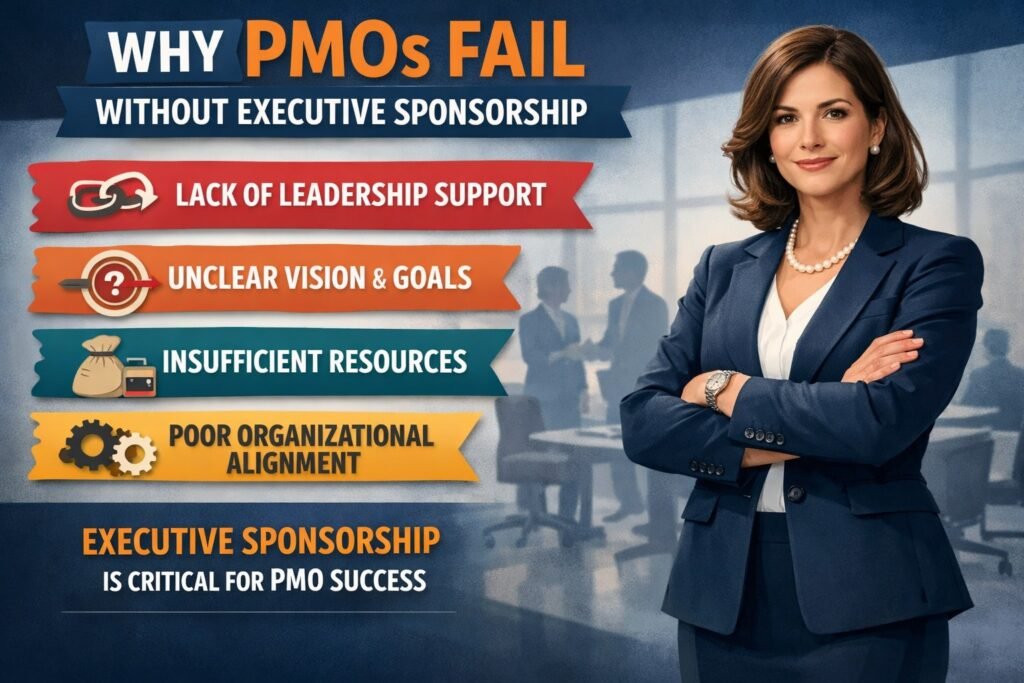
In today’s highly competitive and transformation-driven business environment, the Project Management Office (PMO) stands as a critical pillar of enterprise project governance, portfolio management, and strategic execution. Organizations invest heavily in building structured PMOs to improve project delivery performance, enhance cross-functional alignment, and ensure initiatives drive measurable business value. Yet despite these investments, many PMOs struggle to demonstrate impact and a significant number ultimately fail. One of the most common and costly root causes is the absence of strong executive sponsorship.
Without active executive leadership and visible senior-level commitment, even the most well-designed PMO framework can collapse under organizational resistance, unclear priorities, and resource constraints. A lack of executive sponsorship often results in strategic misalignment between the project portfolio and corporate objectives, fragmented decision-making, weak governance enforcement, and chronic underfunding. Over time, this erosion of authority undermines stakeholder confidence, reduces project success rates, and exposes the organization to increased operational and financial risk.
Executive sponsorship is not merely a symbolic endorsement; it is a strategic leadership function that directly influences PMO effectiveness, enterprise project success, and long-term organizational performance. When executives champion the PMO, they provide clarity of vision, reinforce accountability, secure critical resources, and remove cross-departmental barriers that hinder progress. Their involvement strengthens governance structures, accelerates decision-making, and ensures that projects remain aligned with high-level business strategy.
In this article, we will examine why executive sponsorship is the cornerstone of high-performing PMOs, explore the risks associated with executive disengagement, and outline how organizations can strengthen leadership involvement to prevent PMO failure. By understanding the strategic importance of executive alignment, organizations can transform their PMO from a compliance-driven administrative function into a powerful engine for sustainable growth and competitive advantage.
Understanding the Role of Executive Sponsorship in PMOs
Executive sponsorship is not just a title; it is a strategic partnership that can propel a PMO toward success. An executive sponsor acts as a champion for the PMO, providing both vision and direction. They are responsible for aligning the PMO’s objectives with the organization’s broader goals, ensuring that resources are allocated appropriately, and facilitating communication between various stakeholders. With their influence, they can effectively advocate for the PMO and garner necessary support from other executives, which is crucial for overcoming resistance to change.
Moreover, executive sponsors can help to clarify expectations and set realistic timelines for projects. Their involvement usually translates into a more streamlined decision-making process, reducing bottlenecks that can arise when key stakeholders are not aligned. This clarity enables project managers to focus on execution rather than constantly battling for relevance or resources, directly impacting project delivery and overall organizational performance.
Lastly, the executive sponsor also plays an essential role in risk management. By being closely involved in the PMO, they can identify potential risks and issues early on, enabling proactive measures to mitigate them. This involvement not only enhances project outcomes but also fosters a culture of accountability and trust, which is essential for long-term success in any organization.
Common Reasons PMOs Struggle Without Support
One of the most pervasive issues facing PMOs lacking executive sponsorship is a discrepancy between organizational goals and project objectives. Without guidance from executives, PMOs often find themselves working on projects that do not align with the company’s strategic direction, leading to wasted resources and effort. This misalignment can create disillusionment among team members and erode the PMO’s credibility.
Additionally, PMOs without executive backing often struggle to secure adequate resources both financial and human capital. Executives are typically the gatekeepers of budget allocation, and without their support, PMOs may find themselves underfunded and understaffed. This scarcity can lead to burnout among team members and ultimately compromise project quality. When teams are stretched too thin, deadlines may be missed, and stakeholder satisfaction may plummet.
Lastly, a lack of executive sponsorship can hinder effective communication within the organization. When executives are disengaged, the PMO may struggle to disseminate information and updates to relevant stakeholders. This communication gap can lead to confusion and misinterpretation of project statuses, ultimately affecting the overall perception of the PMO’s value and effectiveness.
How Leadership Buy-In Impacts Project Success Rates
Leadership buy-in is a critical determinant of project success. When executives are actively engaged, they not only provide resources and guidance but also lend credibility to the PMO and its initiatives. Research has shown that projects with strong executive backing are more likely to meet their goals and be completed on time and within budget. This correlation underscores the importance of leadership involvement in facilitating favorable project outcomes.
Moreover, executive buy-in can foster a culture of collaboration across departments. When executives champion the PMO, they encourage teams to work together toward common objectives. This level of collaboration is vital for complex projects that require cross-functional expertise and input. The result is a more cohesive approach to project management, which can significantly enhance success rates.
Furthermore, when leaders are involved, they can actively help to remove obstacles that hinder project progress. This support might involve negotiating with other departments or reallocating resources as necessary. With such backing, project managers feel empowered to make decisions, increasing the likelihood of timely and successful project delivery.
The Consequences of Insufficient Executive Engagement
The repercussions of inadequate executive engagement can be severe, often leading to project delays, budget overruns, and diminished quality. Without an executive sponsor advocating for the PMO, projects can lose momentum, leading to missed deadlines and objectives. The PMO may find itself at odds with other departments, creating a fragmented approach to project management that can result in chaos rather than order.
Additionally, insufficient executive support can lead to low morale among team members. When employees perceive that their efforts are not being recognized or valued by leadership, they may become disengaged. This disengagement can contribute to high turnover rates, which further exacerbates the challenges facing a PMO. A lack of commitment from above can create a downward spiral that is difficult to reverse.
Finally, the absence of strong executive sponsorship can tarnish the PMO’s reputation within the organization. If stakeholders continuously see projects faltering or failing, the PMO may struggle to justify its existence. This can lead to decreased funding and a lack of interest from other departments, ultimately placing the PMO at risk of being dissolved altogether.
Strategies for Securing Executive Sponsorship Effectively
One of the most effective ways to secure executive sponsorship is by demonstrating the PMO’s value to the organization. This can be achieved through data-driven presentations that showcase the PMO’s past successes, alignment with business objectives, and potential for future contributions. When executives can see the tangible benefits of a well-functioning PMO, they are more likely to invest their time and resources in its success.
Building relationships is also crucial. Engaging with executives in informal settings such as networking events or team-building activities can help establish trust and rapport. This relationship-building can lead to more open lines of communication, making it easier to approach executives for support when needed. When they see you as approachable and competent, they are more likely to offer their sponsorship.
Finally, ensuring that executive sponsors understand the PMO’s strategic goals and challenges is key. Providing regular updates and reports can help keep them informed and engaged. By fostering a sense of ownership and responsibility among executives, you can create a strong partnership that not only benefits the PMO but also aligns with the organization’s overall mission.
Building a Strong Business Case for PMO Support
To garner executive sponsorship, it’s essential to craft a compelling business case. This case should outline the PMO’s objectives, the anticipated benefits to the organization, and the resources needed to achieve these outcomes. A thorough analysis of how the PMO aligns with the company’s strategic goals will make a persuasive argument for executive investment.
In addition, including case studies and examples from other organizations can strengthen your business case. Showcase how similar PMOs have driven success in other companies, providing concrete evidence that investing in your PMO will yield positive returns. This real-world validation can resonate with executives, helping them visualize the potential impact of their support.
Lastly, addressing the risks of not having a PMO can serve as a wake-up call for executives. Highlight the pitfalls that organizations face without a structured approach to project management, such as misalignment, wasted resources, and missed opportunities. By clearly articulating the consequences of inaction, you can create a sense of urgency that encourages executives to take action and support the PMO.
Real-World Examples of PMO Failures Without Sponsorship
One notable example of PMO failure due to a lack of executive sponsorship occurred at a large financial services firm. The PMO was established to streamline project management processes but struggled to find its footing. Without executive backing, it faced continual budget cuts and resource constraints. Projects were often misaligned with business objectives, leading to high failure rates. Ultimately, the PMO was disbanded, resulting in chaos and disorganization in project execution across the company.
Another case involves a tech startup that established a PMO to improve product launch timelines. However, due to insufficient executive engagement, the PMO lacked the necessary resources and authority to enforce processes. As a result, projects were frequently delayed, leading to missed market opportunities. The startup eventually scrapped the PMO entirely, opting for a more ad hoc project management approach that led to further inconsistencies and failures.
In contrast, organizations that have embraced executive sponsorship often experience remarkable successes. For example, a major healthcare provider revitalized its PMO through strong executive support, resulting in a significant reduction in project cycle times and improved stakeholder satisfaction. This success story serves as a reminder of the transformative impact that executive involvement can have on project outcomes, reinforcing the importance of securing sponsorship.
Key Takeaways for Strengthening PMO Leadership Links
To ensure the success of a PMO, organizations must recognize that executive sponsorship is not a mere formality but a fundamental necessity. A strong partnership with executives can drive alignment, resource allocation, and overall project success. By engaging with leadership and demonstrating the PMO’s value, organizations can overcome challenges that arise from a lack of support.
Building relationships with executives is essential for fostering a culture of collaboration and accountability. Regular communication, updates, and alignment with strategic objectives can help to maintain engagement and sustain support over time. Additionally, crafting a compelling business case will ensure that executives understand the urgency and importance of their sponsorship.
Ultimately, the success of a PMO is a reflection of its leadership support. Organizations that prioritize executive engagement are more likely to achieve their project goals, enhance stakeholder satisfaction, and drive long-term success. In the competitive landscape of business today, fostering strong connections between PMOs and executive leadership is not just beneficial; it is essential.
Frequently Asked Questions (FAQ)
1. What is executive sponsorship in the context of a PMO? Executive sponsorship refers to active, visible, and ongoing support from a senior leader who champions the PMO at the executive level. The sponsor provides strategic direction, secures funding, removes organizational barriers, and ensures alignment between the PMO’s mandate and enterprise priorities. It is not ceremonial it is an operational leadership role with accountability for outcomes.
2. Why do PMOs fail without executive sponsorship? Without executive sponsorship, PMOs often lack authority, funding stability, and strategic relevance. This results in misalignment between project portfolios and business strategy, limited decision-making power, resource constraints, resistance from business units, and inconsistent governance adoption. The PMO becomes process-focused rather than value-driven, which undermines credibility and long-term viability.
3. How does an executive sponsor align the PMO with organizational strategy? An executive sponsor ensures the PMO portfolio reflects enterprise priorities by validating project selection criteria, enforcing strategic prioritization, linking initiatives to measurable business outcomes, and participating in portfolio governance boards. This alignment prevents the PMO from operating in isolation and ensures its outputs contribute directly to strategic objectives.
4. What specific responsibilities should an executive sponsor have? An effective executive sponsor defines and communicates the PMO’s mandate, secures budget and resource commitments, chairs or participates in governance forums, removes escalated roadblocks, reinforces accountability across departments, and advocates for adoption of standardized methodologies. These responsibilities require consistent engagement rather than occasional oversight.
5. How does executive sponsorship improve decision-making? Executive sponsors accelerate decision-making by clarifying authority structures and resolving cross-functional conflicts quickly. Their seniority reduces bureaucratic friction and ensures that trade-offs involving scope, cost, time, and risk are resolved at the appropriate level, minimizing delays and keeping initiatives on track.
6. What risks emerge when executives are disengaged from the PMO? Disengagement creates systemic risks such as portfolio overload due to lack of prioritization, conflicting departmental agendas, weak governance enforcement, reduced stakeholder confidence, and increased project failure rates. Over time, this erosion of authority diminishes the PMO’s ability to influence enterprise performance.
7. How does executive sponsorship influence organizational culture? When executives visibly support the PMO, it signals that disciplined project governance and execution are organizational priorities. This fosters accountability, transparency, cross-functional collaboration, and stronger adoption of standardized processes, reinforcing long-term performance consistency.
8. Can a PMO operate effectively with multiple executive sponsors? Yes, particularly in complex enterprises with portfolio-level oversight across business units. However, decision rights, escalation paths, and accountability must be explicitly defined to prevent ambiguity or political conflict.
9. How often should an executive sponsor engage with the PMO? Effective sponsors maintain structured engagement through regular governance board participation, portfolio performance reviews, risk and issue escalation meetings, and strategic planning cycles. Engagement should be proactive and continuous rather than reactive during crises.
10. What are signs that a PMO lacks sufficient executive sponsorship? Warning indicators include difficulty securing resources, projects approved without prioritization discipline, inconsistent attendance at governance forums, repeated escalation delays, and limited executive visibility into performance metrics. These symptoms typically signal weak executive alignment.
11. How can organizations strengthen executive sponsorship? Organizations can reinforce sponsorship by clearly defining sponsor accountability in governance charters, establishing performance metrics tied to PMO outcomes, formalizing reporting cadence and dashboards, providing executive briefings on portfolio health, and aligning incentives with strategic delivery performance.
12. What is the long-term impact of strong executive sponsorship on PMO performance? Sustained executive engagement elevates the PMO from an administrative oversight function to a strategic enabler, enhancing portfolio optimization, improving delivery predictability, strengthening risk governance, and ensuring consistent strategic alignment across the enterprise.
Conclusion – Why PMOs Fail Without Executive Sponsorship
In conclusion, executive sponsorship is not a peripheral factor in PMO success it is the decisive force that determines whether a Project Management Office operates as a strategic enabler or fades into organizational irrelevance. Without sustained executive involvement, PMOs face predictable and systemic challenges: misalignment between initiatives and enterprise strategy, insufficient funding, unclear authority, weak governance enforcement, and ultimately, elevated project failure rates. Over time, these gaps erode stakeholder trust, reduce portfolio effectiveness, and diminish the organization’s ability to execute transformational change.
Strong executive sponsorship provides more than visibility; it establishes legitimacy, authority, and strategic coherence. When senior leaders actively champion the PMO, they reinforce governance discipline, ensure appropriate resource allocation, accelerate critical decision-making, and remove organizational barriers that obstruct delivery. This level of engagement transforms the PMO from a reporting function into a value-driven leadership capability that enhances portfolio prioritization, risk management, and benefits realization.
Organizations that deliberately cultivate executive sponsorship position their PMOs for sustained impact. This requires clear accountability frameworks, defined governance roles, measurable performance indicators, and ongoing executive engagement in portfolio oversight. By demonstrating quantifiable value through improved delivery predictability, optimized resource utilization, and stronger alignment with business objectives the PMO earns and maintains executive confidence.
The evidence is clear: the benefits of strong executive sponsorship are substantial, while the consequences of neglect are costly and far-reaching. For organizations committed to strengthening project governance, improving delivery performance, and driving strategic outcomes, cultivating engaged and accountable executive sponsorship is not optional it is foundational. Establishing this partnership is a critical step toward building a resilient, high-performing PMO capable of delivering long-term organizational effectiveness and competitive advantage.
Hashtags: #PMO #ExecutiveSponsorship #ProjectManagement #Leadership #OrganizationalSuccess
External Source: For more insights on the value of executive sponsorship in PMO’s explore 5 Reasons PMOs Fail and How to Avoid Them
Discover More great insights at http://www.pmresourcehub.com
Explore Free Project Management Templates https://pmresourcehub.com/library/