
Project Metrics vs Business Metrics: Aligning KPIs with the Bottom Line
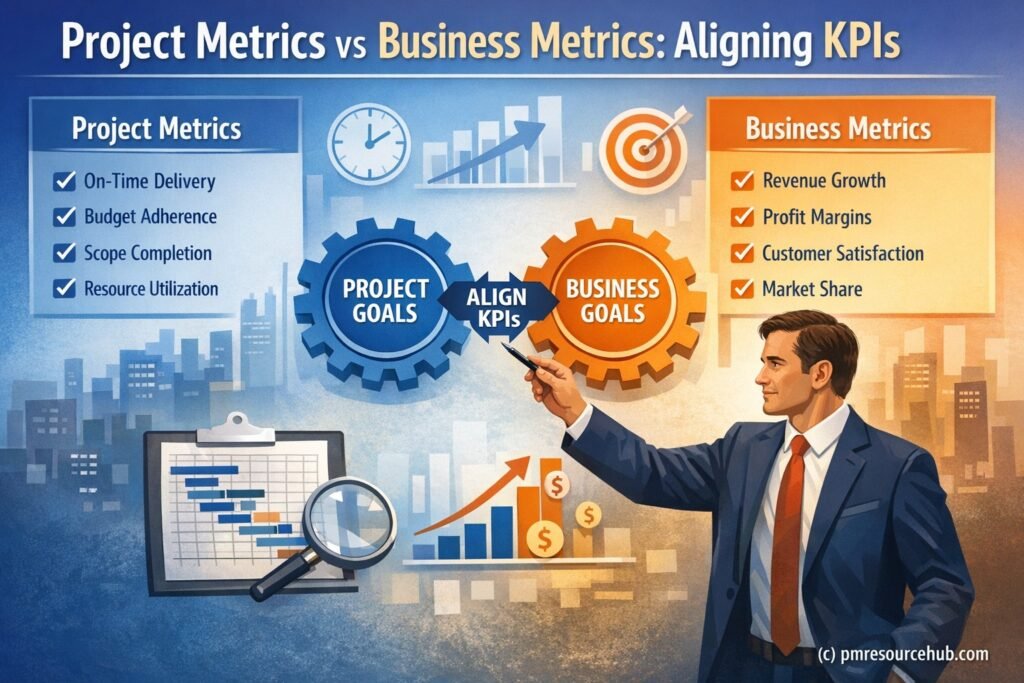
In business operations, understanding the metrics that drive success is essential. Project metrics and business metrics are two vital categories that organizations must manage effectively. While they may appear distinct, aligning these measures can significantly impact an organization’s bottom line. This article explores the nuances of project and business metrics, the importance of aligning key performance indicators (KPIs), and the best practices for achieving this alignment, because when these metrics are out of sync, even well-run projects can fail.
Understanding Project Metrics and Their Importance in Business
Project metrics are quantitative measures used to assess the performance, efficiency, and progress of specific projects. They help teams evaluate whether projects are meeting their objectives, staying within budget, and adhering to timelines. Common project metrics include schedule variance, cost performance index, and task completion rates. By focusing on these metrics, organizations can ensure that resources are utilized effectively, risks are managed, and deliverables are met on time.
The importance of project metrics extends beyond mere performance tracking. They provide insights that can enhance decision-making and foster continuous improvement. For instance, if a project consistently exceeds budget forecasts, it may indicate underlying issues that require attention. Similarly, by analyzing project metrics, teams can identify successful strategies that can be replicated in future initiatives. This continuous learning process is crucial for organizations striving for efficiency and effectiveness.
Moreover, project metrics play a significant role in stakeholder communication. These metrics serve as a common language that project managers can use to provide updates to stakeholders, ensuring transparency and accountability. By demonstrating progress through data, teams can foster trust and collaboration with executives, clients, and team members alike.
Defining Business Metrics: What Matters Most for Profitability
Business metrics encompass a broader set of measures that assess the overall health and profitability of the organization. These metrics include revenue growth, profit margins, return on investment (ROI), customer acquisition cost, and market share. Unlike project metrics, which are specific to individual initiatives, business metrics reflect the organization’s performance in achieving its strategic objectives.
Understanding which business metrics matter most is essential for organizations aiming to enhance profitability. For instance, while increasing revenue is crucial, it must be balanced with cost management to ensure sustainable growth. Metrics such as gross profit margin provide insights into how effectively a company is converting sales into actual profit. Additionally, customer-centric metrics like Net Promoter Score (NPS) can reveal how well an organization is meeting customer expectations, which is vital for long-term success.
Furthermore, business metrics help organizations make informed decisions about resource allocation, pricing strategies, and market positioning. By analyzing these metrics, leaders can identify emerging trends, capitalize on growth opportunities, and navigate potential challenges. This strategic insight is invaluable, enabling organizations to make proactive decisions that align with their long-term vision.
The Key Differences Between Project and Business Metrics
While project and business metrics serve distinct purposes, understanding their differences is crucial for organizations. Project metrics are typically tactical and focused on the execution of specific initiatives, while business metrics are strategic and reflect the overall performance of the organization. This distinction is important because it influences how leaders prioritize their efforts and allocate resources.
Another key difference lies in the timeframe of measurement. Project metrics are often short-term, assessing the progress of a project over weeks or months. In contrast, business metrics are more long-term, evaluating the organization’s performance over quarters or years. This difference in timeframes means that project metrics can provide immediate feedback, while business metrics offer insights that are vital for strategic planning.
Moreover, the audiences for these metrics differ. Project metrics are primarily aimed at project managers, team members, and stakeholders directly involved in the initiatives. In contrast, business metrics are of interest to executives, shareholders, and external stakeholders who are focused on the organization’s overall health and viability. Understanding these differences is the first step toward aligning project efforts with broader business objectives.
Why Aligning KPIs is Crucial for Organizational Success
Aligning key performance indicators (KPIs) across project and business metrics is essential for achieving organizational success. When KPIs are harmonized, teams can ensure that their efforts are directly contributing to the organization’s strategic goals. This alignment fosters a culture of accountability, where team members understand how their actions impact overall performance.
Furthermore, aligned KPIs facilitate better communication across departments. When everyone is working towards the same objectives, it reduces silos and encourages collaboration. For example, project teams can communicate their progress in terms that are relevant to business leaders, ensuring that everyone is on the same page. This collaborative environment enhances decision-making and can lead to faster problem resolution.
Finally, aligning KPIs helps organizations to adapt more readily to change. In today’s fast-paced business environment, being agile is more important than ever. When project and business metrics are aligned, organizations can quickly pivot strategies based on real-time data. This responsiveness can provide a competitive edge, enabling organizations to seize opportunities as they arise.
Best Practices for Integrating Project and Business Metrics
Integrating project and business metrics requires a strategic approach. First and foremost, organizations should establish a clear framework for defining and measuring both sets of metrics. This involves identifying which project metrics are critical to achieving business objectives and ensuring they are relevant and actionable. Collaborating with stakeholders from both the project and business sides can facilitate this alignment.
Secondly, technology can play a vital role in the integration process. Utilizing business intelligence tools and dashboards allows organizations to visualize both project and business metrics in real-time. This technology not only simplifies data analysis but also enhances communication by presenting information in an easily digestible format. By leveraging these tools, organizations can track performance and make informed decisions more efficiently.
Lastly, fostering a culture of continuous improvement is essential. Regularly reviewing and refining metrics based on feedback and changing business needs helps ensure that both project and business metrics remain relevant. Organizations should embrace a mindset that values flexibility, encouraging teams to adjust their KPIs as necessary to align with shifting strategic priorities and market conditions.
Real-World Examples of Successful KPI Alignment
Many successful organizations have exemplified the importance of aligning project and business metrics. For instance, a leading technology company implemented a robust KPI alignment strategy that involved integrating project completion rates with overall customer satisfaction metrics. By doing so, they discovered that projects meeting timelines often resulted in higher customer satisfaction, leading to increased repeat business.
Another example can be found in the retail sector, where a major company aligned its supply chain project metrics with overall sales performance. By tracking inventory turnover rates alongside revenue growth, the company identified opportunities to streamline operations and reduce excess stock. This alignment not only boosted efficiency but also significantly improved profitability, demonstrating how interconnected project and business outcomes can be.
Moreover, a prominent financial services firm successfully aligned its project metrics with organizational ROI goals. By focusing on cost savings and efficiency gains, the firm was able to prioritize projects that had the most significant financial impact. This strategic approach not only improved the bottom line but also inspired a culture of accountability and results-driven performance across the organization.
Common Pitfalls in Measuring Project and Business Metrics
While effectively measuring project and business metrics is essential, organizations often encounter common pitfalls. One significant challenge is the lack of clarity around which metrics matter most. When teams focus on too many metrics, they risk losing sight of the bigger picture. It is crucial for organizations to prioritize metrics that align with their strategic objectives, ensuring that every measurement provides actionable insights.
Another pitfall is the failure to engage stakeholders in the measurement process. When project teams and business leaders do not collaborate on KPI development, it leads to misalignment and confusion about objectives. Engaging stakeholders from various departments not only fosters collaboration but also encourages ownership of the metrics being tracked. This inclusivity results in more comprehensive and relevant performance measures.
Lastly, relying solely on historical data can hinder an organization’s ability to adapt to changing circumstances. While historical metrics provide valuable insights, organizations must balance this with real-time data analysis. Leveraging modern analytics tools can provide predictive insights, allowing organizations to make proactive adjustments to their strategies.
Future Trends: The Evolution of Metrics in Business Strategy
As businesses continue to evolve, so too will the metrics that drive success. One emerging trend is the increased emphasis on real-time analytics. Organizations are leveraging advanced technologies, such as artificial intelligence and machine learning, to analyze data on-the-fly, providing immediate insights into project and business performance. This shift allows for more agile decision-making and better responsiveness to market changes.
Another future trend is the growing importance of customer-centric metrics. As businesses recognize the value of customer experience, metrics that assess satisfaction, loyalty, and engagement will become even more critical. Integrating these customer-focused metrics with traditional project and business measures will enable organizations to align their initiatives with customer expectations, driving long-term success.
Lastly, there is a notable trend toward sustainability metrics. As organizations increasingly prioritize corporate social responsibility, metrics that assess environmental and social impacts will become essential. Aligning these sustainability measures with project and business metrics can help organizations not only meet regulatory requirements but also enhance their brand reputation and attract socially conscious consumers.
Conclusion – Project Metrics vs Business Metrics
Aligning project and business metrics is not just a best practice; it is a necessity in today’s competitive landscape. By understanding the differences between these two types of metrics and implementing strategies for their integration, organizations can foster a culture of accountability and drive profitability. Embracing emerging trends in analytics and customer-centric measures will further enhance this alignment, paving the way for sustainable success.
Hashtags: #ProjectMetrics #BusinessMetrics #KPIAlignment #OrganizationalSuccess #DataDriven
Call to Action: For more insights on aligning metrics for project success, Explore this article from PRINCE2