
Continuous Learning vs Structured Training: Which Approach Builds Skills Faster in Teams
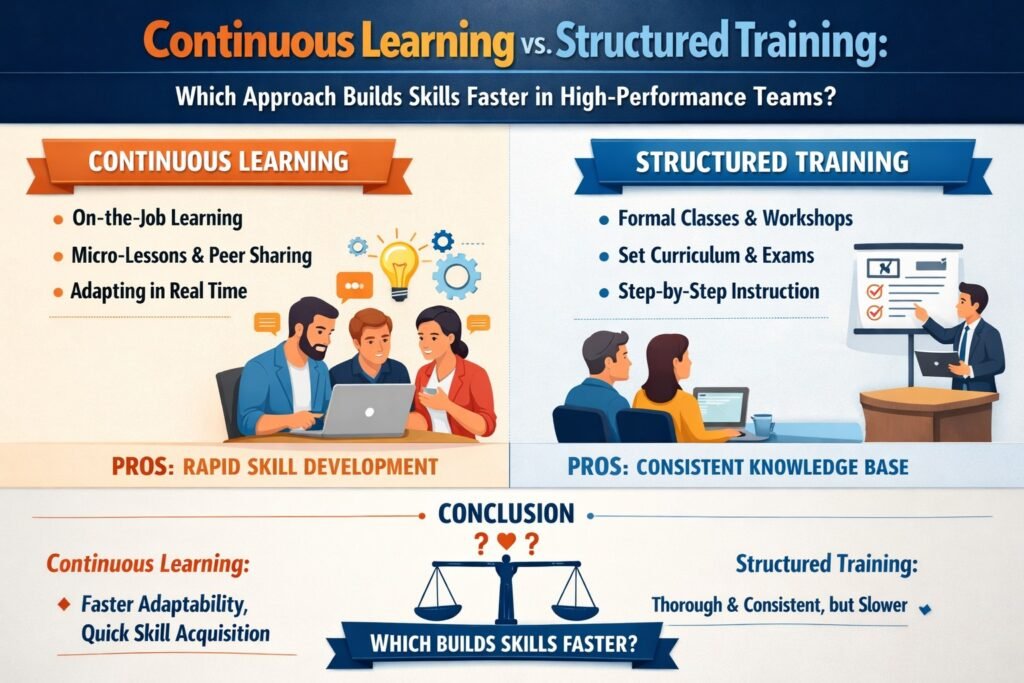
Today, organizations must adapt and evolve rapidly, and the effectiveness of skill development methods directly impacts team performance and overall success. In this article, we’ll explore the contrasts and synergies between Continuous Learning vs Structured Training. Both approaches have distinct advantages, and understanding how to leverage them effectively can optimise skill-building in high-speed teams because when everything is moving quickly, the last thing you want is your team struggling to keep up.
Understanding Continuous Learning in High-Speed Teams
Continuous learning is an ongoing process that encourages employees to acquire new skills and knowledge in real time. In a high-speed team environment, where projects and technologies change swiftly, this approach allows team members to stay relevant and agile. Continuous learning can take many forms, including informal training, peer mentoring, or hands-on experience with new tools and systems. The flexibility of this method fosters an atmosphere where individuals feel empowered to explore new ideas and concepts as they arise.
Additionally, continuous learning promotes a culture of curiosity and innovation within teams. Employees are motivated to seek out learning opportunities, whether through online courses, workshops, or attending industry conferences. This proactive approach to skill development not only enhances individual capabilities but also contributes to team cohesion. By sharing insights and knowledge gained through continuous learning, team members create a supportive environment that propels collective growth.
However, the challenge with continuous learning lies in ensuring that team members engage with the process. Organizations must provide the necessary resources and support systems to facilitate this approach. For example, companies can leverage learning management platforms or create dedicated time for skill-building activities. When effectively implemented, continuous learning can transform high-speed teams into agile, innovative powerhouses capable of tackling complex challenges. Explore Daily Standups vs Weekly Status Meetings: Maximizing Team Communication
The Role of Structured Training in Skill Development
Structured training involves a planned and systematic approach to skill acquisition. Designed with specific objectives and outcomes in mind, structured training often includes formal courses, workshops, and assessments. This method is particularly valuable for onboarding new employees or introducing critical skills that require comprehensive knowledge. By providing a clear roadmap, structured training helps employees grasp foundational concepts and processes essential for their roles.
One of the key advantages of structured training is its ability to ensure consistency across the organization. When training programs are standardized, all employees receive the same core knowledge and skills, promoting a unified approach to team performance. This consistency is crucial in industries where compliance and safety standards are paramount, such as healthcare or manufacturing. Structured training also allows for measurable outcomes, making it easier for organizations to evaluate employee progress and training effectiveness.
Moreover, structured training supports long-term development and career progression. With well-defined pathways, employees can identify the skills needed for advancement and take proactive steps toward achieving their goals. This strategic approach not only enhances individual capabilities but also aligns with organizational objectives, ensuring that teams are equipped to meet future challenges head-on.
Comparing Continuous Learning and Structured Training
While both continuous learning and structured training aim to enhance skill development, they cater to different learning needs and contexts. Continuous learning thrives in dynamic environments where adaptability is essential. In contrast, structured training is beneficial for foundational skill-building and compliance-related education. Understanding the differences between these two approaches enables organizations to tailor their development strategies to suit their specific needs.
For instance, a tech company might implement continuous learning initiatives to allow developers to stay abreast of emerging programming languages and frameworks quickly. Meanwhile, the same organization might employ structured training for onboarding new hires to ensure they grasp the company’s coding standards and methodologies. This dual approach ensures that both new and existing employees are equipped with the knowledge they need to succeed.
Additionally, blending these two strategies can yield even more effective outcomes. Organizations can use structured training as a base while encouraging continuous learning for further skill enhancement. By fostering an environment where employees are both trained and encouraged to learn independently, organizations can cultivate a workforce that is not only highly skilled but also adaptable to changing market demands.
Benefits of Continuous Learning for Fast-Paced Teams
Continuous learning offers numerous benefits for high-speed teams, particularly in terms of agility and responsiveness. In rapidly evolving industries, the ability to learn and apply new skills quickly can differentiate successful teams from those that lag behind. Continuous learning fosters a mindset of adaptability, allowing team members to pivot and embrace change as needed. This flexibility is crucial when facing tight deadlines or shifting project requirements.
Furthermore, continuous learning promotes employee engagement and satisfaction. When organizations invest in their employees’ growth through ongoing learning opportunities, team members feel valued and motivated to contribute to their team’s success. This heightened engagement can lead to improved retention rates, as employees are less likely to seek opportunities elsewhere when they feel their professional development is prioritized.
Lastly, continuous learning encourages innovation. In an environment where team members are regularly exposed to new ideas and perspectives, creativity flourishes. Employees who engage in continuous learning are more likely to develop innovative solutions and approaches, driving the organization forward. This culture of innovation is crucial in high-speed teams, where the ability to think outside the box can lead to competitive advantages.
How Structured Training Enhances Team Performance
Structured training enhances team performance by providing clarity and direction in skill development. By outlining specific goals and learning objectives, structured training ensures that all team members receive comprehensive knowledge essential for their roles. This clarity not only minimizes confusion but also sets clear expectations for performance, allowing teams to operate more effectively.
Moreover, structured training offers the opportunity for teams to collaborate and learn together. Group training sessions can foster teamwork, as employees engage in discussions and activities that reinforce learning. This collaborative aspect further strengthens team dynamics and builds camaraderie, essential for high-speed teams that rely on trust and communication to succeed.
Another notable benefit is the ability to track progress and outcomes through assessments and evaluations. Structured training allows organizations to measure the effectiveness of their training programs and make data-driven adjustments as needed. By continuously refining structured training initiatives based on performance metrics, organizations can enhance their skill development strategies and ensure that teams remain competitive.
Integrating Both Approaches for Optimal Outcomes
To maximize the benefits of both continuous learning and structured training, organizations should consider an integrated approach. By combining elements of each strategy, companies can create a comprehensive learning environment that addresses diverse employee needs. For example, organizations can start with structured training to establish a foundational skill set, followed by ongoing continuous learning opportunities that encourage further development and exploration.
In practice, this integration can take various forms. Companies might offer structured training programs that include optional workshops, webinars, or learning communities that employees can engage with later. This approach allows employees to apply their foundational knowledge while continuing to grow and adapt as new challenges arise. Additionally, encouraging mentorship programs can enrich this integrated learning environment, enabling experienced employees to guide newer team members through both structured and informal learning experiences.
Furthermore, organizations should nurture a culture of feedback and reflection to support integrated learning. By encouraging team members to share their experiences and insights gained from both structured training and continuous learning, organizations can continually refine and improve their skill development strategies. This culture of open communication contributes to a more engaged and knowledgeable workforce prepared to tackle the complexities of a high-speed business environment.
Strategies for Fostering Continuous Learning Culture
Creating a culture of continuous learning requires intentional strategies that encourage employees to prioritize their professional growth. One effective approach is to establish clear expectations around learning and development within the organization. Leaders should communicate the importance of ongoing learning and provide resources to support these initiatives, such as access to online courses or professional development budgets.
Another crucial strategy is to promote autonomy and flexibility in learning. Employees should be empowered to choose how and when they engage in continuous learning. Providing options such as self-paced courses, collaborative projects, or informal knowledge-sharing sessions can foster a sense of ownership over their learning journeys. When employees have the freedom to pursue their interests and learning goals, they are more likely to remain motivated and engaged.
Additionally, recognizing and celebrating learning achievements can strengthen a culture of continuous learning. Organizations can offer rewards or acknowledgment for completing training programs, sharing knowledge, or implementing new skills in their work. This recognition not only reinforces the value of continuous learning but also encourages team members to share their experiences, further promoting a collaborative learning environment.
Measuring Success: Continuous Learning vs Structured Training
Measuring the success of continuous learning and structured training initiatives is vital for understanding their impact on team performance. For continuous learning, organizations can track metrics such as employee engagement, retention rates, and the number of self-initiated learning activities. Surveys can also gather feedback from employees regarding their experiences, providing valuable insights into the effectiveness of learning opportunities.
On the other hand, structured training success can be measured through pre-and post-training assessments, completion rates, and the application of skills in real-world scenarios. Organizations should analyze performance metrics, such as productivity and quality of work, to gauge how effectively training converts into tangible results. Regular evaluations can help refine training programs to ensure they align with organizational goals.
Ultimately, combining both approaches offers a comprehensive view of skill development progress. Integrating data from continuous learning and structured training evaluations enables organizations to make informed decisions about future investments in employee development. By continuously measuring and refining these strategies, organizations can build high-speed teams that are well-equipped to thrive in today’s dynamic business environment.
Conclusion – Continuous Learning vs Structured Training
Building a culture that values both continuous learning and structured training can significantly enhance a team’s ability to adapt and excel in fast-paced environments. By understanding the strengths of each approach and integrating them effectively, organizations can not only improve employee engagement and satisfaction but also drive innovation and success. Embrace the dual approach, and watch your teams flourish in this ever-evolving landscape.
Hashtags: #ContinuousLearning #StructuredTraining #TeamPerformance #SkillDevelopment #CorporateCulture
For more insights on building effective training programs, visit https://www.td.org/insights/creating-a-culture-of-learning-in-the-workplace