
Daily Standups vs Weekly Status Meetings: Maximizing Team Communication
In business today effective communication is vital for team success. Two common approaches to foster communication often compared are Daily Standups vs Weekly Status Meetings. While both serve important purposes, understanding their distinct benefits and ideal contexts can help maximize team collaboration. This article explores the nuances of these two meeting styles, offering insights into their roles in enhancing team communication.
Daily Standups: A Quick Overview of Their Benefits
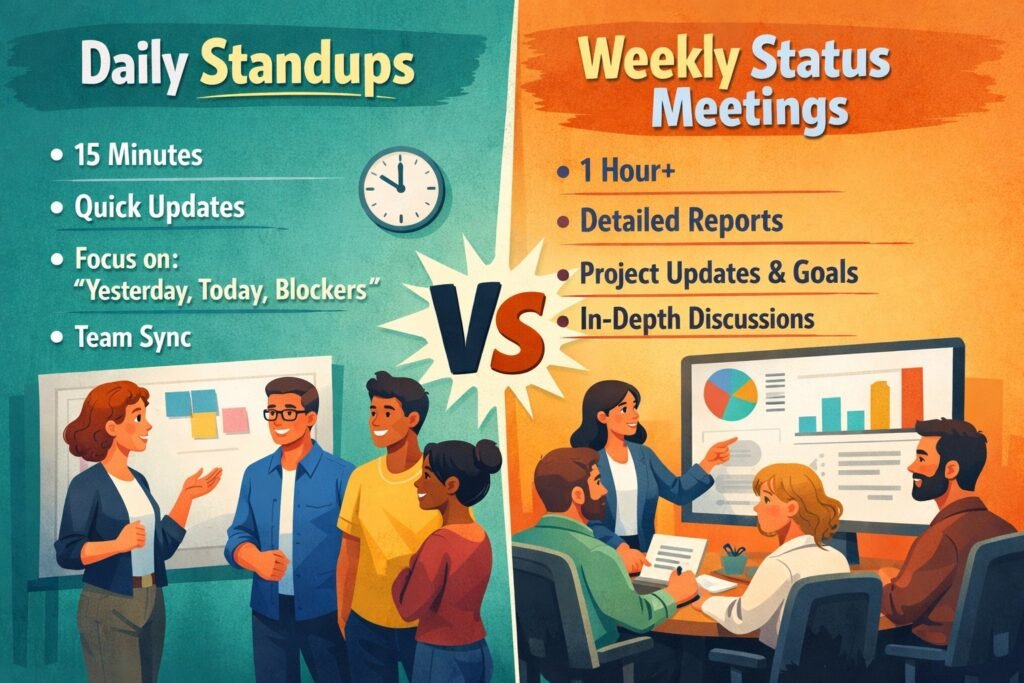
Daily standups are brief, focused meetings typically lasting no longer than 15 minutes. The primary objective is for team members to share updates on their tasks, address any obstacles, and align on goals for the day. The concise nature of standups promotes concise communication, ensuring that every member is aware of what others are working on. This transparency can lead to a unified approach in tackling projects and enhances accountability as team members report on their progress daily.
Another noteworthy benefit of daily standups is the opportunity for real-time problem-solving. When team members share challenges they face, the group can quickly brainstorm potential solutions or offer assistance. This collaborative effort not only speeds up the resolution process but also fosters a sense of camaraderie within the team. Such interactions can improve team culture, making members feel supported and engaged in their work.
Furthermore, daily standups encourage a rhythm of communication that can enhance productivity. By establishing a habit of daily check-ins, teams can maintain momentum and stay focused on their objectives. Regular updates also enable managers to gauge team morale and overall project progression, thus allowing for timely adjustments to resources or strategies as needed.
Weekly Status Meetings: Why They Matter in Your Workflow
Weekly status meetings typically offer a more comprehensive view of ongoing projects and organizational objectives. Unlike daily standups, these meetings allow for a deeper dive into project statuses, discussions on long-term goals, and strategic planning. This extended format enables team leaders to present key performance indicators, project milestones, and any shifts in priorities, offering a holistic perspective that daily standups may lack.
Weekly meetings also provide a platform for cross-departmental collaboration. Members from different teams can come together to share insights and updates, leading to a richer understanding of how each segment contributes to the organization’s goals. This alignment can help identify potential synergies and foster a collaborative environment, paving the way for innovation and problem-solving across departments.
Moreover, these meetings can serve as an opportunity for professional development. Regular check-ins allow managers to offer feedback, recognize achievements, and discuss any areas for improvement. Setting aside time for these discussions encourages a growth mindset within the team and promotes continuous learning, ultimately driving individual and collective performance.
Comparing Frequency: How Often Should Teams Communicate?
Determining the optimal frequency for team communication depends on multiple factors, including project complexity, team size, and organizational culture. Daily standups may work wonders for agile teams focused on quick iterations and frequent feedback. In contrast, teams handling larger projects or working in more traditional environments may find weekly status meetings more beneficial, providing ample time to prepare in-depth reports and updates.
A balance between the two approaches often yields the best results. Incorporating both daily standups and weekly status meetings can create a robust communication framework. The quick, daily interactions keep team members aligned and engaged, while the weekly meetings offer an opportunity for strategic discussions and comprehensive assessments.
Ultimately, the decision on frequency should be guided by the specific needs of the team and the nature of the work. Experimenting with both formats can help leaders identify the right cadence that fosters effective communication while minimizing disruptions in workflow.
Team Dynamics: Standups vs Status Meetings in Action
In practical terms, the dynamics of daily standups differ significantly from weekly status meetings. Standups are usually held at the same time and place each day, creating a predictable routine that team members can rely on. This routine can help build team cohesion, as members become accustomed to each other’s schedules and communication styles. The informal atmosphere often seen in standups encourages openness and honesty, making it easier for team members to share their challenges and successes.
Conversely, weekly status meetings often have a more formal structure. Agendas are usually circulated in advance, allowing participants to prepare updates and reports. This formality can lead to more structured discussions, where each member has the opportunity to present their progress and strategic plans. However, this environment can sometimes stifle spontaneous interaction, making it essential for leaders to create a culture where open dialogue is encouraged.
The nature of teamwork can also affect how these meetings are perceived. In a collaborative, fast-paced environment, daily standups may serve as a lifeline, keeping everyone aligned and responsive to changes. In contrast, teams that operate in a more hierarchical structure might prefer the clarity and direction provided by weekly status meetings, where leadership can dictate priorities and expectations.
Best Practices for Effective Daily Standups and Meetings
To maximize the effectiveness of daily standups, teams should adhere to a few best practices. First, keeping the meeting brief is paramount. A strict time limit encourages participants to stay focused on essential updates and minimizes digressions. Additionally, using a round-robin format where each member takes turns sharing their progress can ensure that everyone has a voice, fostering inclusivity and collaboration.
It can also be helpful to establish a clear agenda for weekly status meetings. By setting predefined topics for discussion, teams can stay on track and make the most out of their time together. This structure can include project updates, roadblocks, and future objectives, creating a comprehensive overview for all participants.
Lastly, follow-up actions are crucial for both daily standups and weekly meetings. Assigning responsibilities and deadlines during these meetings can help ensure that discussions lead to actionable outcomes. Utilizing project management tools to track these tasks can further enhance accountability and streamline communication.
Tackling Challenges: Common Issues in Team Communication
Despite the advantages of daily standups and weekly status meetings, several challenges can arise. One common issue is the risk of repetitive updates, especially in daily standups. When team members report the same information day after day, engagement can dwindle. To combat this, teams can encourage participants to share new insights or challenges, ensuring that each meeting remains relevant and dynamic.
Another challenge is balancing the need for communication with time management. Meetings that extend beyond their allotted time can disrupt productivity, leading to frustration among team members. Establishing strict time limits and adhering to schedules can help mitigate this issue. Moreover, designating a facilitator can ensure that discussions remain focused and on-topic.
Lastly, differing communication styles among team members can lead to misunderstandings or disengagement. To address this, teams can foster an open environment where individuals feel comfortable expressing their preferences and concerns. Encouraging feedback about the format and structure of meetings can also promote continuous improvement.
Tools and Techniques to Enhance Meeting Effectiveness
Leveraging technology can significantly enhance the effectiveness of both daily standups and weekly status meetings. Tools like Slack or Microsoft Teams allow for seamless communication and can even facilitate virtual standups for remote teams. Additionally, project management tools like Trello or Asana can provide a visual overview of tasks and projects, helping team members stay informed and aligned.
Another useful technique is incorporating visual aids during meetings. Utilizing charts, graphs, or dashboards can make complex data more accessible and engaging for participants. This approach can help teams identify trends, monitor progress, and make data-driven decisions more effectively.
Lastly, consider implementing feedback loops. Regularly soliciting input from team members about the effectiveness of meetings can lead to improvements in both format and content. Using anonymous surveys can encourage honesty, helping leaders identify areas where communication can be enhanced.
Choosing the Right Approach for Your Team’s Needs
Ultimately, the choice between daily standups and weekly status meetings should be tailored to your team’s specific needs and objectives. Agile teams might thrive on the quick feedback and alignment offered by daily standups, while larger teams with more complex projects may benefit more from the comprehensive discussions of weekly meetings. Explore Change Management vs Project Management: Integrating People and Processes
It’s also worth considering the team’s culture and preferences when making this decision. Engaging team members in the conversation about meeting formats can uncover valuable insights and lead to a more motivated, cohesive team. Leaders should remain adaptable and willing to shift between formats as team dynamics and project demands evolve.
Conclusion – Daily Standups vs Weekly Status Meetings: Maximizing Team Communication
Both daily standups and weekly status meetings can play crucial roles in enhancing team communication. By understanding their respective benefits and challenges, leaders can implement strategies that maximize collaboration, transparency, and productivity within their teams.
Navigating the complexities of team communication is crucial for success in any organization. By understanding when to utilize daily standups versus weekly status meetings, leaders can create a communication framework that fosters transparency, engagement, and productivity. Embracing these strategies will pave the way for a more connected and effective team.
Hashtags: #TeamCommunication #AgileMeetings #Productivity #TeamWork #Leadership