
Crisis Management vs Risk Management: Handling Disasters and Mitigating Threats
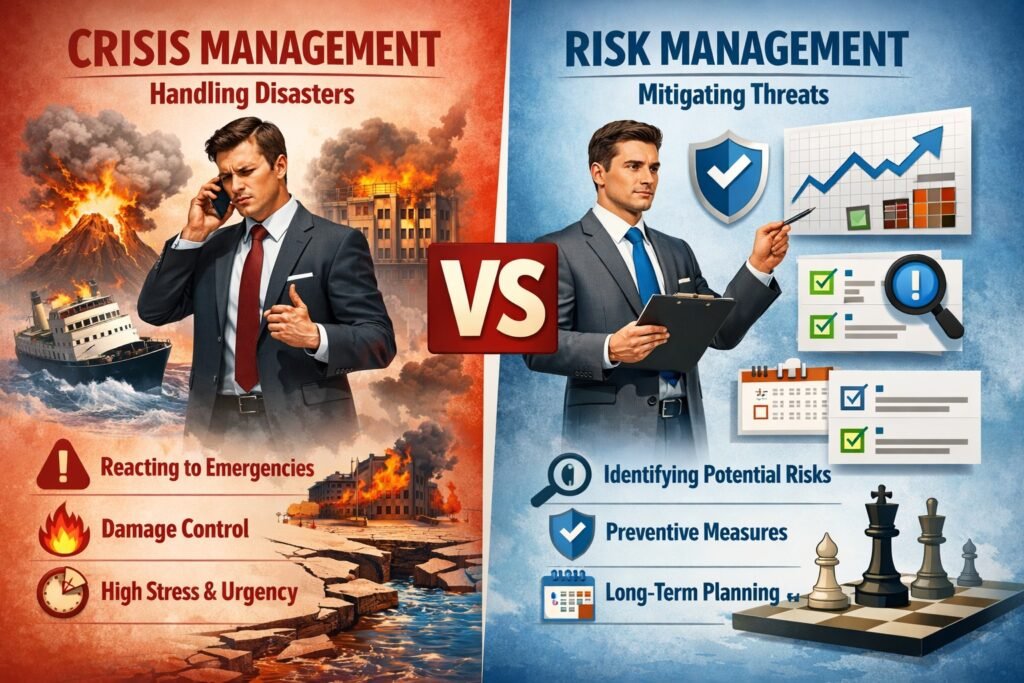
In an increasingly unpredictable world, organizations are constantly navigating through potential crises and threats. Understanding the distinction between crisis management and risk management is essential for any corporate enterprise aiming to thrive amidst adversity. While both functions share the goal of protecting an organization, they differ fundamentally in their approaches, methodologies, and applications. This article will delve into the nuances Crisis Management vs Risk Management, offering insights on how large organizations can effectively handle disasters and mitigate threats.
Understanding the Differences Between Crisis and Risk Management
Crisis management and risk management serve unique and complementary roles within an organization. Risk management is a proactive approach focused on identifying, assessing, and mitigating potential risks before they escalate into crises. It involves analyzing data, trends, and scenarios to foresee challenges that might affect the organization. By implementing strategies to minimize risks, organizations can operate more smoothly and effectively, safeguarding their resources and reputation.
On the other hand, crisis management is a reactive function that comes into play once a crisis has emerged. The primary goal is to minimize damage, restore normalcy, and communicate effectively with stakeholders during and after the crisis. This includes everything from managing media relations to handling internal communications and addressing public concerns. While risk management seeks to prevent crises, crisis management is about navigating through them once they occur.
Both functions are essential for large organizations to ensure resilience and sustainability. When risk management is executed effectively, it reduces the likelihood of crises, allowing crisis management teams to focus on more significant issues when they arise. By integrating both functions, organizations can create a robust framework that not only anticipates potential threats but also responds effectively when unexpected challenges emerge.
The Importance of Proactive Risk Assessment Strategies
Proactive risk assessment strategies play a pivotal role in safeguarding large organizations against potential threats. By conducting thorough risk assessments, organizations can identify vulnerabilities and take necessary preventive measures. This process often involves analyzing internal data, conducting surveys, and utilizing predictive analytics. By doing so, organizations not only mitigate risks but also foster a culture of awareness and preparedness, which is crucial in today’s fast-paced business environment.
Moreover, employing tools such as risk matrices and scenario planning can help organizations visualize the severity of risks and prioritize their responses accordingly. This method allows decision-makers to allocate resources more effectively, ensuring that high-risk areas receive the attention they require. It also facilitates clear communication across departments, ensuring that everyone is on the same page and ready to act.
Another vital aspect of proactive risk assessment is the continuous monitoring of external factors, such as regulatory changes, market dynamics, and emerging threats. By staying ahead of the curve, organizations can adapt their strategies, maintain compliance, and minimize disruptions. This agility not only protects the organization but also positions it as a leader in its industry, capable of navigating challenges effectively.
Key Elements of Effective Crisis Management Plans
A well-structured crisis management plan is indispensable for large organizations aiming to respond effectively to unexpected crises. First and foremost, these plans should outline clear roles and responsibilities for team members, ensuring that everyone knows their specific tasks during a crisis. This clarity fosters swift action and minimizes confusion, which is crucial in high-pressure situations where time is of the essence.
Communication is another cornerstone of effective crisis management. Organizations must establish communication protocols that outline how information will be disseminated internally and externally. This includes pre-prepared statements, designated spokespersons, and channels for updates. Transparent and timely communication helps manage public perception, maintain stakeholder trust, and reduce misinformation during crises.
Lastly, the plan should include regular training and simulation exercises. These drills help teams practice their roles and refine their responses in a controlled environment. By simulating potential crises, organizations can identify gaps in their plans and make necessary adjustments. Ongoing training not only enhances team readiness but also reinforces a culture of preparedness, empowering employees to act decisively when real crises occur.
Real-Life Examples of Crisis Management Successes
Examining real-life examples of successful crisis management can provide valuable insights for large organizations. One prominent case is that of Johnson & Johnson during the Tylenol crisis in the 1980s. When several people died due to cyanide-laced Tylenol capsules, the company acted swiftly by recalling over 31 million bottles and halting production. They communicated transparently with the public and media, regaining consumer trust and ultimately leading to the introduction of tamper-proof packaging. This proactive approach not only salvaged their brand but also set new industry standards for safety.
Another notable instance is how Starbucks managed its racial bias crisis in 2018. After two Black men were arrested in a Philadelphia store for simply waiting for a friend, Starbucks promptly closed more than 8,000 stores for a day to conduct racial bias training for its employees. This swift and decisive action demonstrated the brand’s commitment to social responsibility and sparked a broader conversation on inclusivity. By addressing the issue head-on, Starbucks not only mitigated immediate backlash but also reinforced its values and strengthened customer loyalty.
A more recent example is how Zoom dealt with security issues as it experienced exponential growth during the COVID-19 pandemic. Initially criticized for its security vulnerabilities, Zoom took immediate measures to enhance its security features. They implemented end-to-end encryption and increased transparency around their data practices. This proactive crisis management not only resolved immediate concerns but also positioned Zoom as a trusted platform for video communications, highlighting the importance of adapting to crises in a rapidly changing environment.
Risk Mitigation Techniques for Large Organizations
For large organizations, implementing effective risk mitigation techniques is crucial to maintaining stability and integrity. One of the primary strategies involves diversification. Organizations should not rely heavily on a single revenue stream or market segment. By diversifying products, services, and client bases, they can spread risk and reduce the impact of unforeseen events on their bottom line.
Another technique is employing technology for risk monitoring and management. Advanced analytics and machine learning tools can help organizations predict potential risks by processing vast amounts of data. This allows for real-time risk assessments and informed decision-making, enabling organizations to implement timely interventions before risks escalate into crises.
Additionally, organizations can foster strong partnerships and networks. Collaborating with other organizations, industry groups, and regulatory bodies can provide valuable insights and resources for risk management. By sharing information and best practices, organizations can better prepare for potential threats and create a more resilient business ecosystem.
How to Build a Resilient Corporate Culture
Building a resilient corporate culture is essential for organizations looking to thrive in today’s unpredictable environment. First, leadership commitment is crucial. Leaders must actively promote a culture of resilience by modeling behaviors that prioritize adaptability, open communication, and continuous learning. When employees see management embracing challenges rather than fearing them, it encourages a similar mindset across the organization.
Employee engagement is another vital aspect. Organizations should involve employees in developing resilience strategies, from participating in training sessions to contributing ideas for process improvements. Creating a sense of ownership fosters commitment and boosts morale, making employees more likely to respond positively during crises.
Finally, organizations should invest in mental health and wellness programs. These initiatives help employees manage stress and build coping mechanisms, which are essential during challenging times. A supportive workplace culture that prioritizes mental well-being not only enhances resilience but also improves overall productivity and employee satisfaction.
The Role of Leadership in Crisis and Risk Management
Leadership plays a pivotal role in both crisis and risk management. Effective leaders must be forward-thinking, anticipating potential challenges and preparing their teams for various scenarios. By establishing a clear vision and expectations regarding risk management, leaders can drive the organization’s approach to mitigating threats proactively.
During a crisis, strong leadership is paramount. Leaders must communicate effectively, demonstrating transparency and empathy. They should provide clear guidance to their teams, ensuring that everyone understands their roles and responsibilities. A calm and collected leader can instill confidence among employees, fostering a sense of unity and purpose in navigating through turbulent times.
Moreover, leaders must also prioritize continuous improvement. After navigating a crisis, they should conduct thorough evaluations to assess what worked and areas needing enhancement. By embracing a mindset of learning and adaptation, leaders can better prepare their organizations for future challenges, reinforcing their resilience in the face of adversity.
Future Trends in Crisis and Risk Management Practices
As organizations continue to evolve, so too will crisis and risk management practices. One emerging trend is the increasing reliance on technology and data analytics. With advancements in artificial intelligence and machine learning, organizations can better predict and respond to potential crises. These tools will enable more accurate risk assessments and enhance decision-making processes, allowing organizations to act more swiftly when challenges arise.
Another trend is the growing emphasis on corporate social responsibility and sustainability. Stakeholders are increasingly holding organizations accountable for their impact on society and the environment. This shift necessitates a more comprehensive approach to risk management that includes ethical considerations, social impact assessments, and long-term sustainability planning. Organizations that embrace these principles will not only enhance their reputation but also reduce reputational risks associated with non-compliance.
Lastly, there is a significant move towards integrated risk management frameworks. Organizations are recognizing the interconnectedness of various risks, from operational to financial and reputational. By adopting a holistic approach that aligns risk management with overall business strategy, organizations can create a more resilient structure, better equipped to handle uncertainties in an ever-changing landscape.
Conclusion – Crisis Management vs Risk Management
In an era where crises are becoming more frequent and complex, understanding the distinctions between crisis management and risk management is crucial for large organizations. By adopting proactive risk assessment strategies, implementing effective crisis management plans, and nurturing a resilient corporate culture, organizations can significantly improve their ability to navigate challenges. With strong leadership and a focus on continuous improvement, enterprises can not only survive crises but emerge stronger and more adaptable in the face of adversity.
Hashtags: #CrisisManagement #RiskManagement #CorporateCulture #Leadership #BusinessContinuity
Crisis Management vs Risk Management Call to Action: For more insights on crisis and risk management strategies, visit the London School of Economics
Discover More great insights on value management office and PMO Sponsorship