

Deliverable Focus vs Outcome Focus: Shifting from Task Completion to Value
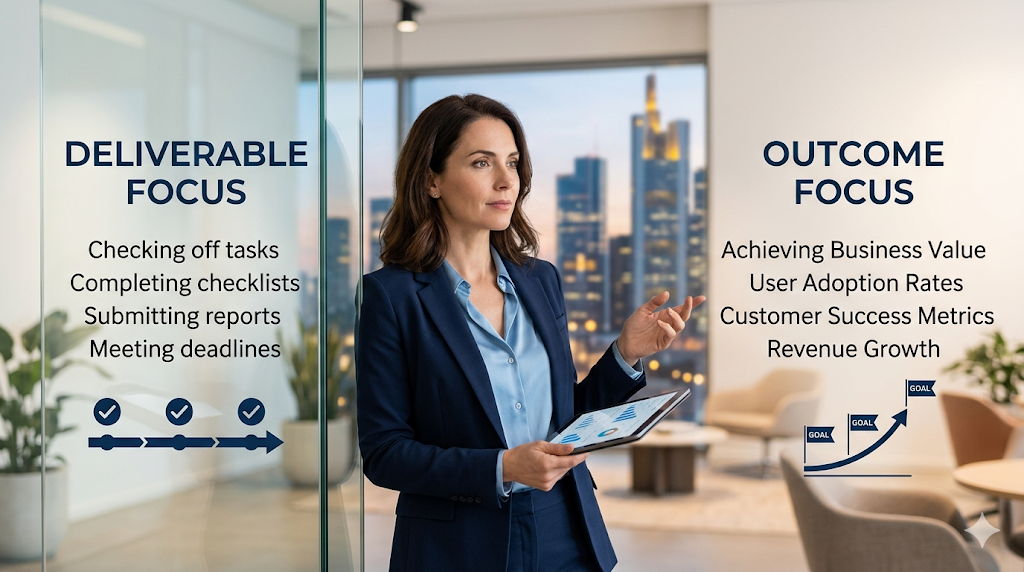
The landscape of modern workplaces is rapidly evolving, and organizations must adapt to stay competitive. One essential shift is from a deliverable focus where success is measured by task completion to an outcome focus, which emphasizes value creation and impact. This article explores this paradigm shift, detailing its significance, advantages, and practical strategies for fostering an Deliverable Focus vs Outcome Focus
Understanding Deliverable Focus in Organizations Today
In many organizations, the traditional approach to project management has centered around deliverables, emphasizing the completion of tasks, milestones, or outputs. Teams often find themselves entrenched in a cycle of checklists, ensuring every item is ticked off before considering a project successful. This mindset, while useful for tracking progress, can lead to a narrow view of success, primarily focused on what has been delivered rather than the value generated.
The deliverable focus often prioritizes quantity over quality. Teams may rush to meet deadlines, producing outputs that meet specifications but lack the necessary depth or innovation. This can result in wasted resources, as companies invest time and effort into projects that might not align with long-term strategic goals or customer needs. Moreover, this approach can create a culture of complacency, where employees feel satisfied with simply completing tasks rather than striving for meaningful results.
Understanding this paradigm is crucial, as it sets the stage for the necessary transition toward an outcome-focused mindset. Recognizing the limitations of a deliverable-driven culture can help leaders identify where value is being overlooked and begin to envision a more impactful approach to project management and team collaboration.
The Shift from Task Completion to Value Creation
Transitioning from a deliverable focus to an outcome focus encourages teams to prioritize value creation over mere task completion. This shift demands a reevaluation of how success is defined within organizations, moving from the tangible outputs to the impact these outputs have on stakeholders, customers, and the broader market. It encourages teams to think critically about the “why” behind their work asking not just “What do we need to deliver?” but also “What value does this delivery create?”
This mindset change requires organizations to invest in training and development that underscores the importance of outcomes. Workshops and coaching can help teams learn to articulate desired results, create measurable success criteria, and align their work with broader organizational goals. By focusing on outcomes, teams become more agile and responsive, able to pivot in real time based on feedback and changing circumstances.
Moreover, this shift fosters collaboration, as team members work together to uncover insights and drive innovation rather than competing to check off tasks. Emphasizing value creation can lead not only to increased employee engagement but also to enhanced customer satisfaction, as teams better understand and address the needs and desires of their end-users.
Why Outcome Focus Matters in Modern Workplaces
In today’s fast-paced business environment, an outcome-focused approach offers a competitive edge. It allows organizations to be more adaptive, responsive, and aligned with their customers’ needs. As markets evolve and consumer preferences shift, companies that prioritize outcomes can adjust their strategies more effectively than those fixated solely on deliverables. Navigating change becomes easier when teams are united in their understanding of the end goals and the value they aim to provide.
Additionally, focusing on outcomes can lead to improved financial performance. Research shows that organizations prioritizing outcomes are more likely to achieve sustained growth, as they continuously refine their offerings based on user feedback and market trends. By investing in understanding the impact of their work, businesses can uncover opportunities for innovation, leading to better products and services that resonate with users.
An outcome-oriented mindset also contributes to long-term sustainability. When organizations emphasize creating value, they build stronger relationships with customers, employees, and stakeholders. These relationships lead to loyalty and trust, essential components for enduring success. By prioritizing outcomes, companies position themselves not just for immediate success but for ongoing relevance in a constantly changing landscape.
Key Differences Between Deliverable and Outcome Focus
Understanding the differences between deliverable focus and outcome focus is crucial for organizations seeking to foster a culture of value creation. At its core, deliverable focus is task-oriented, emphasizing the completion of specific outputs within set timelines. This approach often results in a linear progression of work, with teams moving from one task to the next without necessarily examining whether the tasks drive value.
Conversely, an outcome-focused approach prioritizes results and impacts. Rather than fixating on completing tasks, teams are encouraged to assess their work’s effectiveness in achieving desired outcomes. This involves setting clear, measurable goals and regularly evaluating progress toward those goals. In outcome-focused environments, success is defined not by the number of tasks completed but by the extent to which those tasks contribute to overarching business objectives.
Another significant difference lies in the culture fostered by each approach. Deliverable focus can lead to siloed work, where teams operate independently, checking off their lists without cross-collaboration. In contrast, an outcome focus encourages interdisciplinary teamwork and communication, as employees rally around shared goals and the collective impact of their efforts. This shift in mindset can help break down organizational barriers, fostering a sense of unity and purpose.
Aligning Teams Around Outcomes for Greater Impact
Aligning teams around outcomes is essential for maximizing impact within organizations. This alignment starts with clear communication of organizational goals and ensuring that all teams understand how their roles contribute to these objectives. Leadership plays a crucial role in this process; by articulating a compelling vision focused on value creation, leaders can inspire teams to rally behind shared outcomes.
Effective alignment involves setting specific, measurable, attainable, relevant, and time-bound (SMART) goals that resonate across teams. By doing so, organizations can ensure that every team member understands not only what is expected but also how their individual contributions fit into the larger picture. This clarity helps teams prioritize their efforts and focus on activities that drive the most significant impact.
Collaborative tools and frameworks can facilitate this alignment. Agile methodologies, for instance, encourage cross-functional teamwork and regular check-ins to assess progress against outcomes. These frameworks not only promote accountability but also provide opportunities for teams to share insights, learn from one another, and adapt strategies to ensure they are on track to achieve desired results.
Strategies to Foster an Outcome-Oriented Culture
Creating an outcome-oriented culture requires intentional strategies that encourage teams to focus on value creation. One effective approach is to implement regular feedback loops, allowing teams to assess their progress and adjust their strategies in real time. This can involve surveys, one-on-one check-ins, or team retrospectives aimed at discussing what’s working and what isn’t.
Another strategy is to celebrate successes that stem from an outcome-focused mindset. Recognizing and rewarding teams that achieve significant results not only boosts morale but also reinforces desired behaviors. Implementing performance metrics that emphasize outcomes rather than just outputs can motivate team members to take ownership of their work and strive for excellence.
Training sessions and workshops can further support this cultural shift. Investing in professional development can help team members learn how to set and assess outcome-based goals and develop critical thinking skills necessary for evaluating the impact of their work. By equipping employees with the right tools and knowledge, organizations can foster an environment that values innovation, collaboration, and continuous improvement.
Measuring Success: Metrics for Outcome Focus
Measuring success in an outcome-oriented culture requires different metrics than those used in a deliverable-focused environment. Traditional metrics, such as the number of tasks completed or hours logged, fall short in capturing the true impact of the work being done. Instead, organizations should focus on key performance indicators (KPIs) that reflect the outcomes they aim to achieve.
For example, customer satisfaction scores, net promoter scores (NPS), and user engagement metrics can provide a clearer picture of how well teams are meeting customer needs. Additionally, measuring the return on investment (ROI) for projects can help organizations assess the financial impact of their efforts, enabling them to allocate resources more effectively.
Another important aspect of measuring success is to establish a system for ongoing evaluation. Regularly reviewing outcomes and their alignment with strategic goals can inform decision-making and help teams adapt their strategies as needed. Organizations that prioritize outcome-focused metrics are better positioned to drive meaningful results and innovate continuously, ultimately enhancing their competitive advantage.
Real-World Examples of Shifting Focus Effectively
Many organizations have successfully shifted from a deliverable focus to an outcome focus, reaping significant benefits in the process. For instance, companies like Adobe and Spotify have embraced agile methodologies that prioritize outcomes over task completion. By implementing cross-functional teams and focusing on iterative feedback, these companies have enhanced their ability to innovate and respond to market changes.
Another example is the healthcare sector, where organizations are increasingly shifting towards value-based care models. In these models, healthcare providers are rewarded for patient outcomes rather than the volume of services rendered. This shift has led to improved patient satisfaction and health outcomes, demonstrating the tangible benefits of an outcome-oriented approach.
Furthermore, tech giants like Google have adopted outcome-focused frameworks, such as Objectives and Key Results (OKRs), to align their teams around shared goals. This approach encourages transparency and accountability, as employees regularly evaluate their progress toward achieving meaningful results. By focusing on the impact of their work, organizations like Google have fostered a culture of innovation and high performance, driving sustained success in a highly competitive landscape.
Frequently Asked Questions: Deliverable Focus vs Outcome Focus in Modern Organisations
How does a deliverable-focused approach work in organisations today?
A deliverable-focused approach centres on completing predefined tasks, outputs, or milestones within a project lifecycle. Success is typically measured by whether specific items on a project plan have been delivered on time and according to specification.
While this method provides structure and clarity, it can unintentionally encourage a “tick-box” mentality. Teams may prioritise completing tasks efficiently rather than questioning whether those tasks contribute meaningful value to the organisation or end user. As a result, projects can appear successful on paper while delivering limited real-world impact.
What defines an outcome-focused approach in modern organisations?
An outcome-focused approach shifts attention from output completion to value creation and measurable impact. Instead of asking “Was the task completed?”, organisations ask “Did this work create meaningful business or customer value?”
This mindset prioritises results such as improved customer satisfaction, increased revenue, enhanced operational efficiency, or better user experience. It encourages teams to think strategically about why work is being done, not just what is being delivered.
Why is the shift from deliverables to outcomes important?
A strong deliverable-driven culture can lead to several structural inefficiencies. Teams may become overly focused on deadlines and task completion, even when the output no longer aligns with evolving business needs.
This can result in wasted resources, duplicated effort, and low-impact outputs that do not contribute meaningfully to organisational goals. Over time, it can also reduce innovation, as employees focus on compliance with plans rather than exploring better ways to deliver value.
How does an outcome focus improve organisational performance?
An outcome-focused model improves performance by aligning work directly with strategic objectives. Instead of measuring success by completion alone, organisations evaluate whether initiatives are delivering tangible benefits.
This leads to better prioritisation, improved resource allocation, and stronger alignment between teams and business strategy. It also encourages continuous improvement, as teams are motivated to refine their approach based on real-world impact rather than static delivery metrics.
How can organisations transition from deliverable focus to outcome focus?
The transition begins with redefining success metrics. Organisations must move away from purely task-based KPIs and introduce value-based performance indicators such as customer impact, efficiency gains, or revenue contribution.
Leadership also plays a critical role in reinforcing this shift by consistently communicating the importance of outcomes over outputs. Without executive alignment, cultural change is unlikely to take hold effectively.
How can teams be supported during this transition?
Teams require clear frameworks, training, and tools to successfully adopt an outcome-focused mindset. This includes structured goal-setting methodologies such as OKRs (Objectives and Key Results), which link daily work to measurable business outcomes.
Regular feedback loops and performance reviews also help teams understand whether their work is delivering intended value. Over time, this reinforces a culture of accountability and continuous learning.
What role does leadership play in driving outcome-focused thinking?
Leadership is the primary driver of transformation from deliverables to outcomes. Leaders must actively encourage teams to question the value and impact of their work rather than simply tracking completion.
This involves shifting conversations from “What did we finish?” to “What value did we create?” Leaders must also ensure that organisational incentives and recognition systems reward meaningful outcomes rather than activity volume alone.
What behaviours should leaders promote?
Leaders should promote curiosity, experimentation, and critical thinking. By encouraging teams to explore better ways of achieving results, they help embed innovation into everyday work.
They should also support psychological safety, ensuring that teams feel comfortable challenging assumptions and proposing changes to existing processes when they do not align with desired outcomes.
What challenges do organisations face when adopting an outcome focus?
One of the biggest challenges is legacy thinking. Many organisations have long-established systems, reporting structures, and performance frameworks built around outputs rather than outcomes.
Changing this requires not only process adjustments but also a fundamental shift in mindset. Employees may initially struggle to redefine success in more abstract, value-based terms.
How can organisations overcome resistance to change?
Resistance can be reduced through clear communication, consistent reinforcement, and gradual implementation. Introducing pilot programmes and demonstrating early wins can help build confidence in the new approach.
Providing training and aligning incentives with outcome-based performance also ensures that teams are supported throughout the transition. Over time, this helps embed the new mindset into everyday organisational behaviour.
Conclusion – Deliverable Focus vs Outcome Focus: Shifting from Task Completion to Value
Transitioning from a deliverable focus to an outcome focus is not just a trend; it’s a necessary evolution for organizations aiming to thrive in today’s dynamic business environment. By prioritizing value creation, aligning teams around shared outcomes, and implementing strategies to foster an outcome-oriented culture, companies can drive greater impact and achieve lasting success. As organizations embrace this shift, they will not only enhance their operational effectiveness but also cultivate a more engaged and motivated workforce. I hope you enjoyed this blog on Deliverable Focus vs Outcome Focus
Hashtags: #ValueCreation #OutcomeFocus #ProjectManagement #CorporateCulture #Innovation
External Source: For more insights on the difference between Deliverables and outcomes, visit from Projectmanagement.com
Discover More great insights:
PMO Automation Strategies
Project management methodologies